Category: Parks & Gardens

  • ‘Just One Tree’ – A ‘Botak’ Ficus Sp. Tree in ASRJC and its Interesting Inhabitants

    ‘Just One Tree’ – A ‘Botak’ Ficus Sp. Tree in ASRJC and its Interesting Inhabitants

    Just One Tree’ is a blog series that explores how individual trees support life. Each post delves into the unique ecosystem centered around a single tree, showcasing its vital role in sustaining various forms of life.

    In this inaugural post of the series, I spotlight a particular tree along Upper Serangoon Road. I discovered this arboreal wonder while cycling to buy the famous Yong’s Teochew Kueh for my parents on the 9th January 2025. The tree stands within the vicinity of Anderson Serangoon Junior College (formerly Serangoon Junior College, where I studied for three months before transferring to Anderson Junior College in Ang Mo Kio in 1999).

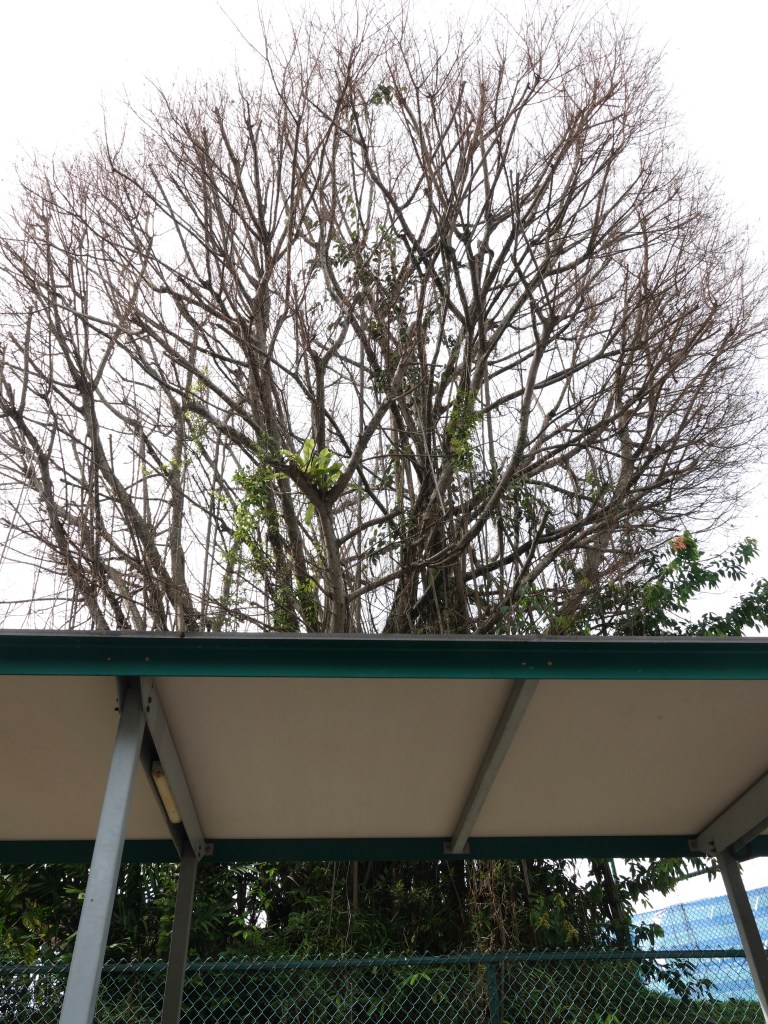
    What caught my attention was the tree’s unusual appearance – it was completely stripped of its leaves. My immediate reaction was one of concern and curiosity: What had happened to this tree?

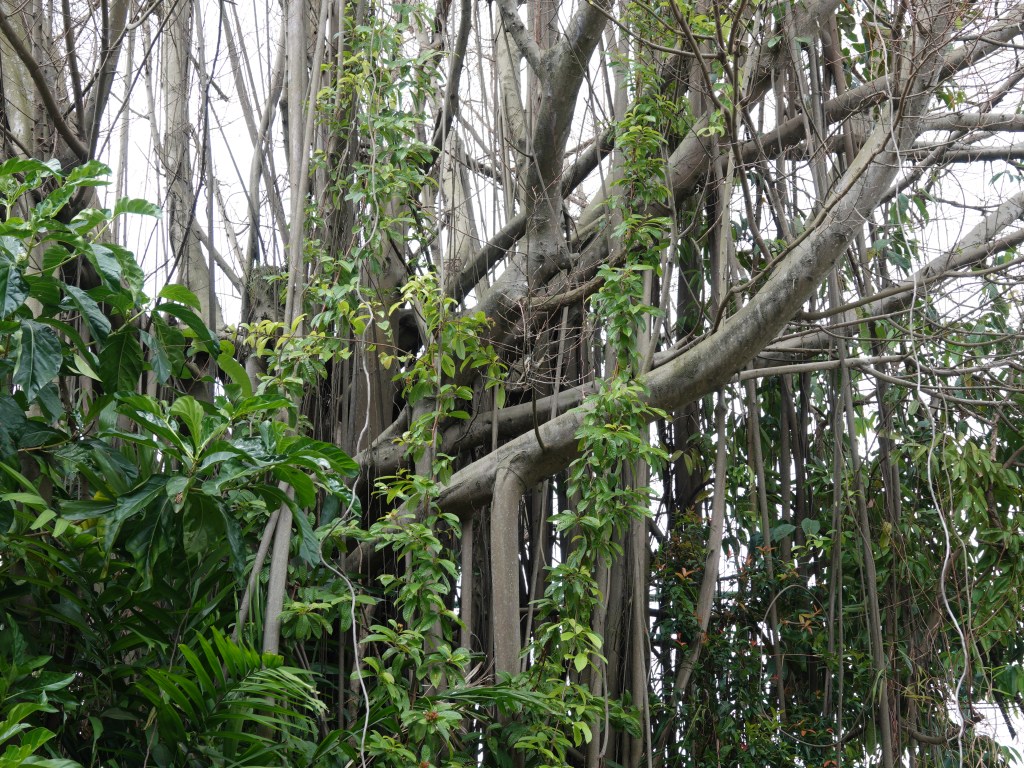
    Upon closer observation, I noticed dangling aerial roots, a characteristic feature that left no doubt about its identity. This tree is a Ficus species, most likely a Ficus microcarpa, as it is one of the most common Ficus species grown in urban areas.


    The location of the tree is pinned. I documented the details about this tree at the bus stop area on the 9th Jan 2025. (Source: Google Map)
    By referring to Google Streetview, I caught a glimpse of the tree’s former splendor. Examining its structure and leaf arrangement, I was able to rule out Ficus benjamina, as it lacks the characteristic droopy appearance. Unfortunately, the resolution wasn’t sufficient to discern the leaf shape, making a definitive identification impossible. (Source: Google Street View)
    The fate of the entire tree as of January 2025: The visible green patches belong to an unknown climber and some epiphytic plants, not to the Ficus itself.
    There are other flora species at the base of the Ficus. On the left, it looks like a Noni tree (Morinda citrifolia) with a palm species growing below it. On the right is probably a wild cinnamon tree (Cinnamomum iners).

    What’s Causing the Tree to Become Botak?

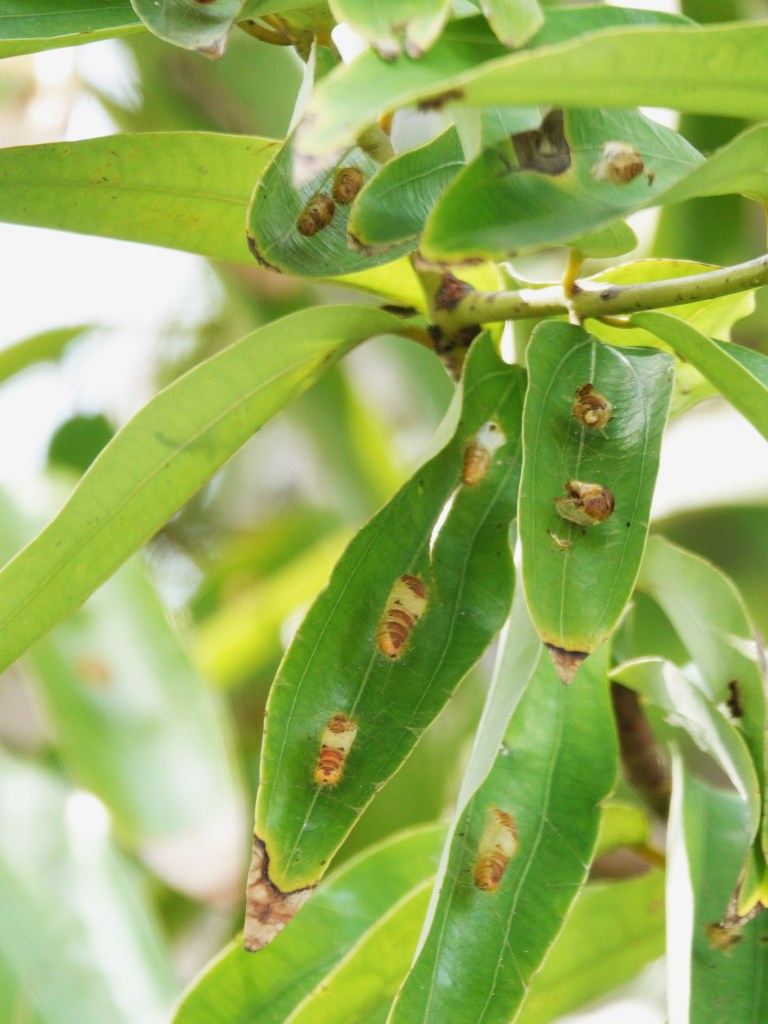
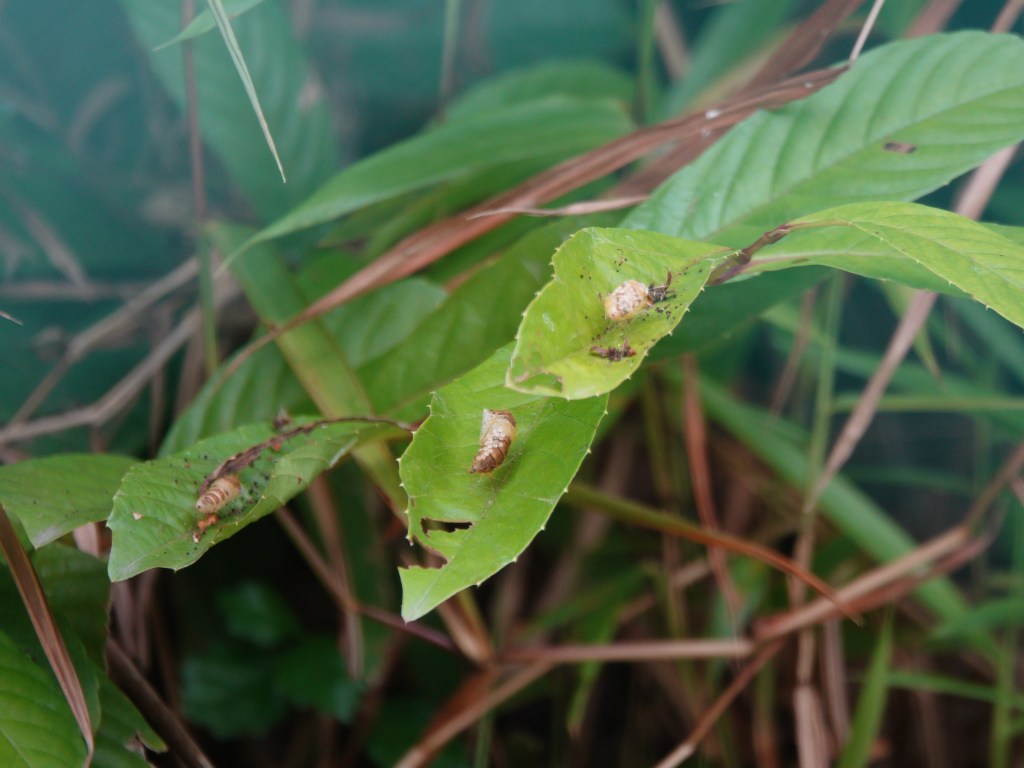
    I parked my bicycle at the bus stop and approached the fence. Immediately, I found the answer: caterpillars! And not just any caterpillars, but Clear-Winged Tussock Moth (Perina nuda) caterpillars. Also known as the Banyan Tussock Moth, they weren’t just crawling all over the fence; they were also on the bus stop, the walkway shelter, and even on the ground.

    As I was photographing them, one fell on my neck. I instinctively brushed it away in fright, worried that its bristles might cause an allergic reaction (fortunately, they didn’t).
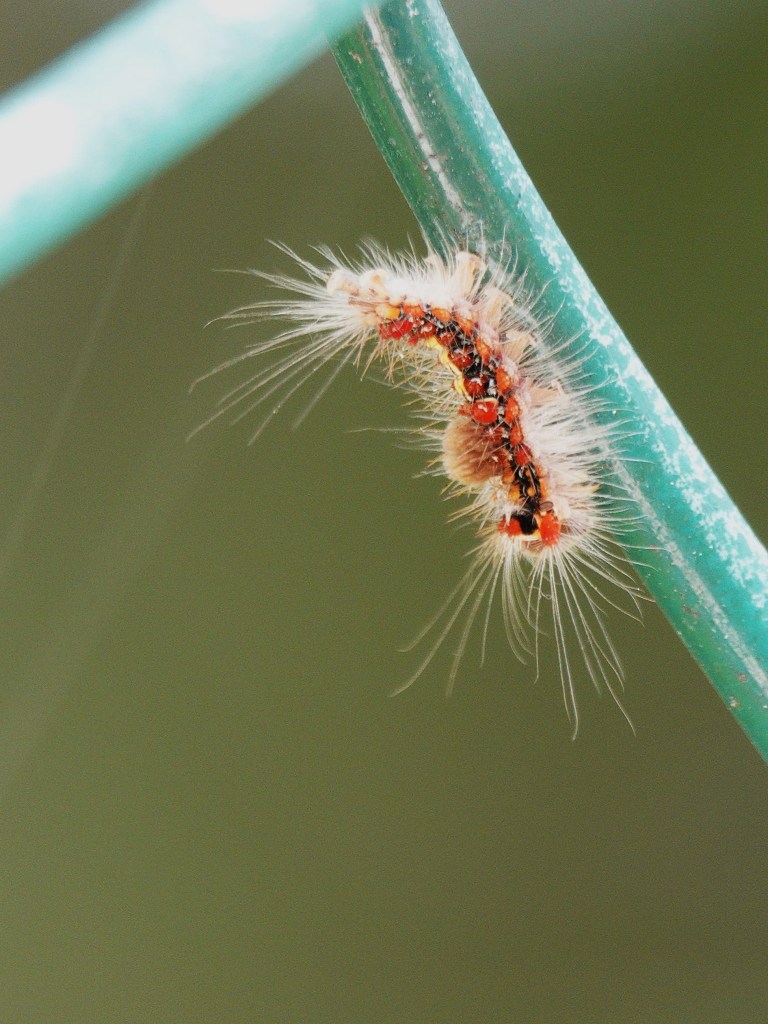

    Sighted the first one on the fence.
    You can see 5 of them of varying sizes on the metal pillar of the sheltered walkway.
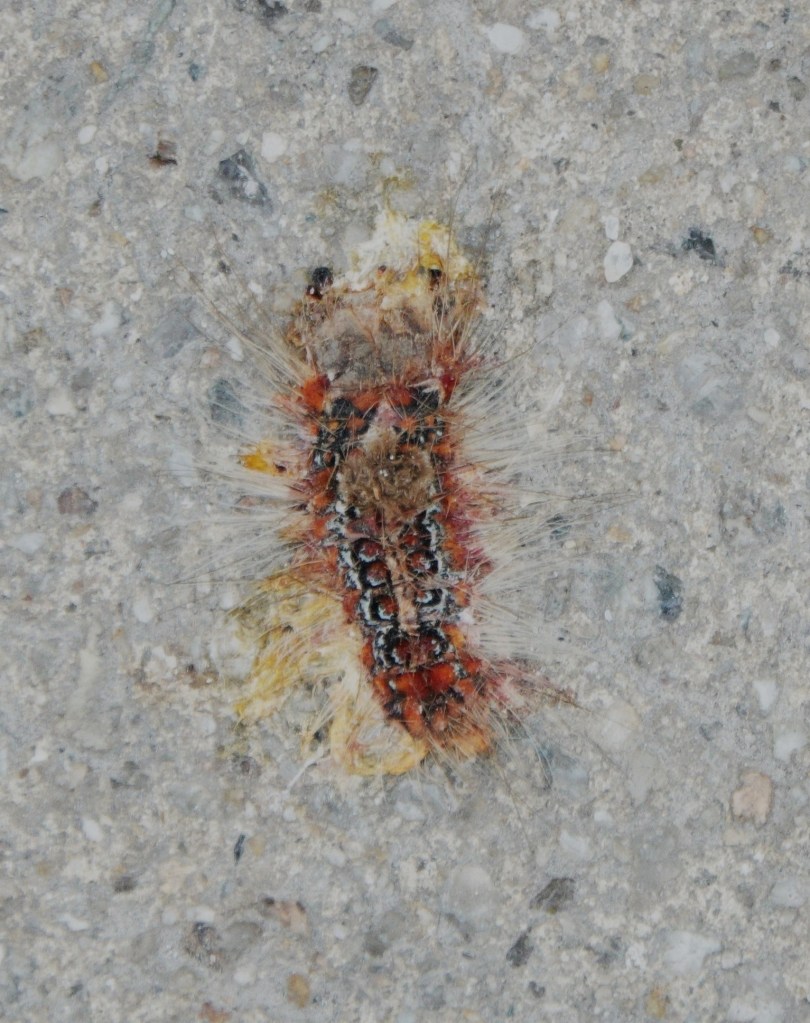
    There are also a couple of flattened ones on the walkway, either unknowingly crushed by bicycles, PMDs or pedestrians.
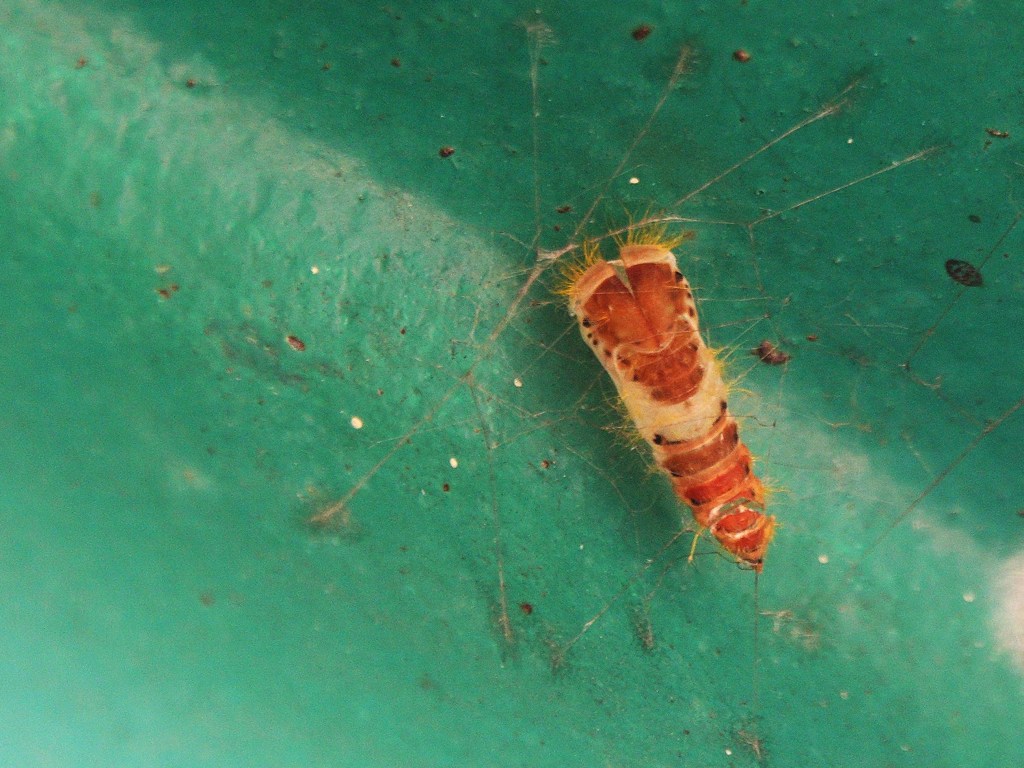
    This particular pupa at the top of the sheltered walkway has already eclosed (i.e. emerged as a moth).
    More pupae on the Wild Cinnamon Plant
    And a lot more on the Noni plant too.

    Predators of the Caterpillars: A Search for Evidence

    Having previously observed numerous cuckoos feasting on Phauda flammans caterpillars infesting a Ficus microcarpa in Jurong Lake Gardens, I hoped to see more cuckoos on this tree. I scanned closely for any fleeting movements against the bright afternoon sun. Instead of cuckoo-sized birds, I spotted two flycatchers darting around in their signature fly-catching moves, repeatedly returning to their ‘favorite’ perches after aerial forays.

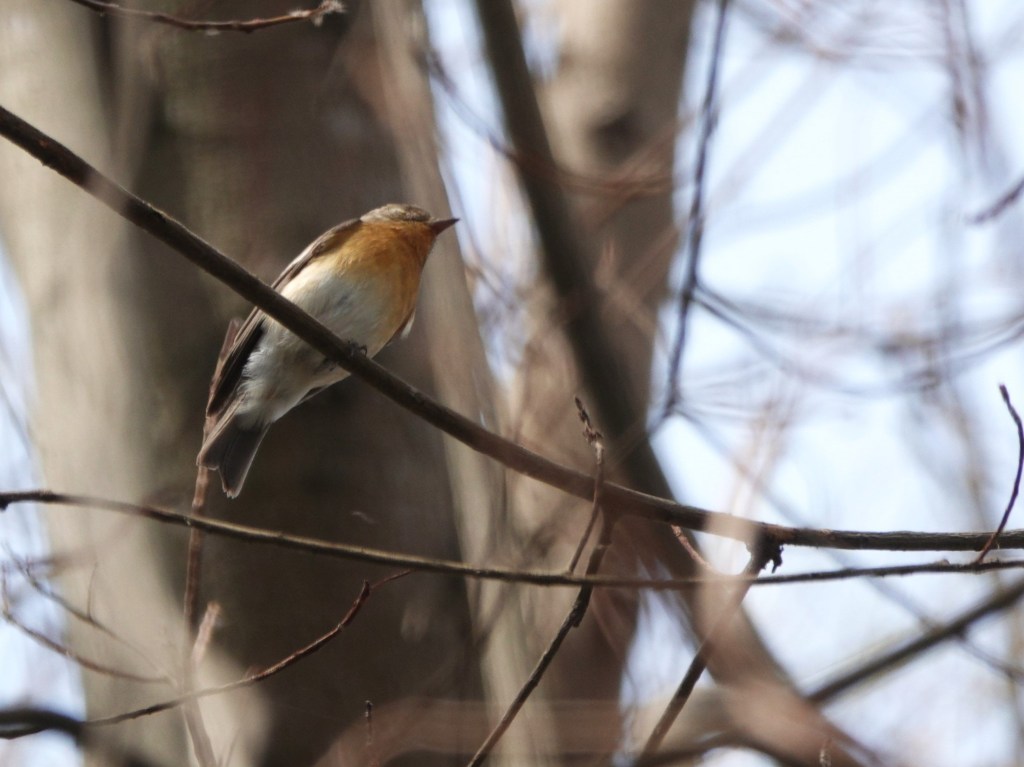
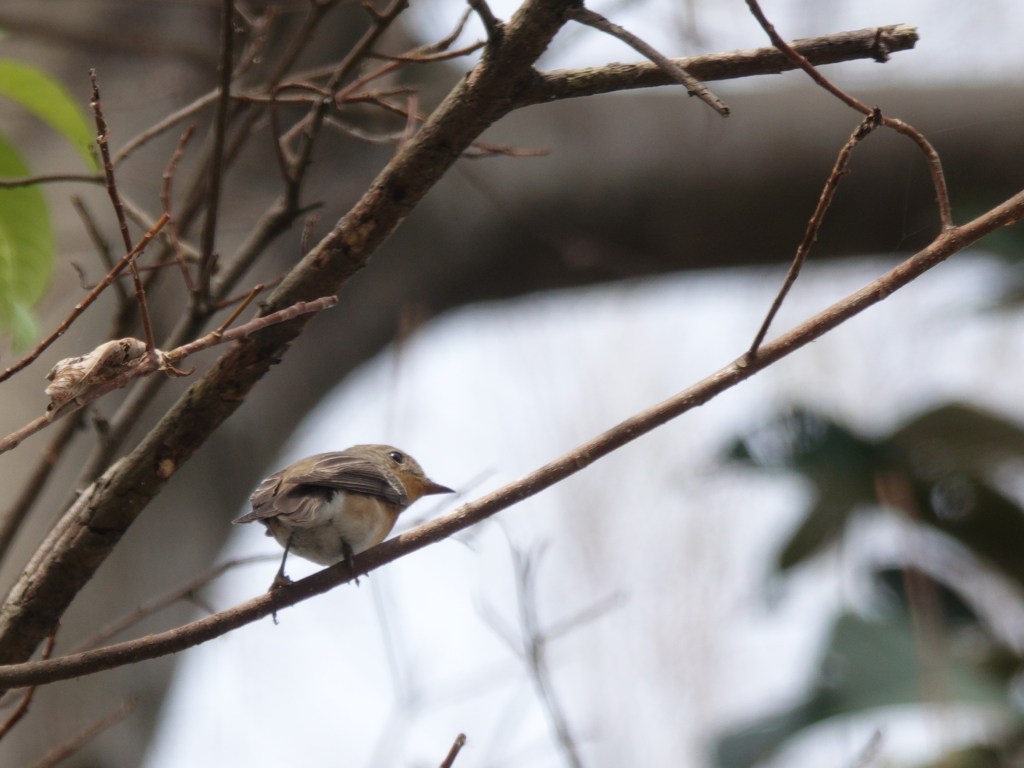
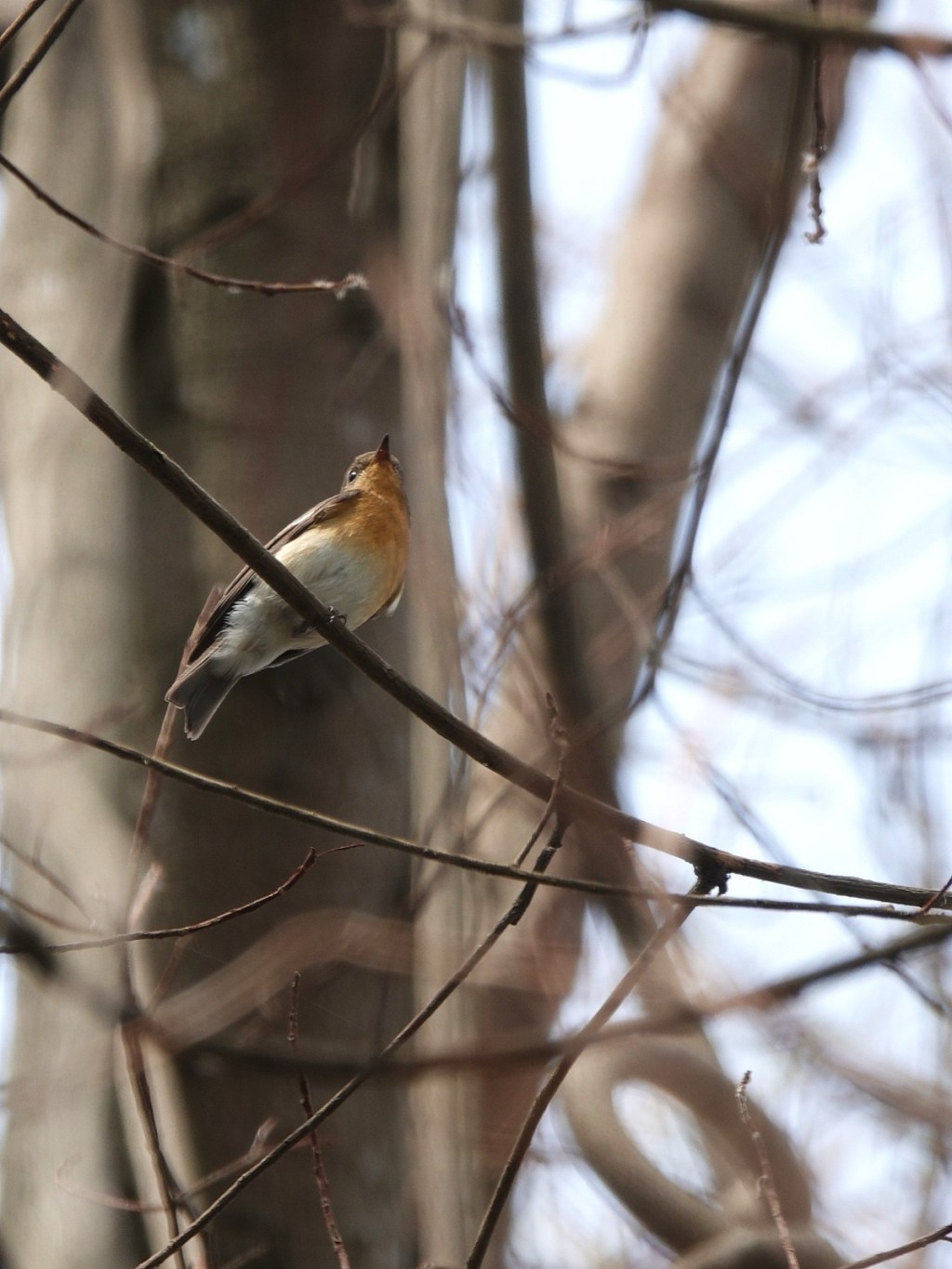
    Initially, I expected both to be common migrants – Asian Brown Flycatchers (Muscicapa dauurica). To my surprise, one of them has an orangey throat! It was a female Mugimaki Flycatcher (Ficedula mugimaki)! Interestingly, this uncommon visitor appeared very drowsy, frequently closing its eyes while perched on a branch.
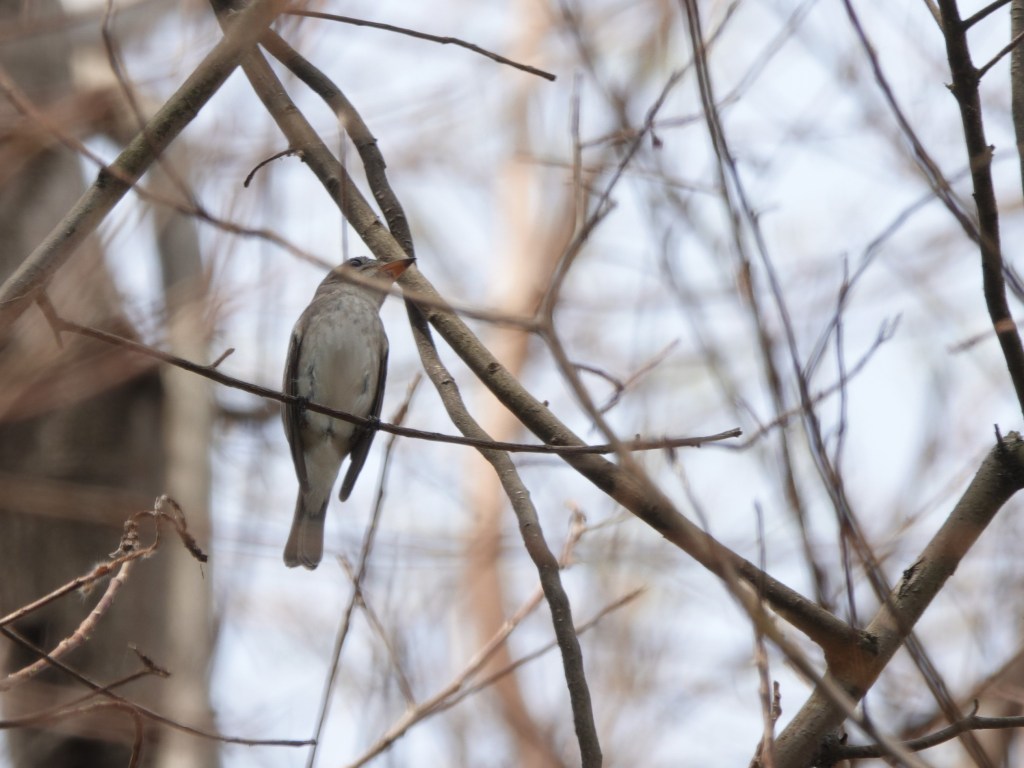
    I first sighted an Asian Brown Flycatcher flying around the tree. But I was not able to document if it ate any of the caterpillars or its adult moth.
    A Mugimaki Flycatcher on a tree along the highly urbanised Upper Serangoon Road.
    How cute it is with its eyes closed.
    A front view of the tired Mugimaki Flycatcher.
    It occasionally opened its eyes before flying to another branch.

    Without photographic evidence of either flycatcher species feeding on the Clear-Winged Tussock Moths or their caterpillars, I couldn’t conclude whether these hairy caterpillars are part of their diet. This is in contrast to cuckoos, which have been documented feasting on Clear-Winged Tussock moths in my previous blog post. Nevertheless, I am quite positive that the flycatchers may be feeding on the smaller caterpillars or even the adult moths.
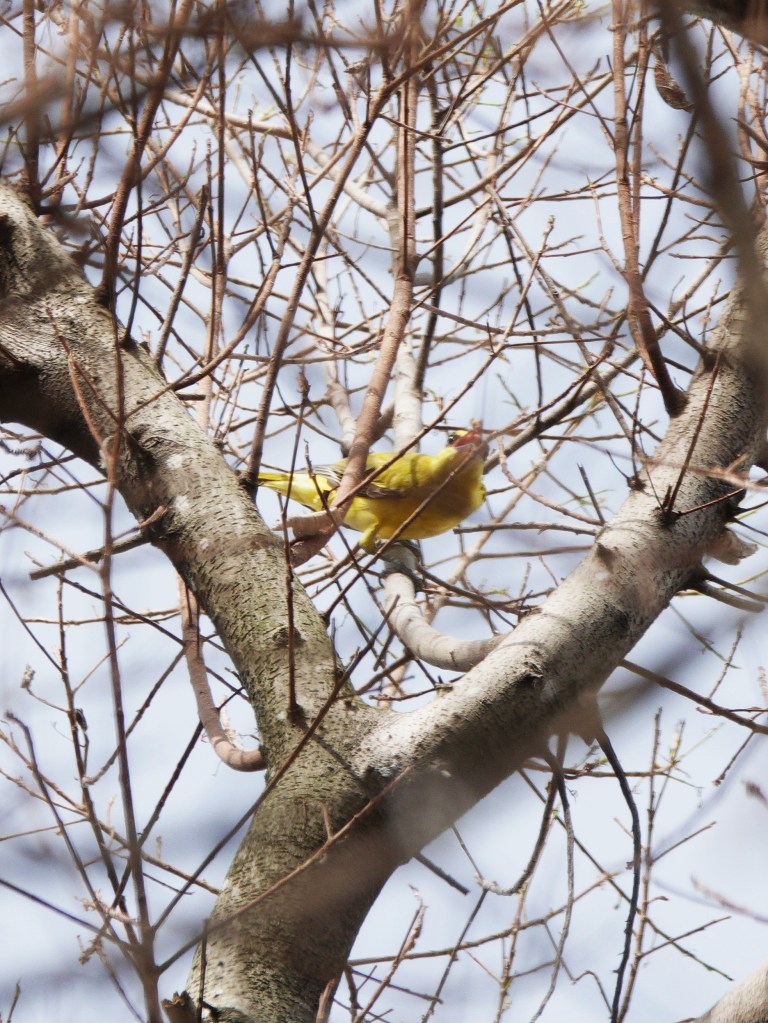
    A Black-Naped Oriole was observed to be consuming something. But due to the many obstructing branches, it was impossible to get a clearer shot of the content it was feeding on. Nevertheless, I have seen orioles eating all sorts of caterpillars so I am sure it does consume the Tussock Moth caterpillars.

    While photographing, an attendant, possibly ASRJC’s Operations Manager, approached and spoke with me. He shared his recent discovery of the infestation and mentioned that despite spraying copious amounts of pesticides, the caterpillars persisted. I suggested letting nature take its course, pointing out the presence of three insectivorous birds in the tree during our conversation as evidence of nature’s self-balancing mechanisms.

    After capturing over a hundred photographs, I finally departed to purchase the Teochew kuehs. Just thinking about the Koo Chai Kueh (Teochew Chives Dumpling) is making my mouth water now.

    Takeaway for Readers: Ficus – Nature’s Keystone Species

    Ficus trees are commonly recognised as ‘keystone species’ – organisms that have a disproportionately large impact on their environment relative to their abundance. If removed, these trees can cause significant changes within the ecosystem. Given their elevated status in the ecological hierarchy, it’s always worthwhile to take a closer look at Ficus trees. By doing so, you’ll learn to appreciate how they support a diverse array of fauna species.

    For wildlife photographers, learning to recognise different Ficus species can be immensely beneficial. These trees are often hotspots of biodiversity, attracting a wide variety of birds, mammals, and insects. By identifying Ficus trees in your area, you can increase your chances of capturing diverse wildlife interactions and behaviours. Whether you’re interested in photographing fruit-eating birds, nectar-feeding insects, insectivorous birds or even arboreal mammals, Ficus trees can serve as natural wildlife magnets, providing you with excellent photographic opportunities throughout the year.

    Update: 24th March 2025

    A wildlife enthusiast (Lui Nai Hui) just shared two photographs of a male Narcissus Flycatcher, Ficedula narcissina, spotted in Dairy Farm Nature Park) munching on a Stinging Nettle Slug, a caterpillar that has painful stings with venomous hairs.
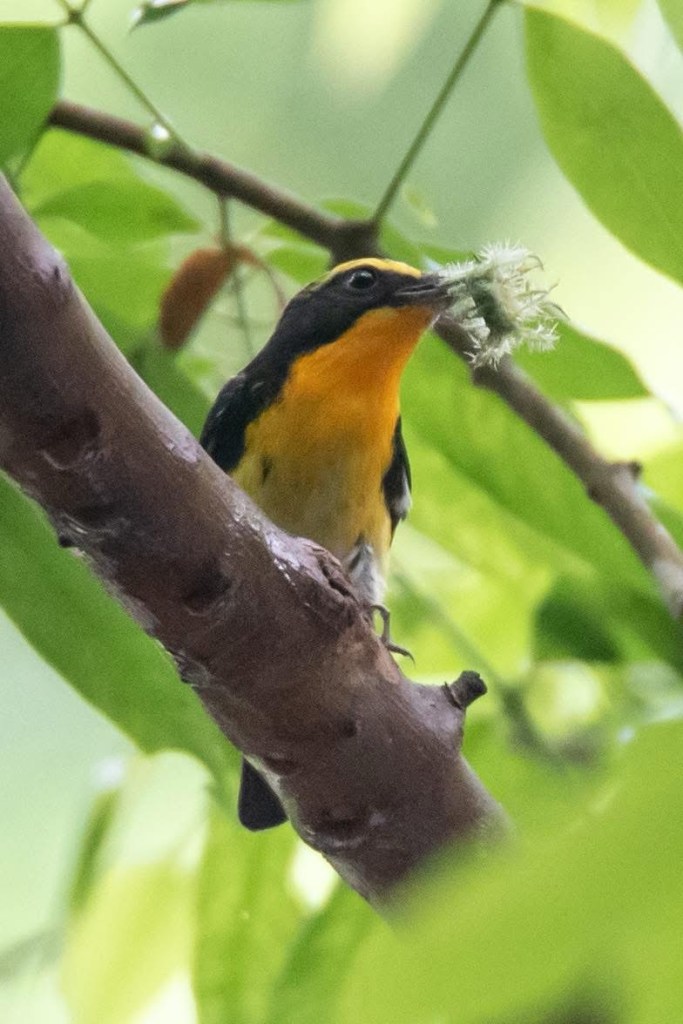
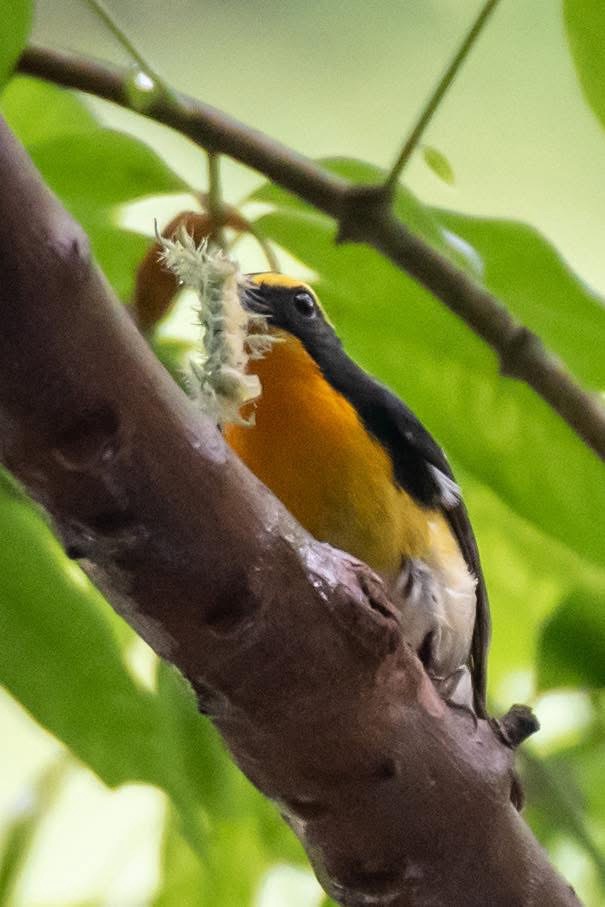
    These photo-evidences clearly demonstrate that Flycatchers, like cuckoos, can consume potentially venomous caterpillars. Based on this observation, I am confident that both the Asian Brown Flycatcher and the Mugimaki Flycatcher fed on the Clear-Winged Tussock Moth caterpillars infesting the tree.

    Written by Lucas Teo

  • Flowers of Fear: Possible Scientific Reasoning Behind Spooky Folklore

    One evening, as you stroll along a quiet street, a distinct aroma catches your attention – a sweet floral scent fills the air. Without giving it much thought, you continue your walk. Suddenly, the sweet fragrance is replaced by a peppery, musty, and pungent odor that wafts through the night air.

    Your mind briefly recalls old tales linking nighttime flower fragrances to supernatural presences. One such legend speaks of the frangipani scent associated with the Pontianak, a vampiric ghost of a beautiful woman who died during childbirth. According to folklore, when that sweet scent turns pungent, it signals that the Pontianak has become vengeful and is approaching fast.

    One of the many books on Pontianak that I had in my teenage days, which has contributed to my fear of flower scent at night.

    A shiver runs down your spine, and goosebumps prickle across your skin. Your breathing quickens, and with each rapid inhale, the scent seems to intensify, filling your senses with its mysterious fragrance.

    You remember some advice given from Russell Lee’s True Singapore Ghost Story Book – Do not look back or look up or you may see something you do not want to see, perhaps on the tree. Or some old wives’ tales – Do not shine your torchlight at the trees or else you may see the evil spirit and further aggravate it.

    Tapping on Your Rationale Brain with Flora Knowledge

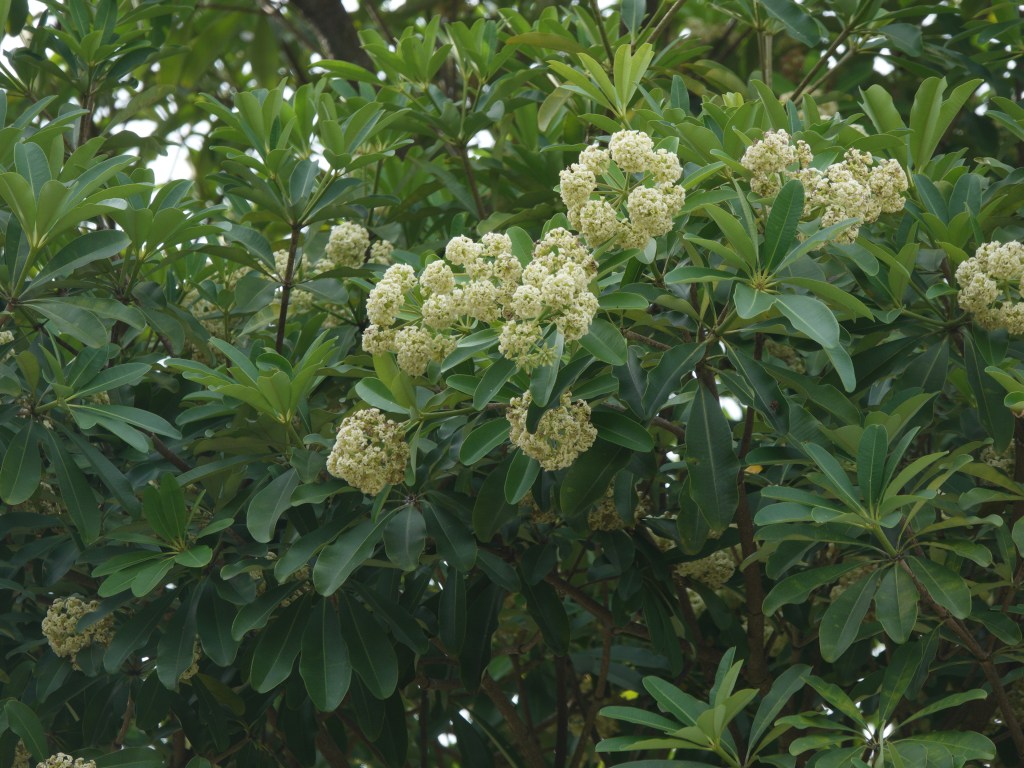
    If you do have a torchlight with you and choose to disregard those warnings, you may spot clusters of tiny yellowish-green flowers on a few tall, sturdy trees nearby. This tree is the Alstonia scholaris, more commonly known as the Indian Pulai, and ominously referred to as the Devil Tree or Satan Tree, for reasons previously mentioned.

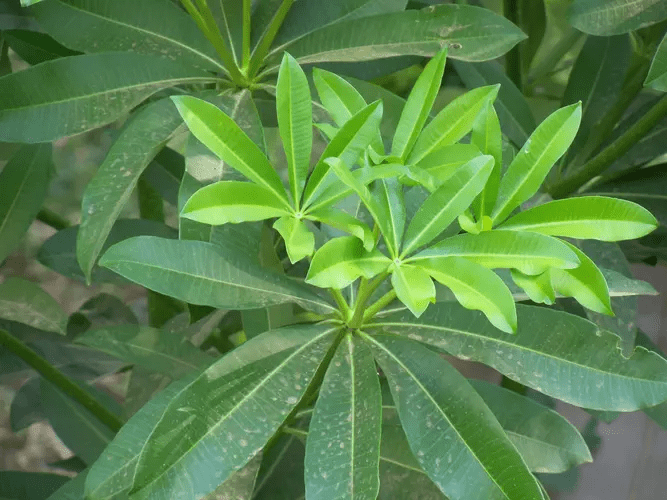
    The greenish-yellow flower clusters of the Alstonia Scholaris. Do you notice the leaves are held together in clusters as well?
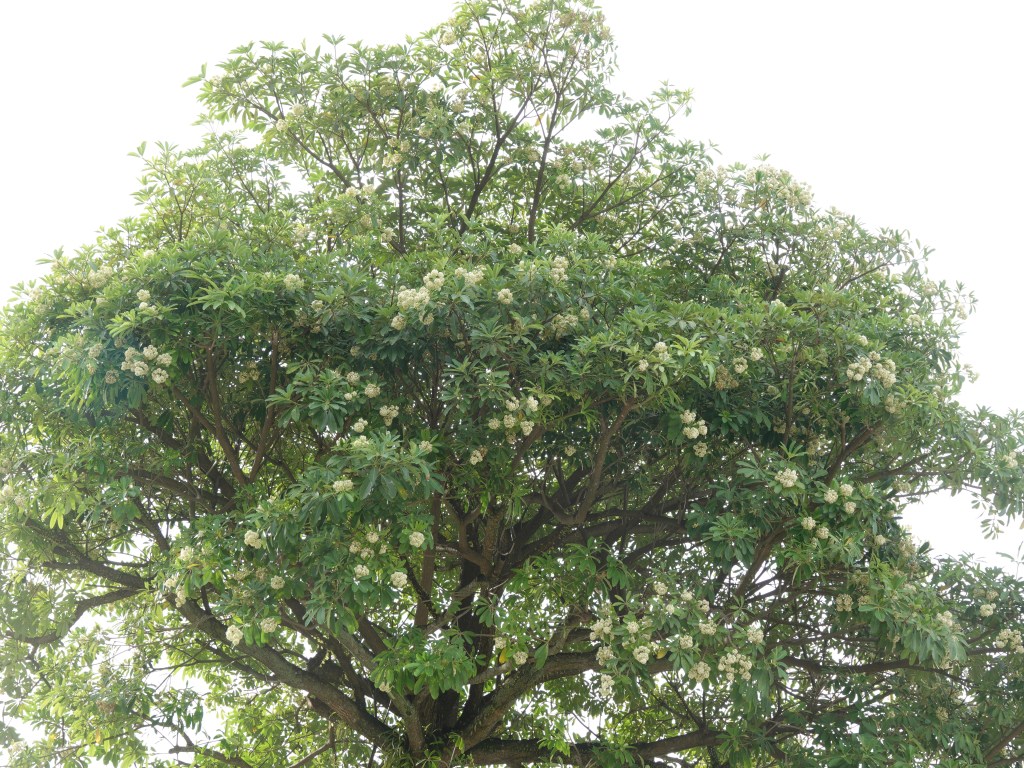
    Photograph taken in Bukit Panjang. Commonly planted in our neighbourhoods.

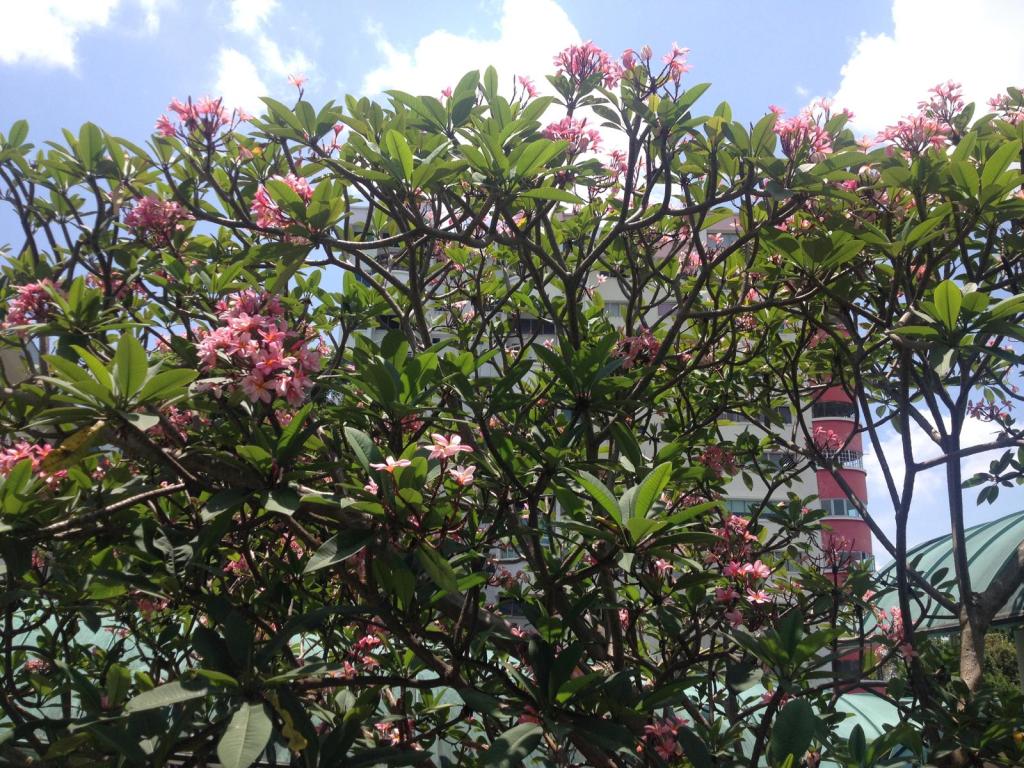
    Should you retrace your steps, you’ll likely notice some Frangipani trees (Plumeria obtusa) in the vicinity, their fragrant flowers in full bloom.

    Frangipani trees are also planted in many HDB estates.

    The shift in scent is likely due to your proximity to two types of trees commonly found along pavements in housing estates and roadsides. Specifically, the overpowering fragrance of the Alstonia tree is probably the culprit, and you’re not alone in finding it overwhelming – many people share your aversion to its exceedingly pungent aroma. It is so smelly that a city in south-central Vietnam cut down over 3,000 trees (out of the 4,000 planted) in 2015 due to their overpowering and unpleasant smell, which has become unbearable for local residents (Click here for source).

    In fact, the tree’s strong odour has led to some rather colourful nicknames. While we’ll refrain from mentioning the more crude monikers, it’s worth noting that the tree’s distinctive scent has certainly made an impression, inspiring a variety of descriptive (if not always flattering) names (You may refer to a reddit discussion on Alstonia Scholaris here)

    Why Some Flowers Emit Strong Scent at Night?

    You might still wonder, “Why is the scent so strong at night? It must be something supernatural?” The answer lies firmly in the realm of science, not the supernatural. Understanding nocturnal plant behaviour reveals a hidden world of ecological interactions that occur while most of us sleep.

    Plant pollination takes on a different character after sunset, with specialised night-active insects and animals playing crucial roles. The strong nighttime fragrance isn’t a ghostly phenomenon – it’s a sophisticated biological mechanism.

    Why do both the Plumeria and the Alstonia expend so much energy producing scents at night? After all, aren’t most butterflies and bees inactive during these hours? The answer lies in these trees’ fascinating relationship with nocturnal pollinators.

    Some sphinx moths (also known as Hawkmoths), for instance, the Oleander Hawk Moth and the Yam Hawk Moth with their impressively long proboscises, are perfectly adapted to feed on and pollinate night-blooming flowers. (Note that not all hawk moths are nocturnal; some species, such as the hummingbird and pellucid hawk moths, are active during the day. Additionally, not all moths are pollinators, as some species lack a functional mouthpart for feeding, for instance, the Atlas Moth). These moths, along with certain species of bats, form a crucial link in the chain of nocturnal pollination. By releasing their potent fragrances after dark, the Plumeria and Alstonia trees have evolved to attract these nighttime visitors, ensuring their continued reproduction and survival.

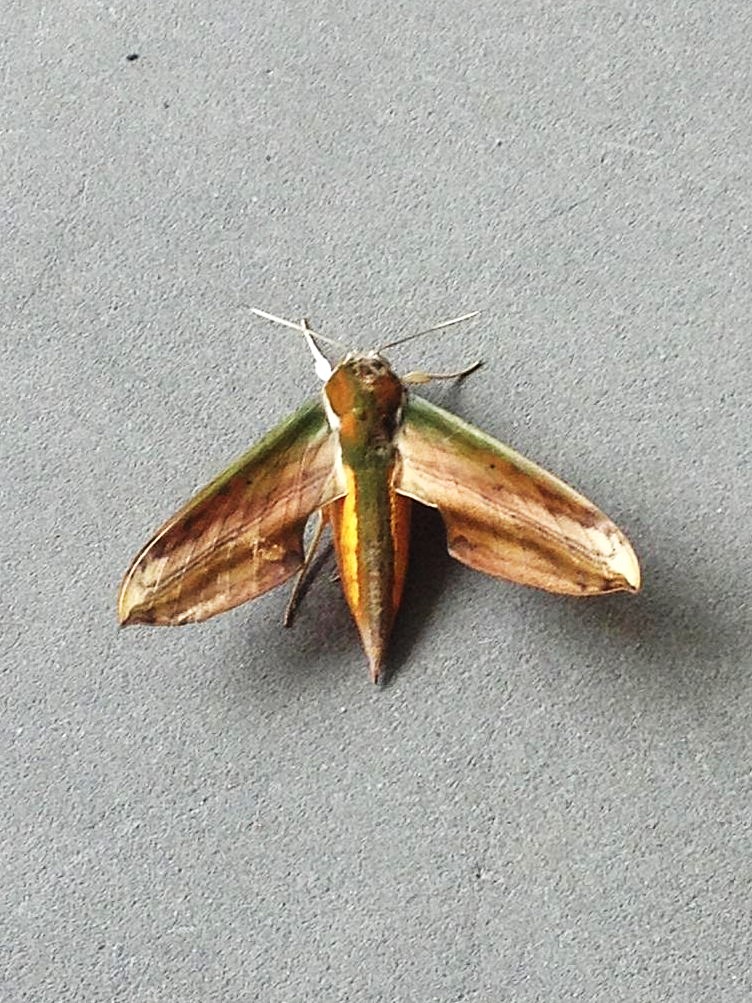
    Yam Hawk Moth – A night dwelling moth that helps with pollination in the wee hours.
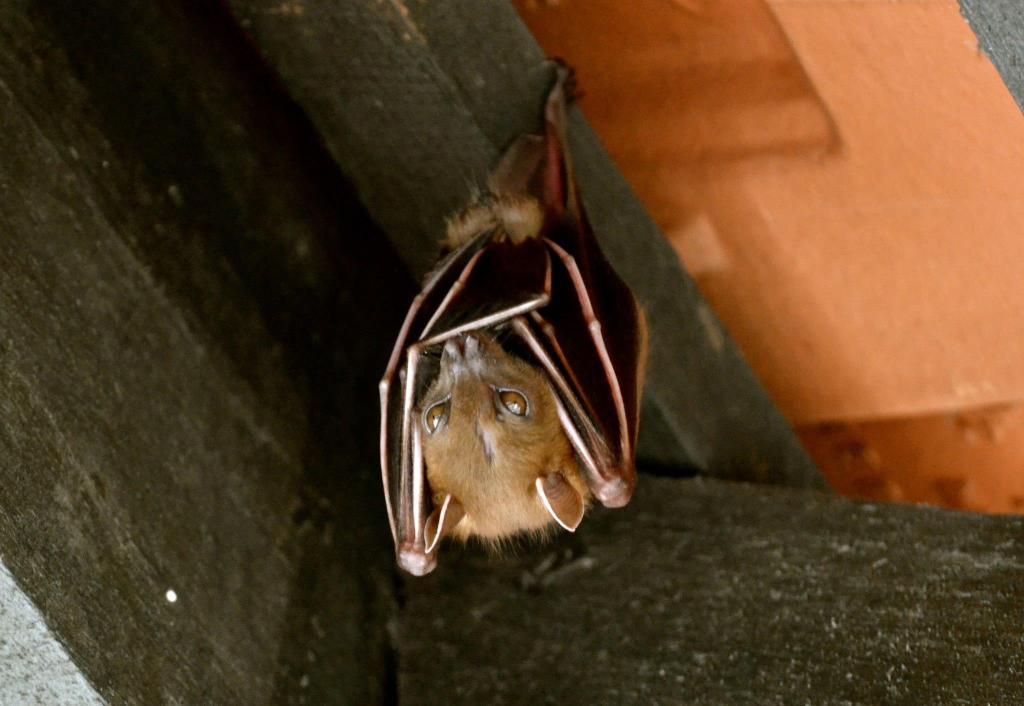
    The Lesser Dog-Faced Bat is a common sight, even in our urban areas. While I couldn’t find specific documentation of this species contributing to pollination, fruit bats in general do play a role while feeding on nectar.

    These night-active pollinators are attracted to the strong scents and large, robust flowers of plants like Plumeria and Alstonia. While feeding on the nectar, they are also unintentionally transferring pollen from flower to flower, ensuring the plants’ reproduction.

    Some Interesting Features of the Alstonia and Plumeria

    The species name “scholaris” reflects the tree’s historical significance in education. Traditionally, its wood was used to craft slates for schoolchildren’s lessons, and it was also a preferred timber for making pencils. Interestingly, local lore suggests that the fragrance of the tree’s flowers had cognitive benefits, improving learning for those who sat beneath its branches. However, this notion is likely met with skepticism by many, as the scent of the flowers is often described as pungent and overpowering, rather than invigorating or conducive to learning.

    There is another common name for the Alstonia tree i.e. saptaparni (in sanskrit), which literally means seven-leaves tree as the Alstonia’s leaves are held in clusters, usually adds up to 7. However, it is not always the case as botanically, it ranges from 4-8. For more interesting features of Alstonia Scholaris, click here to read more.

    See the clusters of 7 leaves, which isn’t always the case though.

    On the other hand, the Plumeria has deep cultural and historical roots, symbolising the exotic Oriental ‘East’ for centuries. This symbolism has been perpetuated in outdated tourism imagery, which often features bikini-clad, brown-skinned women adorned with frangipani flowers in their hair, reinforcing a problematic and stereotypical representation of tropical cultures. Ironically, the Frangipani actually originates from the tropical regions of South America – the ‘West’. For a more nuanced understanding of the Frangipani tree’s cultural and historical significance, click here for a recommended read.

    Conclusion

    The next time you catch a whiff of sweet fragrance, that suddenly turned pungent on a nighttime walk, remember – you’re not experiencing something supernatural, but rather witnessing an age-old dance between plants and their pollinators. This nocturnal plant behaviour, far from being ominous, is a testament to the incredible adaptability and ingenuity of nature.