Category: Relationships

Our ‘Relationships’ category explores the intricate connections within ecosystems, featuring blog posts that delve into various ecological interactions. These posts examine fascinating topics such as:

Symbiotic relationships: Mutually beneficial partnerships like the clownfish and sea anemone.

Parasitic relationships: One-sided interactions where one organism benefits at the expense of another, such as ticks on mammals.

Predator-prey dynamics: The ongoing evolutionary arms race between hunters and their quarry, exemplified by the relationship between wolves and deer.

Competitive interactions: Conflicts between species vying for similar resources, like different bird species competing for nesting sites.

Mutualistic associations: Cooperative arrangements benefiting both parties, such as the relationship between flowering plants and their pollinators.

Urban ecology: The complex interactions between flora, fauna, and urban landscapes, including: Adaptation of wildlife to city environments (e.g., urban foxes or peregrine falcons nesting on skyscrapers)

The impact of green spaces on urban biodiversity
Challenges faced by plants and animals in navigating urbanization

Human-nature relationships: How urban development affects local ecosystems and the strategies employed for coexistence.

Each post in this category offers insights into how these relationships shape ecosystems, drive evolution, and maintain the delicate balance of nature, even in the face of increasing urbanization. We explore both the challenges and opportunities presented by the intersection of natural and built environments, highlighting the importance of understanding and nurturing these complex relationships for sustainable urban development and conservation efforts.

  • Towards A More Ethical 2025 in Wildlife Photography

    Towards A More Ethical 2025 in Wildlife Photography

    As wildlife enthusiasts and photographers, we often find ourselves in situations that test our ethical boundaries. In 2024, I have experienced several moments, which led me to reflect on my own practices as well as my own role in promoting responsible wildlife photography.

    An Uncomfortable Encounter
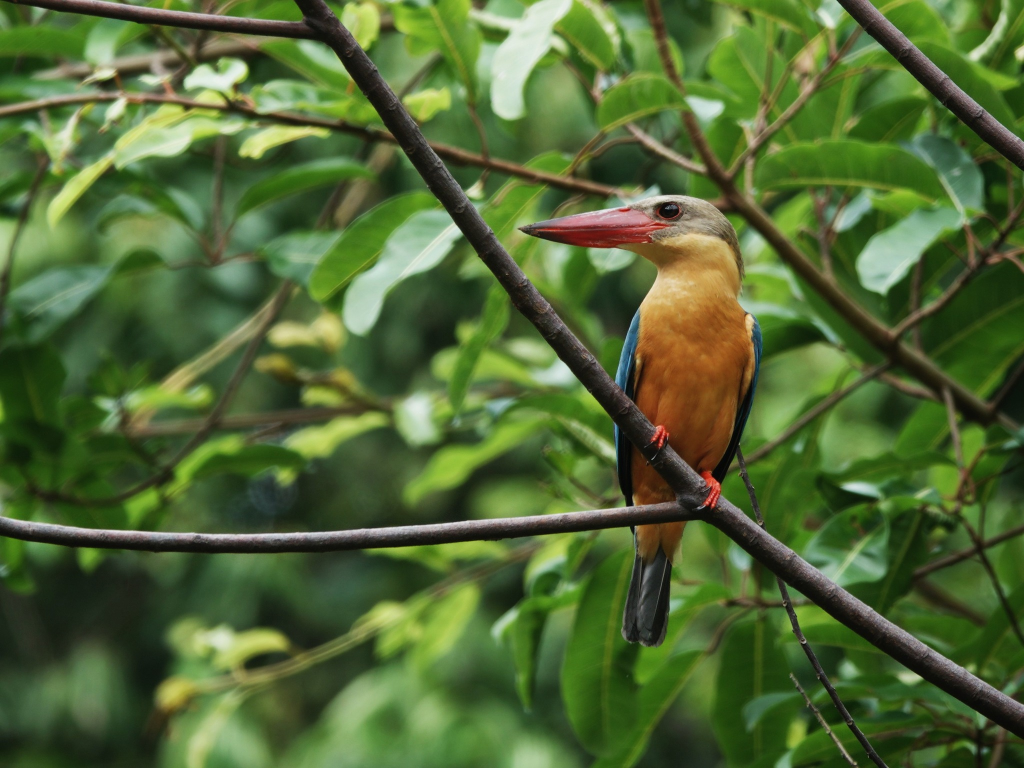
    Stork-Billed Kingfisher photographed in August at the Singapore Quarry

    My first clear photo of a Stork-billed Kingfisher came under circumstances that left me feeling uneasy. At the Singapore Quarry, surrounded by over 30 other birders, I witnessed behaviour that I now regret not addressing. Some individuals were tossing whole slices of bread into the water to gather the fishes to a particular spot where the photographers were aiming at. The ripples created by the fishes lured the kingfisher from a distant tree, prompting it to dive before perching right in front of us. I took a few shots, feeling conflicted – admiring the beautiful colours of the kingfisher in such a close distance but yet feeling guilt-stricken.

    The act of tossing bread into the water started triggering more hunting behaviour in various birds present, including the Grey-headed Fish Eagle and Oriental Darter.

    The Motivation Behind Unethical Practices

    The primary objective seemed to be capturing dramatic shots: “Birds in Flight”, photographs, “Fish in Mouth” images i.e. action shots preferred over standard perched bird photos. This practice raises several concerns. Bread lacks nutritional value for wildlife, adding empty calories to their diet. Uneaten bread may pollute the water. Moreover, feeding wildlife, in general, is discouraged and often prohibited.

    Feeling conflicted, I decided to act on my discomfort. I left Singapore Quarry after just 10 minutes, despite usually spending over an hour birdwatching. This decision meant missing the Oriental Darter’s and the Grey-Headed Fish Eagle’s feeding behaviours.

    Unfortunately, the incident at the Singapore Quarry isn’t isolated. Similar unethical behaviours have been observed across various locations, highlighting a concerning trend in wildlife photography.

    At Dairy Farm’s small pond, I’ve heard about a small group of individuals releasing feeder fish, feeder shrimps and glofish to get the Blue-Earred Kingfisher’s ‘Food-In-Mouth’ photographs. Social media has become a showcase for these questionable practices, with posts featuring blue-earred kingfishers capturing non-native fish species. Even more troubling are the discussions among photographers about which fish species to introduce next for ‘ideal’ shots.

    The issue continues during this year’s migratory season when Singapore becomes a temporary home for exotic birds, drawing large crowds of eager birders. In the newly opened Bidadari Park, rumours circulated about individuals releasing American Bull Frogs – typically sold in aquarium shops as live feed – to entice one particular Ruddy Kingfisher. Over several weeks, numerous photographs emerged showing this kingfisher with non-native frogs in its mouths, raising ethical and environmental concerns. Rumour had it that someone actually broke the frogs’ legs to keep them in the patch, allowing for a clear shot of the Ruddy.

    These practices not only disrupt natural ecosystems but also potentially harm the very wildlife we aim to appreciate and document. They represent a fundamental misunderstanding of our role as observers and documentarians of nature, prioritising a perfect shot over the wellbeing of the subjects we photograph.

    As wildlife enthusiasts and photographers, we must recognise the far-reaching consequences of these actions. It’s crucial to foster a community that values ethical practices and respects the natural behaviours and habitats of wildlife. Only then can we truly capture the essence of nature without compromising its integrity.

    I Can Do Better Myself

    The enthusiasm for capturing great wildlife shots is something I understand all too well. Like many others in this field, I’ve had my own lapses in judgment, particularly when it comes to approaching birds too closely, even near their nests.

    One incident from earlier this year stands out, leaving me with a profound sense of guilt and shame. While cycling with my family in Pasir Ris Park, I spotted a Large-Tailed Nightjar. Excited by the sighting and without my usual zoom camera, I approached the bird with just my smartphone, hoping for a clearer picture. My actions frightened the nightjar, causing it to fly away and expose its eggs.

    A fellow birder who was following behind me, witnessing this, sternly warned me against sharing the location and reprimanded me for my close approach. Although I initially tried to justify my actions, deep down I knew I was wrong. I silently thanked her for the reminder about my actions and the greater mission we share as wildlife enthusiasts.
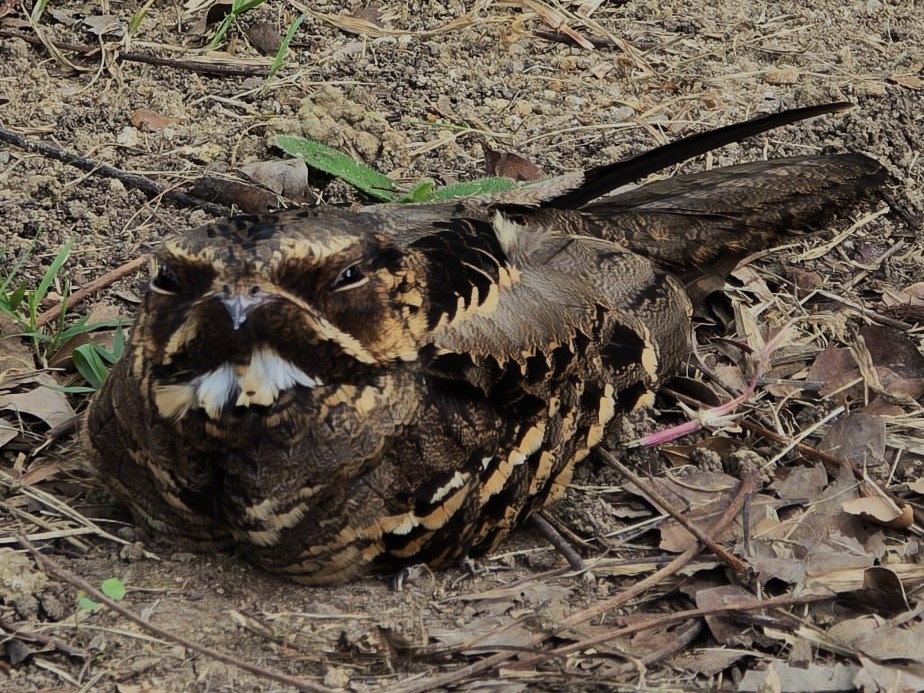
    An unethical handphone shot of the Large-Tailed Nightjar
    The moment I saw the two eggs after the mum flew off, I was guilt-stricken.

    Beyond the incident with the nightjar, I’ve faced other ethical challenges in my wildlife photography journey. The temptation to handle wildlife such as snakes, lizards, and frogs for that perfect shot has been a recurring struggle. However, each of these experiences has become a valuable lesson in restraint and respect for nature.

    Moving Forward

    As I continue to grow in this field, gaining both experience and credibility, I’ve come to realise the importance of not only improving my own practices but also gently guiding others. Educating fellow enthusiasts about responsible wildlife watching has become an integral part of my mission. It’s crucial to remember that this journey towards ethical wildlife photography is an ongoing process. All of us who share this passion for nature and wildlife photography are constantly learning, adapting, and hopefully, improving.

    By openly discussing these challenges and sharing our experiences, we create a community of more conscientious observers and documentarians of the natural world. This collective effort to balance our enthusiasm for capturing wildlife with our responsibility to protect it is what will ultimately ensure that our passion contributes positively to conservation efforts rather than inadvertently causing harm.

    What are your thoughts on this issue? Have you encountered similar situations?

    Written by Lucas
  • Under the Mistletoe

    Under the Mistletoe

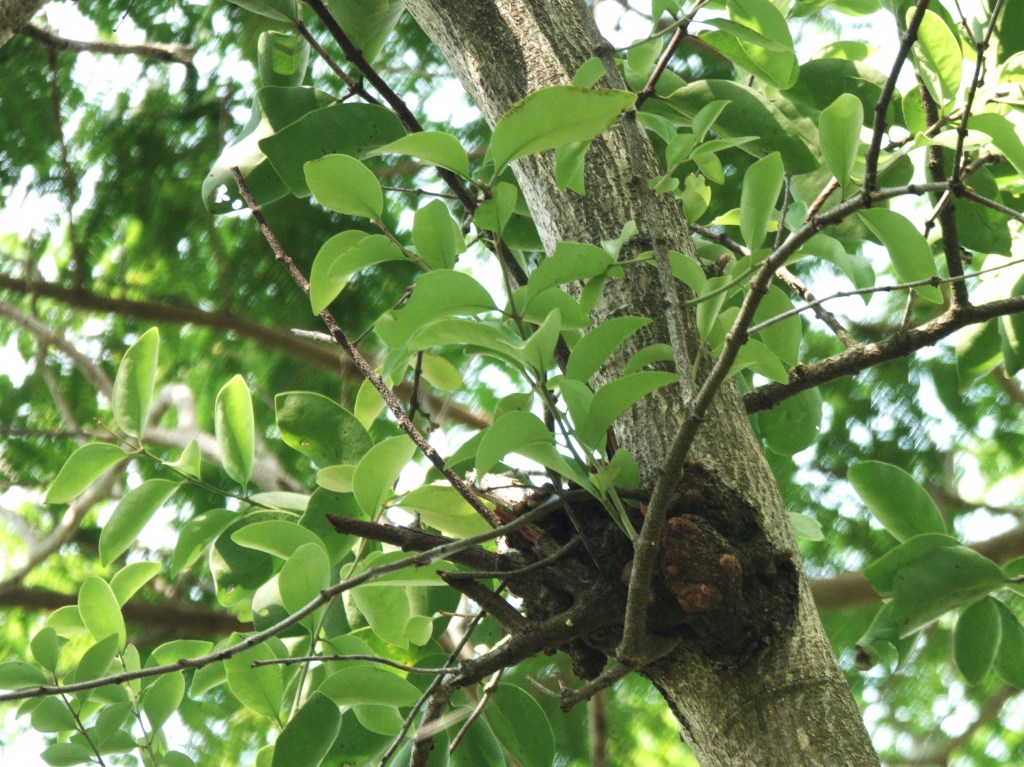
    As the holiday season approaches, many of us think of mistletoe as a festive decoration, often associated with winter countries, stolen kisses and Christmas cheer. However, what many don’t realise is that mistletoes are actually parasitic plants that grow on trees.

    In Singapore’s lush public parks, nature reserves or even our roadside trees, a unique ecosystem revolves around the native Malayan Mistletoe, creating a fascinating web of life that includes the vibrant Painted Jezebel butterfly and the charming Scarlet-backed Flowerpecker. I invite all nature lovers to stand under the mistletoe, where instead of a kiss, you might be rewarded with a plethora of living creatures flourishing above—a different kind of holiday magic.

    The Malayan Mistletoe: Our Local Parasite

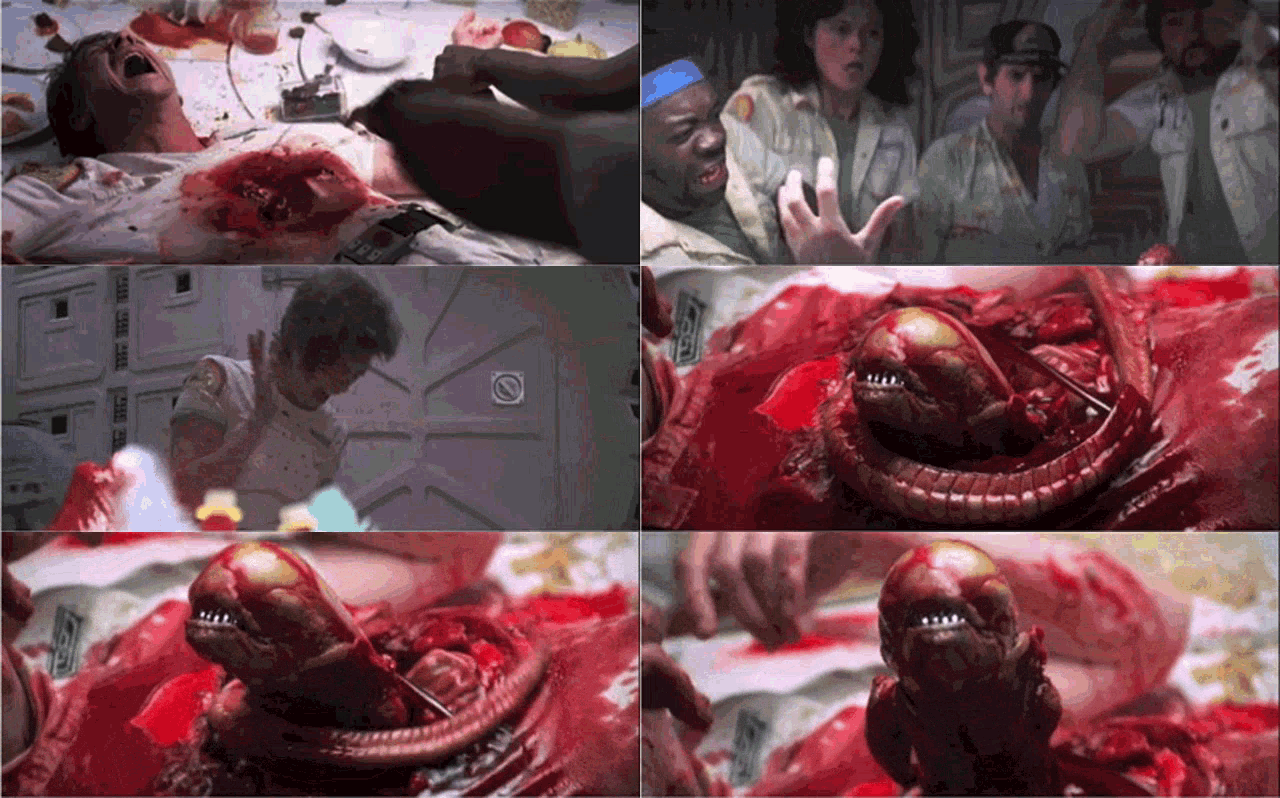
    The word “parasite” often evokes fear and discomfort, conjuring images from popular culture that range from the grotesque to the terrifying. From the infamous chest-bursting xenomorphs in the 1980s sci-fi classic “Alien” to more recent documentaries showcasing fungi (cordyceps) zombify insects before dramatically erupting from their bodies, parasites have long captured our imagination in the most unsettling ways.

    Infamous ‘chestburster’ scene from Alien (1979)

    While our local Malayan Mistletoe (Dendrophthoe pentandra) might not win any beauty contests (in fact, they are considered the ‘messiest’ mistletoe of all in Singapore), it plays an important role in the ecosystem. As a parasitic plant, it is less like a scary invader and more like that one relative who shows up during Chinese New Year and proceeds to eat all your cookies and snacks. It might irk the tree, much like how that relative tests your patience, but most of the time, it doesn’t cause serious harm. However, just as too many hungry relatives can empty your pantry, too many mistletoes can overwhelm a tree. But don’t worry – our sturdy and mature Singapore trees can usually handle these freeloaders without too much fuss.

    Interestingly, while the holiday mistletoe we’re familiar with from Christmas cards has needle-like leaves, our Singapore mistletoes sport a different look. Most of our local species, including the Malayan Mistletoe, have thick, fleshy leaves.

    The haustoria (special roots) of one Malayan Mistletoe plant.

    The Malayan Mistletoe is what we call a hemiparasite. It’s like a part-time freeloader, getting some of its nutrients from the host tree while also making its own food through photosynthesis. It attaches to the tree’s branches using special roots called haustorium, which tap into the tree’s plumbing system for water and minerals. While a few mistletoes usually don’t cause much harm, a large number can slow the tree’s growth or even cause branches to die back.

    And here’s a fun twist—some unexpected guests, in the form of caterpillars, actually help keep the party under control. It’s nature’s way of balancing the books, ensuring that our leafy hosts don’t end up too stressed by their clingy mistletoe guests!

    The Painted Jezebel: Our Colorful Butterfly Friend

    Now, let me introduce you to one of the mistletoe’s most beautiful admirers—the Painted Jezebel butterfly (Delias hyparete metarete). The life cycle of this stunning creature is a sight to behold, right in our own backyard!

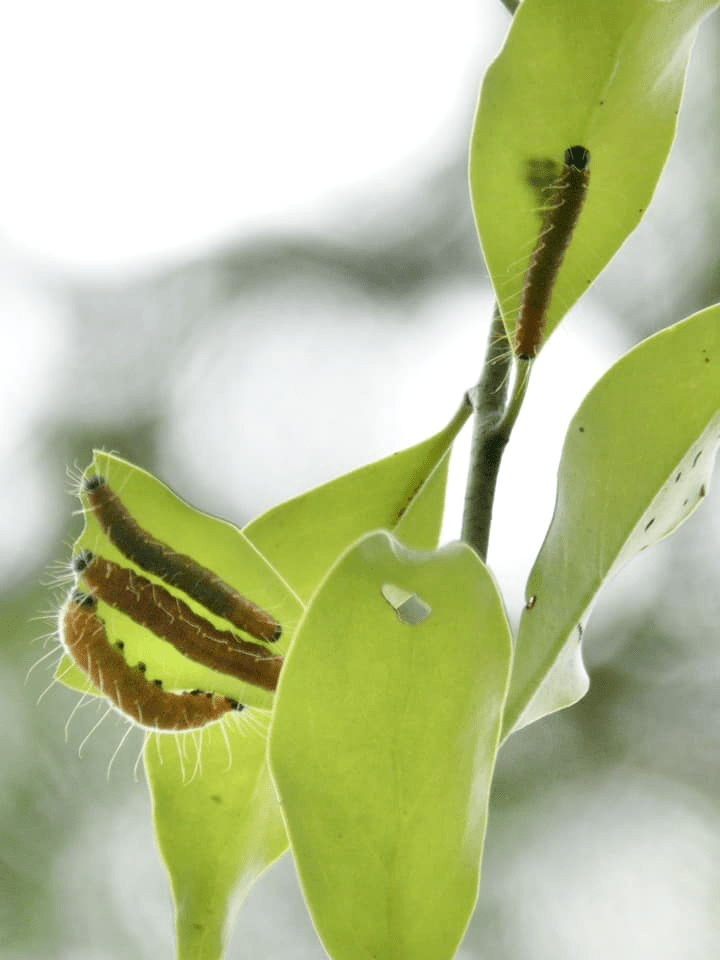
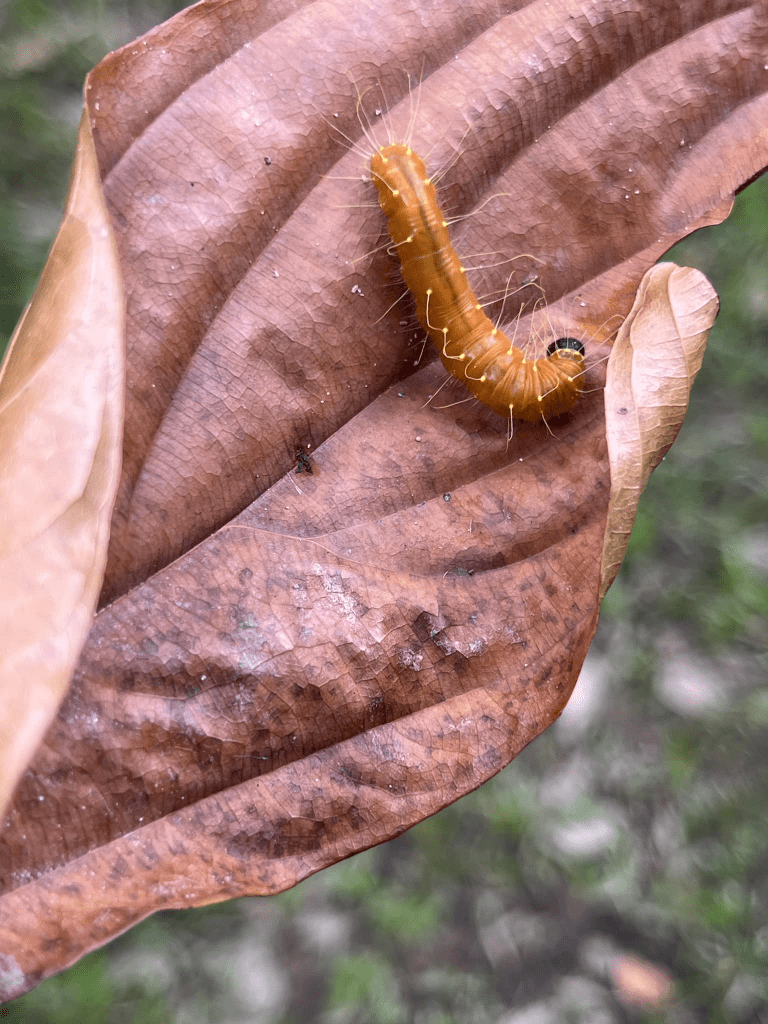
    The caterpillars start their journey as tiny 2mm creatures, growing to about 25mm while changing from light to dark orange. They’re social eaters, feeding in groups on the undersides of mistletoe leaves. If you look closely, you might see a row of little black heads munching away together. Their bright orange color isn’t just for show—it’s a warning to predators that they’re not a tasty snack. On top of that, by feeding at the undersides of leaves, they tend to avoid predation.

    Feeding ‘socially’ at underside of the Malayan Mistletoe leaf
    A closer view of the Painted Jezebel Caterpillar that fell from its host plant

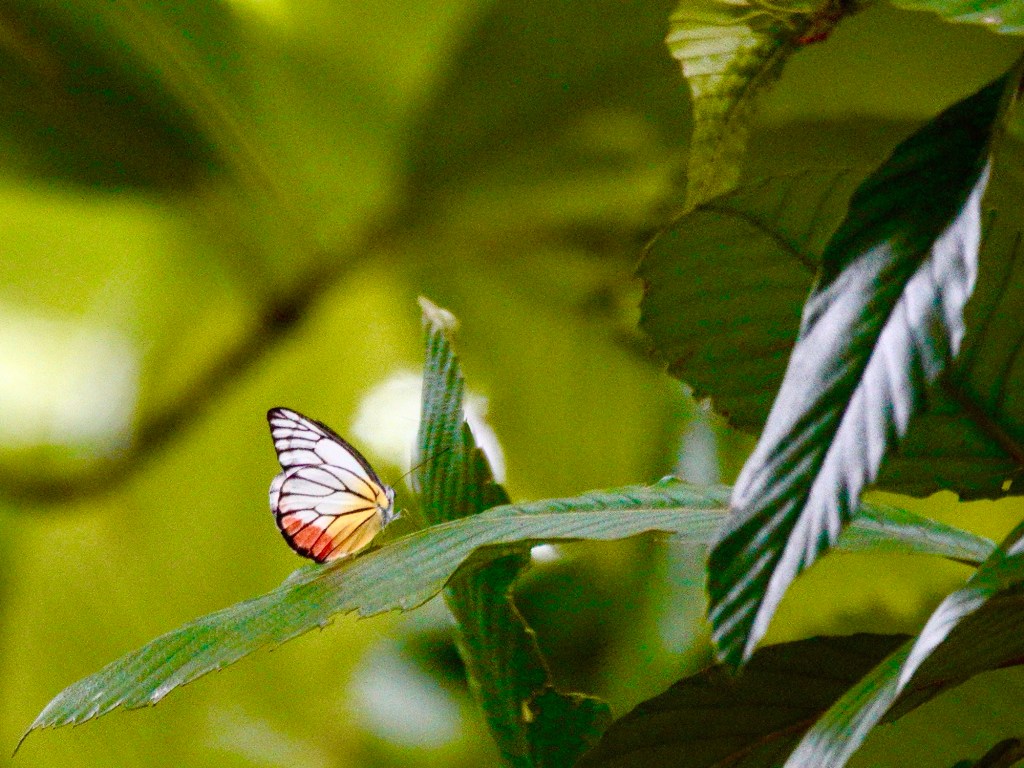
    When these caterpillars grow up, they transform into spectacular butterflies. The Painted Jezebel’s wings are a work of art, showcasing a beautiful pattern of white, black, bright red, and vibrant yellow. But here’s the clever part—this beauty is actually a defense mechanism called aposematism. It’s nature’s way of saying, “Look how pretty I am, but don’t even think about eating me!”

    Painted Jezebel Butterfly

    It’s a perfect example of how nature works together—the mistletoe provides food and protection for the butterfly, and in return, the butterfly might help pollinate the mistletoe.

    The Scarlet-backed Flowerpecker: Our Tiny Tree Dweller

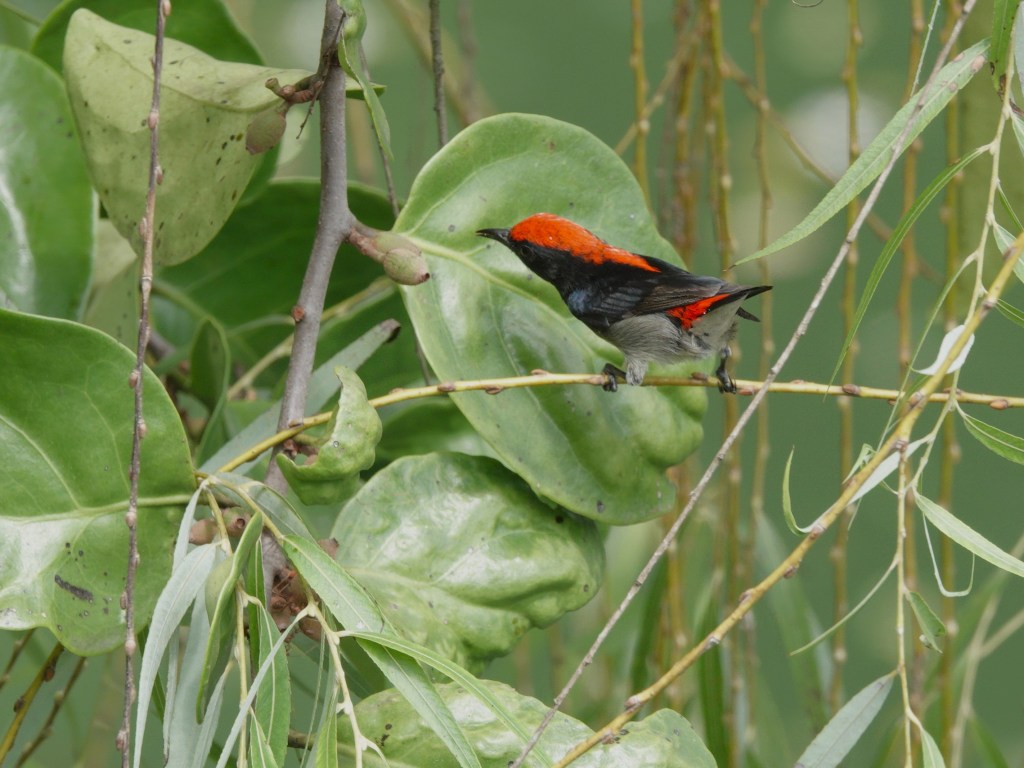
    A male Scarlet-Backed Flowerpecker foraging at the Malayan Mistletoe

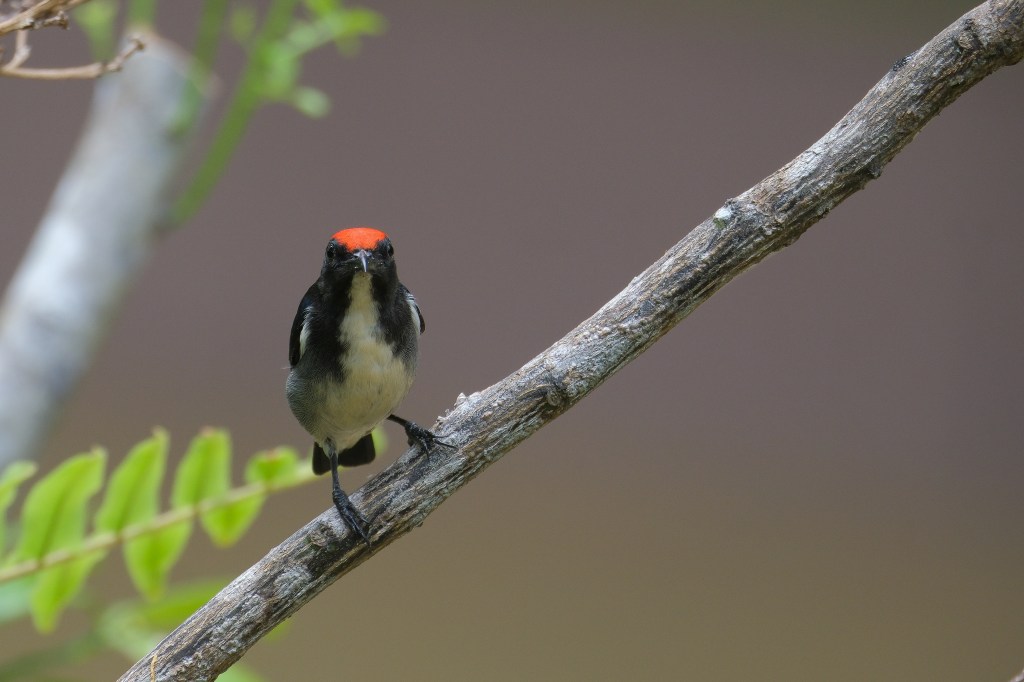
    Completing our trio of mistletoe marvels is the Scarlet-backed Flowerpecker (Dicaeum cruentatum). This little bird, barely larger than your thumb, sports a brilliant red back that makes it a striking sight in our trees.

    A front view of the beautiful bird

    The Scarlet-backed Flowerpecker has a special relationship with our Malayan Mistletoe. It loves to snack on the mistletoe’s fruits, helping to spread the seeds in the process. When the bird’s droppings land on tree branches, they contain undigested seeds that can grow into new mistletoe plants.

    Other than the flowerpeckers, it is also common to see the Ornate Sunbirds (Cinnyris ornatus) or Brown-Throated Sunbirds (Anthreptes malacensis) feeding on the fruits of the mistletoes.

    Nature’s Relationships

    While the Malayan Mistletoe is the most common in our parks and gardens, Singapore is home to several other mistletoe species. Keep an eye out for the Rusty Mistletoe, the Oval-leaved Mistletoe, and the Common Chinese Mistletoe. Each of these plants plays a role in supporting our local wildlife, even as a parasite.

    Together, these species create a miniature ecosystem right above our heads, showcasing the interconnectedness of life. The mistletoe provides food and shelter, the butterfly helps with pollination, and the flowerpecker spreads the mistletoe to new trees. It’s a beautiful cycle of life happening in our very own green spaces.

    So, the next time you’re strolling through one of Singapore’s public parks or exploring our nature reserves, look up! You might spot a clump of mistletoe with its distinctive fleshy leaves, a flash of a Painted Jezebel’s wings, or hear the chirp of a Scarlet-backed Flowerpecker. Remember, our local mistletoe isn’t just for holiday kisses—it’s supporting a whole world of wildlife right here in our urban jungle. It’s a nature story written by evolution itself, filled with color, cooperation, and the cycle of life—truly a Singapore marvel worth celebrating.

    Merry Christmas!

    Written by Lucas