…Or does it?
Back in 1991, Michael Jackson released “Black or White,” a hard-hitting, genre-blending anthem that instantly captured the global imagination. I was only nine years old at the time—far too young to understand the complexities of race, but exactly the right age to get utterly obsessed with the music, especially with MTV Asia.

The track was unforgettable. From the iconic opening skit where a young Macaulay Culkin blasts his dad through the roof (“But dad, this is the best part!” followed by “eat this”) to that infectious, driving guitar riff, it was an instant classic. And who could forget the music video? It featured pioneering face-morphing technology that felt like absolute magic at the time, delivering a simple, powerful message: when it comes to human equality, unity, and love, the colour of your skin shouldn’t dictate your value. The King of Pop brilliantly used the stark contrast of these two absolute colours as a metaphor to dissolve cultural divides, urging humanity to look past surface-level differences.

But if we step outside the world of pop culture and venture into the wild—leaving behind human societal constructs—we find that nature operates on a completely different set of rules. In the avian kingdom and beyond, the significance of being black or white becomes immense.
For the fragile chicks of various bird species, the choice between donning a coat of stark white down or a cloak of deep black feathers isn’t an aesthetic whim; it is a profound, evolutionarily hardwired strategy for survival. While human pop culture celebrates the blurring of these lines, nature utilises the extreme contrast of black and white to solve the ultimate questions of life, death, thermoregulation, and deception.
Let’s dive into the fascinating, mind-boggling ways bird chicks use the power of black or white to conquer the elements and outsmart predators.
White Chicks of the Skies
Having done countless nature walks through our local nature reserves and parks—both as a passionate nature lover and in my capacity as a Geography teacher and nature guide—I’ve started to notice some fascinating patterns.
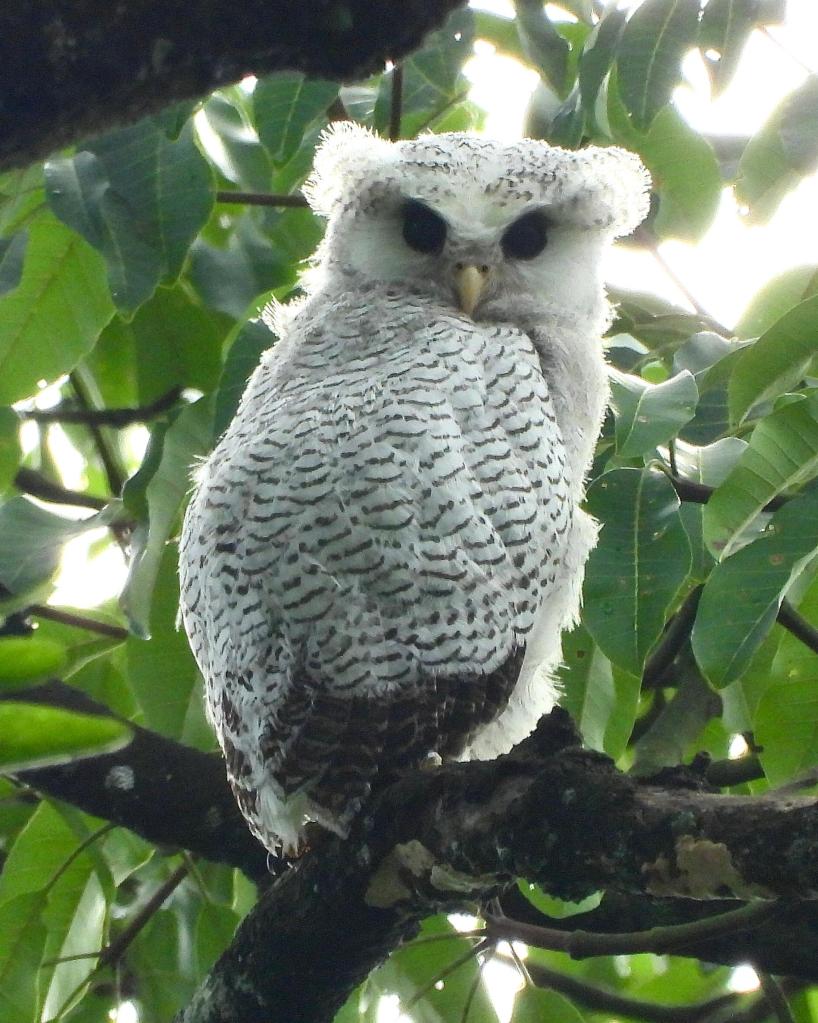
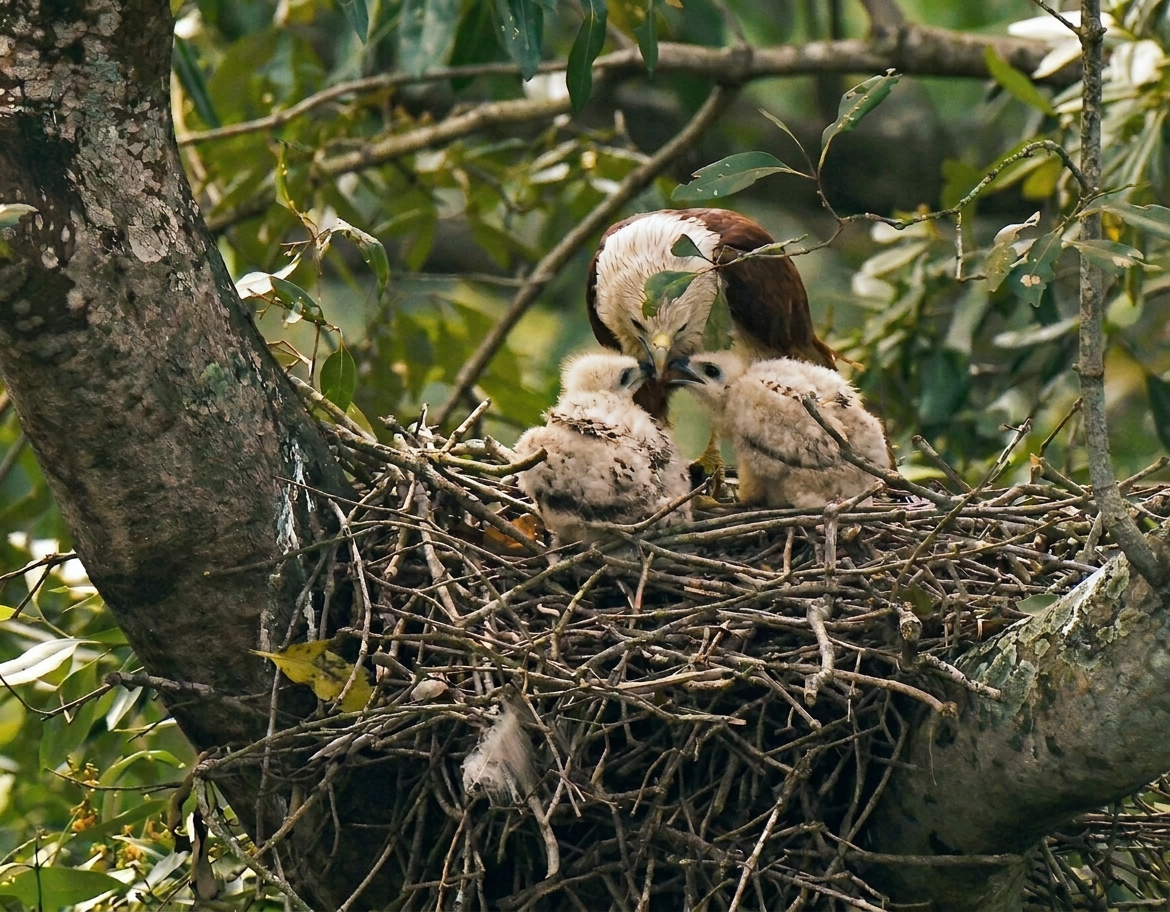
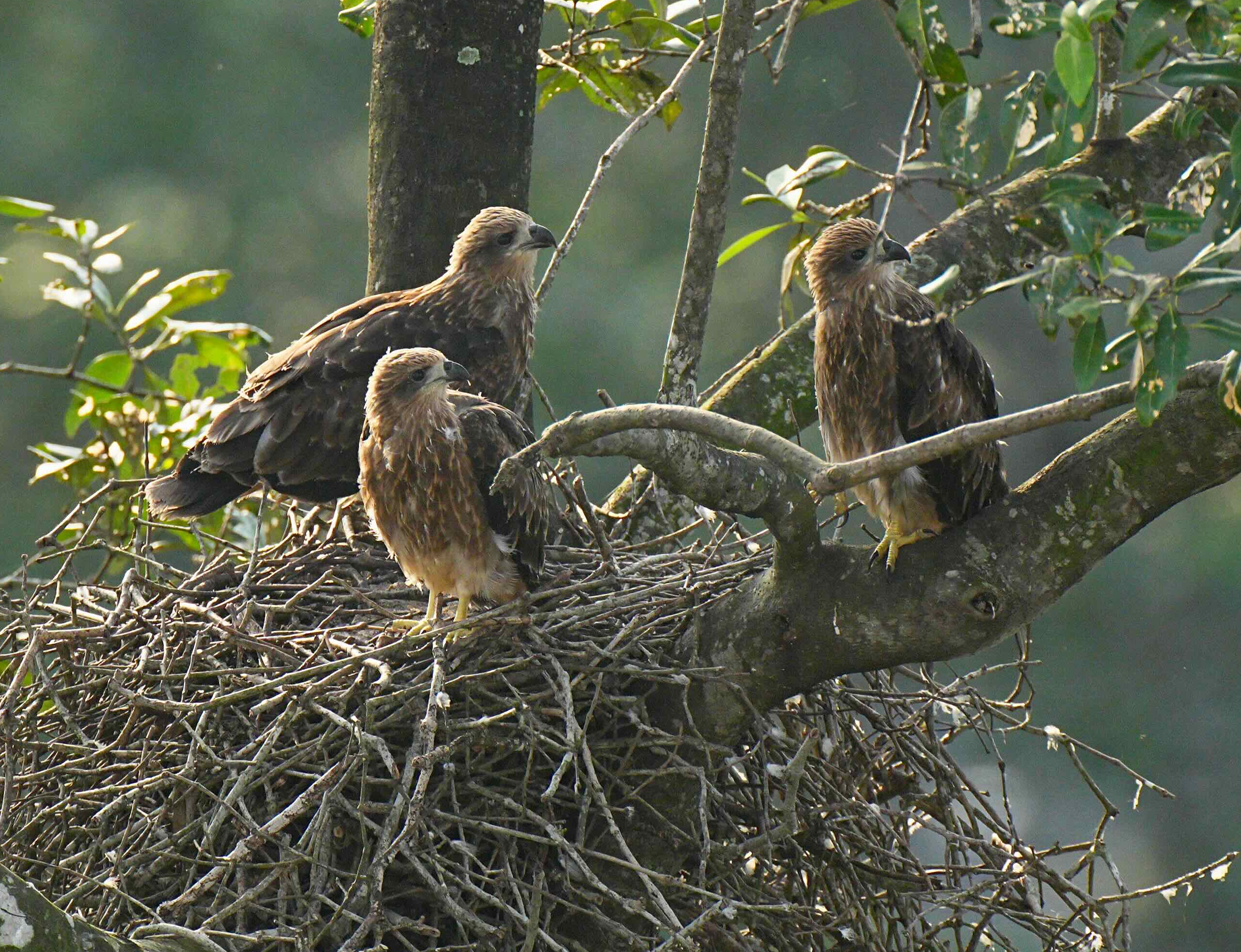
Take our local raptors and owls, for instance: whether you’re observing the fluffy hatchlings of the Spotted Wood Owl and Buffy Fish Owl, or the tiny chicks of the White-bellied Sea Eagle, Brahminy Kite, and Crested Goshawk, they all begin life in the same way—wrapped in a coat of pure, stark white. It is only as they mature that darker pigments gradually bleed into their plumage.
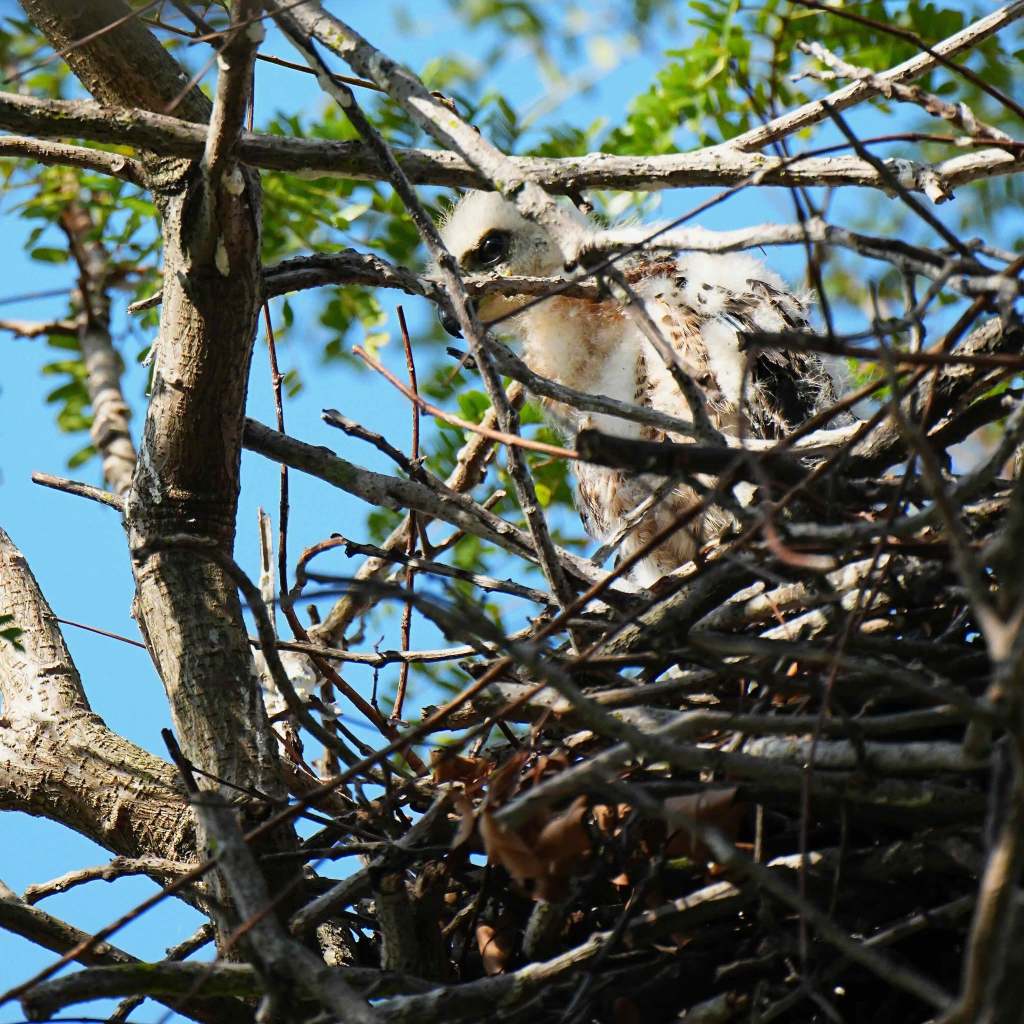
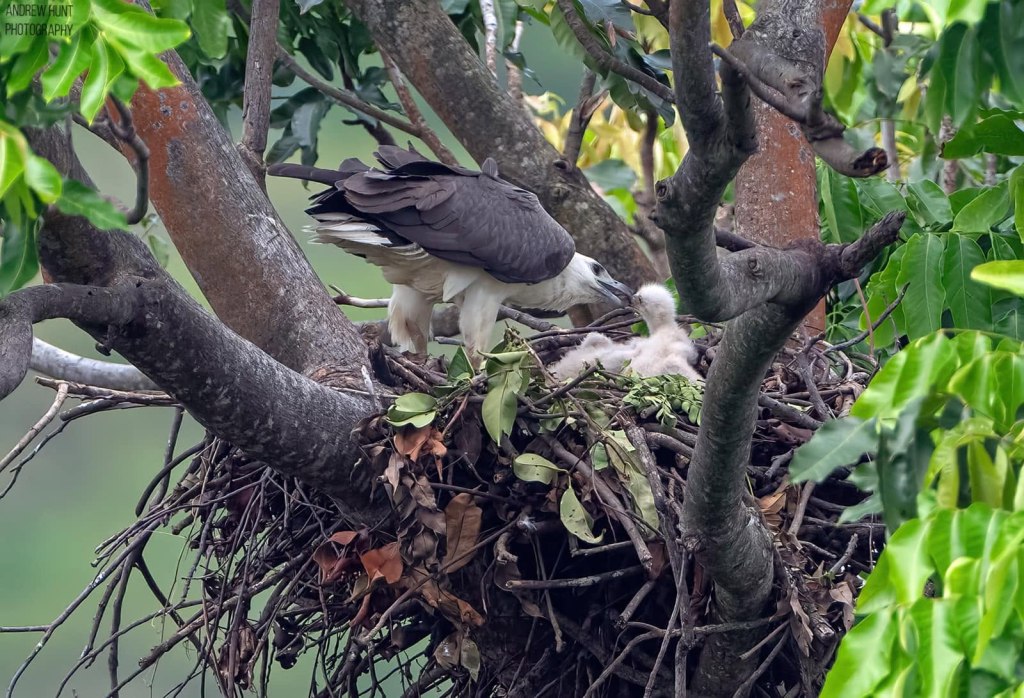
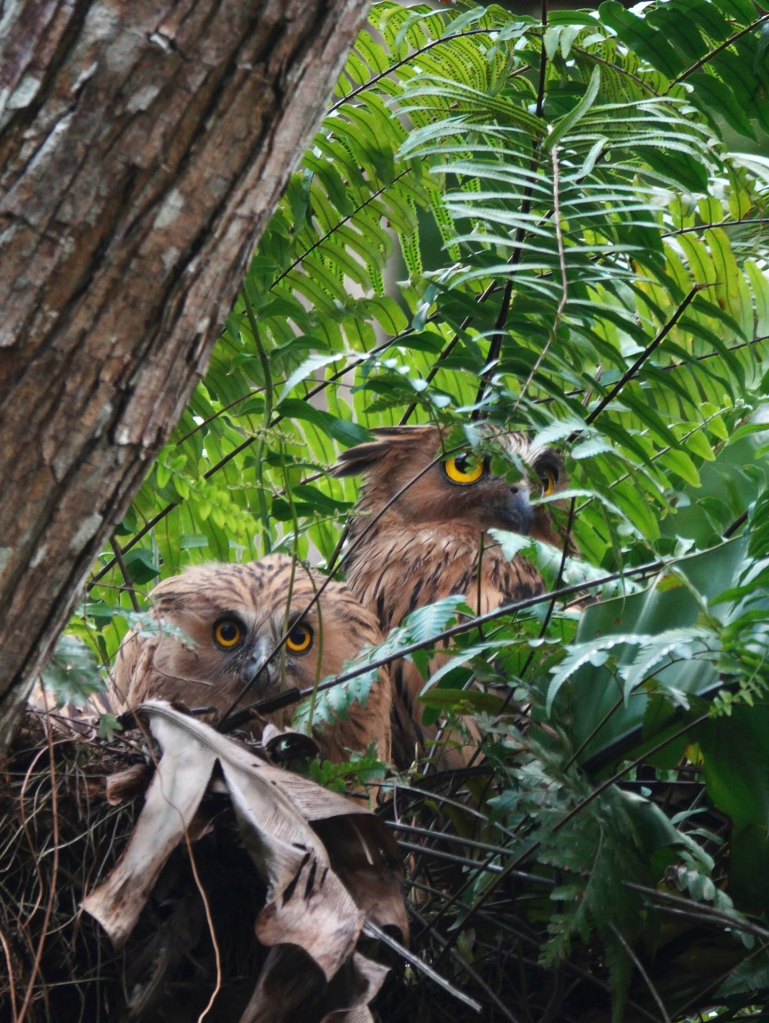
In evolutionary terms, nearly every feature of a species serves a distinct purpose—typically revolving around:
- Mating Success
- Environmental Adaptation
- Predator Defense.
What purpose, then, does the chick’s white down serve? For a young bird, mating can immediately be ruled out. Predator defense is also unlikely; rather than providing camouflage or deterring threats, the stark white plumage makes the chick highly conspicuous against the brown twigs and green ferns of its nest. By process of elimination, this feature almost certainly serves as a shield against environmental stress.
When a raptor chick first hatches, it is ectothermic—physically incapable of regulating its own internal body temperature.
This vulnerability is amplified by the location of the nests; the large eyries of Singapore’s apex raptors (such as the White-Bellied Sea Eagles or Changeable Hawk Eagles) are often constructed high in the exposed canopies of tall trees (which I personally find foliage to be rather sparse), such as the Albizia Trees (Falcataria falcata). Consequently, these nests receive very little shade from the direct sun and can become intensely hot. Even during the monsoon season, the tropical sun frequently breaks through the clouds to create scorching conditions.
Because darker colours absorb a wide spectrum of light waves and convert them into heat, a dark-feathered chick in such an exposed environment would quickly overheat.
The chick’s white downy feathers solve this problem through two basic laws of physics:
- Reflecting Light (Albedo): White acts like a mirror, bouncing the intense tropical sunlight away so the chick never absorbs the heat in the first place.
- Releasing Heat (Emittance): White materials do not store heat well. If the afternoon air gets too hot, the white feathers quickly dump that excess heat back into the air rather than letting it travel inward to the chick’s body.
In short, the fluffy white down acts as a built-in sunshield that keeps the helpless chick from cooking in the treetop heat.
However, what if it gets too cold due to rain? The raptor parents do shield the chicks from the rain. While Singaporeans may find our weather hot, young chicks can easily die from hypothermia during a severe monsoon downpour if they get wet.
To prevent this, birdwatchers note that parent raptors will use their own large, waterproof adult feathers like an umbrella to keep the nest bowl dry (see a video footage documented by Warren Seah here). Underneath this protective parent, the chick’s white downy feathers act like high-grade thermal underwear. Because down feathers are uniquely unstructured and packed tightly together, they trap millions of microscopic pockets of still air. This trapped air is rapidly warmed by the mother’s intense avian body temperature—creating a perfectly insulated microclimate.
Black Chicks by the Waters
In stark contrast to canopy-dwelling raptors, many nature lovers will have noticed the jet-black chicks of Singapore’s most common waterbird: the White-breasted Waterhen. This phenomenon isn’t isolated to just one species; the recent birding buzz at Marina Grove has also captured the community’s attention, with social media feeds overflowing with photographs of the subtly patterned, dark Little Grebe chicks.
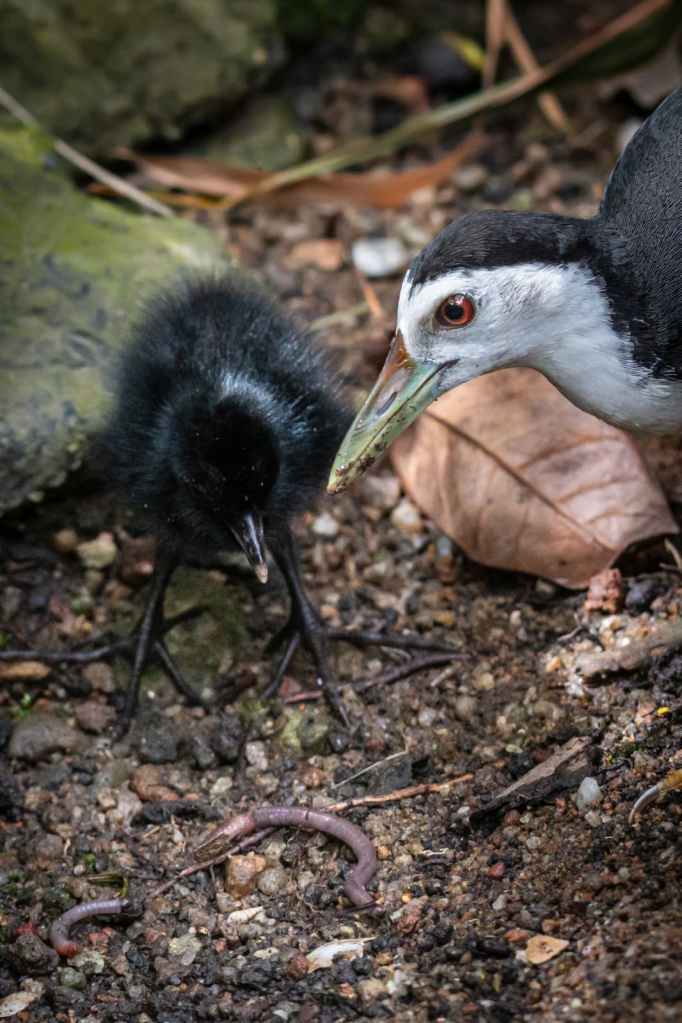
While not all waterbird chicks are black—especially migratory shorebirds—this dark down is highly prevalent among resident species (such as the Red Legged Crake, Lesser Whistling Ducks and Common Moorhen) that nest and forage near dense, aquatic vegetation. In Singapore, this includes habitats dominated by grass-like plants such as Dwarf Papyrus (Cyperus papyrus) and Cattail (Typha sp.), or even tangled patches of wild Kang Kong (Ipomoea aquatica).
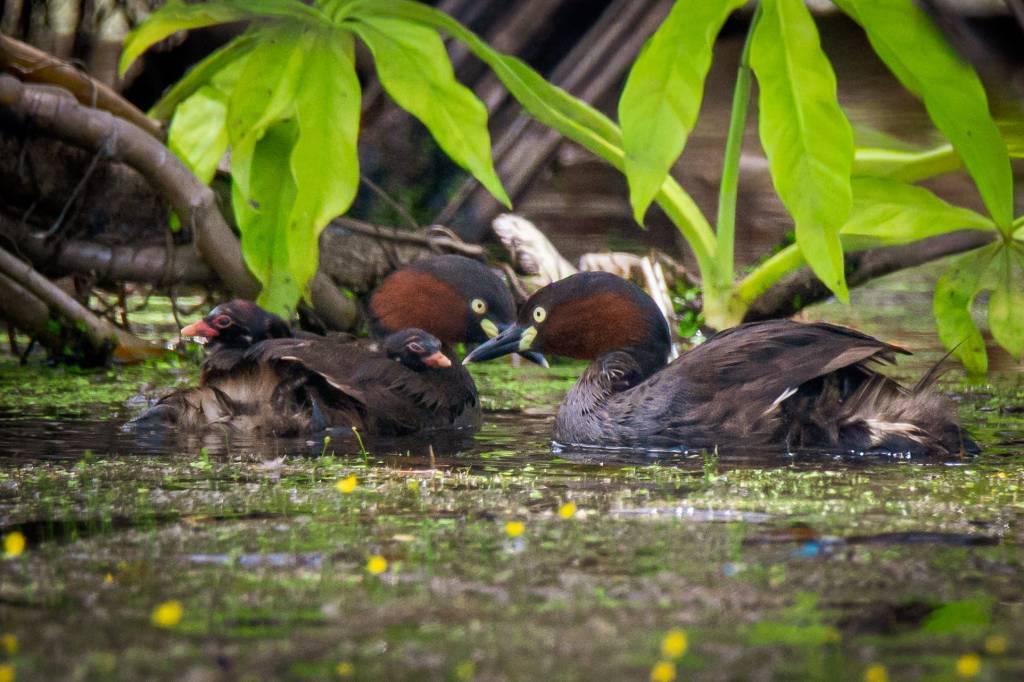
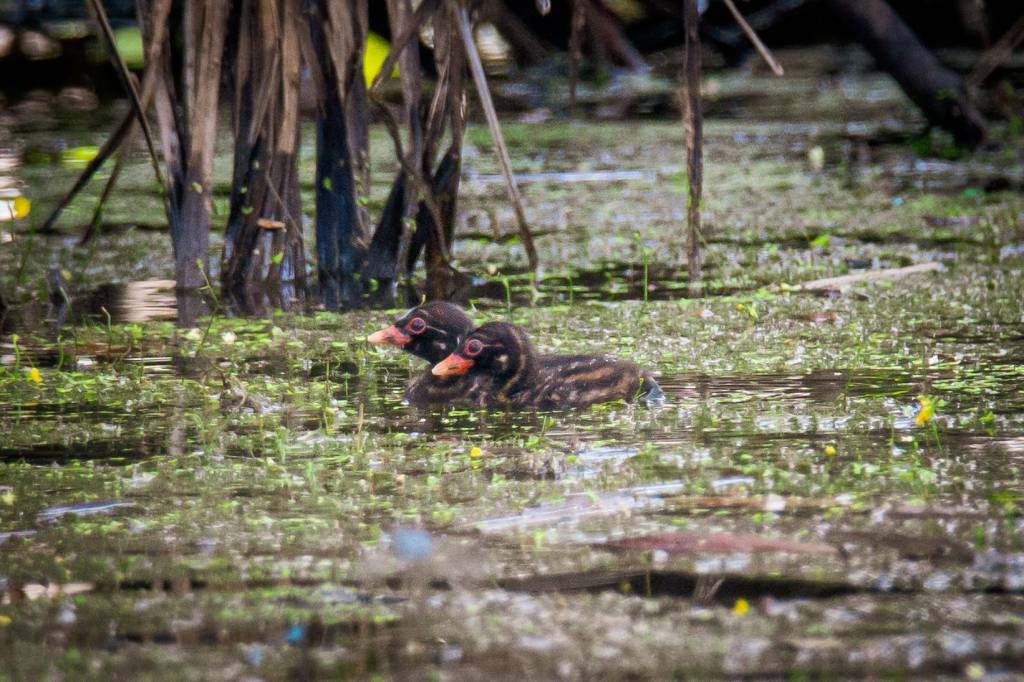
While white feathers offer clear thermal advantages to exposed canopy-nesters, marsh and wetland chicks (as well as some of their adults) have evolved dark plumage for entirely different survival priorities. For these waterbirds, living at the water’s surface makes camouflage and predator evasion paramount. Black and dark grey down allows chicks to blend seamlessly into the deep shadows of overhanging riverbanks, thick reeds, and murky mangrove roots, effectively breaking up their silhouettes from both aerial and ground predators.
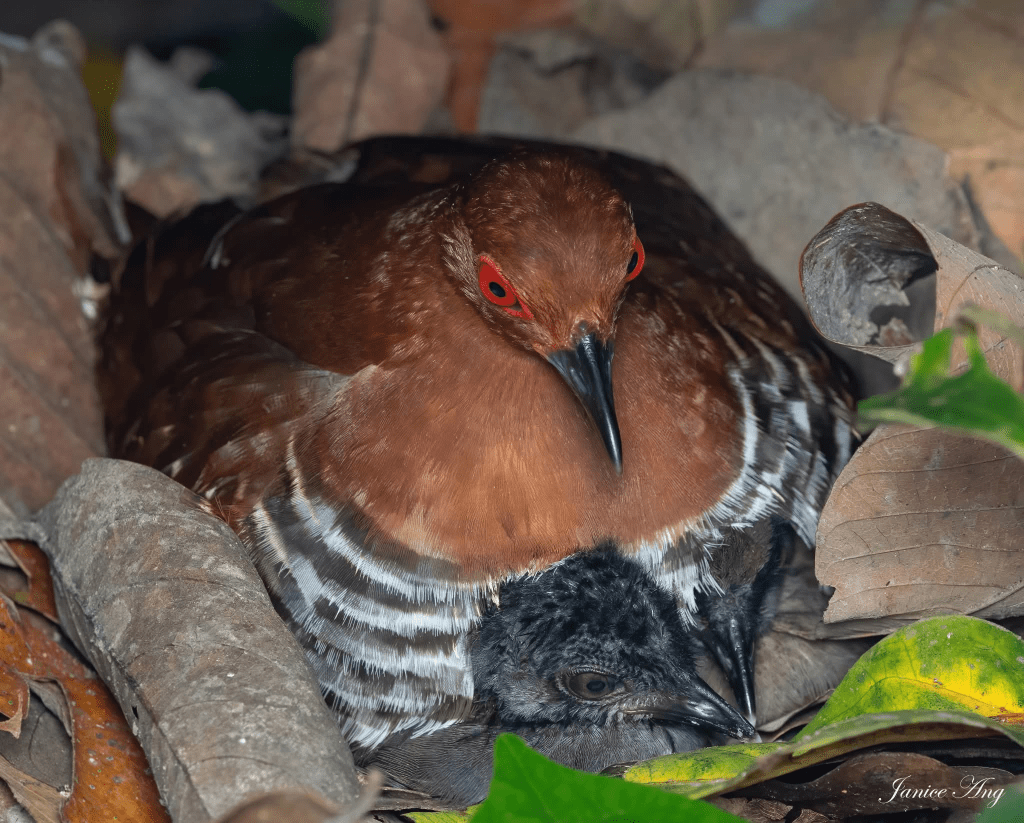
Beyond safety, this dark plumage plays a vital dual role in thermoregulation and drying. Unlike raptor chicks that must constantly shield themselves from intense, direct solar radiation, waterbird chicks spend their time in damp, shaded environments. After diving or foraging, their dark feathers absorb ambient solar radiation incredibly quickly. This rapid heat absorption allows the chicks to dry off almost instantly, helping them maintain their body temperature and stay light enough for sudden, evasive flight.
It Don’t Matter if You’re Black or White: Nature’s True Colours
While I have tried to provide a non-academic way of explaining the purpose of the black or white plumage of raptor and waterbird chicks, social constructions does create some form of black-bias even towards our animal kingdom e.g. our dislike for crows, black cats.
In nature, a chick’s fluffy coat is all about survival. Whether it is black or white comes down to practical things like staying warm, blocking UV rays, and staying safe from predators. Nature does not see one colour as “good” and another as “bad”. Yet, we humans often struggle to see animals for what they really are. We project our own old superstitions and fears onto them, turning a harmless crow into a sign of bad luck, or a black cat into a spooky omen.
By looking at the actual science behind these feathers, we can start to challenge our own hidden biases. It brings to mind the famous message from Michael Jackson’s classic song, “Black or White“—the idea that we shouldn’t spend our time judging based on colour. When we look past these old human stories, we can finally appreciate how brilliant nature’s designs truly are. In the end, a chick born with black or white feathers isn’t trying to send us a symbolic message. As the song says, “It don’t matter if you’re black or white”—in the wild, every animal is just wearing exactly what it needs to survive.

