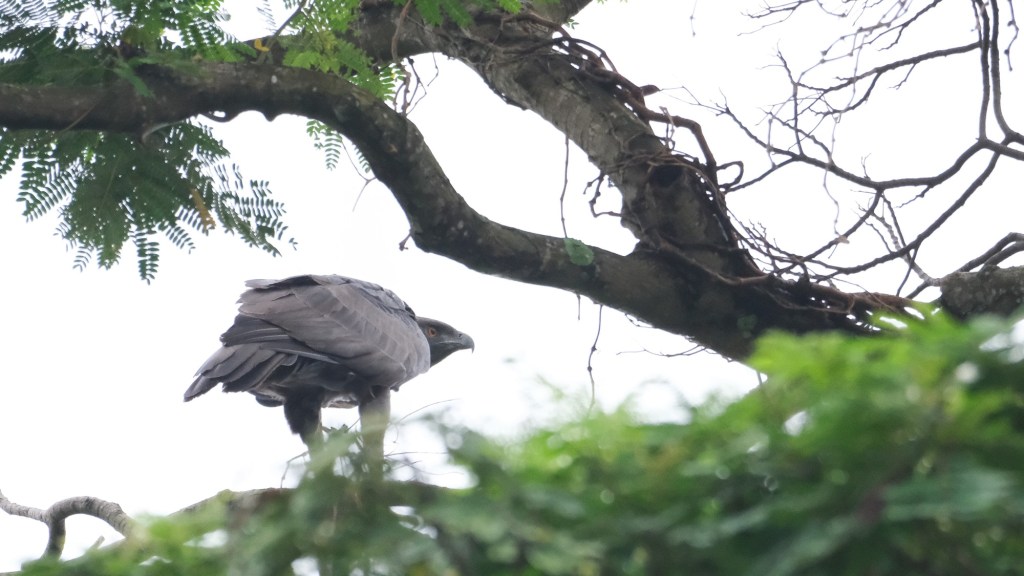
While conducting nature guiding walks, one of the biggest concerns is often ‘Will the birds show up?’ After gaining a deeper understanding of relationships among the flora and fauna species within any ecosystems, I have come to realise that if birds are elusive, I can instead look for the tree species they tend to frequent. Trees, after all, provide a more reliable presence (barring events like lightning strikes or removal by authorities for various reasons).
One of the tree species I often look out for bird sightings is the Albizia Tree, specifically Falcataria falcata (see link from uforest for more detailed documentation of its physical features). Typically seen from a distance from boardwalks in nature parks or park connectors within secondary forests, these trees are notable for being among the world’s fastest-growing species (can reach maturity within 5 years), which has led to their popular use in reforestation projects.
So why are Albizia trees often located away from areas with high human traffic? It’s because they belong to the softwood species, characterised by low-density wood and a shallow root system. These features make them vulnerable, especially in a tropical equatorial climate with frequent lightning, heavy rainfall, and strong winds that can cause breakage of branches and uprooting due to soil erosion. Thus, many of those grown nearer to human traffic may have already been removed over the years. In fact, after googling more about the tree species, I found an article regarding NParks removing a patch of Albizia trees at the Bukit Batok Nature Park in 2017 due to safety concerns (See link). And specifically 10 years earlier in 2007, a Singaporean was crushed to death by a toppled Albizia tree, with two others injured (see link).
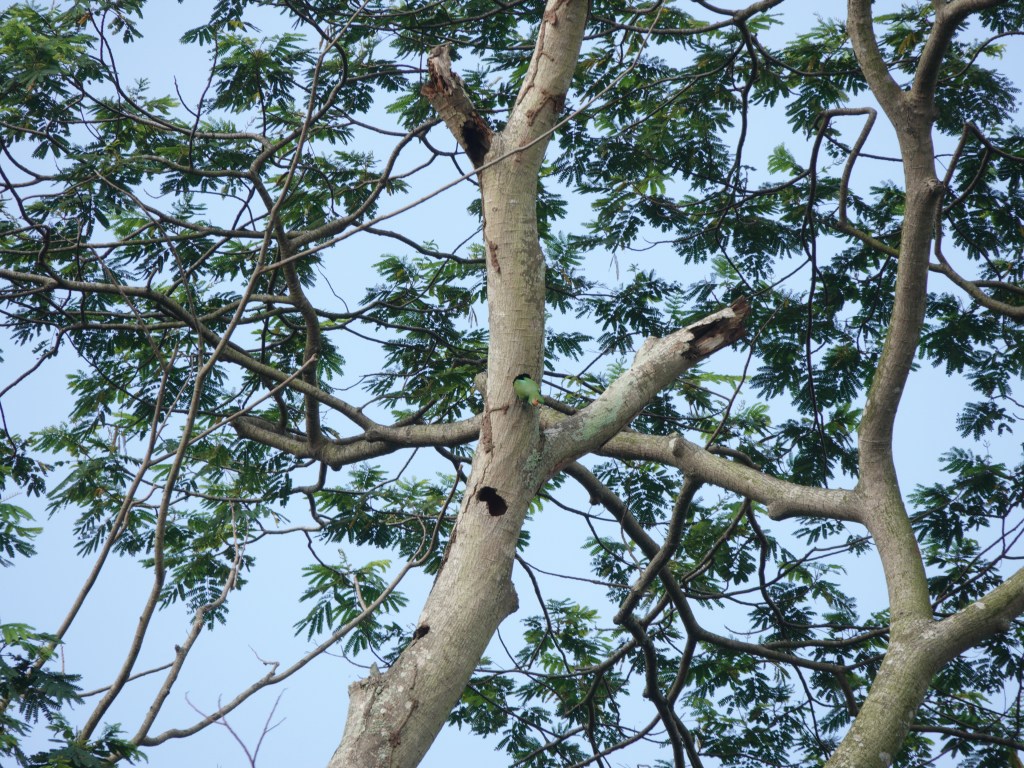
Interestingly, the same characteristics that make Albizia trees potential safety hazards for humans also make them attractive to certain bird species, such as Lineated Barbets, Banded Woodpeckers, Long-Tailed Parakeets, Hill Mynas and Oriental Pied Hornbills (there may be many others which I have yet observed). The reason lies in the tree’s softer, lower-density wood, which is easier for woodpeckers to excavate cavities for nesting. Barbets may also exploit the more brittle or damaged areas with portions of dead wood to create their own cavities. In contrast, mynas, parakeets and hornbills often rely on existing cavities, using those vacated by other birds for nesting though they do have strong beaks to further shape the holes. Thus, the mynas, parakeets and hornbills are known as “secondary cavity nesters” i.e. they utilise cavities that have already been created by birds with strong beaks that are built for such purposes.
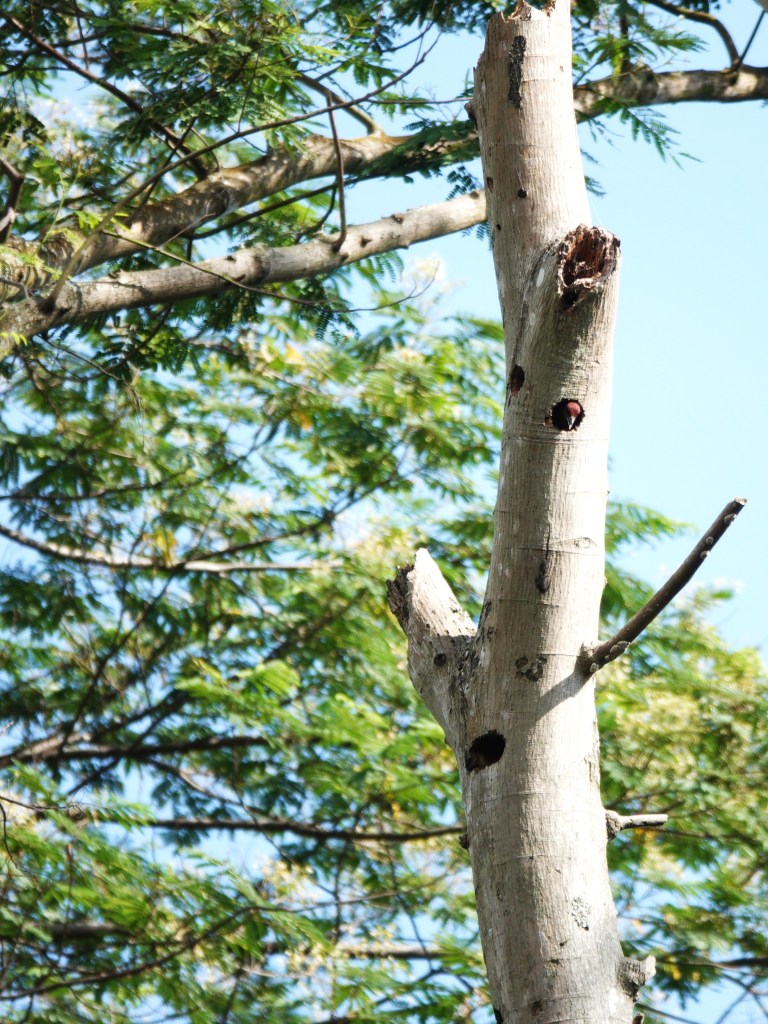
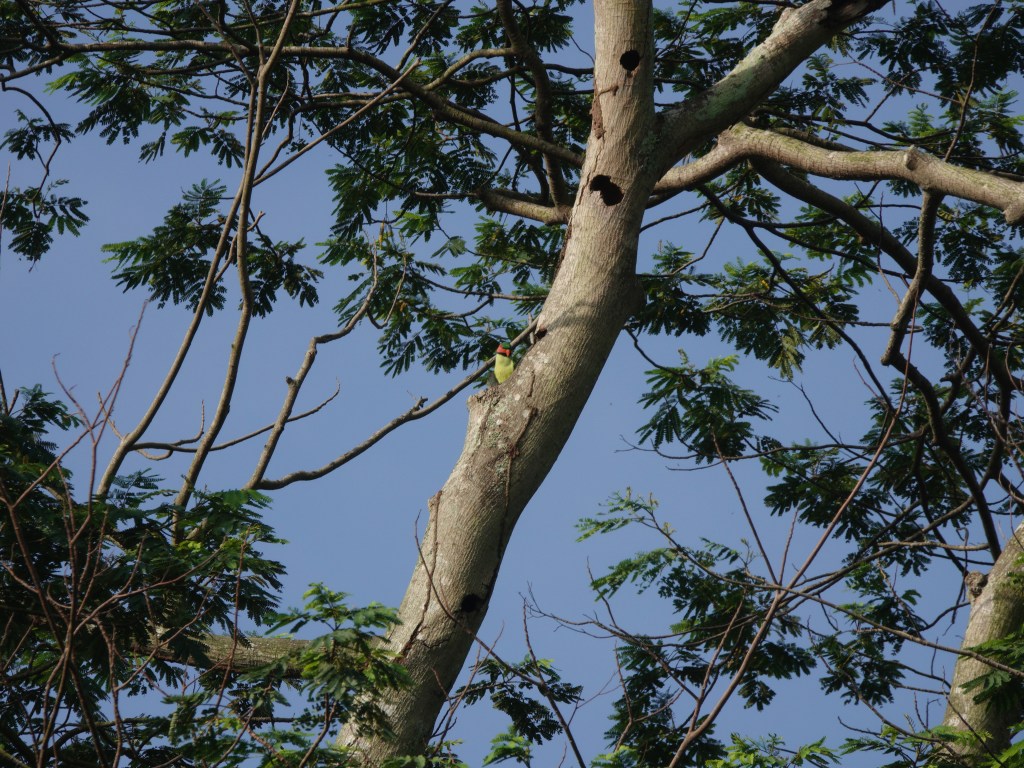
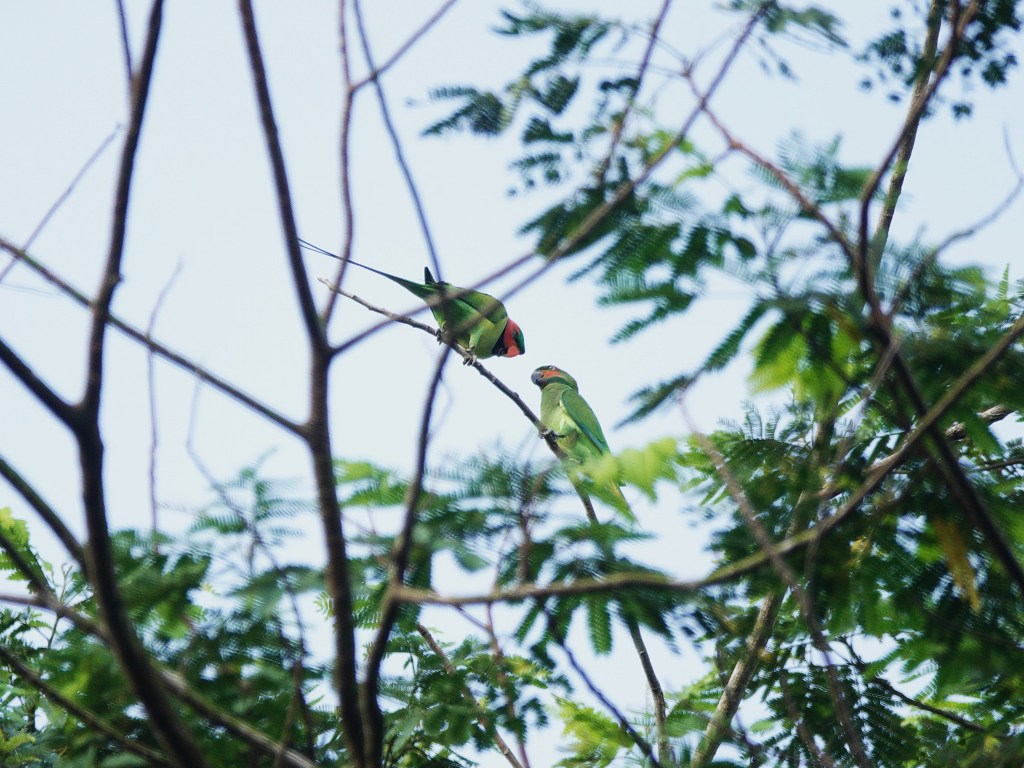
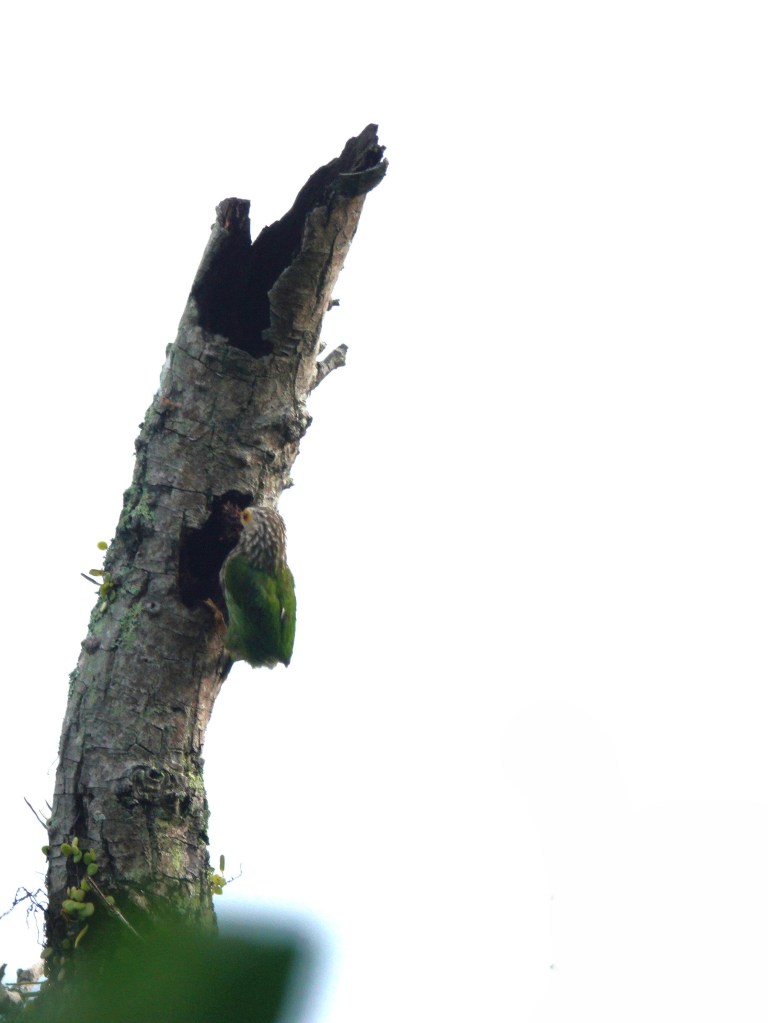
The sparse foliage at the canopy of the Albizia tree also makes it an ideal spot for birders to look for raptors, which often perch on the tree’s horizontally stretching branches. This vantage point likely provides the raptors with an unobstructed view of potential prey from a significant height, a luxury not afforded by trees with denser canopies where leaves and branches would block their line of sight. In fact, the height, shape and structure of the branches also encourage raptors to construct their eyries on the Albizia canopy. This has been well-documented by many others. Below are some of the photographs taken by Gabriel and I that illustrate the above points.
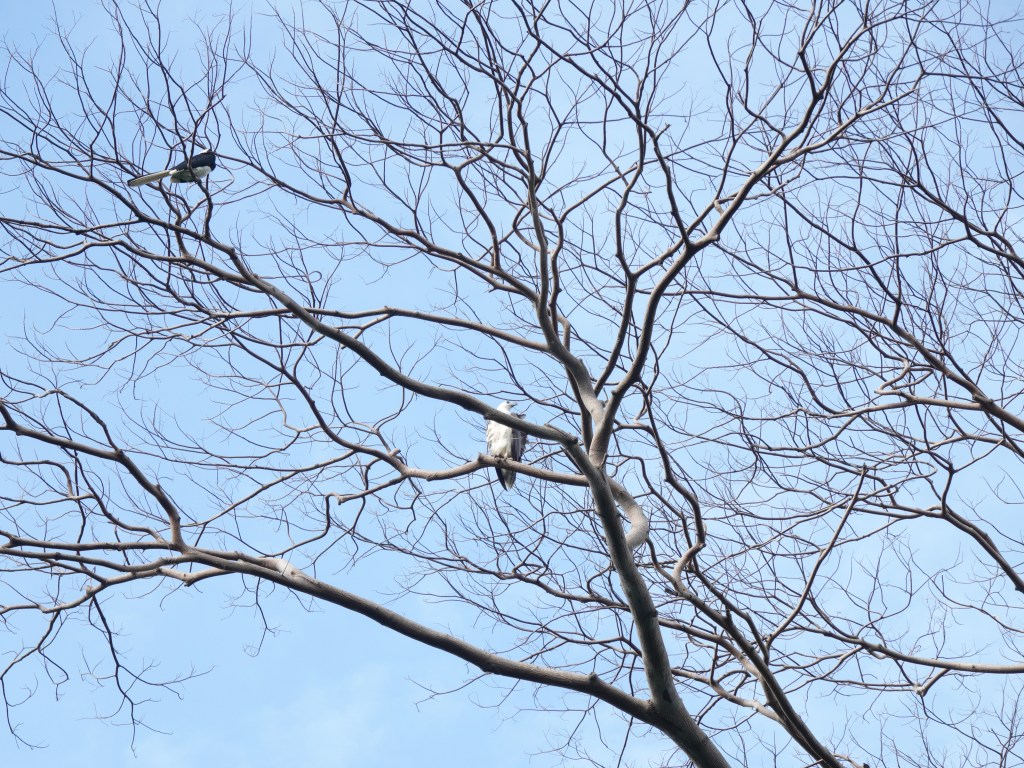
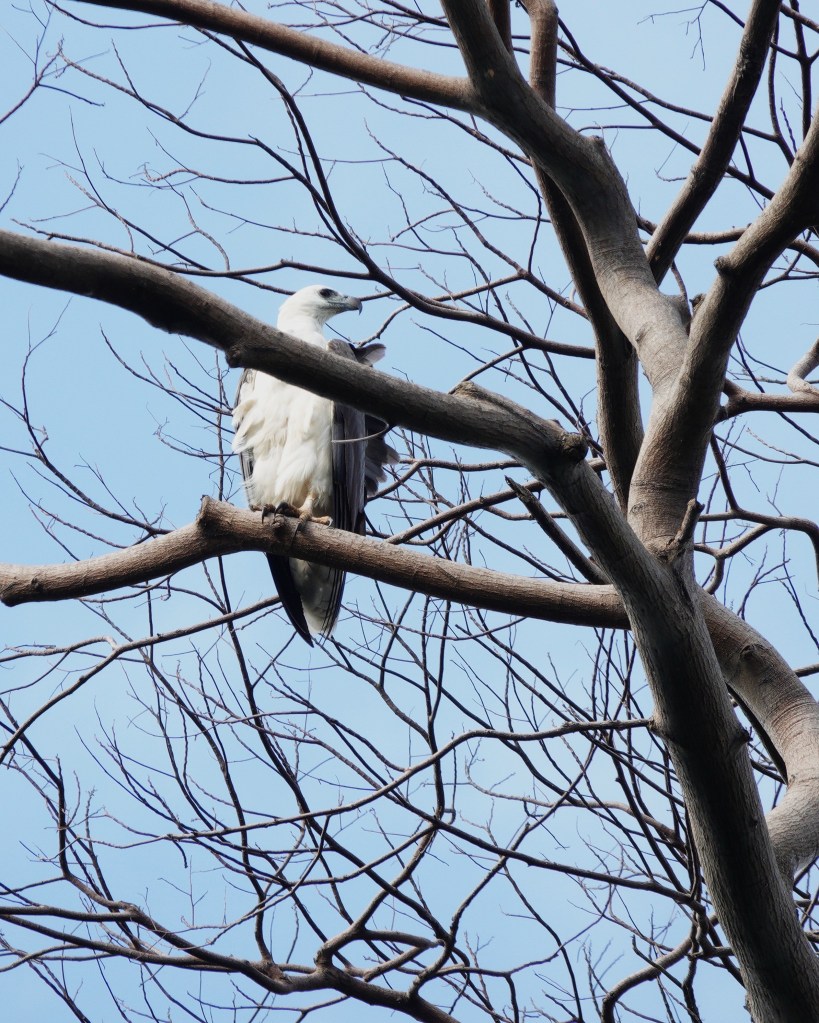
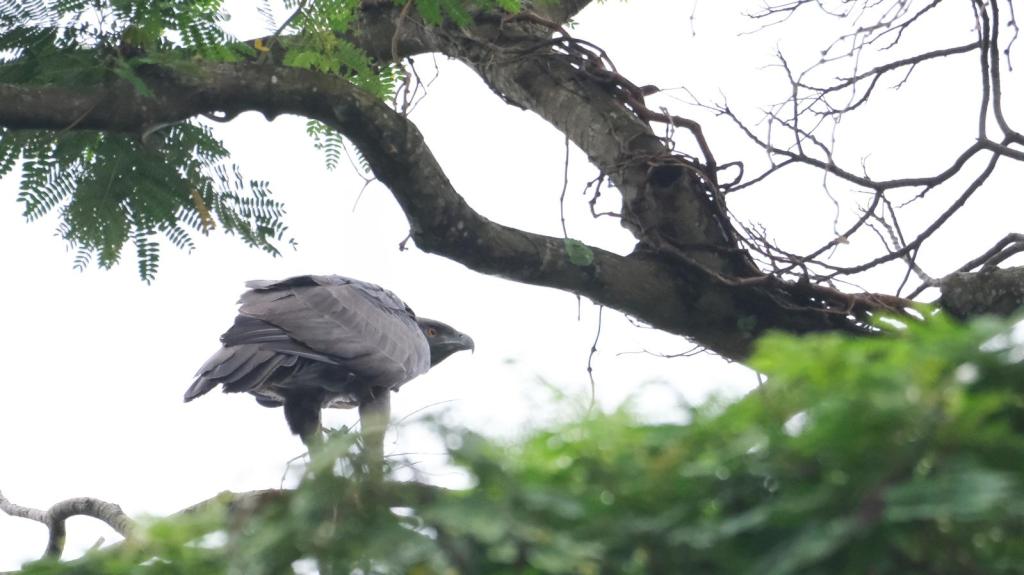
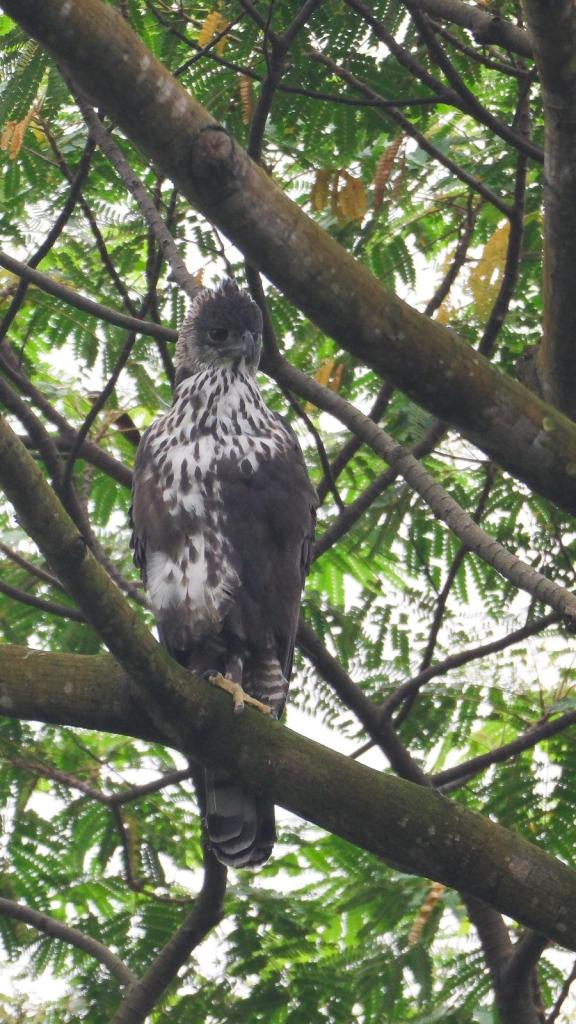
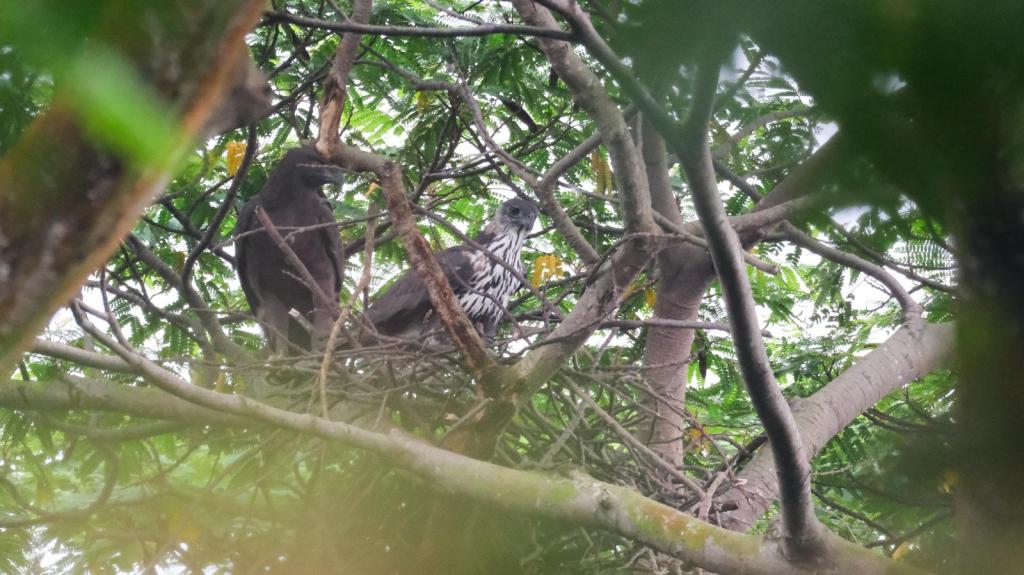
I have also found a well-documented article from the journal publication “Nature in Singapore”, published by NUS whereby the Changeable Hawk Eagles and the Oriental Pied Hornbills nested on the Albizia in the Dover Forest. It is an enjoyable read for those who would like to find out more. (Click here to access the article)
In conclusion, the Albizia tree presents a complex trade-off between supporting biodiversity and posing safety risks to humans. Effective management of this dilemma requires a collaborative approach, with NParks working closely with the community and various stakeholders to make informed decisions that balance human safety with environmental conservation. Education plays a crucial role in this process, helping people understand the reasons behind tree removal and the importance of prioritising safety while supporting species biodiversity. For nature guides and birders, I hope this post provides valuable insights and fosters a deeper appreciation for the importance of flora in supporting the fauna we admire. Don’t forget your binoculars, as these trees are often located at a distance from walking paths for reasons already mentioned.
Thank you Siyang for providing information about the Albizia trees and Gabriel for the wonderful photos of the Changeable Hawk Eagles.
 birdbrainsg