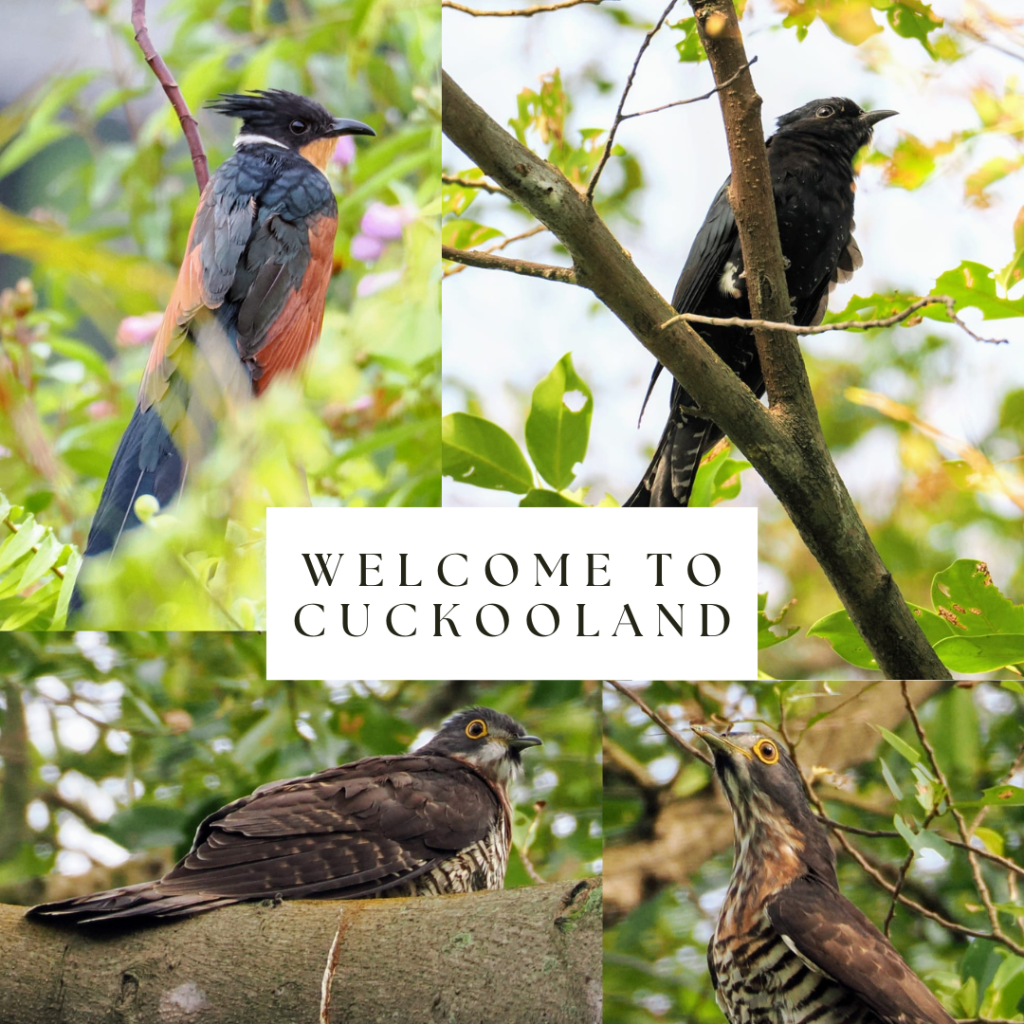
Over the last month, a “Cuckooland” was discovered by the Singapore birding community in Jurong Lake Gardens, much to the delight of birders living in the West. Several species of migratory and resident cuckoos have congregated in the area, attracting wildlife photographers who adore these birds for their beautiful plumage and elegant silhouette. The diverse array of cuckoo species includes the Squared-Tailed Drongo-Cuckoo, Large-Hawk Cuckoo, Indian Cuckoo, Sunda Brush Cuckoo, Himalayan Cuckoo, Plaintive Cuckoo, Banded Bay Cuckoo, Asian Koel and the handsome Chestnut-Winged Cuckoo.
The Parasitic Brooding Behaviour of Cuckoos
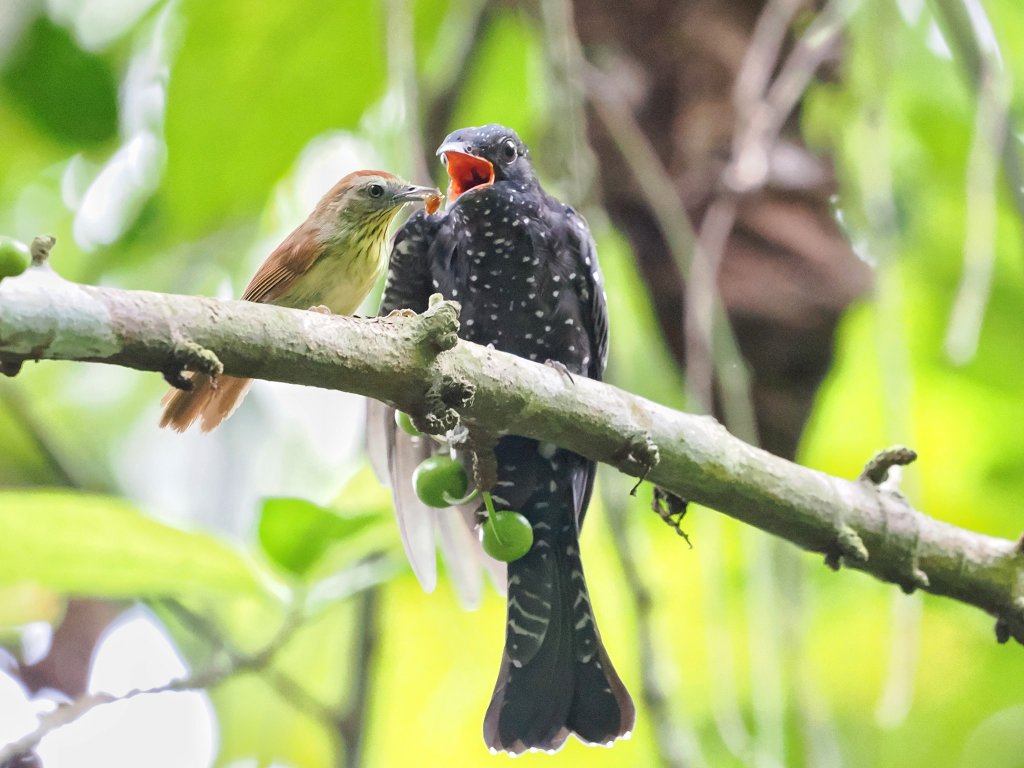
Cuckoos are particularly interesting due to their parasitic brooding behaviour, which birders have had the pleasure of observing and photographing. Singaporean birders have brilliantly captured images of various host species, such as Golden-bellied Gerygones, Ashy Tailorbirds, Pin-Striped Tit-Babblers, and Malayan Pied Fantails, feeding cuckoo fledglings that are often larger than themselves, belonging to species like the Little Bronze Cuckoo, Square-Tailed Drongo, Rusty-breasted Cuckoo, Plaintive Cuckoo, and even the well-known Asian Koel (which is also a member of the Cuckoo family)
Cuckoos – Our Pest Controllers
This unique gathering in Jurong Lake Gardens has also provided an excellent opportunity for bird enthusiasts to witness and document the feeding habits of beautiful cuckoos, which I’ll focus on in this post.
During a recent birding excursion with my friend Gabriel, we explored the area around Fusion Spoon, a known cuckoo hotspot. Despite not spotting any cuckoos that morning, we enjoyed sightings of migratory Warblers, Flowerpeckers, Tailorbirds, Sunbirds, and Pied Trillers as we strolled past the ficus trees.
A moment of delight came when a beautiful moth unexpectedly landed on Gabriel’s arm, adding a sudden splash of colour to our walk. Though familiar, we couldn’t immediately identify it. Our friend Ching Yong later joined us, sharing photos of caterpillars he’d spotted in the same area over the past few days. These caterpillars, found on the pavement, were likely dislodged by foraging cuckoos or heavy rain, hinting at the intricate ecological interactions unfolding around us.
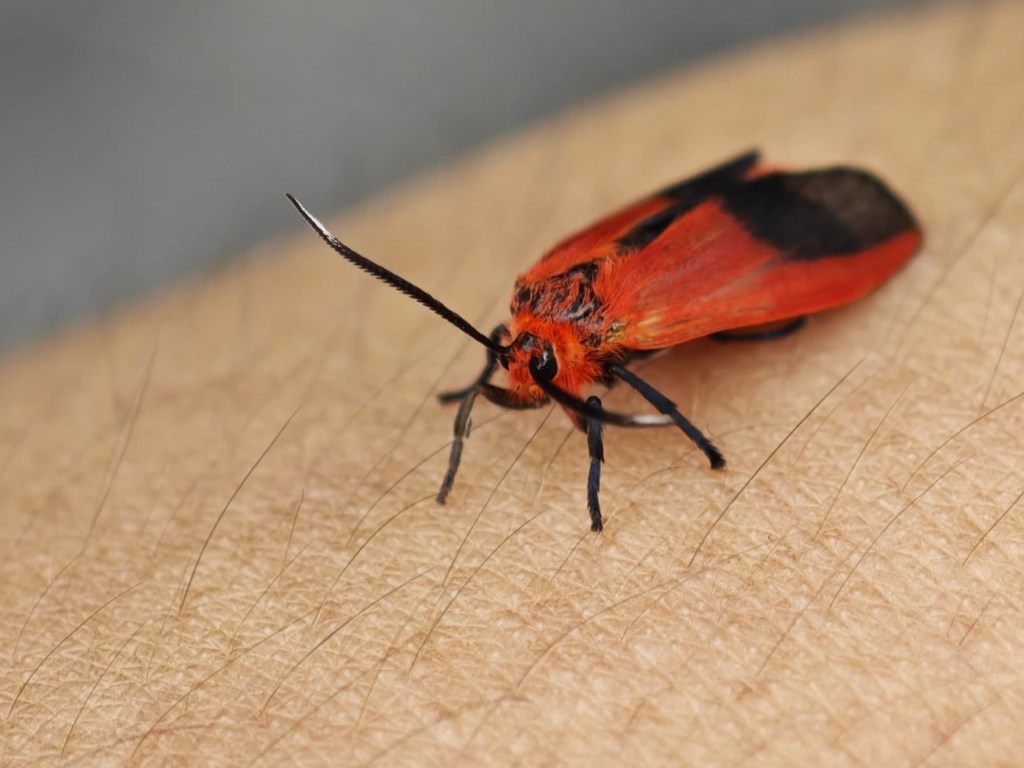
Intrigued by our encounter, I later ‘Google-lensed’ the moth’s identity and made a fascinating connection: the moth that landed on Gabriel’s arm was the adult form of the caterpillar that Ching Yong had photographed. It turned out to be the notorious Phauda flammans, a species known for its destructive impact on specific Ficus trees, particularly Malayan Banyan (Ficus microcarpa) and Weeping Fig (F. benjamina), while leaving the other commonly seen Ficus elastica unscathed (see article).
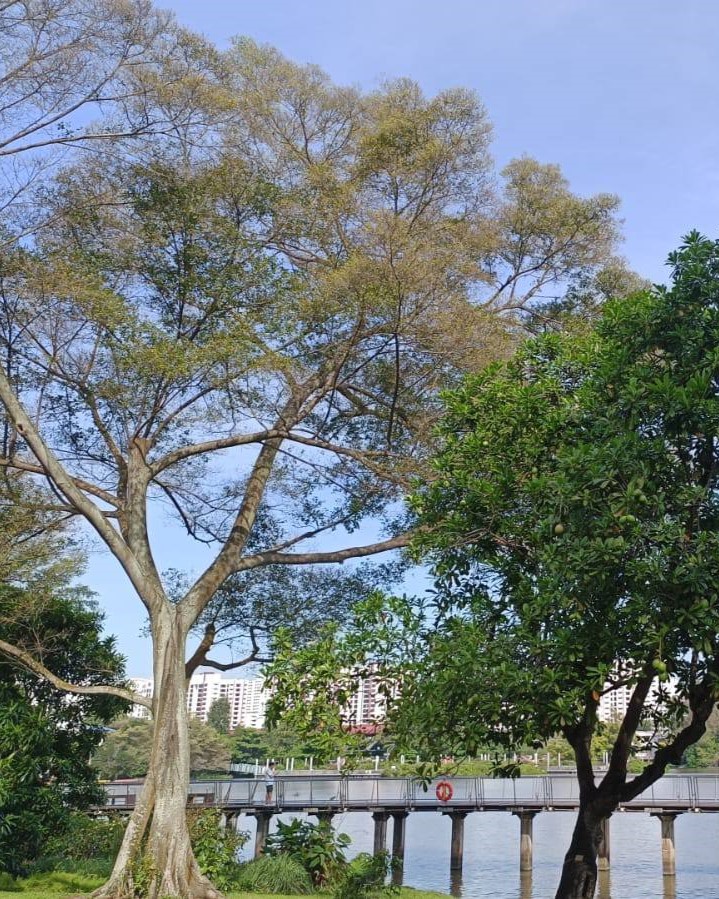
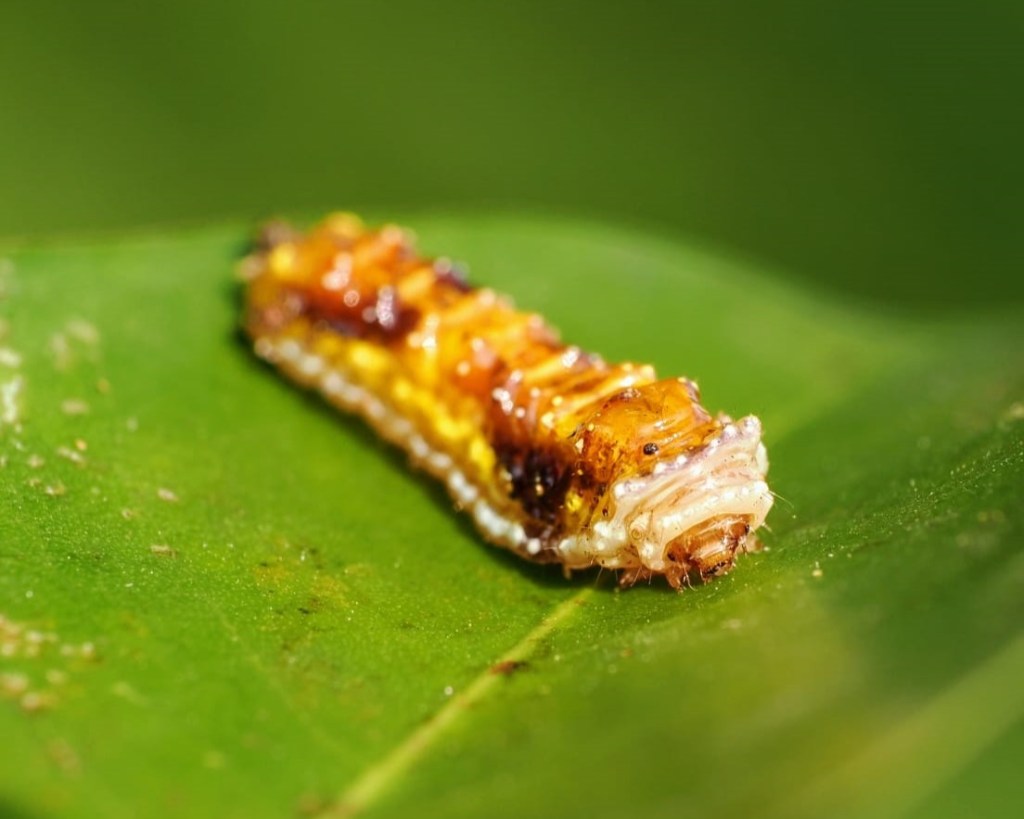
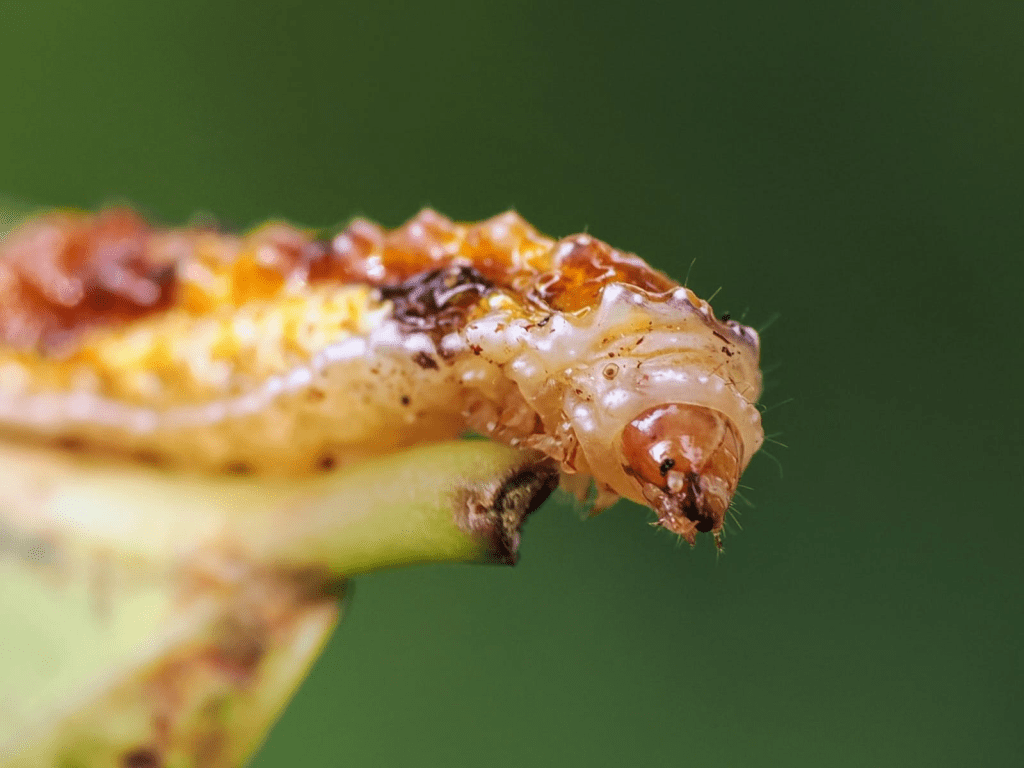
This moth has gained infamy in recent years, particularly in Hong Kong, where it has been responsible for significant damage to various Ficus species (You may read about the article here), causing complete defoliation. Eggs are laid on leaves in the top of the trees and the larvae (caterpillars), upon hatching will start consuming right from the top. In Singapore, you may have noticed some canopy branches of Ficus trees losing their foliage. It’s highly likely that Phauda flammans is the culprit behind this damage.
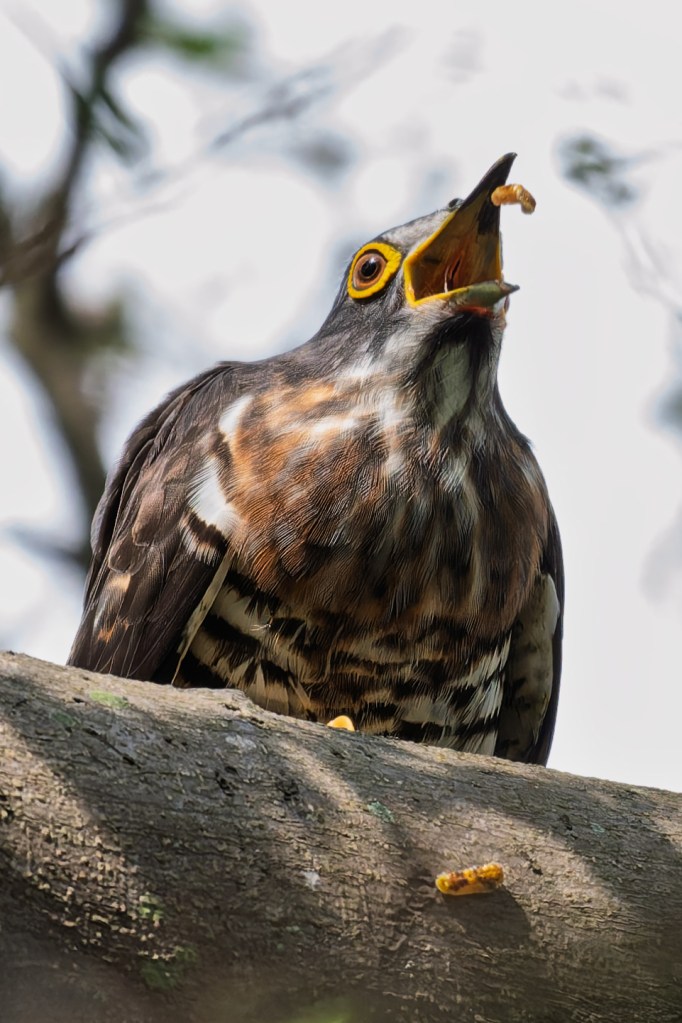
The presence of these moths and caterpillars in the area not only explains the damage to the local Ficus trees but also sheds light on the reason behind the cuckoos’ congregation. These birds are capitalising on the abundant caterpillar population, which includes Phauda flammans and some tussock moth (Lymantriinae) caterpillars, as evidenced in other publicly shared photographs. This effectively transforms a potential pest problem into a bountiful feeding opportunity for the cuckoos. This ecological interaction has been visually confirmed by a fellow birder, Bai Qw’s photograph, which brilliantly captured a Large-Hawk Cuckoo (Hierococcyx sparverioides) feasting on these specific Phauda flammans caterpillars.
Ain’t Many of These Caterpillars Venomous and/or Poisonous?
Yes, many caterpillars are indeed venomous and poisonous. However, this fact doesn’t deter cuckoos from making these hairy creatures a significant part of their diet. In fact, cuckoos worldwide are well-known for specifically targeting hairy caterpillars that possess venomous spikes/bristles.
In New Zealand, Shining Bronze Cuckoos were documented feeding on venomous Gum-leaf Skeletoniser Caterpillars, Woolly-Bear caterpillars, Magpie Moth Caterpillar etc (refer to article for the New Zealand’s reference).
The secret lies in the cuckoo’s unique digestive system:
Protective Gizzard: The cuckoo’s gizzard is lined with a thick, protective mucous membrane.
Hair Trapping: This membrane traps the venomous hairs of the caterpillars.
Shedding Mechanism: As a defense mechanism, the bird periodically sheds patches of this membrane.
Regurgitation: The shed membrane, along with the toxic hairs, is regurgitated as a pellet.
Interestingly, the Bird Ecology Study Group has documented another intriguing behaviour: some cuckoos have been observed rubbing caterpillars against rough tree bark. This action likely serves to remove or reduce the number of irritating hairs on the caterpillar before consumption, further minimising the risk to the bird (see link).
Back in the Jurong Lake Gardens, the cuckoos were photographed to have consumed hairy caterpillars such as the Clearwing Tussock Moth Caterpillar (Perina nuda).
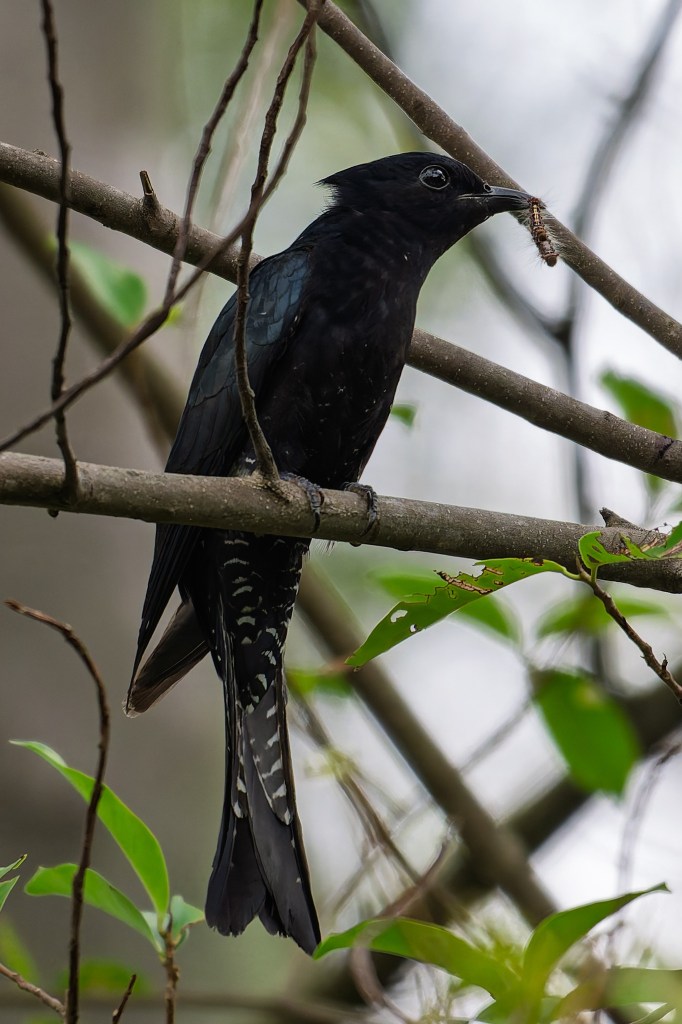
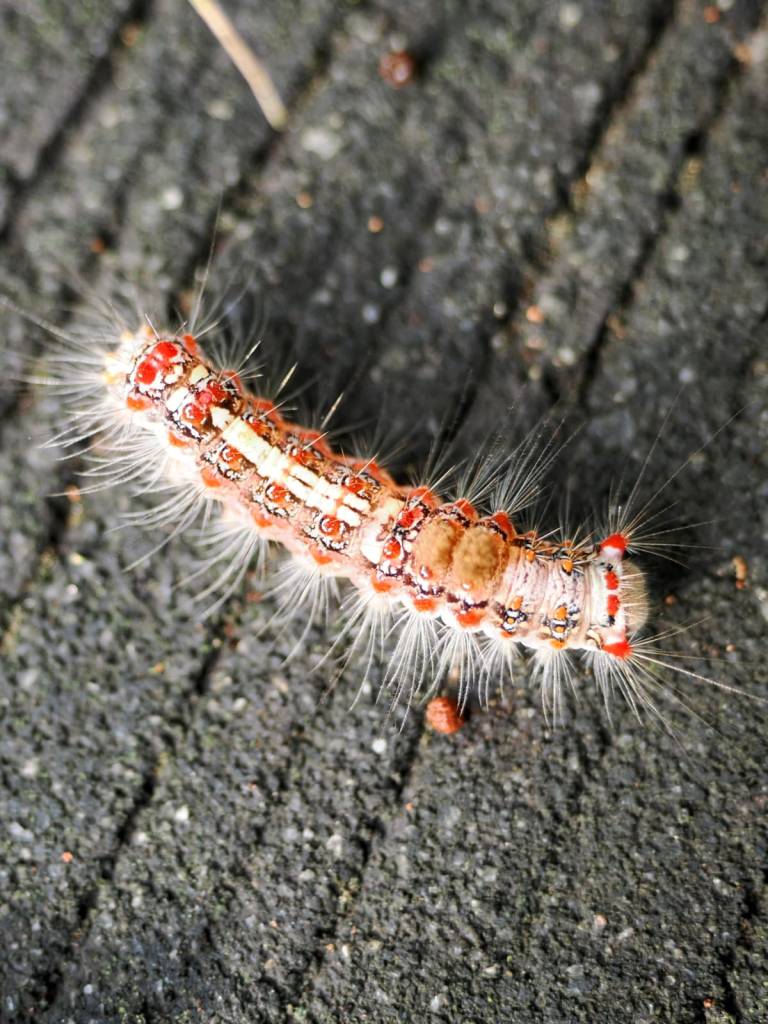
As for toxic caterpillars well-known for their aposematic colouring, photographers have caught images and videos of cuckoos thrashing the caterpillars such that the toxic guts spilled out before consuming them.
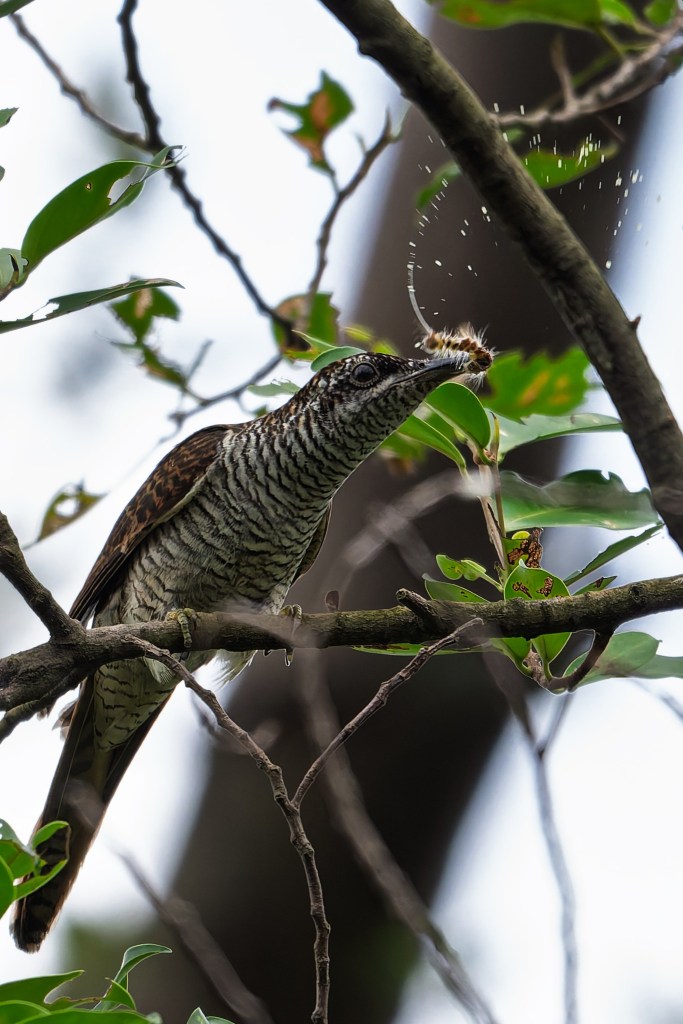
Thank You Cuckoos for Your Service
Before penning this post, I harboured doubts about Singapore’s ecosystem’s capacity to sustainably support the influx of migratory birds. Now, having witnessed this intricate dance between the Ficus trees, Phauda flammans caterpillars, and cuckoos, I’m positive about what our “city-in-a-garden” can offer to these beautiful visitors. It’s clear that our urban landscape offers more than meets the eye, providing a rich and complex habitat that can indeed sustain and attract diverse wildlife.
A heartfelt thank you to our feathered friends for their pest control services! Special appreciation goes to Anderson Ng, Bai Qw, and Lee Ching Yong for their stunning photographs.
Written by Lucas
 birdbrainsg