As the holiday season approaches, many of us think of mistletoe as a festive decoration, often associated with winter countries, stolen kisses and Christmas cheer. However, what many don’t realise is that mistletoes are actually parasitic plants that grow on trees.
In Singapore’s lush public parks, nature reserves or even our roadside trees, a unique ecosystem revolves around the native Malayan Mistletoe, creating a fascinating web of life that includes the vibrant Painted Jezebel butterfly and the charming Scarlet-backed Flowerpecker. I invite all nature lovers to stand under the mistletoe, where instead of a kiss, you might be rewarded with a plethora of living creatures flourishing above—a different kind of holiday magic.
The Malayan Mistletoe: Our Local Parasite
The word “parasite” often evokes fear and discomfort, conjuring images from popular culture that range from the grotesque to the terrifying. From the infamous chest-bursting xenomorphs in the 1980s sci-fi classic “Alien” to more recent documentaries showcasing fungi (cordyceps) zombify insects before dramatically erupting from their bodies, parasites have long captured our imagination in the most unsettling ways.

While our local Malayan Mistletoe (Dendrophthoe pentandra) might not win any beauty contests (in fact, they are considered the ‘messiest’ mistletoe of all in Singapore), it plays an important role in the ecosystem. As a parasitic plant, it is less like a scary invader and more like that one relative who shows up during Chinese New Year and proceeds to eat all your cookies and snacks. It might irk the tree, much like how that relative tests your patience, but most of the time, it doesn’t cause serious harm. However, just as too many hungry relatives can empty your pantry, too many mistletoes can overwhelm a tree. But don’t worry – our sturdy and mature Singapore trees can usually handle these freeloaders without too much fuss.
Interestingly, while the holiday mistletoe we’re familiar with from Christmas cards has needle-like leaves, our Singapore mistletoes sport a different look. Most of our local species, including the Malayan Mistletoe, have thick, fleshy leaves.
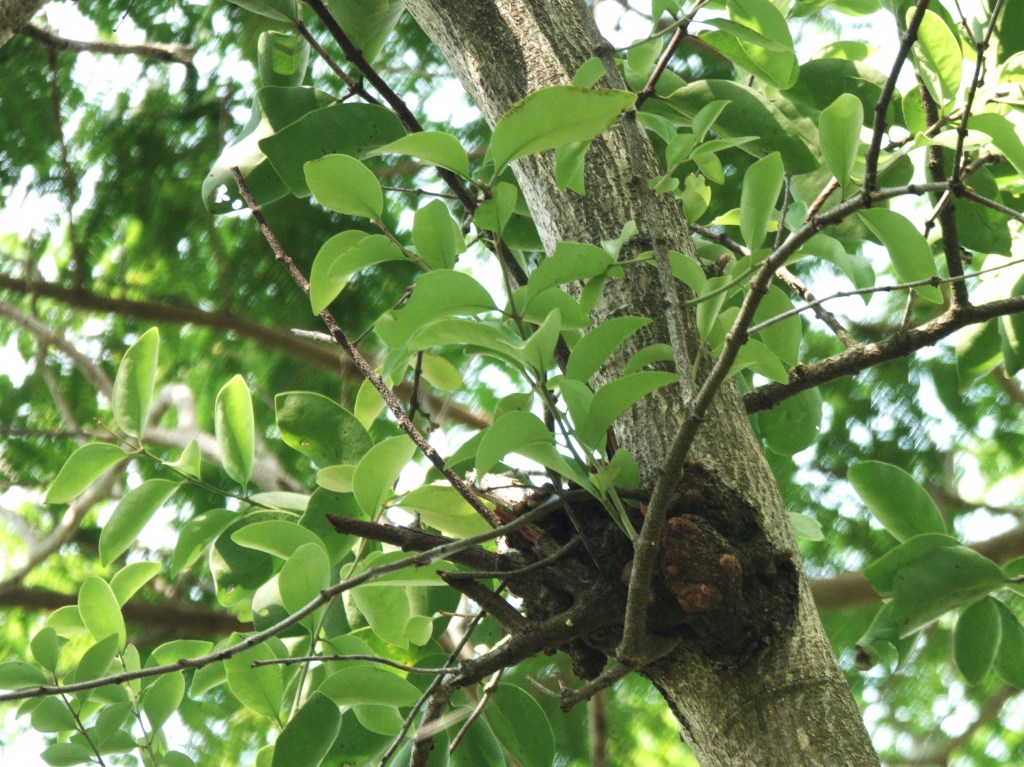
The Malayan Mistletoe is what we call a hemiparasite. It’s like a part-time freeloader, getting some of its nutrients from the host tree while also making its own food through photosynthesis. It attaches to the tree’s branches using special roots called haustorium, which tap into the tree’s plumbing system for water and minerals. While a few mistletoes usually don’t cause much harm, a large number can slow the tree’s growth or even cause branches to die back.
And here’s a fun twist—some unexpected guests, in the form of caterpillars, actually help keep the party under control. It’s nature’s way of balancing the books, ensuring that our leafy hosts don’t end up too stressed by their clingy mistletoe guests!
The Painted Jezebel: Our Colorful Butterfly Friend
Now, let me introduce you to one of the mistletoe’s most beautiful admirers—the Painted Jezebel butterfly (Delias hyparete metarete). The life cycle of this stunning creature is a sight to behold, right in our own backyard!
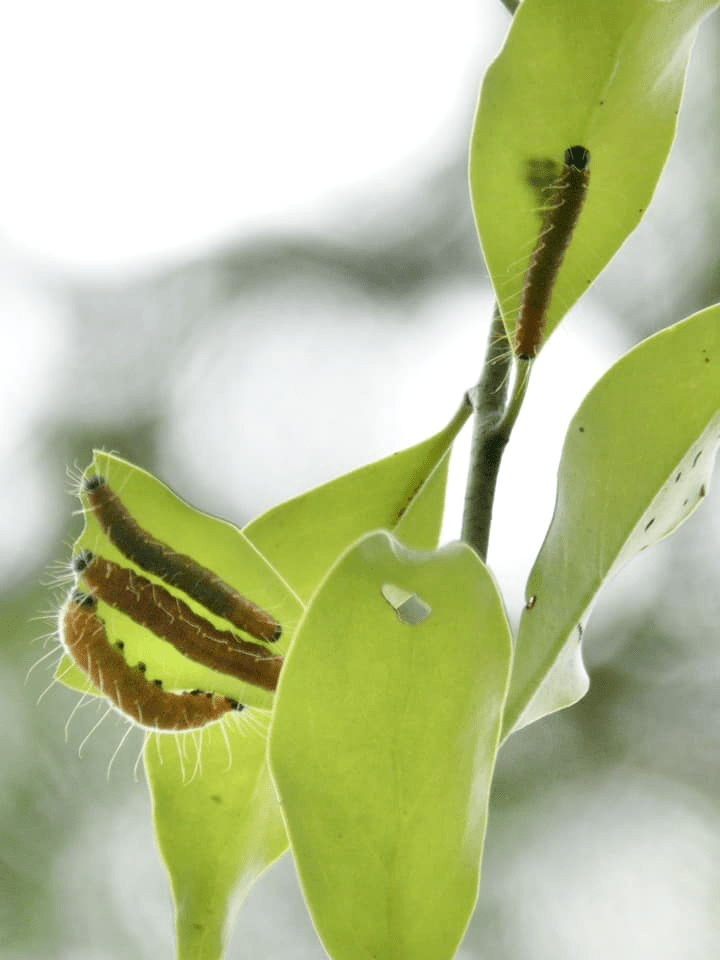
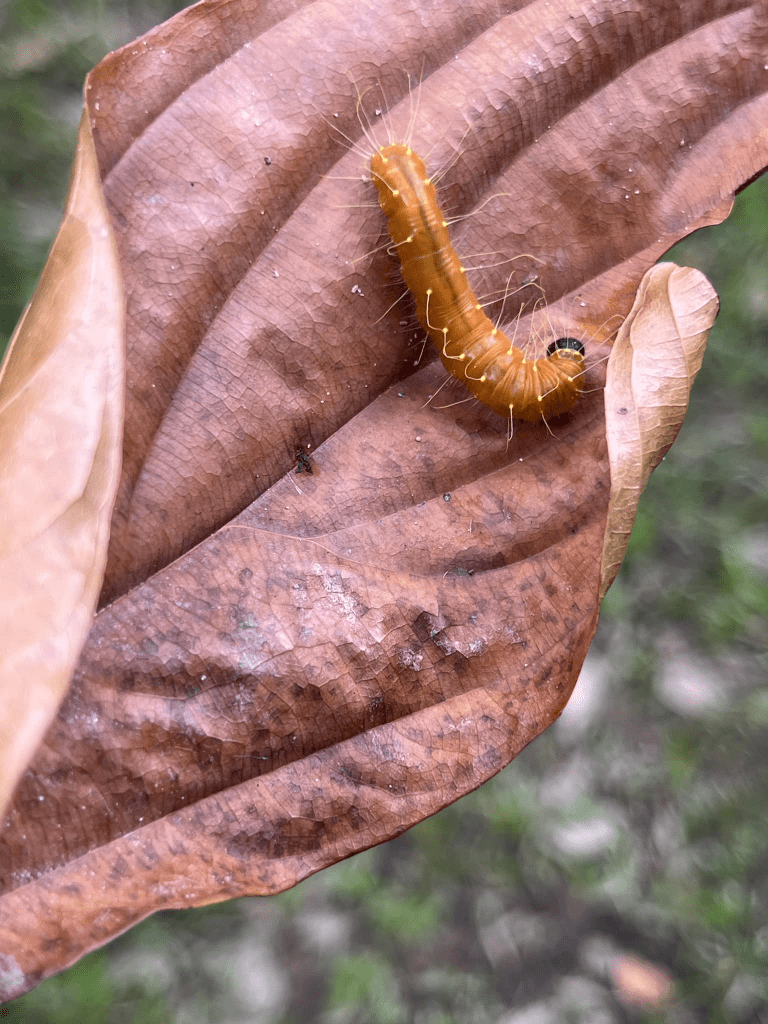
The caterpillars start their journey as tiny 2mm creatures, growing to about 25mm while changing from light to dark orange. They’re social eaters, feeding in groups on the undersides of mistletoe leaves. If you look closely, you might see a row of little black heads munching away together. Their bright orange color isn’t just for show—it’s a warning to predators that they’re not a tasty snack. On top of that, by feeding at the undersides of leaves, they tend to avoid predation.
When these caterpillars grow up, they transform into spectacular butterflies. The Painted Jezebel’s wings are a work of art, showcasing a beautiful pattern of white, black, bright red, and vibrant yellow. But here’s the clever part—this beauty is actually a defense mechanism called aposematism. It’s nature’s way of saying, “Look how pretty I am, but don’t even think about eating me!”
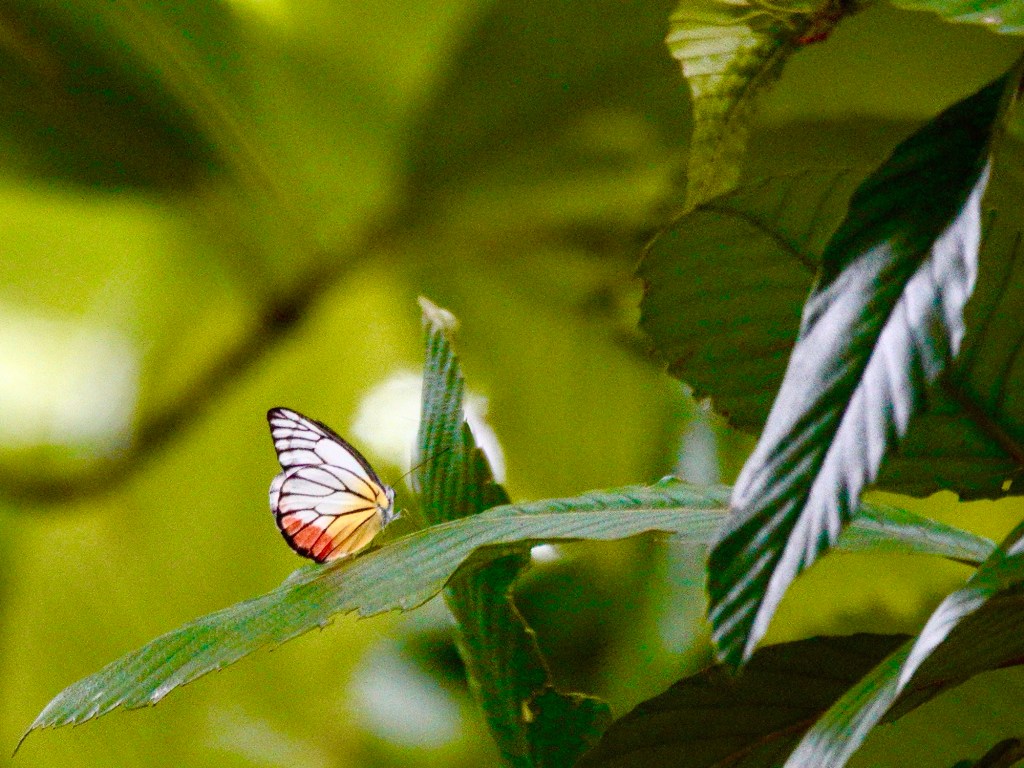
It’s a perfect example of how nature works together—the mistletoe provides food and protection for the butterfly, and in return, the butterfly might help pollinate the mistletoe.
The Scarlet-backed Flowerpecker: Our Tiny Tree Dweller
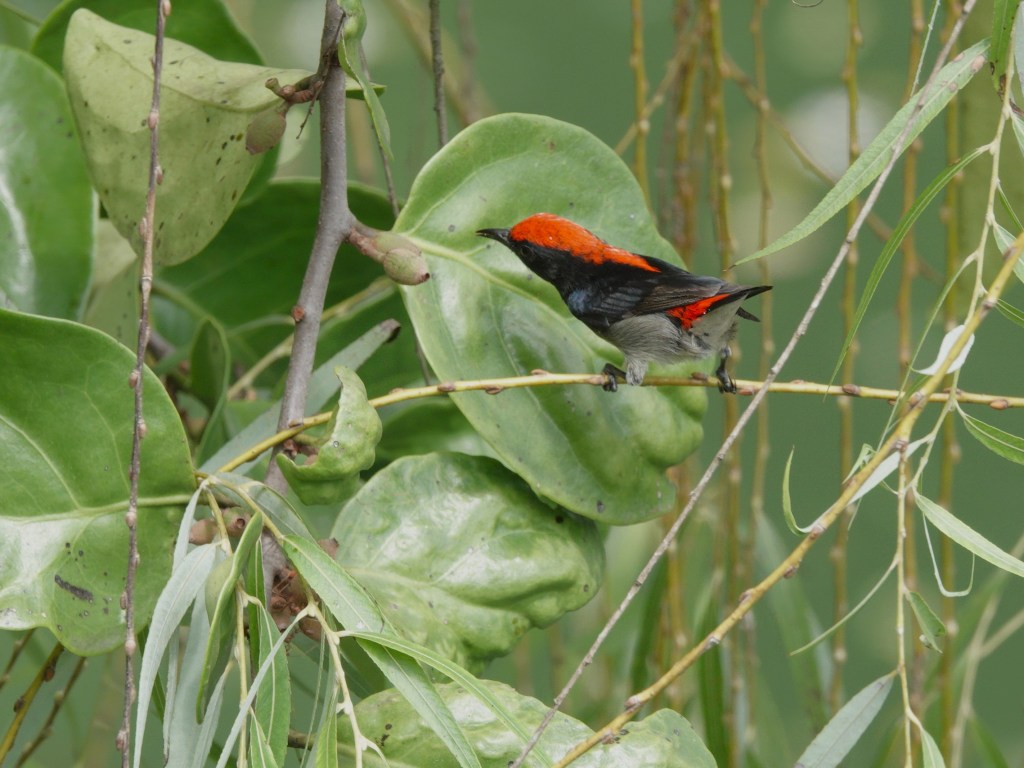
Completing our trio of mistletoe marvels is the Scarlet-backed Flowerpecker (Dicaeum cruentatum). This little bird, barely larger than your thumb, sports a brilliant red back that makes it a striking sight in our trees.
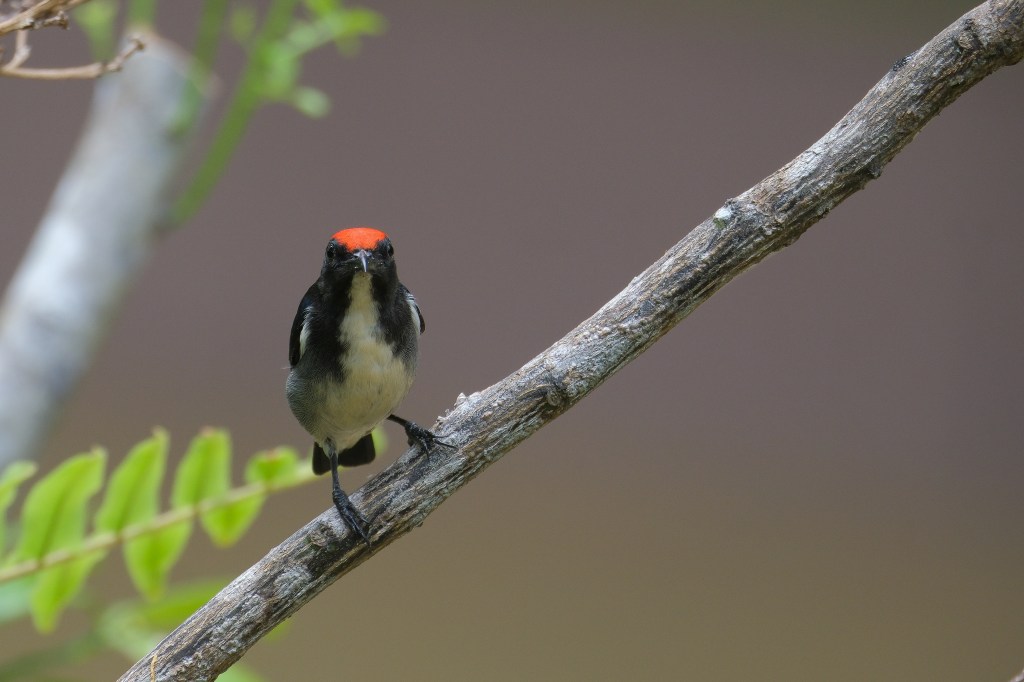
The Scarlet-backed Flowerpecker has a special relationship with our Malayan Mistletoe. It loves to snack on the mistletoe’s fruits, helping to spread the seeds in the process. When the bird’s droppings land on tree branches, they contain undigested seeds that can grow into new mistletoe plants.
Other than the flowerpeckers, it is also common to see the Ornate Sunbirds (Cinnyris ornatus) or Brown-Throated Sunbirds (Anthreptes malacensis) feeding on the fruits of the mistletoes.
Nature’s Relationships
While the Malayan Mistletoe is the most common in our parks and gardens, Singapore is home to several other mistletoe species. Keep an eye out for the Rusty Mistletoe, the Oval-leaved Mistletoe, and the Common Chinese Mistletoe. Each of these plants plays a role in supporting our local wildlife, even as a parasite.
Together, these species create a miniature ecosystem right above our heads, showcasing the interconnectedness of life. The mistletoe provides food and shelter, the butterfly helps with pollination, and the flowerpecker spreads the mistletoe to new trees. It’s a beautiful cycle of life happening in our very own green spaces.
So, the next time you’re strolling through one of Singapore’s public parks or exploring our nature reserves, look up! You might spot a clump of mistletoe with its distinctive fleshy leaves, a flash of a Painted Jezebel’s wings, or hear the chirp of a Scarlet-backed Flowerpecker. Remember, our local mistletoe isn’t just for holiday kisses—it’s supporting a whole world of wildlife right here in our urban jungle. It’s a nature story written by evolution itself, filled with color, cooperation, and the cycle of life—truly a Singapore marvel worth celebrating.
Merry Christmas!
Written by Lucas
 birdbrainsg
Leave a comment