It has been over a year since my last offshore fishing trip, and today I finally had the chance to join my friends for an exciting expedition in the Southern Islands area, situated between Sentosa and Saint John’s Island.

With Chinese New Year approaching, we embarked on our fishing trip with high hopes of landing some prized catches like Coral Trout, Golden Snapper, Red Snapper, or the Orange-Spotted Grouper for our reunion dinners. However, our enthusiasm was dampened by unfavourable weather conditions, as heavy downpours significantly impacted the bite rate, making our quest more challenging.
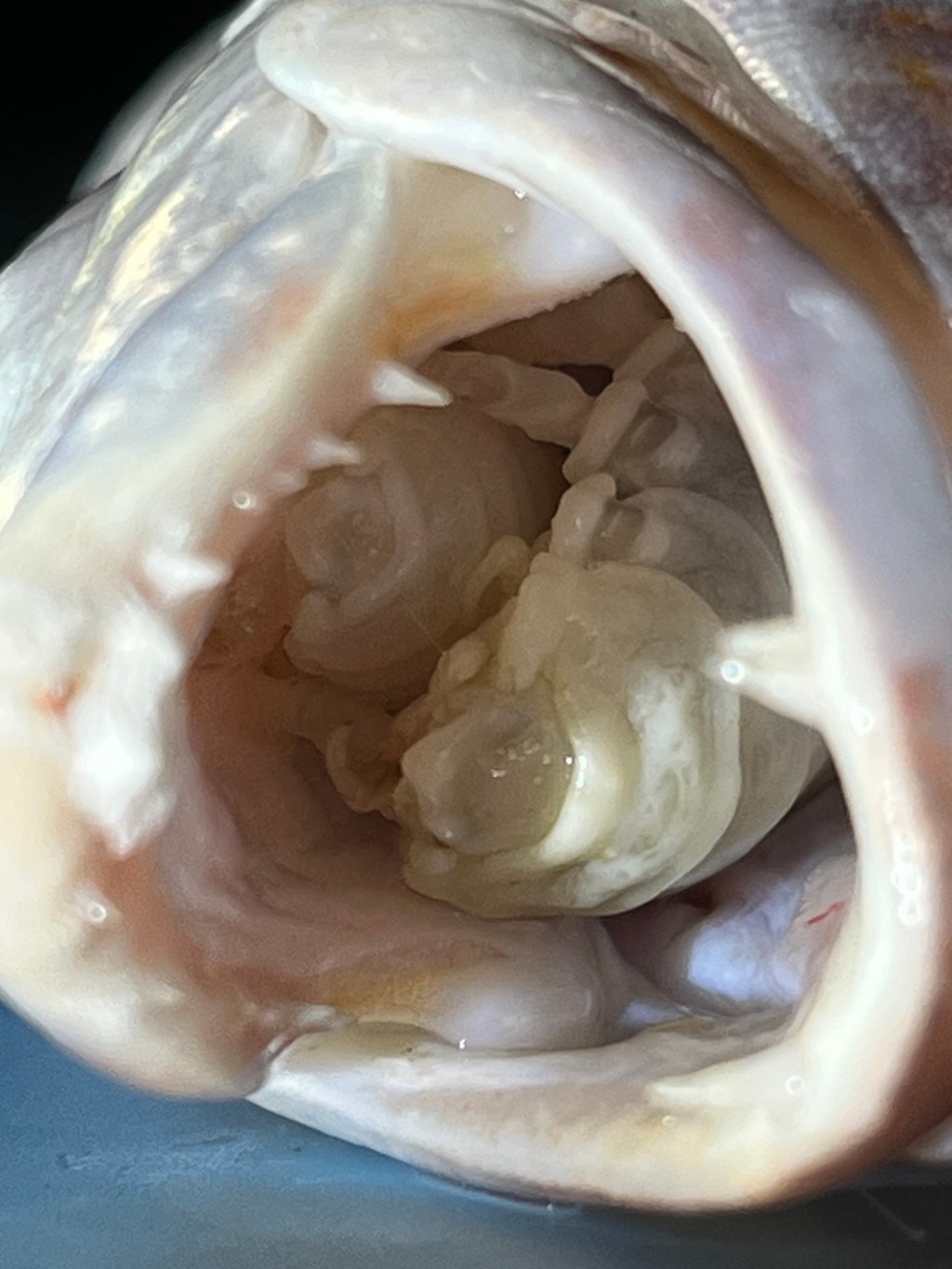
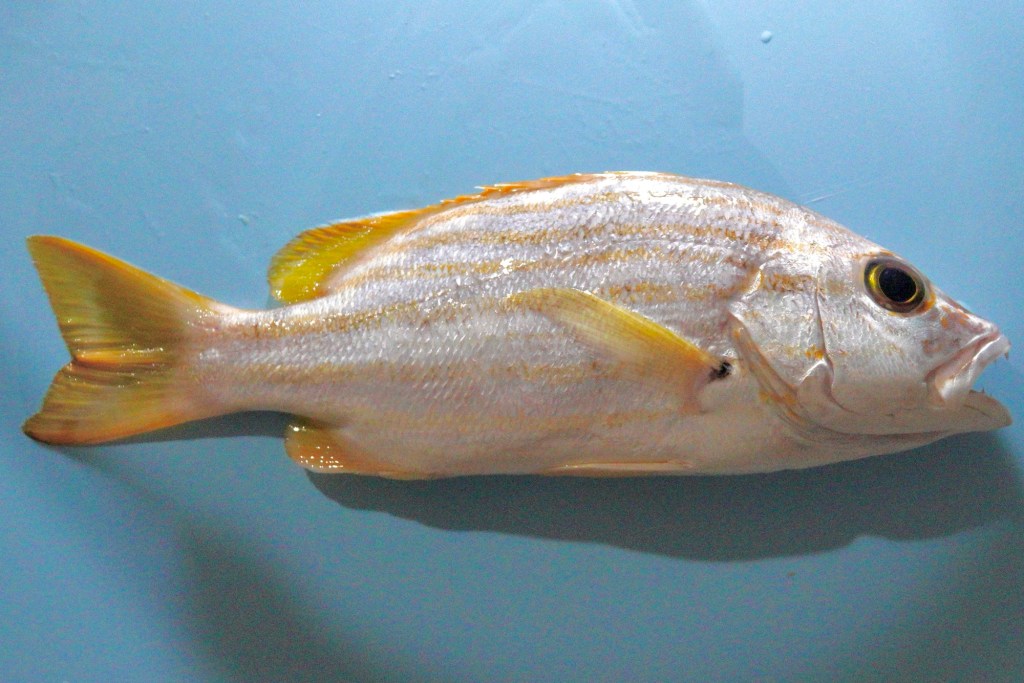
In the end, we caught a variety of other fishes instead, that included a Black Spot Tuskfish (Choerodon schoenleinii), which is often mistakenly called ‘Eng Kor’ or Parrot Fish in Hokkien, despite belonging to a different family than true parrotfish (Scaridae). We also caught a Fingermark Seaperch, commonly known as ‘Golden Snapper’ (Lutjanus johnii), and an impressively large ‘Leng Jiam’, also known as a Spangled Emperor (Lethrinus nebulosus). To round out our catch, we reeled in numerous ‘Tee Boon’, or Spanish Flag Snapper (Lutjanus carponotatus). While we may not have caught exactly what we were aiming for, we enjoyed the time spent together.

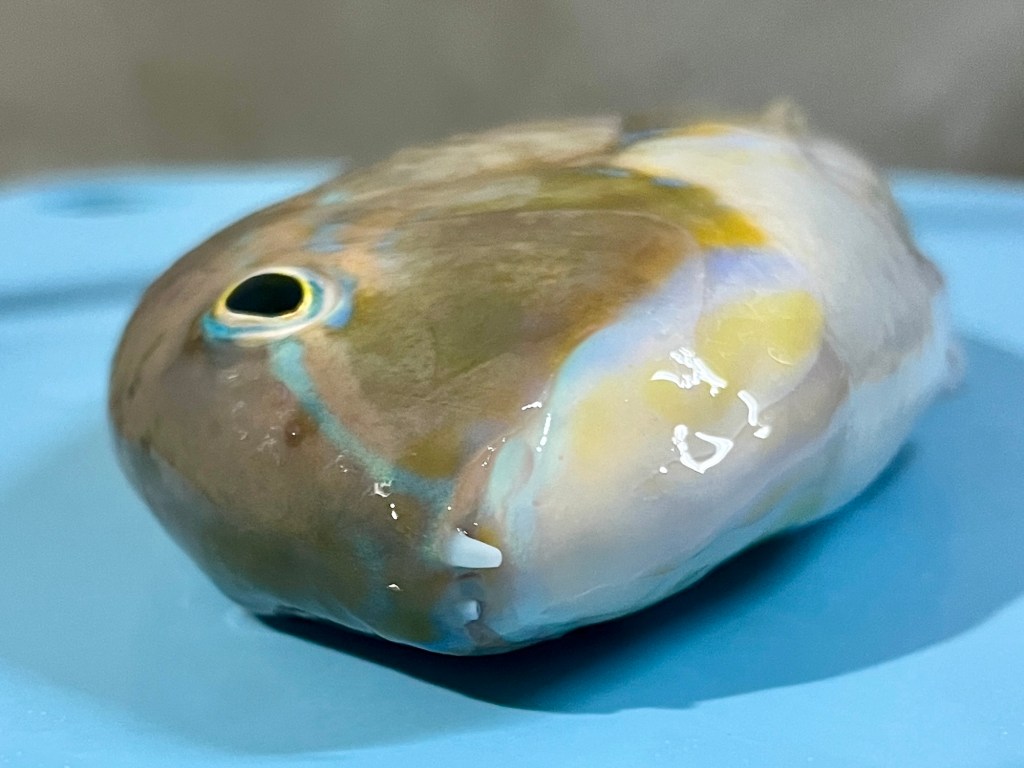
Warning: If you have entomophobia (a fear of insects) or hemophobia (a fear of blood), please do not continue with the article.
A Nightmarish and Disturbing Discovery
Our fishing adventure was filled with unexpected sights and discoveries. During our trip, we were treated to the majestic view of 5-6 White-Bellied Sea Eagles (Haliaeetus leucogaster) soaring through the sky and perching on one of St. John’s Island’s Casuarina Trees. We also exclaimed in awe at the sight of a huge turtle, most likely a Green Turtle (Chelonia mydas) given its impressive size.
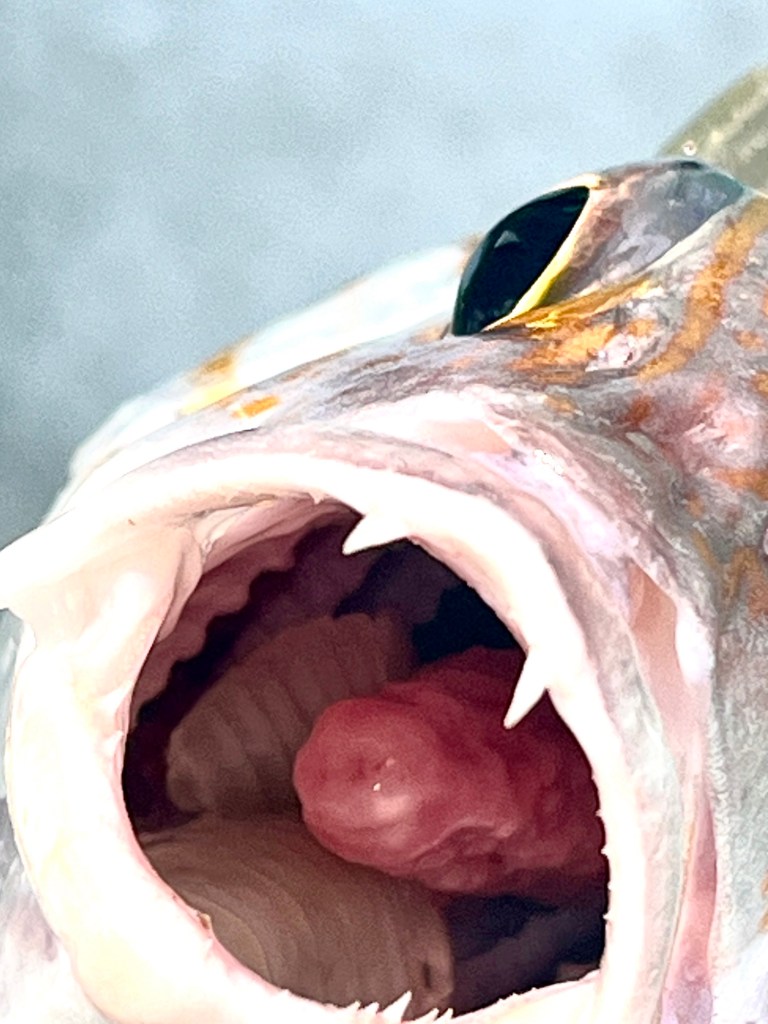
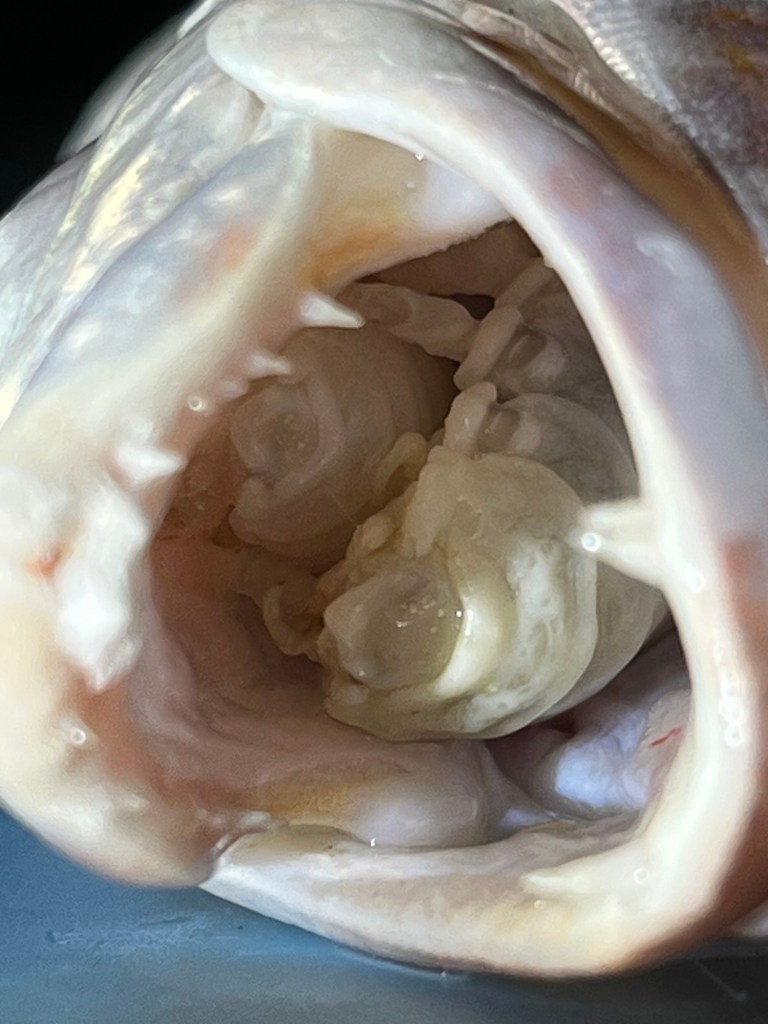
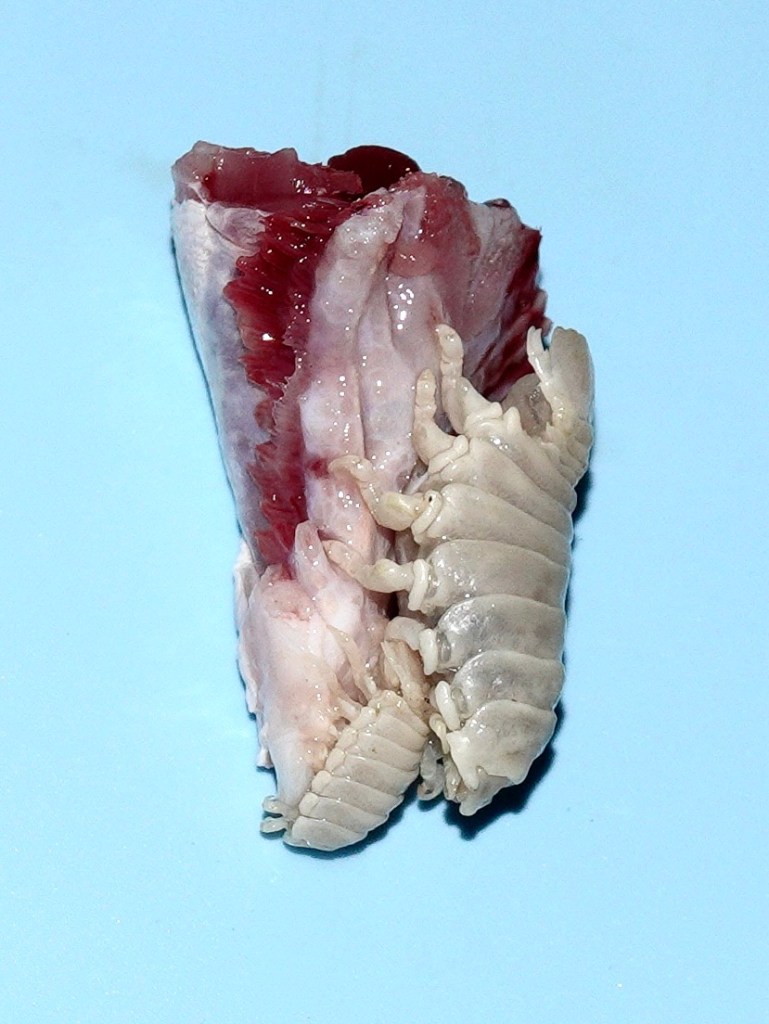
A disturbing yet fascinating discovery was the Tongue-Eating Louse (Cymothoa exigua), I mean lice, as there were two of them in the mouth of a Spanish Flag Snapper, caught by my ex-colleague, Marvin.
Behaviours & Appearances of the Parasitic Isopods
During their juvenile stage, these isopods swim freely in the ocean before attaching themselves to fish. They then crawl into the fish’s mouth through the gills and make their way to the tongue, where they anchor themselves using their sharp claws. This clever manoeuvre cuts off blood circulation to the tongue, causing the tongue to eventually experience necrosis.
But that’s not the most astonishing part – the parasite then positions itself as a replacement tongue, essentially becoming a functional part of the fish’s anatomy. It survives by feeding on the host’s blood and mucus.
The photograph above shows two tongue-eating lice, with the larger female (approximately 20mm) taking center stage and the smaller male (about 8mm) positioned behind and slightly underneath her. Apparently, they are protandrous hermaphrodites as they begin their lives as males and mature into females. Thus, it is safe to deduce that the smaller one is not just smaller in size but younger in age as well.
As I cleaned and prepared the fish for freezing, I carefully extracted the tongue, which still had the two isopods attached. Despite my best efforts, I couldn’t separate them from the tongue, as their multiple pairs of legs were tightly lodged in place. What struck me as remarkable was that, even after being out of water for over 6 hours, the isopods were still alive and moving. This raised an intriguing question: are these tiny creatures capable of breathing air?
As much as they are scary-looking creatures, these parasites do not really kill their hosts and often the latter will outlive the parasites. Nevertheless, the host may be slightly malnourished.

After I have preserved the parasites in a bottle of 70% alcohol, the bigger female started having babies floating around. So it wasn’t bloated. It was pregnant!
Ewwwww… Goosebumps!
I’ve spent what feels like an eternity observing these two creatures, all in the pursuit of accurately documenting their behaviours and appearances. Despite being an insect enthusiast – I even keep terrestrial isopods as pets – there’s something about these particular creatures that sends shivers down my spine and leaves me covered in goosebumps.
And so, our journey into the bizarre world of tongue-eating lice comes to an end. But if you’re ready for more adventures into the uncharted territories of Earth’s biodiversity, be sure to follow birdbrain blog for a wild ride. From the fascinating to the frightening, we’ll explore it all – so, buckle up and join us, but be warned: not all of our discoveries will be for the faint of heart!
Written by Lucas
 birdbrainsg
Leave a comment