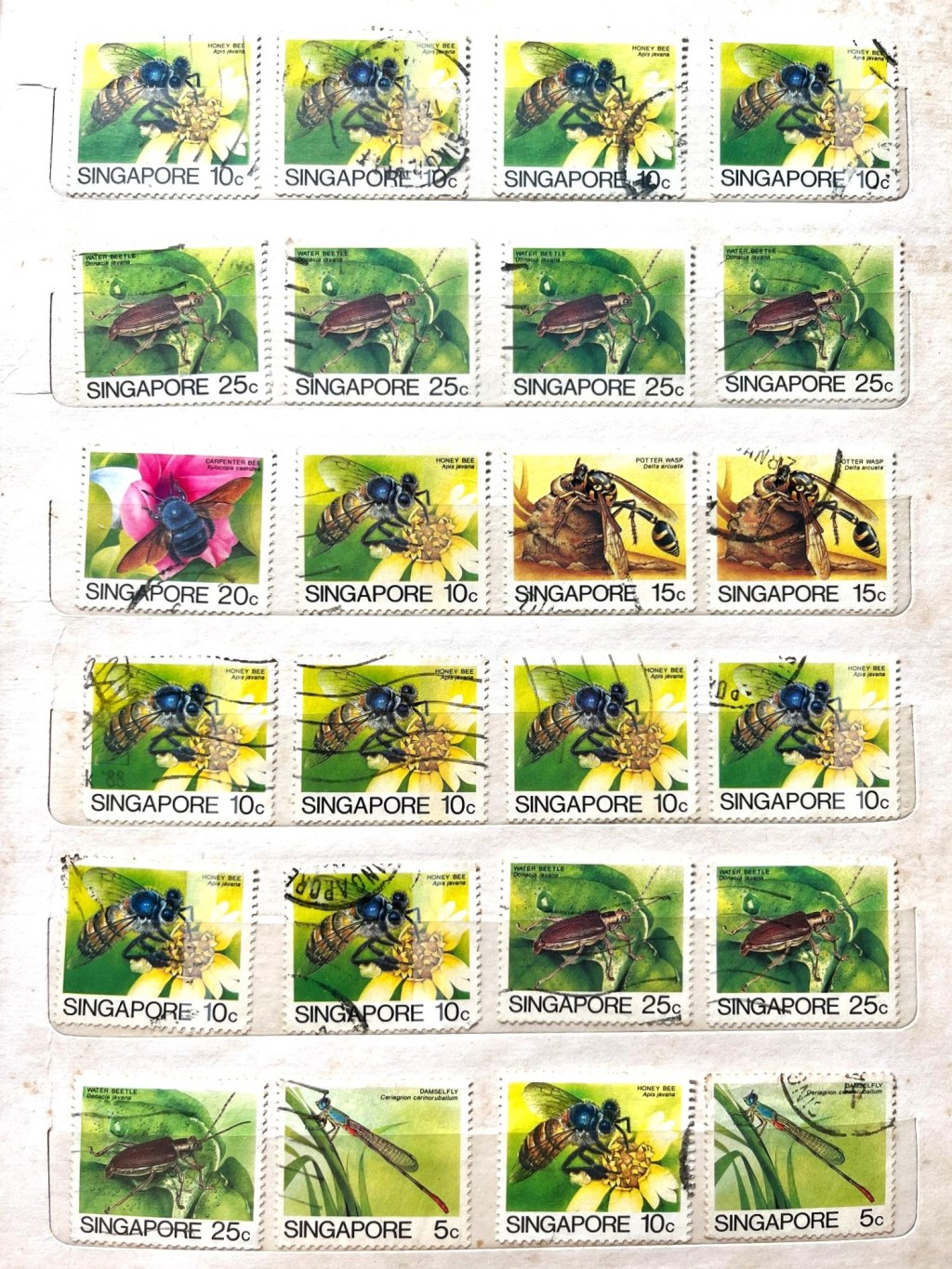
Born in 1982, I’ve witnessed Singapore’s dramatic transformation over the decades. In my opinion, nature appreciation wasn’t a conscious “thing” back then – simply because nature was all around us. Many parts of Singapore were still forested, creating a landscape vastly different from what we see today.
Let me paint a picture of those (personal) times in the late 80s and early 90s:
- Weekly family visits to my grandma near Pasir Ris Park involved driving through lush, green forests.
- Chinese New Year traditions often led us to relatives living in kampong houses. These traditional dwellings were nestled right in the heart of forested areas.
- Even though I lived in Hougang, I was very near the coastal areas as Buangkok, Sengkang and Punggol had not yet been (massively) reclaimed. The sea was less than 1km away.
This proximity to nature wasn’t just a backdrop; it was a way of life. It shaped our perspectives, our play, and our understanding of the world around us. Ironically, because nature was so omnipresent, I personally took it for granted and didn’t always pay close attention to my surroundings. Even though I enjoyed collecting rubber seeds and saga seeds, and shooting grass blades (yes, nature was more of a plaything), I didn’t fully appreciate its significance. However, I did begin to learn about biodiversity in a more indirect way – through stamp collecting.

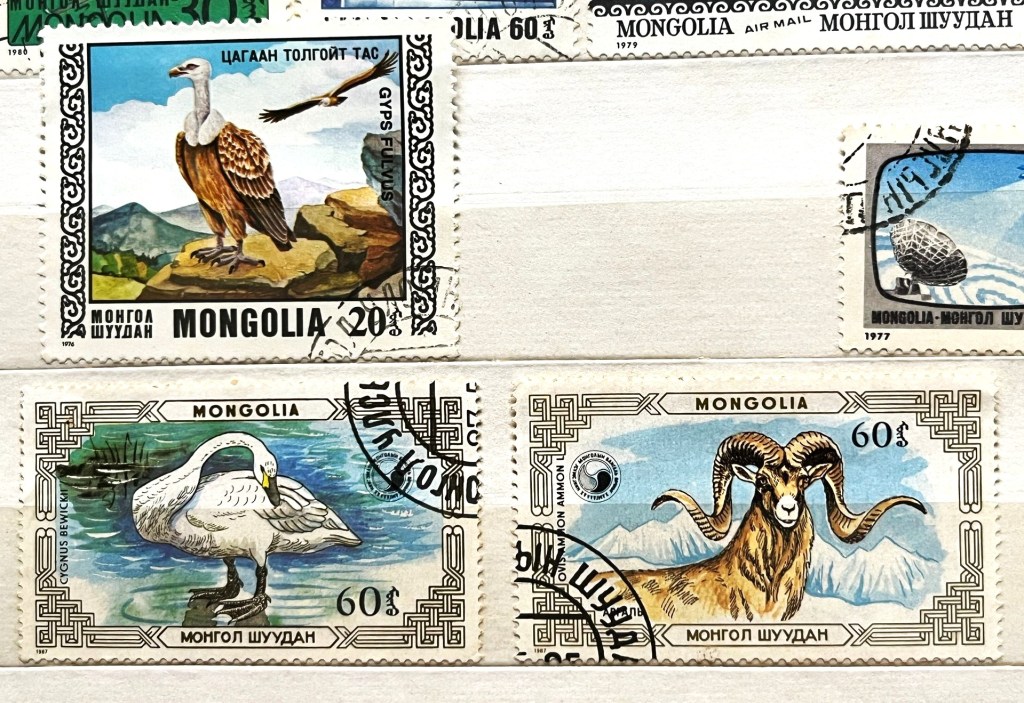
For children growing up in the 70s, 80s, and 90s, stamp collecting was more than just a hobby – I feel that it was a window to the natural world. Long before the internet and smartphones dominated our lives, these tiny, colourful pieces of paper served as glimpses to exotic landscapes, elusive animals, and vibrant flora from both Singapore and across the globe. The Singapore Post Office played a crucial role in nurturing this interest, regularly releasing stunning stamp collections that showcased the beauty of nature.
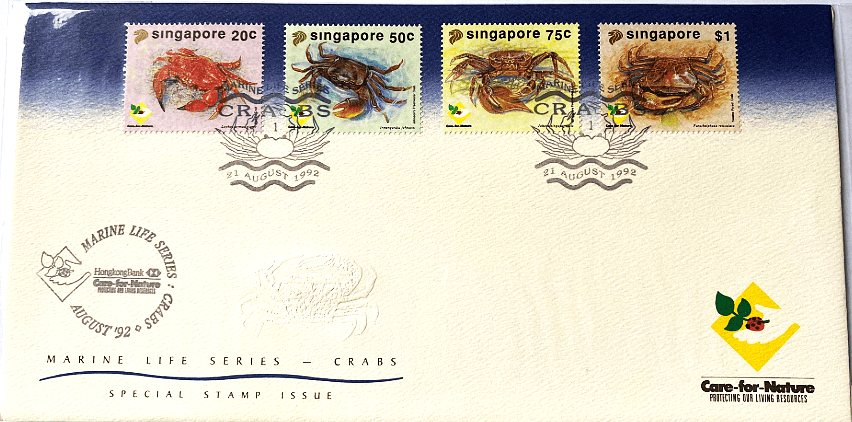
My introduction to stamp collecting came through two main sources: loose stamps carefully removed from envelopes and sets of stamps in “First Day Covers,” which my dad often bought for us as presents. These became treasured possessions and to some extent, learning tools.

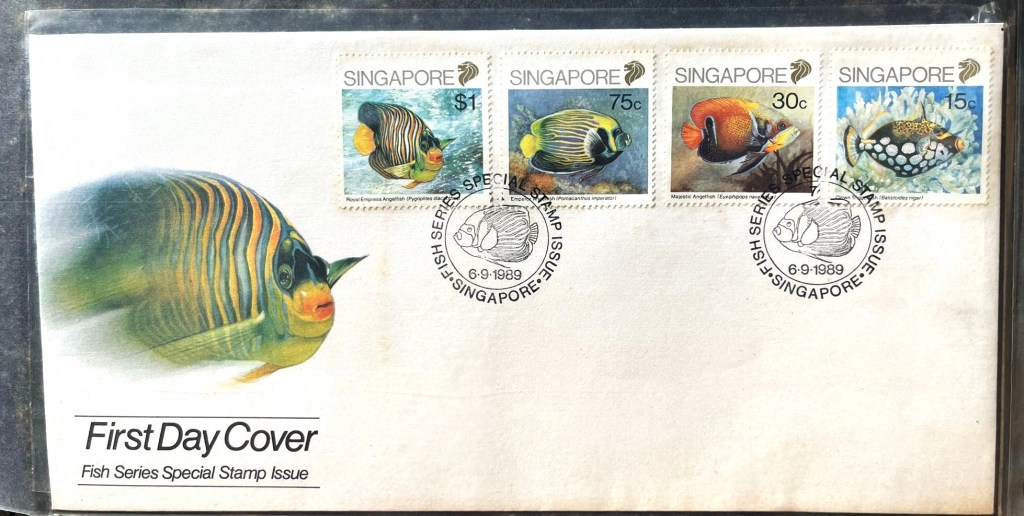
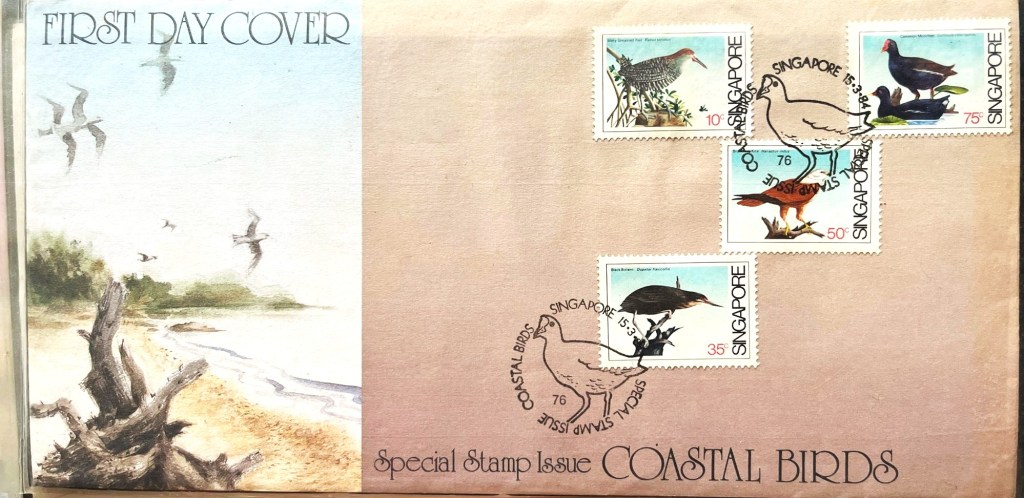
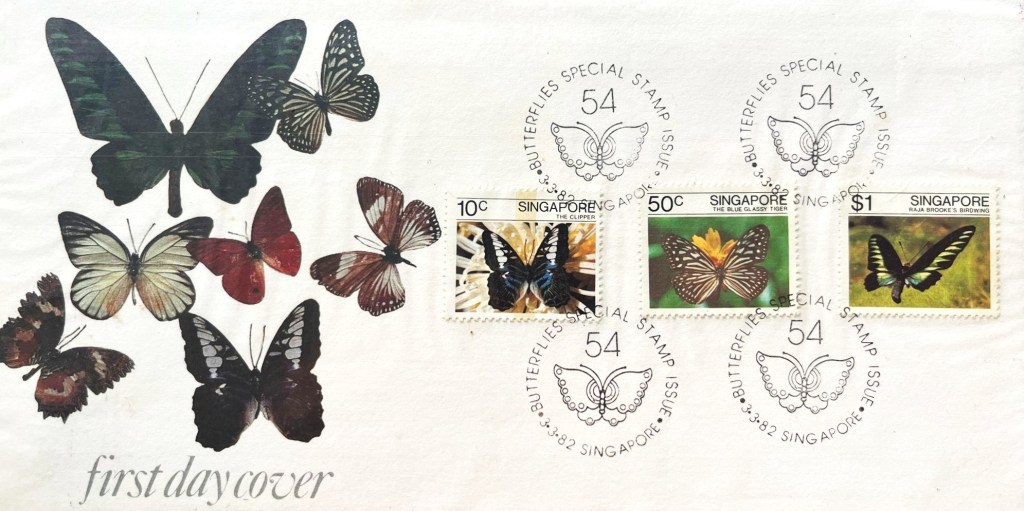
Imagine the excitement of a young collector eagerly awaiting the latest nature-themed stamp series in a First Day Cover format. Each new release was an adventure, offering glimpses of vibrant orchids, ferns, freshwater and marine fishes, and birds. I particularly favour the illustrated stamps over the photographed ones, appreciating the intricate artistry behind them. First Day Covers were especially valuable as they provided the entire stamp series, including higher-valued stamps that were rarely used for regular postage. Have you noticed that all the rubber stamp ink prints are of a certain theme that matches the First Day Cover theme?
The real joy and excitement came from collecting loose stamps. You never knew what you’d get, as it depended on which stamps were used for mailing. As a nature lover from a young age, I often pored over our albums, learning about different species and admiring their colors and shapes (and often cross-referencing to the Science Centre published guidebooks).

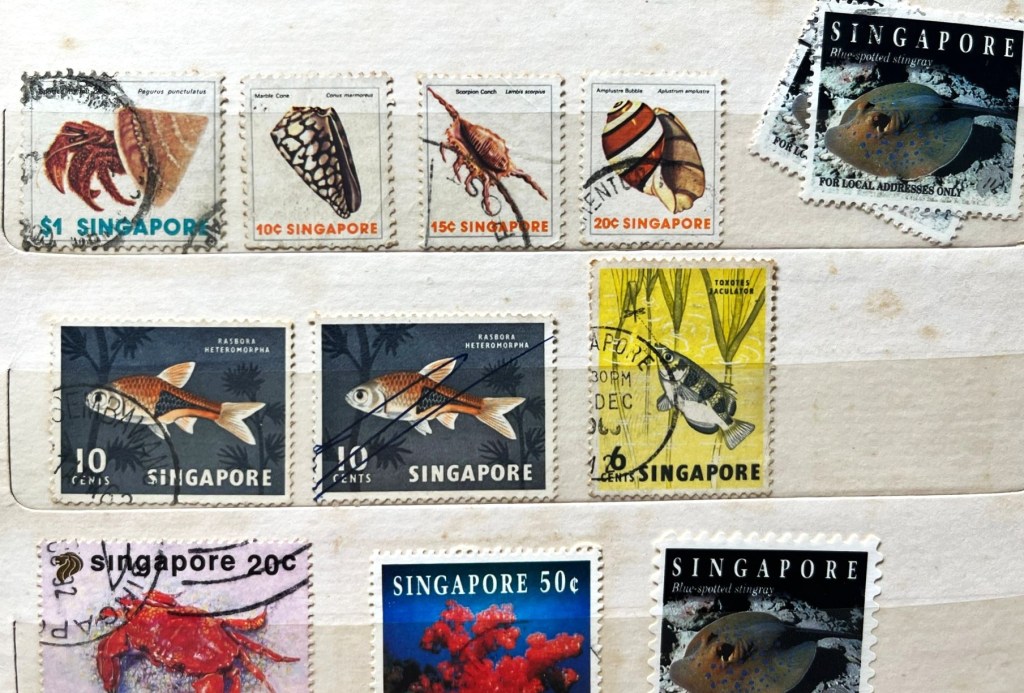
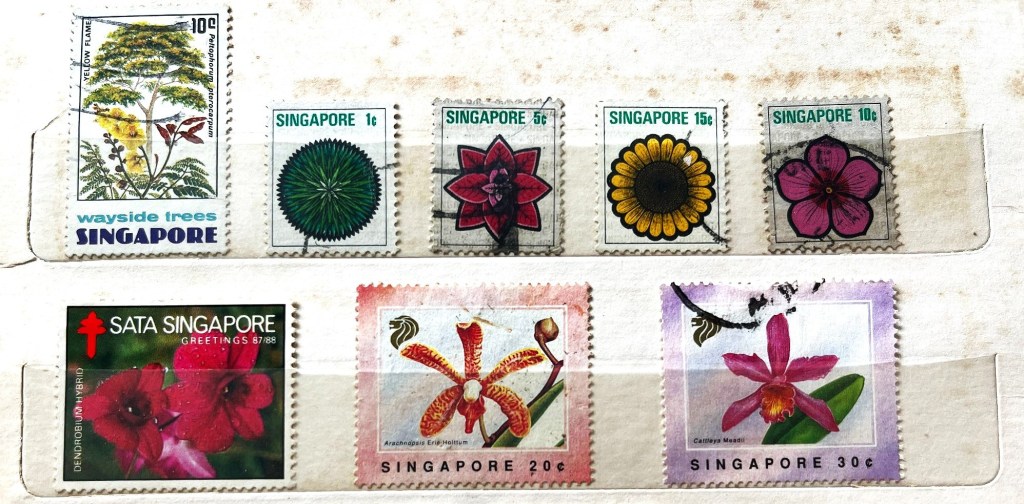
The act of collecting itself was a lesson in patience and appreciation. We would carefully soak the stamps off envelopes, dry them, and meticulously arrange them in our albums. This process fostered a sense of care and respect for these miniature works of art.
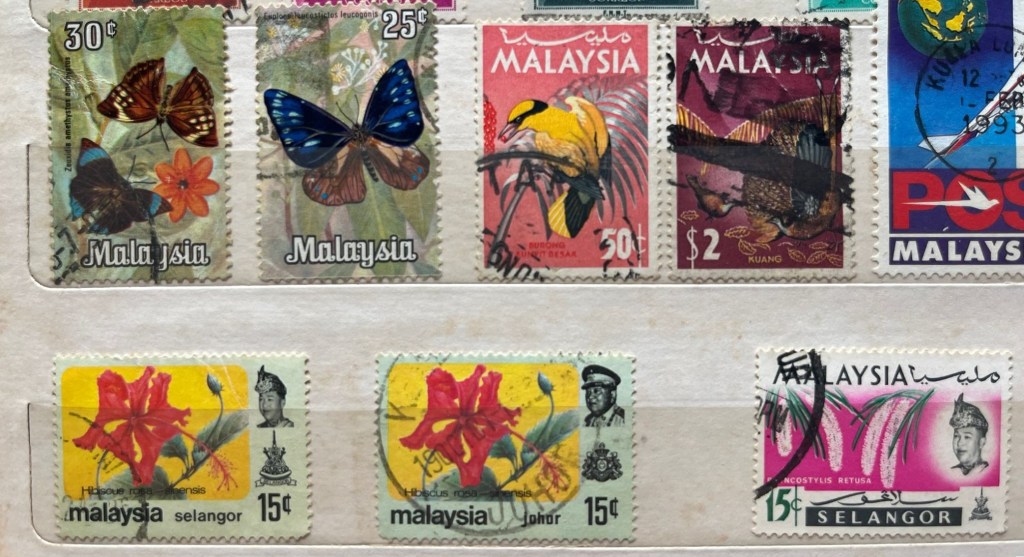
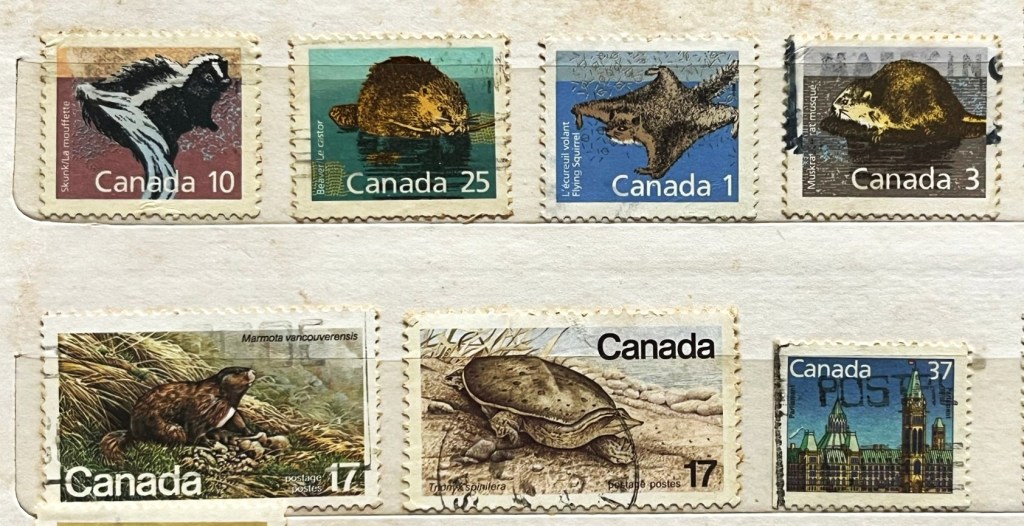
From an early childhood education perspective, stamp collecting also helped nurture children’s executive functions and fine-motor skills given the need to take great care of them, learn to organise them based on countries and themes and through stamp exchange as part of our social activities. Friends would gather to trade duplicates and show off their prized possessions. I particularly looked for flora and fauna stamps, always eager to add to my nature-themed collection.
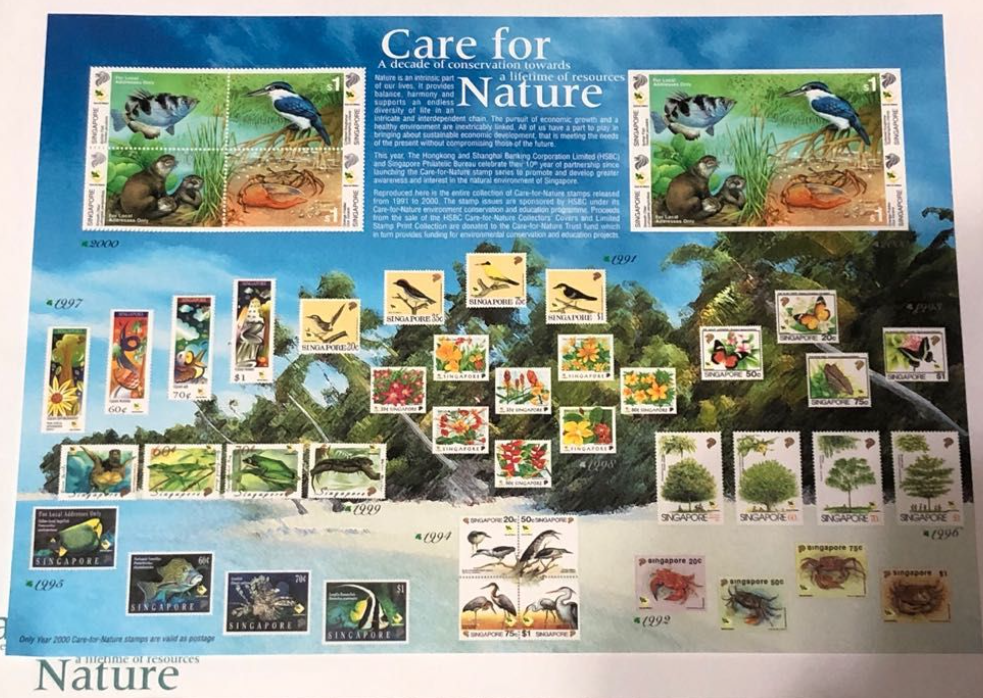
Since the early 1990s, Singapore Post has collaborated with HSBC bank to produce nature-themed stamps more intentionally. Titled “Care-for-Nature,” this collection of postage stamps aims to raise awareness about nature conservation in Singapore.
Even today, I’m amazed by how Singapore Post continues to produce beautiful nature-based stamps that showcase artists’ works while adding more background information for their presentation pack. A perfect example is Teo Nam Siang’s recent series on “Flora of Singapore in Freshwater Swamp Forest,” which I find particularly captivating. (refer to link for the exact post on Linkedin).
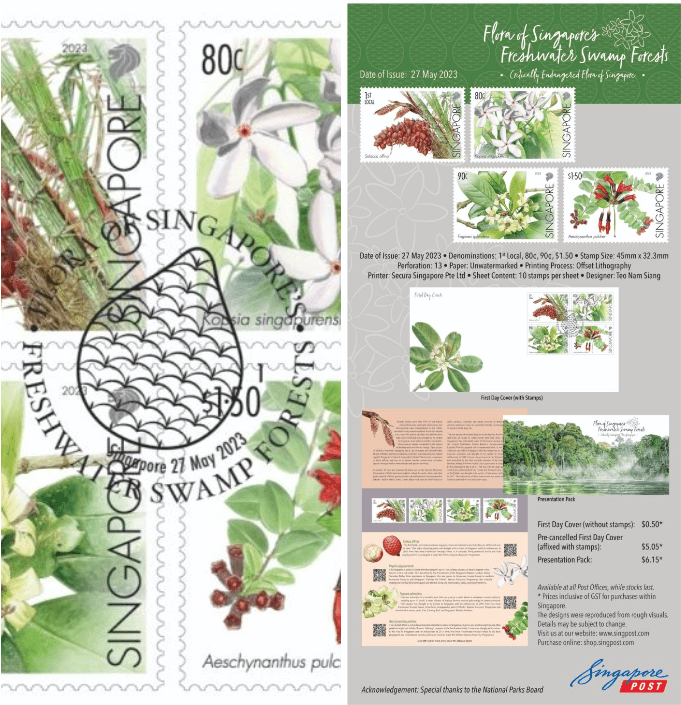
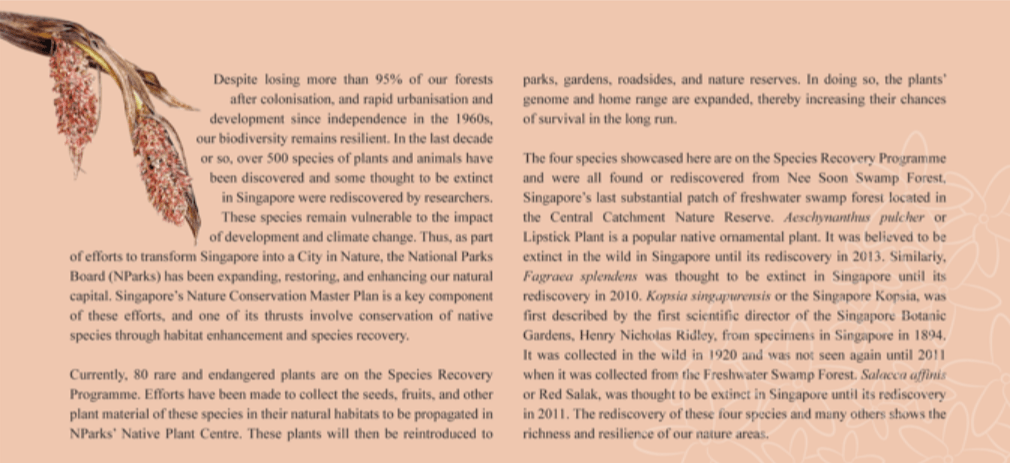
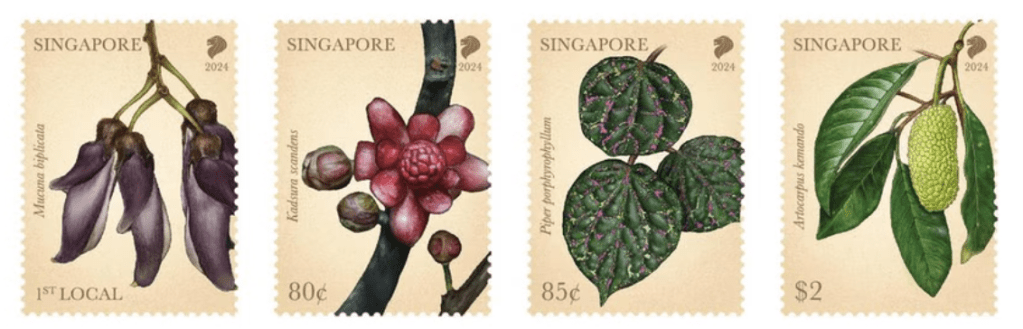
More recently, Singapore’s National Parks Board (NParks) and Singapore Post (SingPost) have collaborated to celebrate the country’s biodiversity and natural heritage through a series of postage stamps. As part of the Festival of Biodiversity, they released two special sets of stamps in 2023 and 2024, showcasing Singapore’s rare plant species.
The first set featured four critically endangered plants that are currently part of NParks’ Species Recovery Programme: the lipstick plant, Fagraea splendens, Singapore kopsia, and red salak. The second set introduced two rare species: the two-fold velvet bean climber and the Kadsura scandens with its pale red blossoms.
By featuring these plants on postage stamps, NParks and SingPost aim to raise awareness about Singapore’s unique flora and emphasise the urgent need for conservation efforts to protect these endangered species.
Personally, stamp collecting, along with other hobbies, has instilled a love for nature in me (or reinforced my already nature-loving heart) that I’ve carried into adulthood. This passion has significantly influenced my attitudes towards biodiversity, given the numerous stamp series I’ve collected featuring stunning flora and fauna.
In today’s digital age, while stamp collecting may not be as prevalent, I am so glad that I have gone through the era where I get to slowly appreciate the colours and the identities of these flora and fauna on the stamps. It’s a testament to the various ways we can connect with nature, even in unexpected forms like stamp collecting.
As we move forward, let’s cherish these memories while finding new ways to appreciate and protect the natural world around us.
Written by Lucas Teo
 birdbrainsg
Leave a comment