The mango tree at 125 Bukit Merah Lane 1 is a renowned hotspot among Singapore’s birding community, attracting a variety of species such as the Coconut Lorikeet (Trichoglossus haematodus), Blue-Crowned Hanging Parrot (Loriculus galgulus), Black-Naped Oriole (Oriolus chinensis), Asian Glossy Starling (Aplonis panayensis), Javan Myna (Acridotheres javanicus) etc.
I challenge all birders and nature enthusiasts to explore fruiting mango trees in their area – these birds might be living right on your doorstep! Here’s an example from Bukit Panjang, right beside a shopping mall.
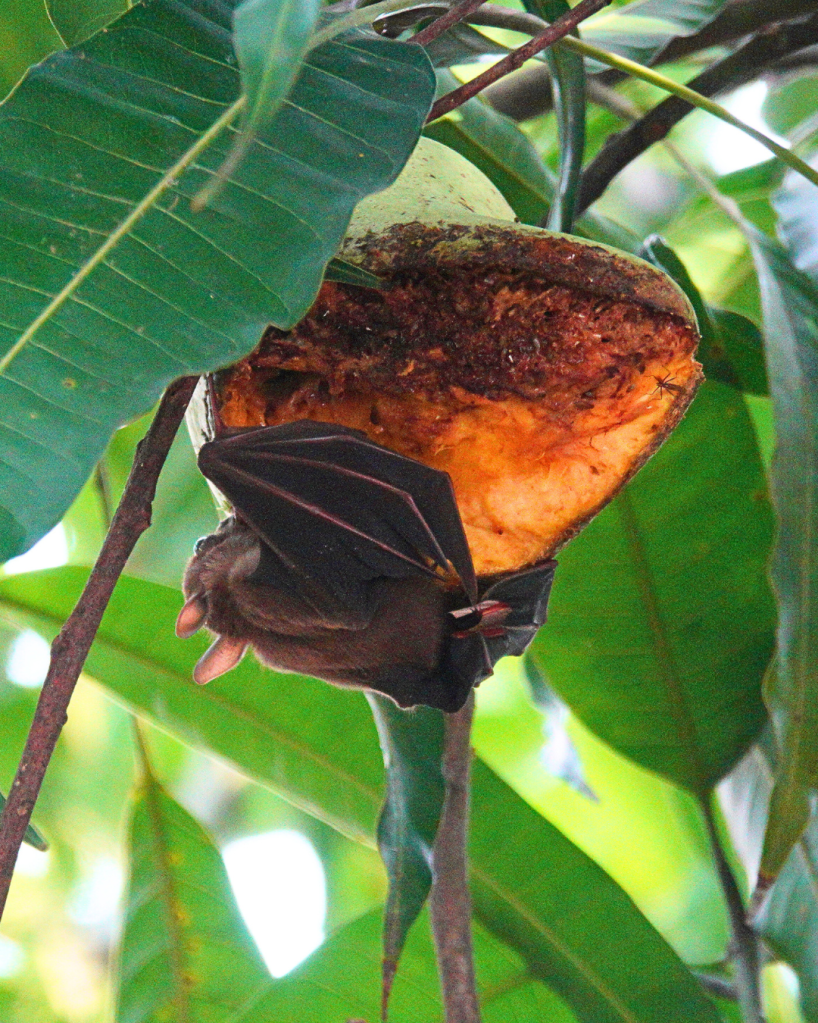
Just yesterday, as I walked by the tree, I caught a whiff of sweet scent and spotted half-eaten fruits. As it was already 6:00 pm and birds were scarce, I was surprised to find a Lesser Dog-Faced Fruit Bat (Cynopterus brachyotis) feasting on a mango.
This species of bat is highly adaptable to urban spaces and is, in fact, the most commonly spotted bat species in Singapore.
A few months back, when the mangoes were ripe, many birds flocked to this particular mango tree to feast, particularly in the mornings. On one such morning, I recorded the following bird species visiting the same tree in Bukit Panjang.
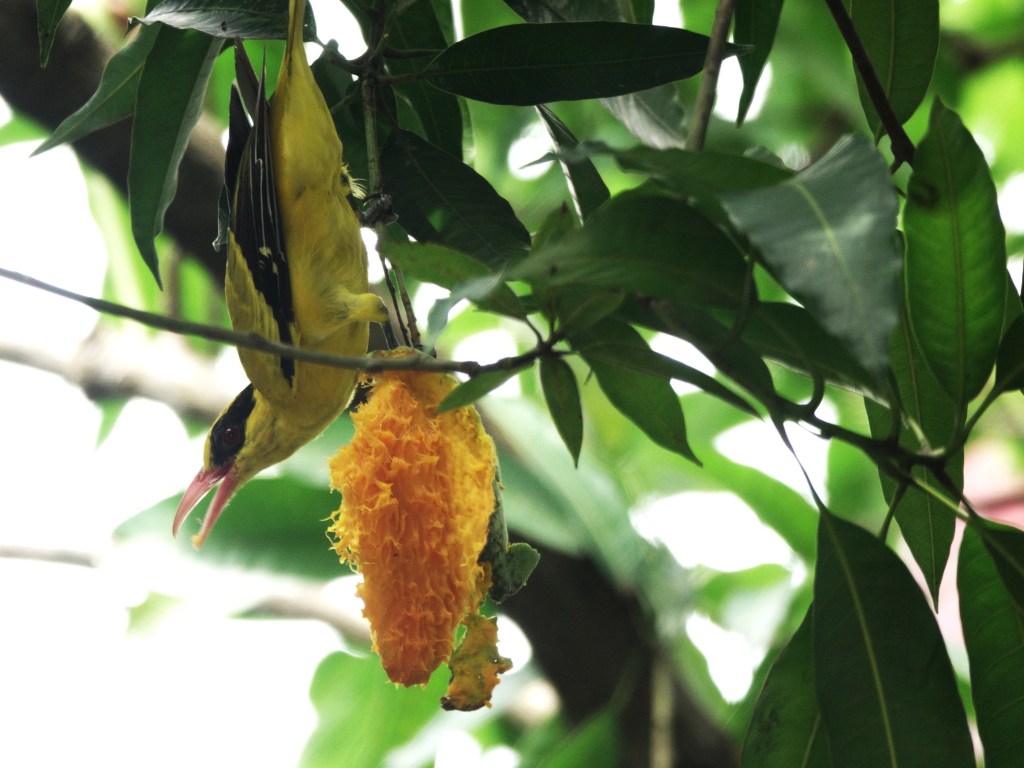
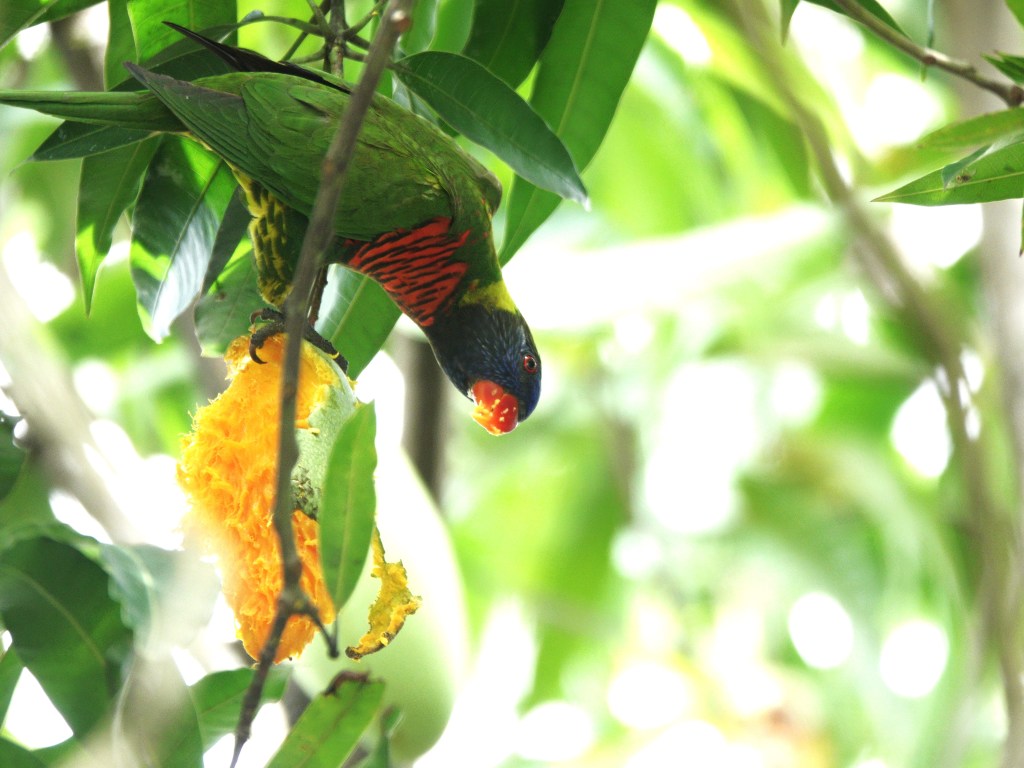
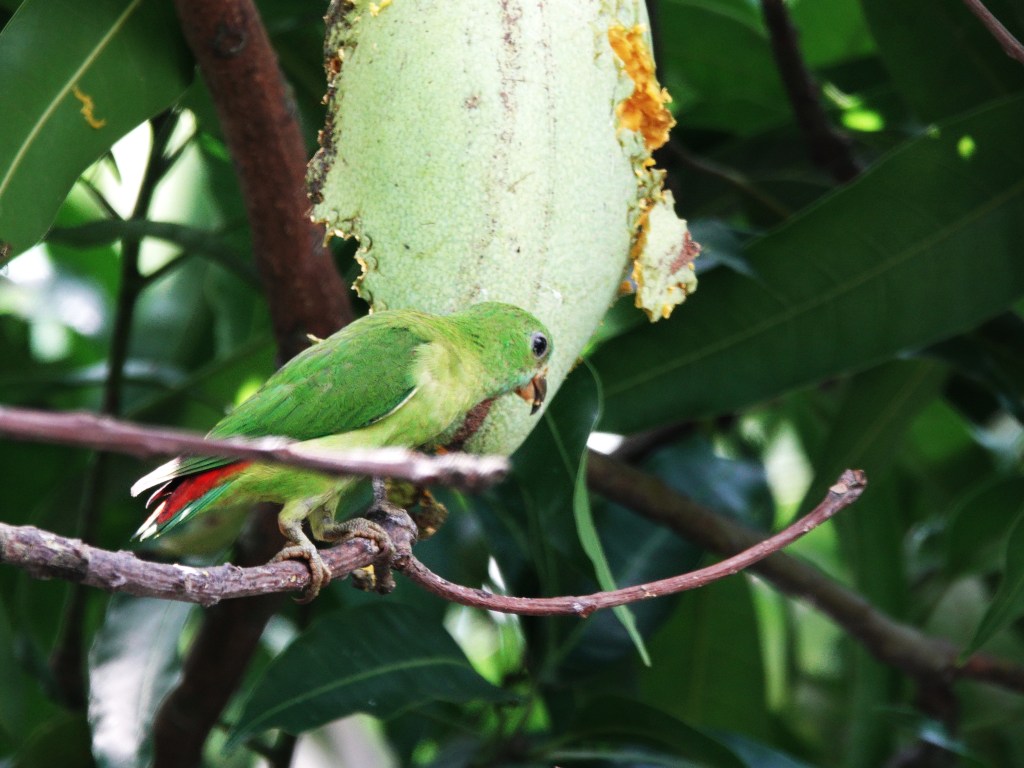
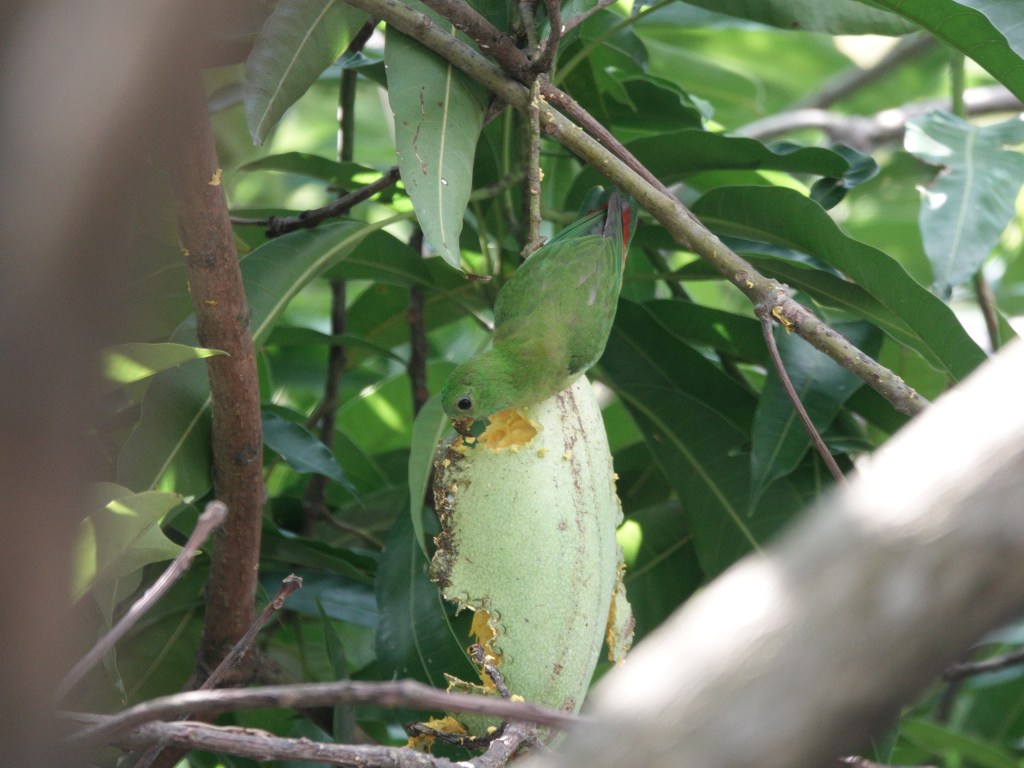
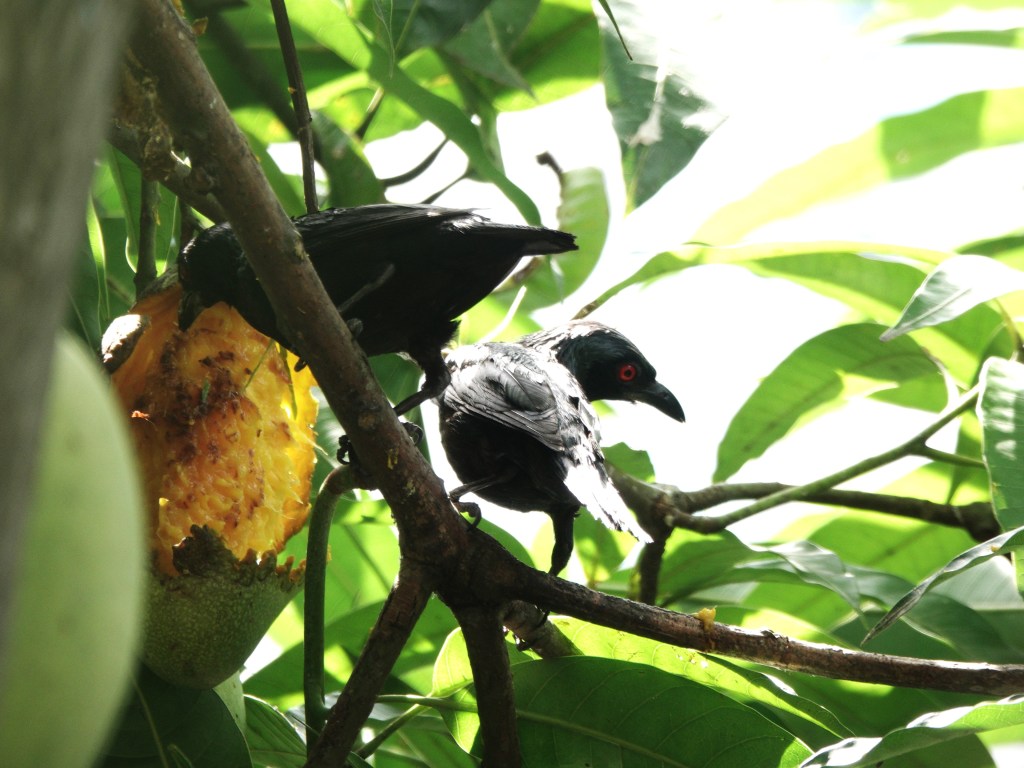
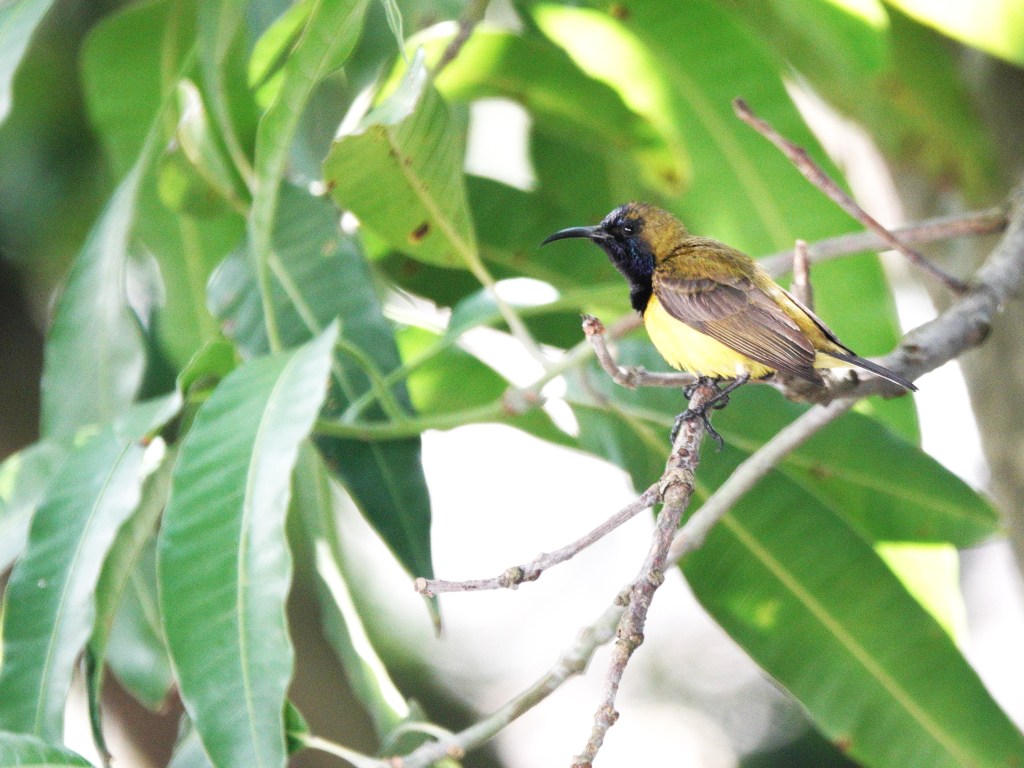
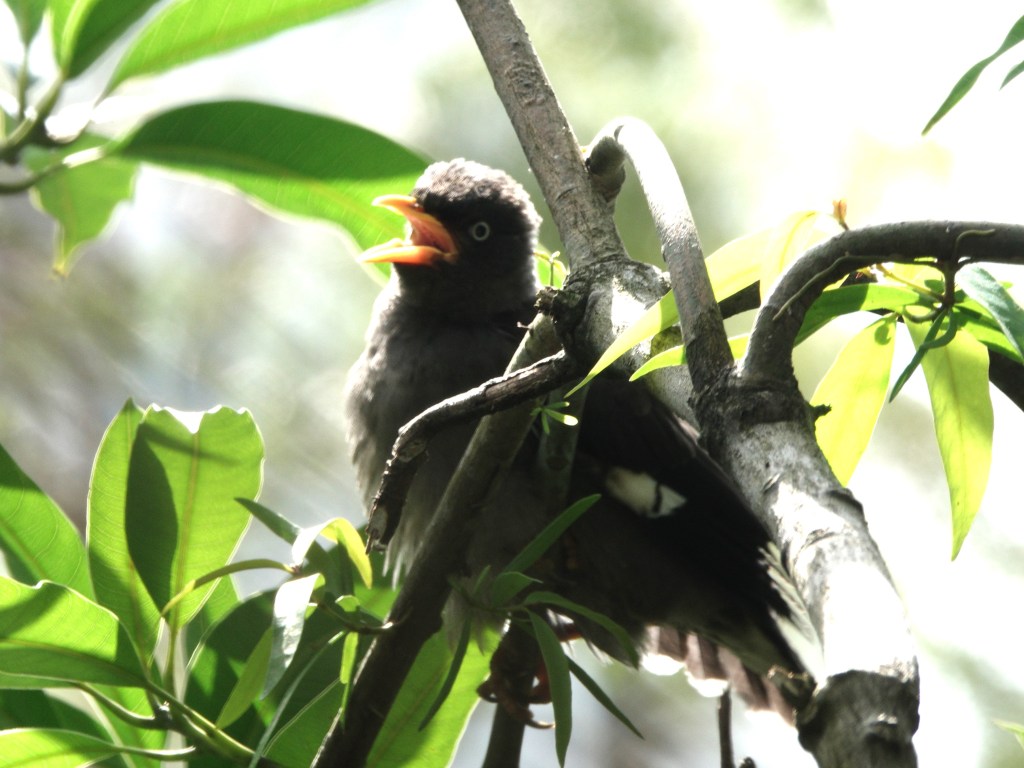
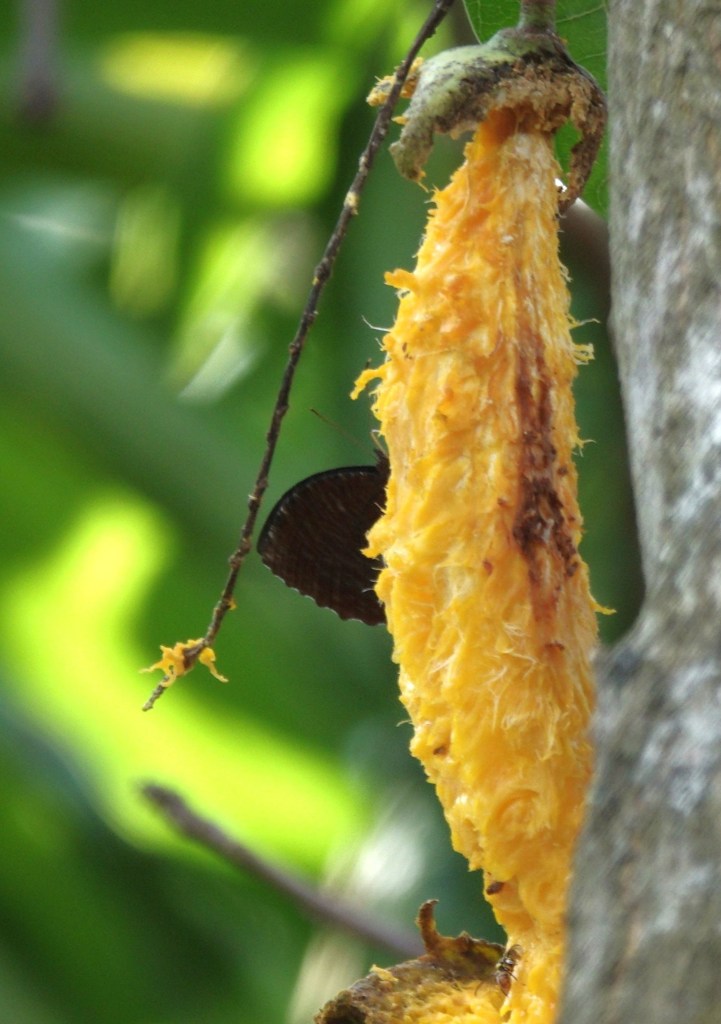
Black-Naped Orioles have a clear fondness for mangoes! I’ve affectionately nicknamed them the “Wolverine” due to their striking yellow plumage, which reminds me of the iconic X-Men character’s costume.I spotted two Coconut Lorikeets regularly visiting this mango tree, and here’s one of them in action! Looks like it’s time for a cleanup – this bird is definitely a messy eater!Here’s a lovely female Blue-Crowned Hanging Parrot! While they’re often heard flying between spots, the best opportunities for photography are usually near mango trees located close to carparks or HDB corridors. In more natural settings, I tend to find them high up in the canopies of ficus trees, feasting on tiny figs.The Blue-Crowned Hanging Parrot gets its name from the distinctive blue crown found on males – which this one lacks. So, it’s pretty clear that this is a female!A Spotted Dove waiting for its turn to feast on the mangoes.Catching the sun’s rays, Asian Glossy Starlings can reveal their stunning iridescent green feathers (not in this case though) – and their love for mangoes is undeniable!When I first started birding, this species was still referred to as the Olive Sunbird – now it’s known as the Ornate Sunbird. Interestingly, I did spot one in the same tree, although it wasn’t feeding on the mangoes this time.The Javan Myna is another common sight on our local mango trees. Hey! Where is our own native Common Myna? In this case, it looks like a curious juvenile might be waiting for its parents to bring it some mango treats!And how can we forget the Yellow-Vent Bulbuls? They’re definitely enjoying their share of mangoes at this buffet!Well! Our winged friends also love the remains of the mango. An unidentified butterfly and possibly a wasp/hornet at the bottom of the picture. A special guest joins the party! This Sunda Pygmy Woodpecker isn’t here for the mangoes, but rather to lend a beak in pest control – a welcome helper for the mango tree! One of my favorite woodpeckers in Singapore, for sure!And of course, a common sight to see the weaver ants’ nest on mango trees!
In fact, when my friend visited the same tree the next morning, he spotted even more species, including a Common Iora (Aegithina tiphia) and a Pied Triller (Lalage nigra), in addition to all the birds I previously mentioned.
Let’s open our senses to the world around us! Notice the mango trees in your neighborhood – are they fruiting? Can you catch the sweet scent wafting from them? And do you hear the lively, screeching calls of the birds?
I challenge you to find your own mango tree teeming with life – I’m sure it’s waiting to be discovered!




 birdbrainsg
Leave a comment