My Childhood Memory of the Seashore Life
My fascination with seashore creatures began in my childhood, rooted in frequent visits to Pasir Ris beach with my father in the 1980s and 1990s. His mother and sister lived nearby, giving us the perfect excuse to explore this coastal haven.
Those trips left indelible memories:
- The elusive mudskippers, tiny and impossibly quick, always evading our grasp
- Baby squids, their defense mechanism on full display as they turned white after expelling their ink (a stress response to our curious prodding)
- Black Eeltail catfish (Plotosus canius), camouflaged among the ‘sea litter’ – dried leaves, seaweed and even rubbish, waiting to be discovered. Dad warned us against the venomous spines.
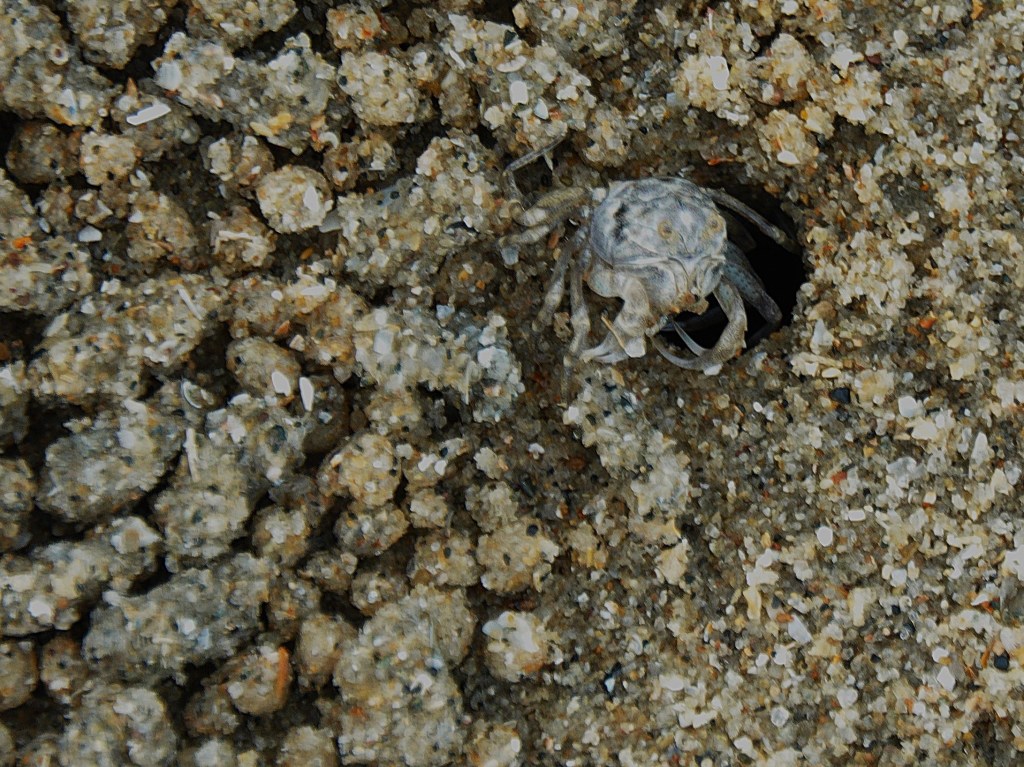
- The harmless Sand Bubbler Crabs (Scopimera and Dotilla spp.), which left holes on the sandy beaches.
Armed with the beloved $5 guidebook – “A Guide to Seashore Life” published by the Singapore Science Centre – I embarked on a journey of discovery. This pocket-sized treasure trove became my trusted companion, helping me decipher the identities of various sea creatures.
In those carefree days, our curiosity often led us to capture fascinating marine creatures and bring them home. Sadly, most perished within days, with only the hardy catfish surviving for months. Looking back with regret, it’s striking how different our mindset and approach were then:
• Wildlife conservation wasn’t yet a widespread concept
• Our interactions with nature were driven primarily by personal curiosity and fun
• We didn’t fully grasp the impact of removing creatures from their natural habitats
This reflection serves as a poignant reminder of how our understanding and relationship with nature have evolved. While those experiences sparked a lifelong interest in marine life, they also highlight the importance of conservation and responsible interaction with ecosystems.
A Return to the Shore: Guided Intertidal Walk at Changi Beach
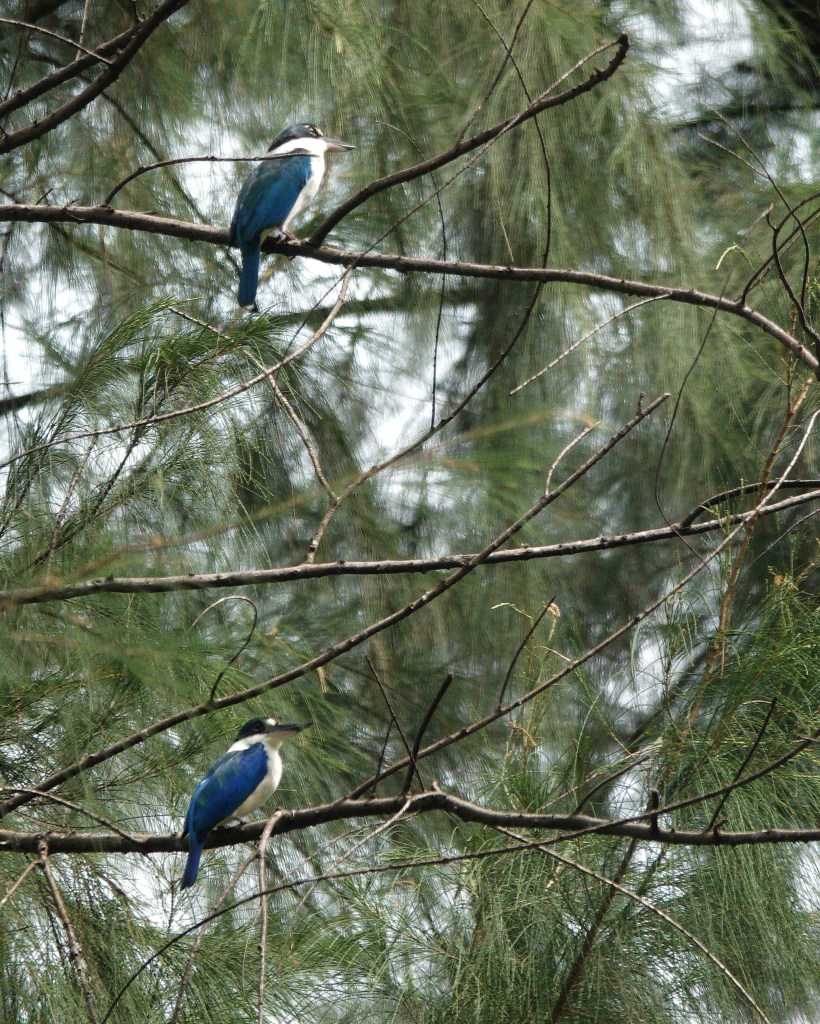
Fast forward to last week, and I found myself embarking on my first guided intertidal walk. Organised by “Just Keep Thinking” and led by the renowned MJ Biogal, this excursion took place at Changi Beach, right beside the Ferry Terminal to Pulau Tekong. Arriving early, my friend and I seized the opportunity for some impromptu bird watching. We spotted White-Bellied Sea Eagles, Long-Tailed Parakeets, and Collared Kingfishers, along with the Common Mynas, Javan Mynas and House Crows.

MJ Biogal, our guide, proved to be a passionate advocate for environmental conservation, truly walking the talk. Her approach to the intertidal walk was a stark contrast to my childhood experiences. She enforced firm guidelines, prohibiting the digging out of creatures and touching, especially venomous species like fire worms and bristle worms. Throughout the walk, MJ actively educated the public, reminding other beachgoers to leave creatures undisturbed.

During the Covid-19 pandemic in 2021, MJ raised awareness about the mistreatment of marine life, notably calling out those skewering through Sand Dollars (Clypeasteroida), like meat chunks on a satay stick, killing them right in front of her eyes. It was a powerful reminder of the need to balance our curiosity with respect for marine life and their habitats and there is a lot more to be done to educate the public.
During our guided walk, our group of 36 was divided into smaller clusters, each led by an experienced guide. I found myself in a group led by Jerryl, an avid diver with aspirations of becoming a marine biologist. Our exploration began with a molted flower crab shell. When a young boy in our group mistook it for a dead crab, Jerryl seized the opportunity for an impromptu learning session.
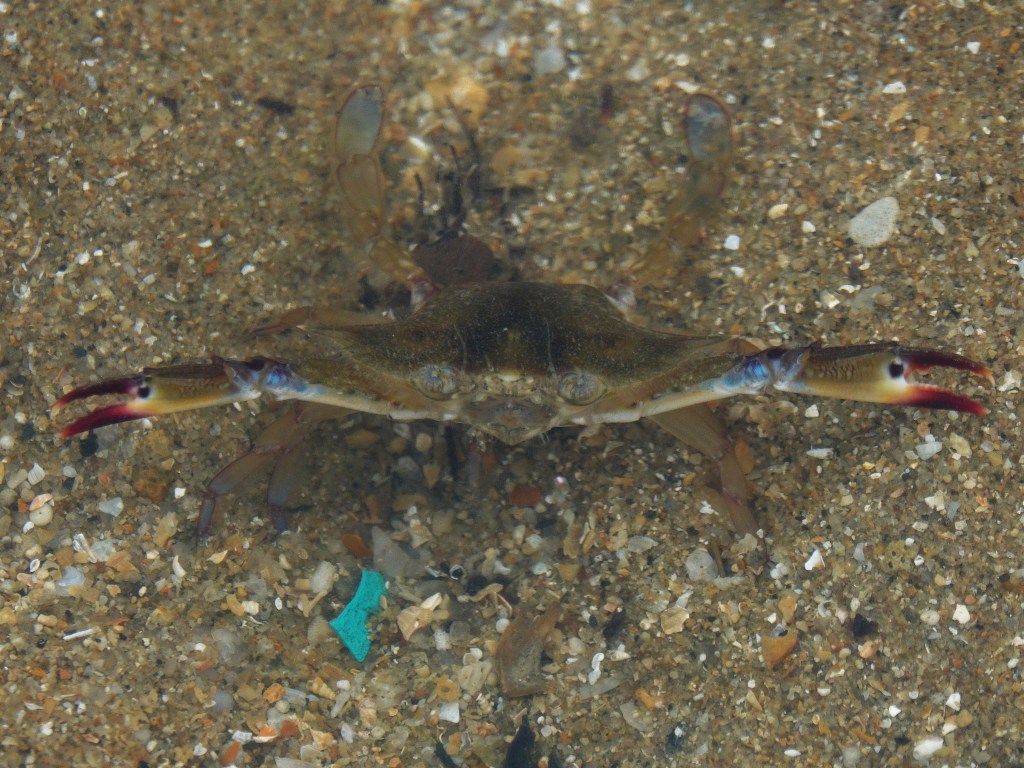
Using engaging questioning techniques, Jerryl sparked curiosity among the group, particularly exciting two enthusiastic boys. “What are the tell-tale signs that this isn’t a dead crab?” he asked, encouraging critical thinking and observation. This interactive approach not only corrected misconceptions but also kindled a deeper interest in marine life among the participants.
As we gathered around, Jerryl revealed the fascinating details that distinguish a molted shell from a dead crab:
The Missing Eyes: In a freshly dead crab, the eyes are still visible. However, on a molted shell, you won’t find any eyes. This absence is a clear sign that what we’re looking at is just the discarded outer layer of the crab.
The Gap: A key indicator is the noticeable gap between the molt. This separation occurs as the crab sheds its old exoskeleton to grow.
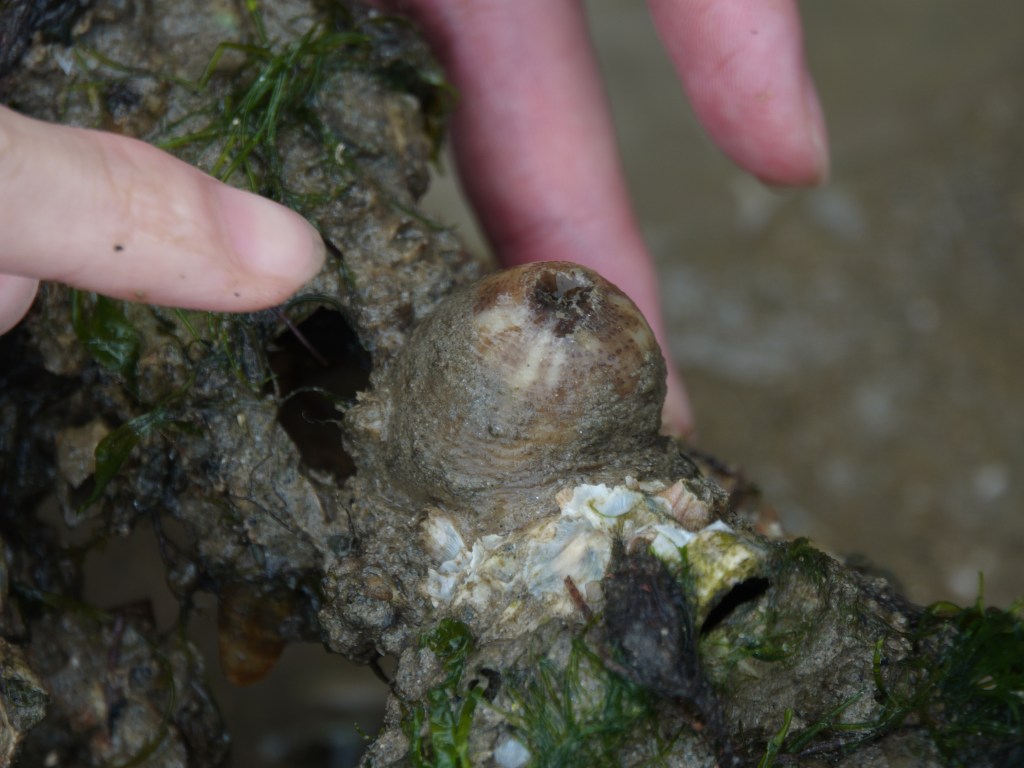
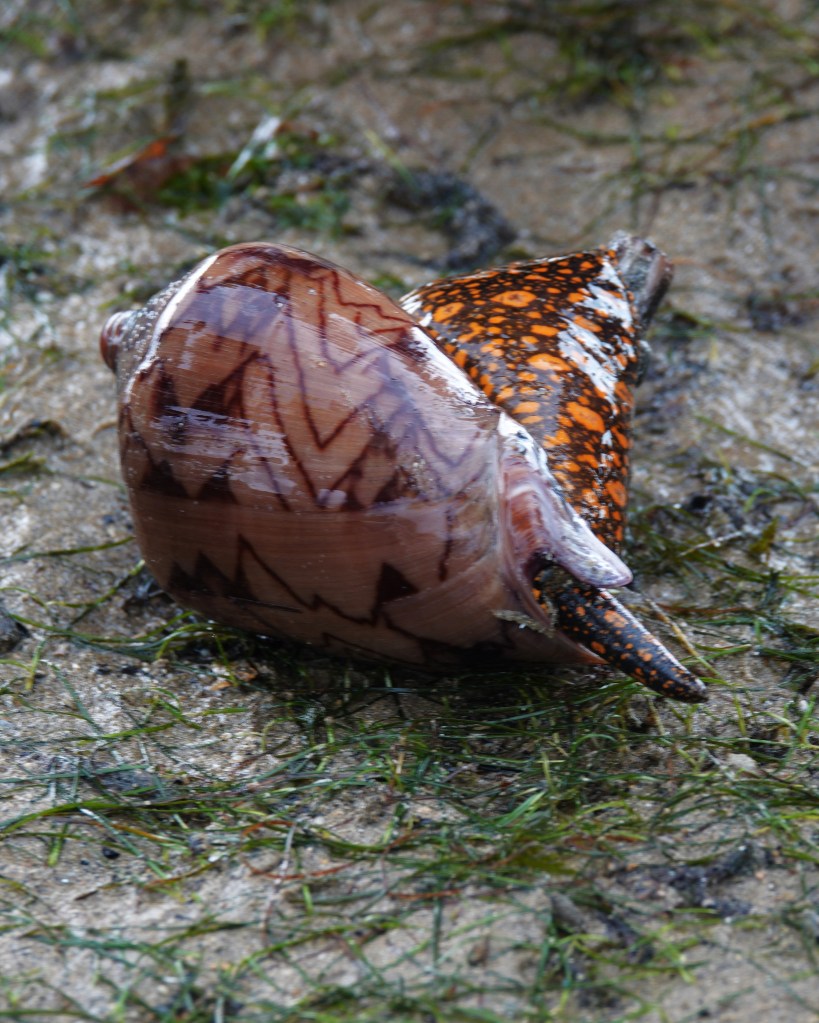
Our first ‘wow’ moment arrived with the discovery of a large hermit crab, snugly ensconced in the shell of a Noble Volute (Cymbiola nobilis). The sight initially sent a jolt of excitement through me, as I mistook the shell for that of the venomous cone snail, infamous for its harpoon-like shooting mechanism. Moments later, another guide brought us a live Noble Volute! It was the prettiest thing I have seen that day. This is a large carnivorous snail that used to be hunted for its beautiful shell and even its edible flesh.
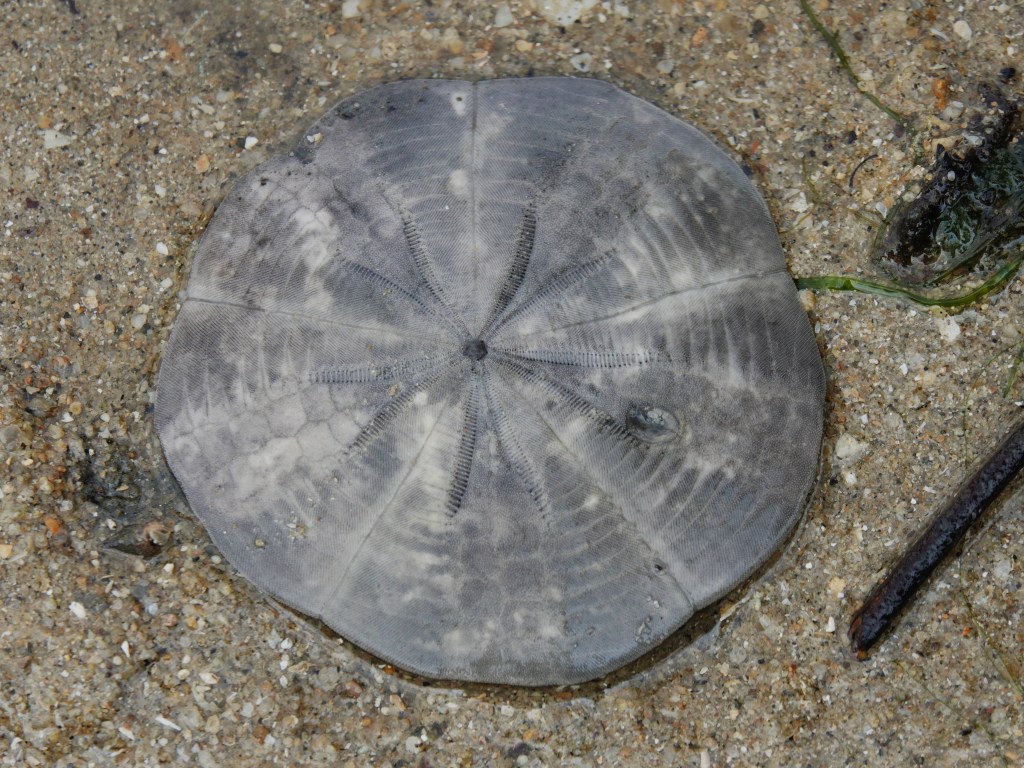
Our exploration led us to a fascinating discovery: Cake Sand Dollars (Arachnoides placenta). It was hard to believe these peculiar discs were living animals. Jerryl, our knowledgeable guide, turned this find into an engaging guessing game, challenging us to identify the top and bottom sides of these flat, clayey-looking creatures.
After a few attempts, Jerryl revealed the secret: the top side typically displays a subtle ‘flower pattern’ and is slightly convex, while the bottom side prominently showcases the pentaradial symmetry characteristic of most echinoderms (a group including sea cucumbers, sea stars, and sea urchins).
Jerryl’s sharing sparked my curiosity, leading me to further research. I learnt that the sand dollar’s unique disc-like shape is an evolutionary adaptation, optimised for efficiently consuming detritus on the ocean floor. It has tube feet on both surfaces to help breathe, navigate and feed.

Written by Lucas
Midway through our guided tour, a heavy downpour forced us to seek shelter, despite the absence of lightning risk. We prioritised the well-being of the many young children in our group, not wanting them to catch a cold. Fortunately, it was merely a passing shower, and as we resumed our walk around the intertidal zone, we were greeted with a beautiful rainbow as our backdrop. This natural spectacle added an extra layer of wonder to our already fascinating excursion.

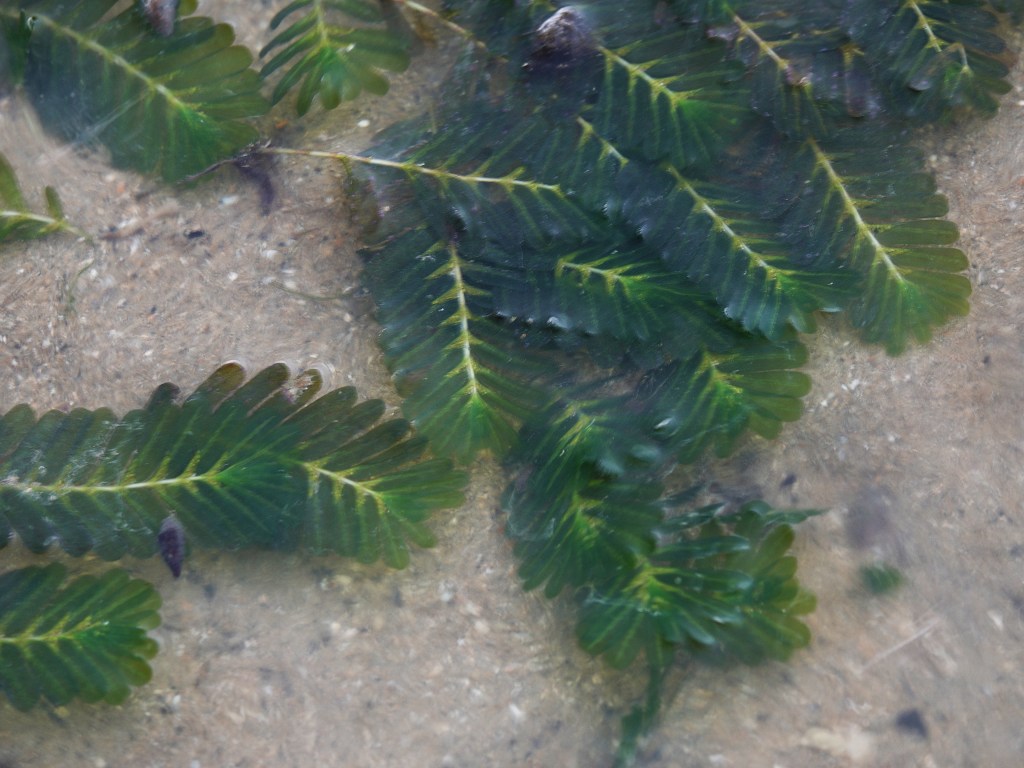
As a plant enthusiast, I found myself drawn to the seagrasses, particularly a species resembling a cross between mimosa and fern – aptly named fern seagrass (Halophila spinulosa). Unlike seaweed, these are true flowering plants that produce fruits. They form a crucial ecosystem, serving as the primary habitat and food source for dugongs. I look forward to capturing photographs of these fascinating plants’ various features during my next solo intertidal walk.
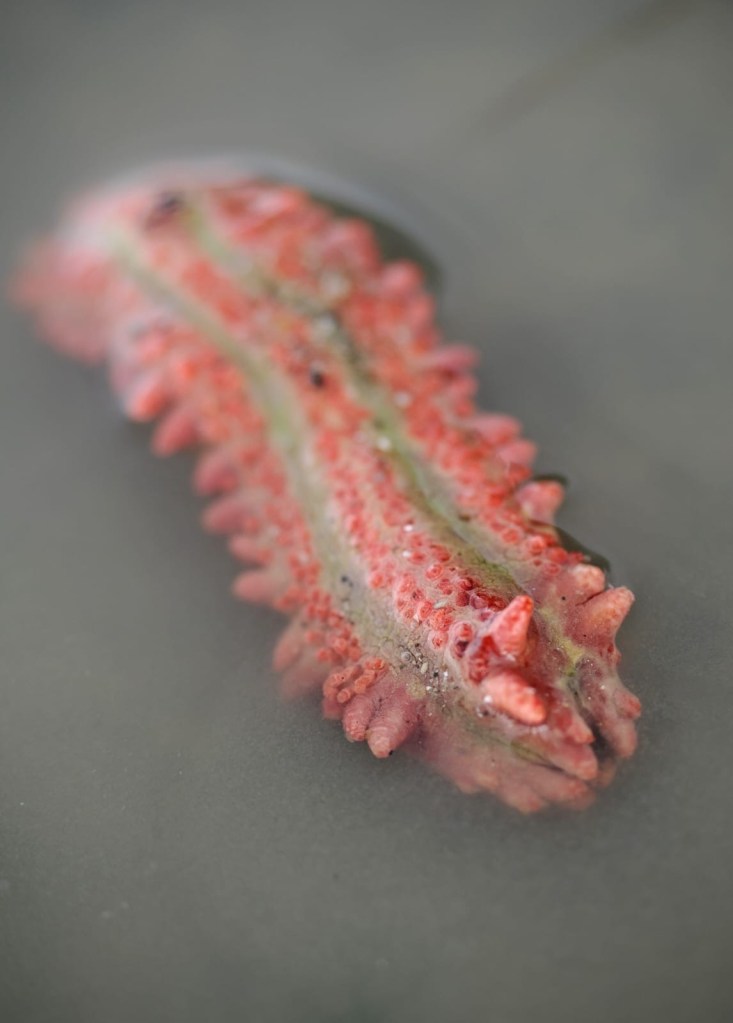
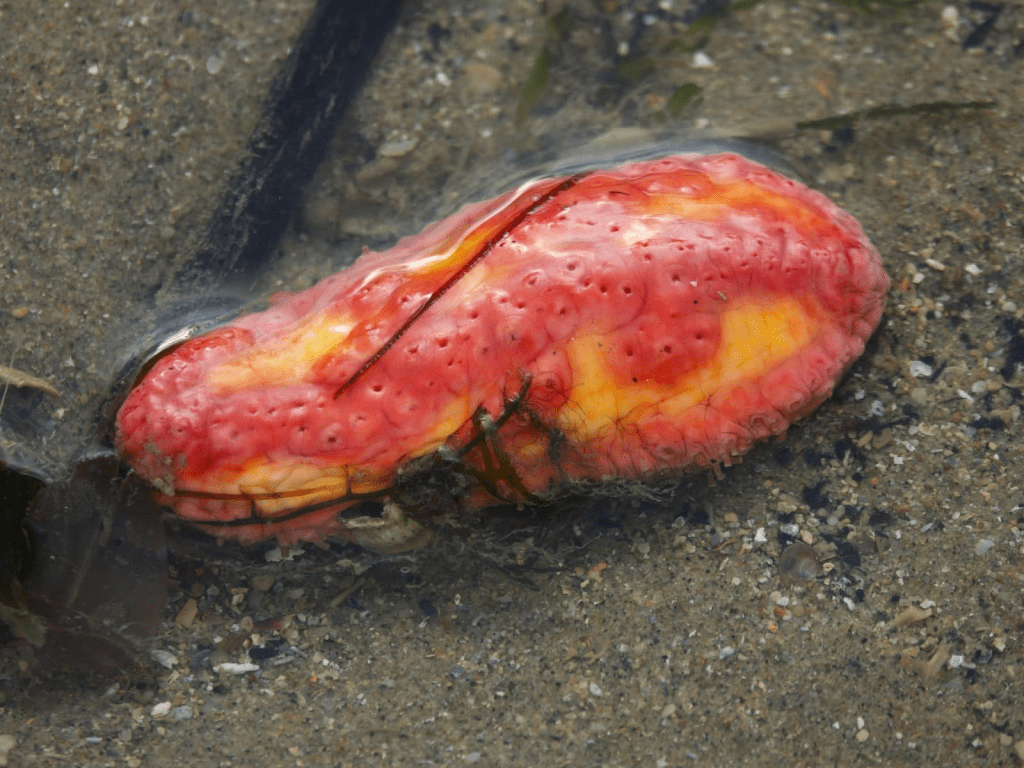
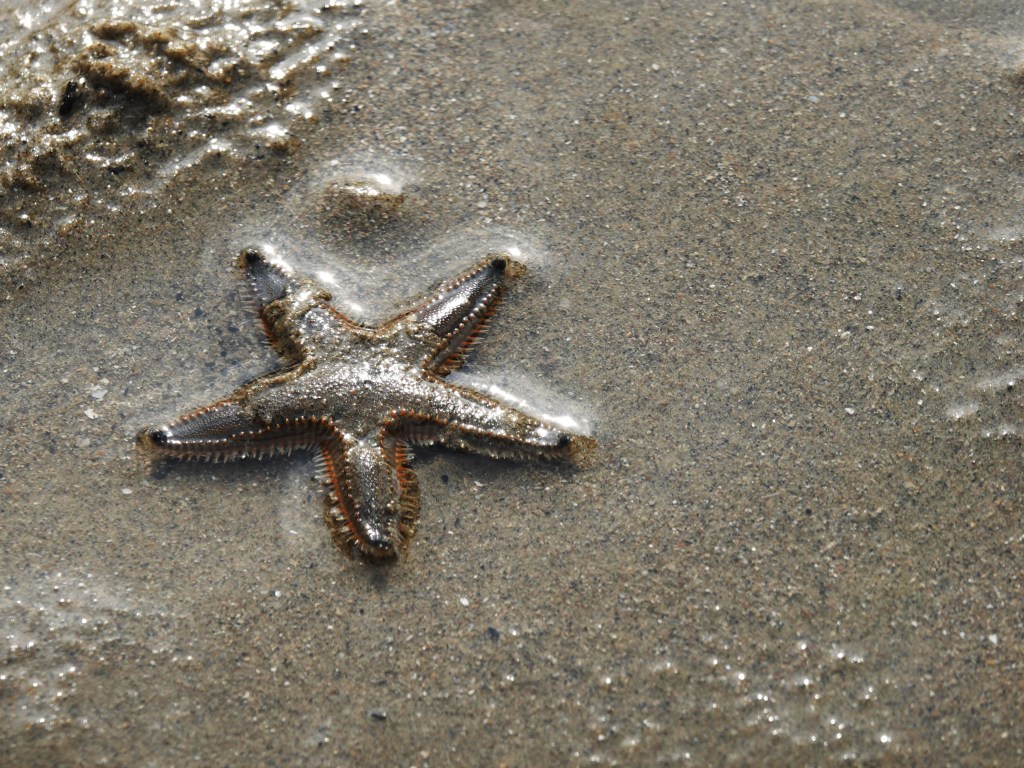
Our exploration revealed three more fascinating creatures exhibiting pentaradial symmetry: the thorny sea cucumber (Colochirus quadrangularis), the pink warty sea cucumber (Cercodemas anceps), and the plain sand star (Astropecten indicus). Both sea cucumber species display a remarkable feeding process, extending their vibrant tentacles from one end while expelling waste from their anus at the opposite end. In stark contrast, the sand star’s muted appearance likely aids in camouflage. This intriguing difference sparked curiosity about how the more flamboyant sea cucumbers manage to conceal themselves in this dynamic environment. Hmm… By aposematism?
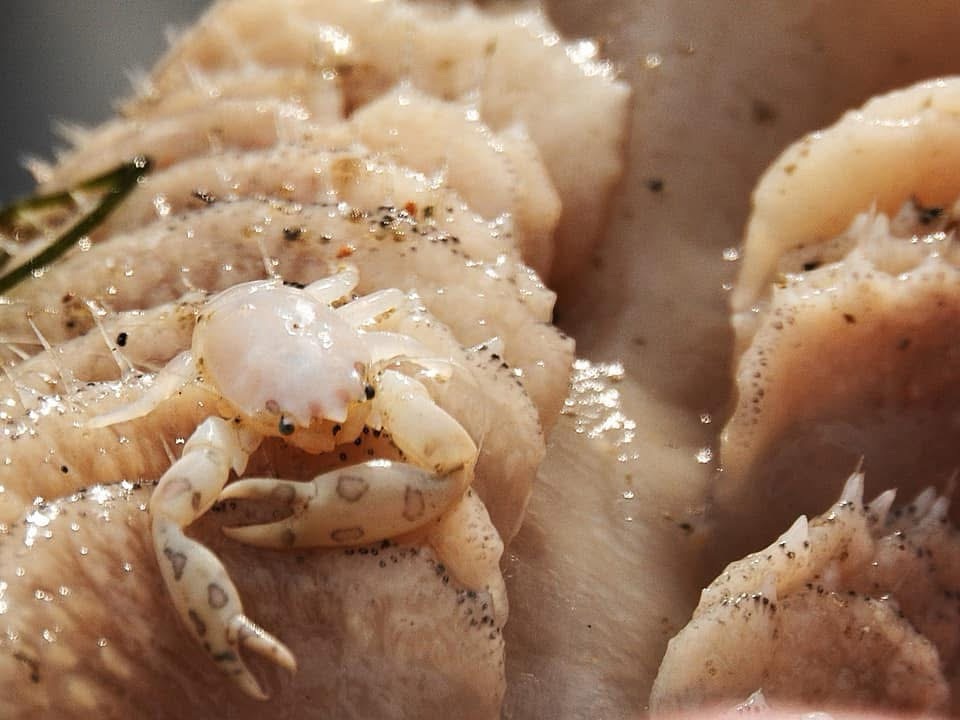
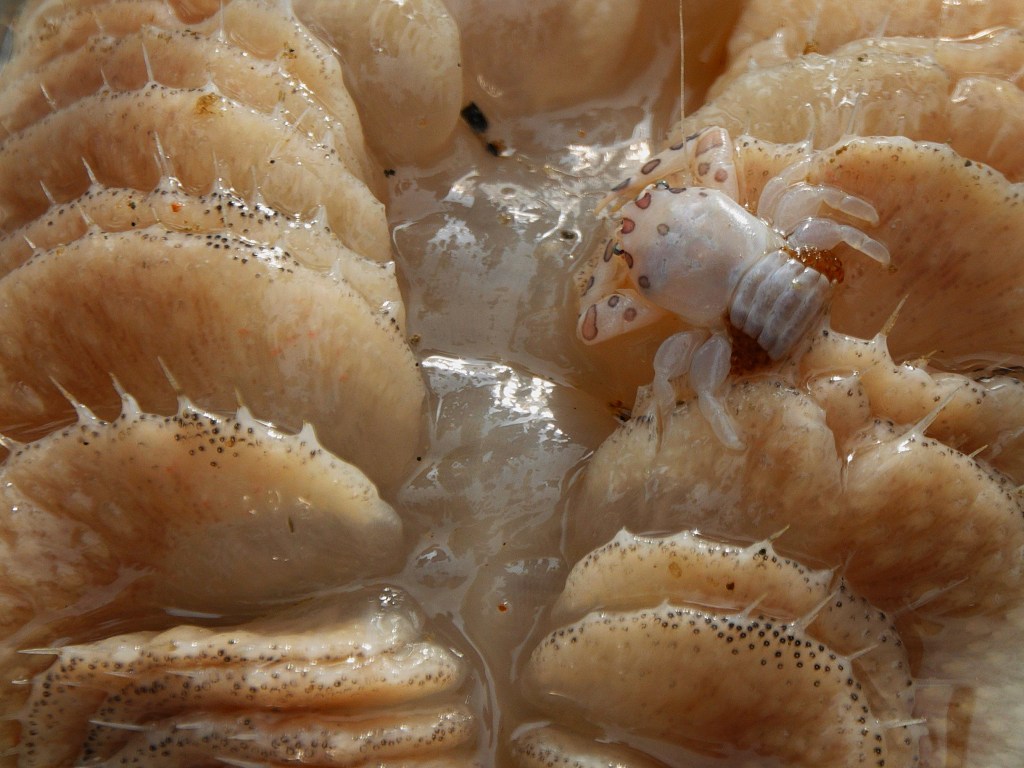
Living organisms like sea pens and sea sponges serve as vibrant habitats for a diverse array of marine life. One of our guides made an exciting discovery: a Spiky Sea Pen hosting two Painted Porcelain Crabs (one of which is carrying a load of eggs), showcasing the intricate relationships within these miniature ecosystems. We also had the opportunity to examine what appeared to be a lifeless sea sponge, yet it was teeming with life, including a brittle star, snails and several tiny crabs. These encounters highlighted the complex interdependencies within marine communities and the importance of seemingly simple organisms in supporting biodiversity.
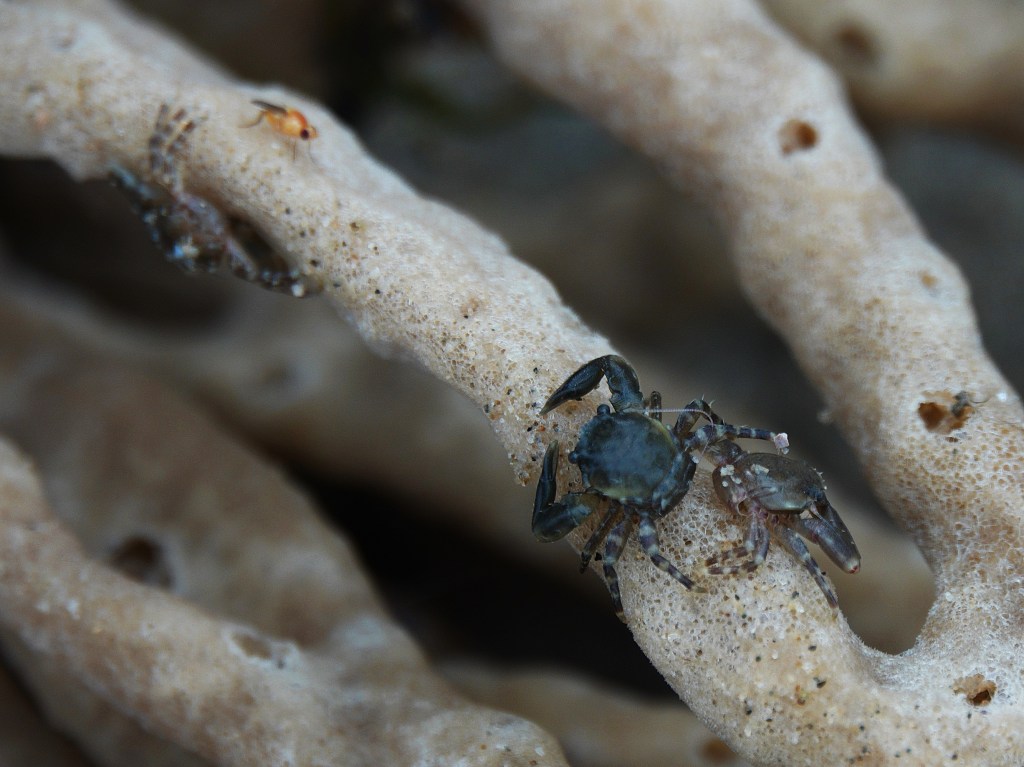
One of the most peculiar crustaceans I encountered, which evoked memories from the seashore life guidebook, was the Leaf Porter Crab (Family Dorippidae). This fascinating creature appears remarkably flat, including its pincers and legs. What makes it truly intriguing is its adaptive behavior: at night, it perches atop floating leaves, taking advantage of the darkness to evade predators from above. During daylight hours, it cleverly conceals itself beneath these same floating leaves, demonstrating a remarkable survival strategy in its marine habitat.
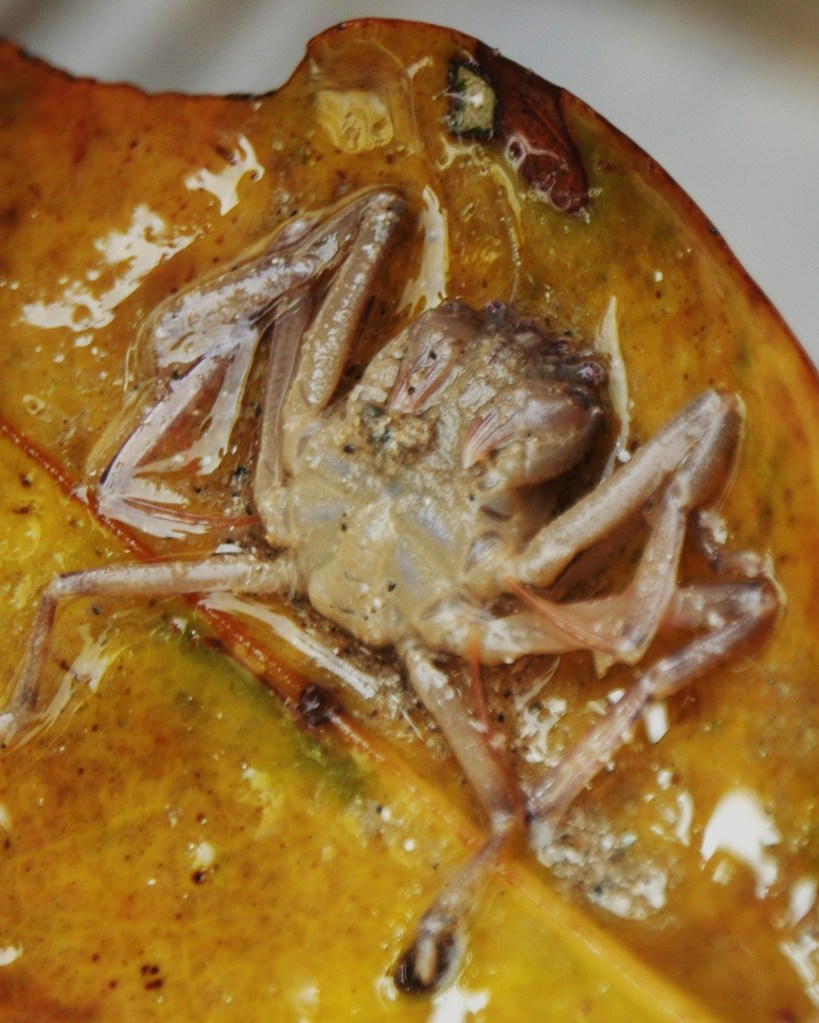
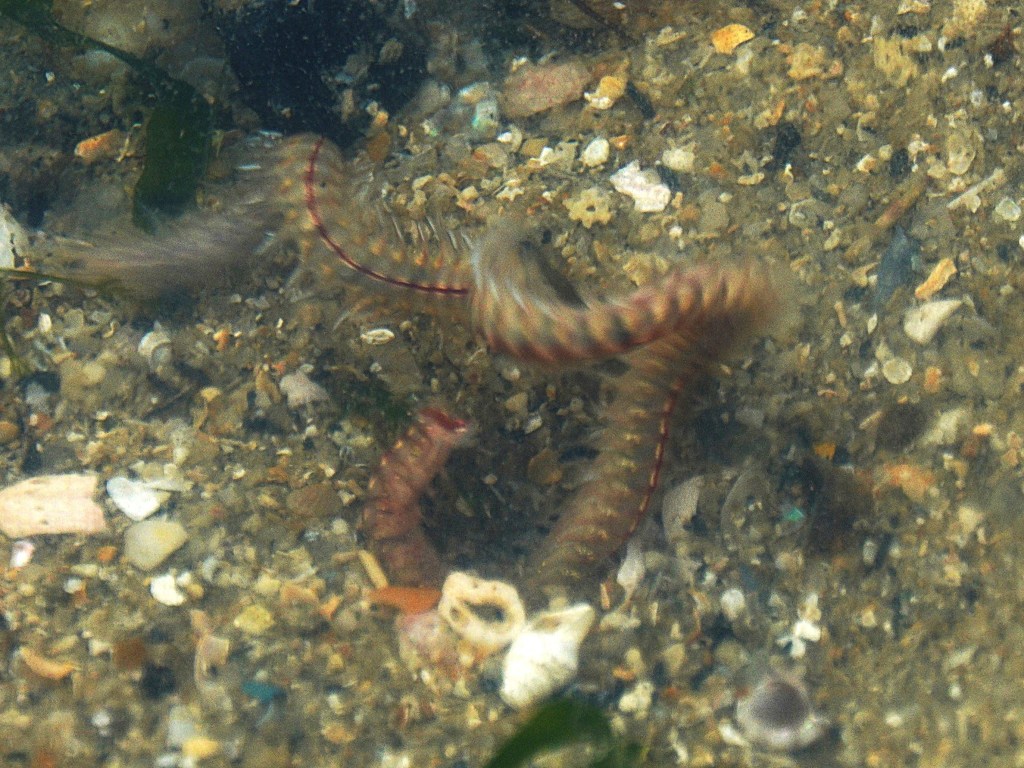
During our exploration, a participant noticed a worm-like creature in a small tidepool, prompting our guide to issue a stern warning against touching any such organisms. Although the guide didn’t identify the species, it bore a striking resemblance to a bristle worm. While this particular specimen appeared to have been decapitated, bristle worms are renowned for their remarkable regenerative abilities, often capable of regrowing body parts lost to predators – including, astonishingly, their heads!
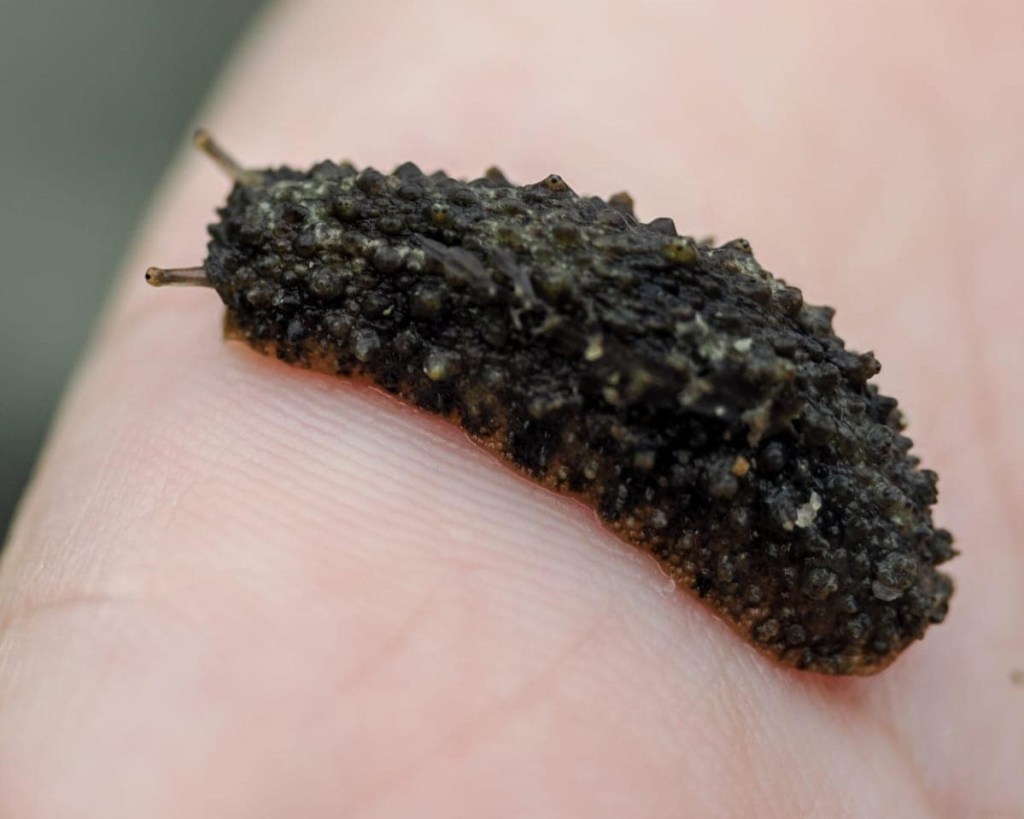
As we approached the canal area where our drainage system discharges, we encountered a vibrant ecosystem thriving on the walls. Algae, barnacles, and periwinkle snails adorned both sides. Jerryl, our guide, picked up some small black objects and offered to place them on our palms. Initially mistaking them for limpets, I was surprised to learn they were Onch Slugs (Family Onchidiidae), grazing on the algae. As one rested on my palm, it began leaving a trail of mucus and excrement while observing me with its distinctive elongated eyes, providing an unexpectedly intimate encounter with these fascinating intertidal creatures.
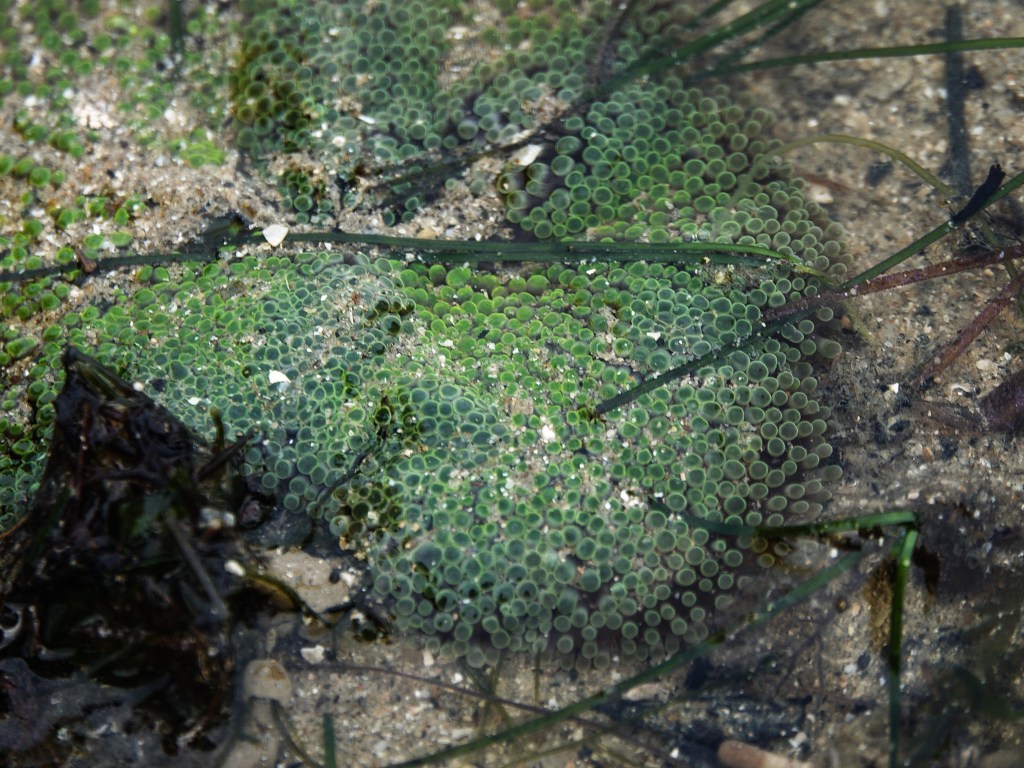
As our guided walk neared its conclusion, we encountered a stunning carpet anemone, its vibrant green hue catching our eyes. Jerryl, our knowledgeable guide, encouraged us to gently touch its stinging tentacles, explaining that the subtle suction we felt was due to a small amount of toxin being released onto our skin. This fascinating experience piqued my curiosity about the various types of carpet anemones and the miniature marine life that might be dwelling among their tentacles.
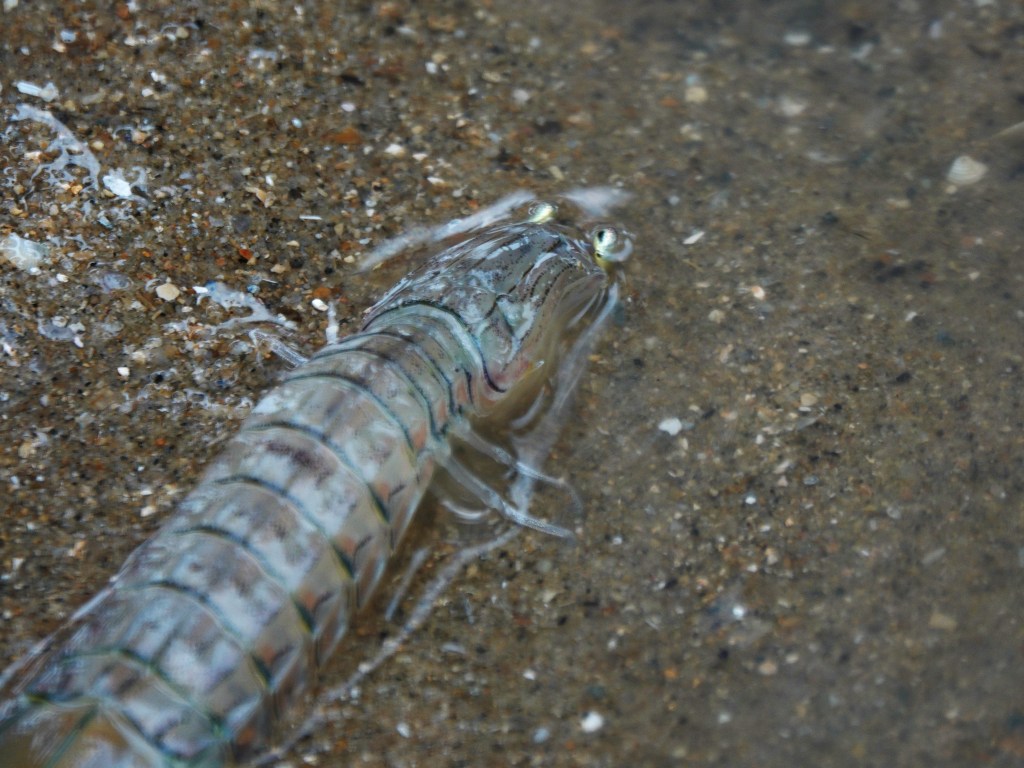
Our excursion concluded with a spectacular sighting: a Spearer Mantis Shrimp (Family Squillidae), spotted by my friend. The creature’s striking appearance drew eager participants who were tempted to touch it. However, our vigilant guides swiftly intervened, warning against such interaction.
The excursion concluded on a high note with a group photograph featuring MJ and her expert guides. As a delightful parting gift, MJ distributed cutesy, beautifully-illustrated stickers to all participants. These stickers depicted the various sea creatures we had encountered during our intertidal adventure, serving as both a memento and an educational tool to reinforce our newfound knowledge of the marine ecosystem.

Thank you MJ Biogal and the guides for such an enriching intertidal walk.

Written by Lucas