Author: Bird Brain

  • Common Names Vs Scientific Names: More Than Just Fancy Labels

    Common Names Vs Scientific Names: More Than Just Fancy Labels

    Introduction

    Allow us to introduce ourselves in a rather unconventional way. I’m Homo sapiens lucasensis trisilva, but you can call me Lucas Teo – that’s my ‘common name’. And joining me in this birdbrain adventure is my partner-in-crime, Homo sapien Gabriellus auricomus agaricus, better known as Gabriel Kang. Curious about Gabriel’s quirky scientific name? Check out his profile picture on his instagram i.e. gabriel.birdbrain (Hint: Google the meaning of auricomus and agaricus).

    Anyway, here’s a thought experiment: try Googling “Lucas Teo” or “Gabriel Kang”. How many results do you get? Quite a few, I’d wager. This little exercise brings us to an intriguing question: Why do scientific names matter?

    None of them is me. As a nobody, I wouldn’t be in the top searches.

    The Challenge of Common Names

    Common names, while convenient for everyday use within the same geographical area, culture and language, may lead to confusion and ambiguity in scientific contexts when applied across cultural and political boundaries.

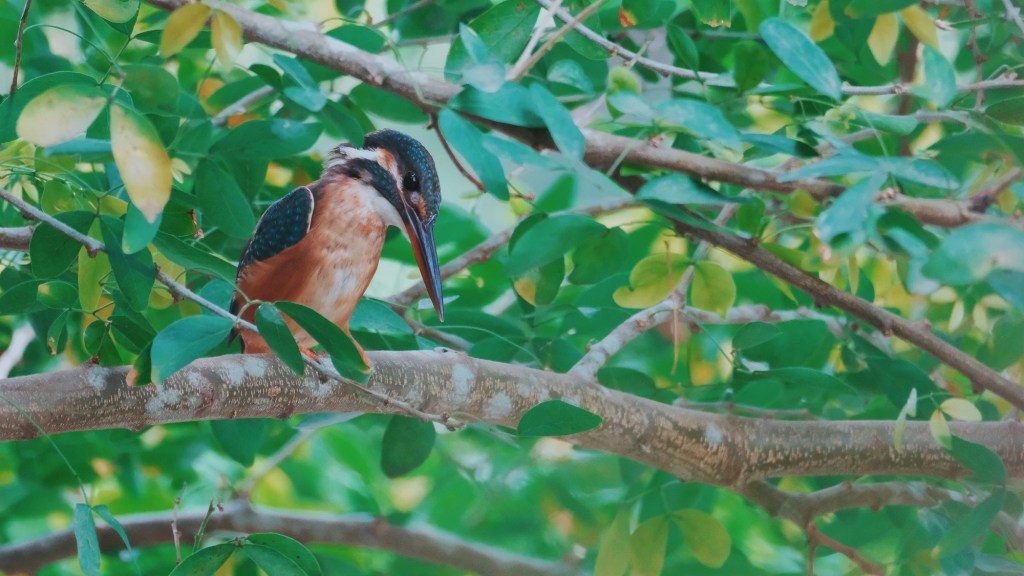
    Let’s consider the common kingfisher (Alcedo atthis) as an example. This striking blue and orange bird, found across Eurasia, is known by several names in English alone:

    • Common Kingfisher
    • Eurasian Kingfisher
    • European Kingfisher
    • River Kingfisher
    • Small Blue Kingfisher
    Common Kingfisher shot in Jurong Lake Gardens (Credit: Gabriel Kang)

    This diversity of names within a single language demonstrates the potential for confusion in scientific communication. The situation becomes even more complex when we consider names in other languages and cultures. For instance, in French, it’s known as “Martin-pêcheur d’Europe”, while in German, it’s called “Eisvogel” (ice bird). In Chinese, it’s fondly referred to as “Xiao Cui” (小翠). Such linguistic and cultural variations highlight the need for a standardised naming system in scientific contexts.

    When the Common Names Mean Different Things in Different Countries

    Many common names are based on physical descriptions, which can lead to further confusion. For instance, “bluebird” might refer to several different species across various families. In North America alone, there is a Western Bluebird (Sialia mexicana) and a Mountain Bluebird (Sialia currucoides)… and I believe there is also a Eastern Bluebird (Sialia sialis)?
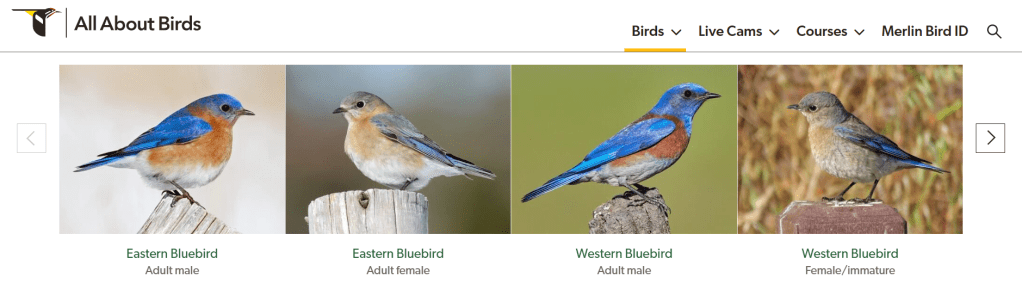
    Comparison between Eastern and Western Bluebird (© 2025 Cornell University)

    While these birds share a similar blue colouration, they are distinct species with different hunting styles (though with many other similar behaviours and traits). Moreover, other blue-coloured birds like the Blue Grosbeak (Passerina caerulea) or Indigo Bunting (Passerina cyanea) might also be mistakenly called “bluebirds” by casual observers.
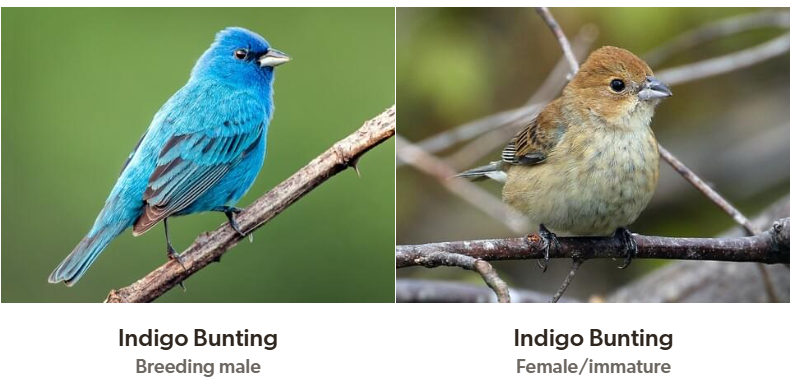
    Not all blue-coloured birds have “bluebird” as their common name, such as the Indigo Bunting. (© 2025 Cornell University)

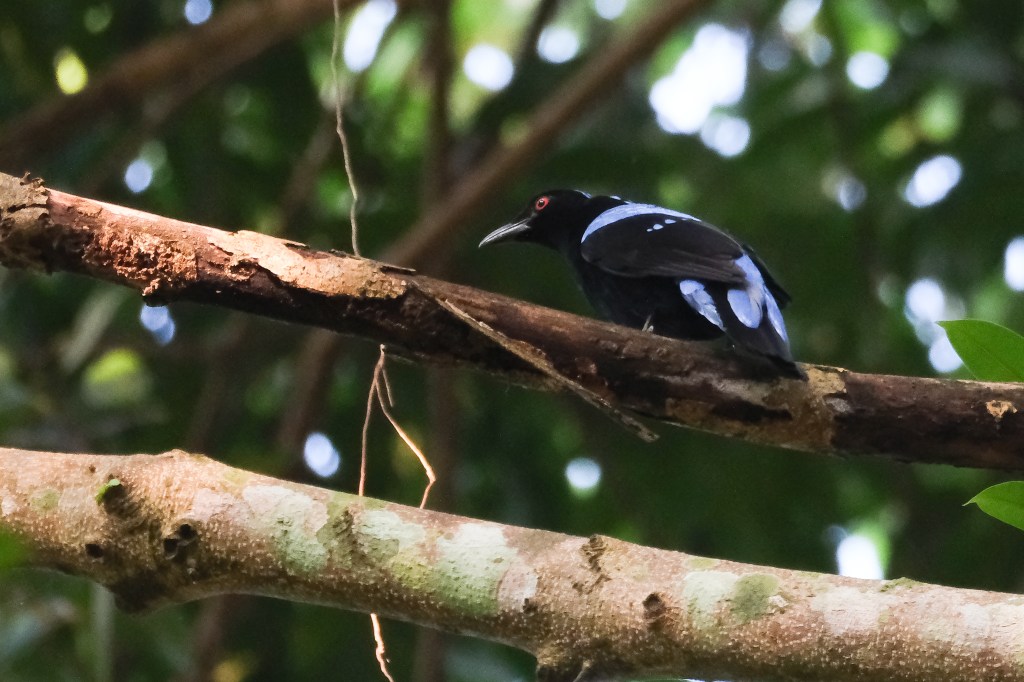
    To further complicate matters, the term “bluebird” isn’t limited to North American species. In Singapore, we have our own Asian Fairy Bluebird (Irena puella), a strikingly beautiful bird with vibrant blue plumage. Despite its common name, this species is not closely related to the North American bluebirds. It belongs to a different family altogether (Irenidae) – related to leafbirds, while the North American bluebirds are members of the thrush family (Turdidae).
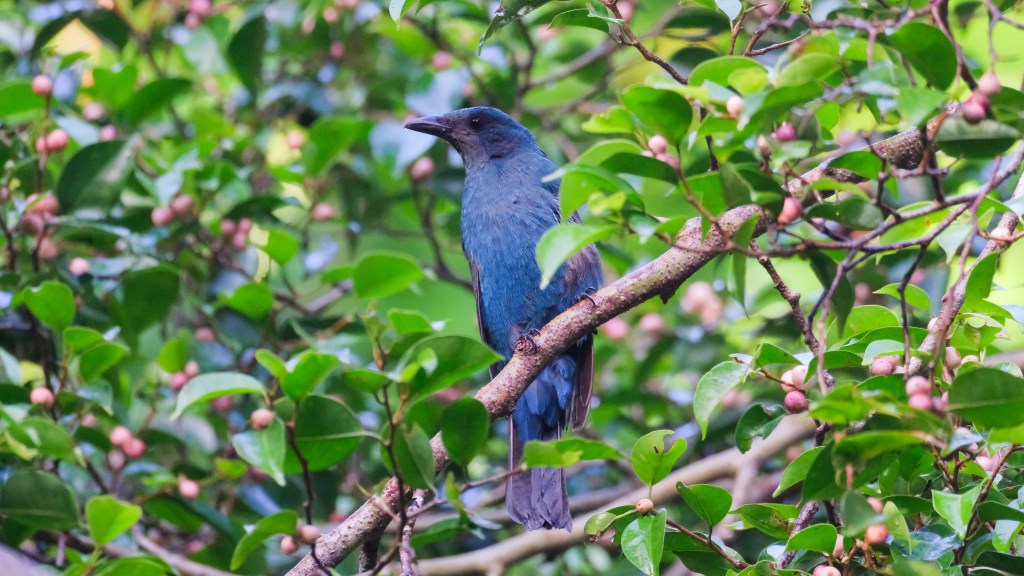
    A female Asian-Fairy Bluebird photographed in Dairy Farm Nature Park, Singapore (Credit: Gabriel Kang)
    A male Asian Fairy Bluebird photographed in Dairy Farm Nature Park, Singapore (Credit: Gabriel Kang)

    This example illustrates how common names can be misleading across continents. A birdwatcher familiar with North American bluebirds might be quite surprised to encounter the Asian Fairy Bluebird, which has a different appearance, behaviour, and ecological niche.

    This issue extends beyond birds. The term “silverfish” is used for a specific insect (Lepisma saccharina), but can also represent the Antarctic silverfish (Pleuragramma antarctica), also known as the Antarctic herring – a true fish that swims in the sea. This example further illustrates how common names can lead to confusion across different animal groups, potentially causing misunderstandings in scientific discourse.
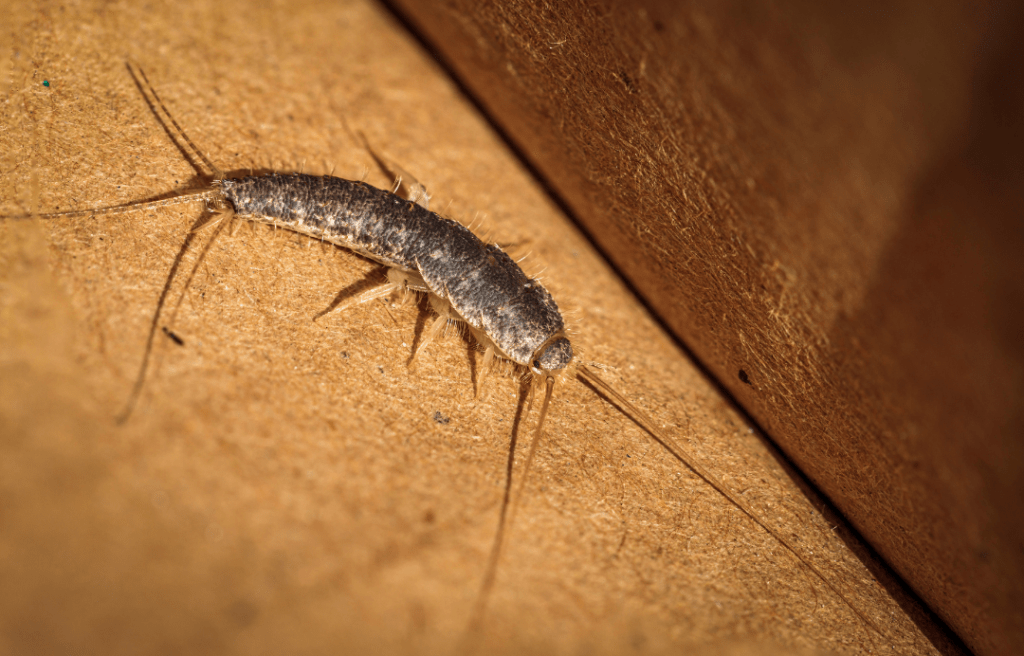
    A silverfish is not a fish, but rather an insect, other than pelagic fish – Antarctic silverfish native to the Southern Ocean near Antarctica

    These examples highlight how common names based on physical descriptions can be misleading, as many different species may share similar physical features. This is where scientific names become invaluable.

    When the “Common” May Not Be Common

    Sometimes, we see the adjective “common” being used to describe a bird or other aspects of the nature world. It may be misleading like a misnomer. I will be sharing two examples to illustrate this point i.e. the Common Myna (Acridotheres tristis) as well as the Common Kingfisher (Alcedo atthis).

    The use of the adjective “common” to describe birds or other aspects of the natural world can sometimes be misleading or act as a misnomer. Two examples that illustrate this point are the Common Myna (Acridotheres tristis) and the Common Kingfisher (Alcedo atthis).

    In the context of Singapore, the Common Myna is ironically no longer commonly seen, despite being a native species known for its high adaptability to urban environments. This decline is primarily due to the introduction of the Javan Myna (Acridotheres javanicus), a species originating from Java, an island in Indonesia in the 1920s. The Javan Myna has outcompeted its “common” counterpart, likely due to its superior ability to exploit limited nesting cavities in urban structures and trees. This competition has caused the Common Myna’s population to decrease significantly in Singapore. In fact, it is likely that the Javan Myna is the most common bird in Singapore right now. You may refer to this very comprehensive article from Bird Ecology Study Group to understand reasons behind their ubiquitous presence.
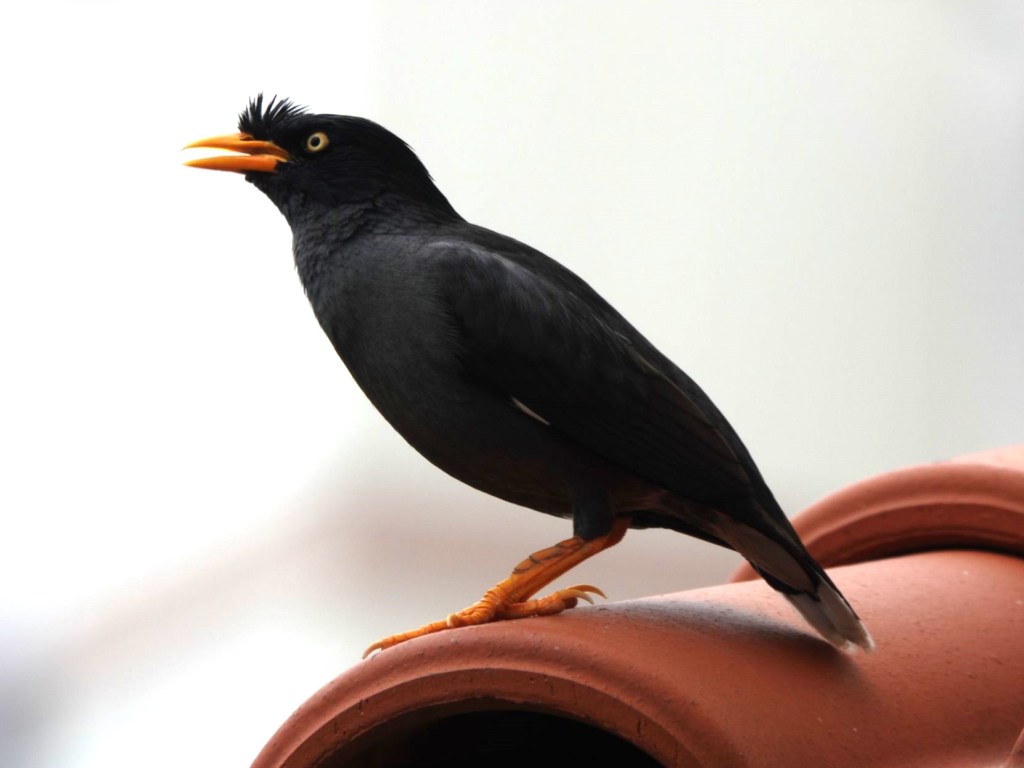
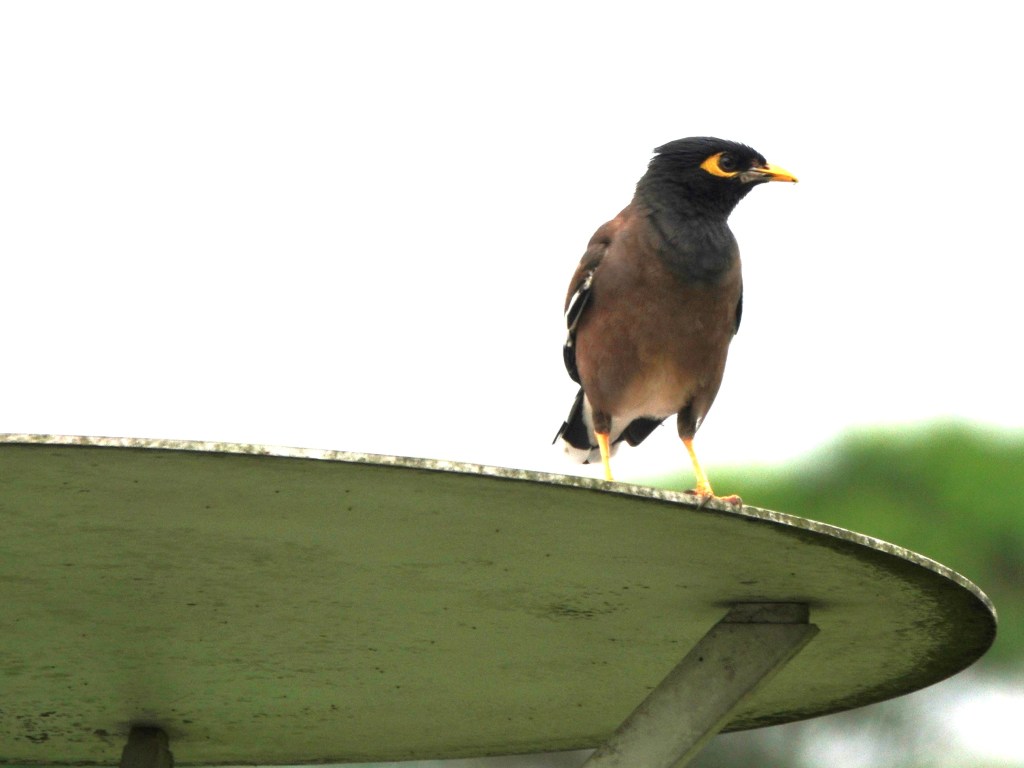
    A Javan Myna perching on urban structures in a regular HDB setting
    A lone common Myna at Lorong Halus Wetland.

    This example highlights how the term “common” in a species’ name may not always reflect its current prevalence in a given ecosystem, especially when factors like introduced species and habitat changes come into play.

    During the migratory season, one of the kingfisher species that arrives in Singapore is the Common Kingfisher (Alcedo atthis). Despite its name, this bird is not commonly seen in Singapore, even during migration periods. The term “common” in its name refers to its prevalence in its native range, not its abundance in Singapore.

    In contrast, the most frequently observed kingfishers in Singapore are:

    1. The Collared Kingfisher (Todiramphus chloris)
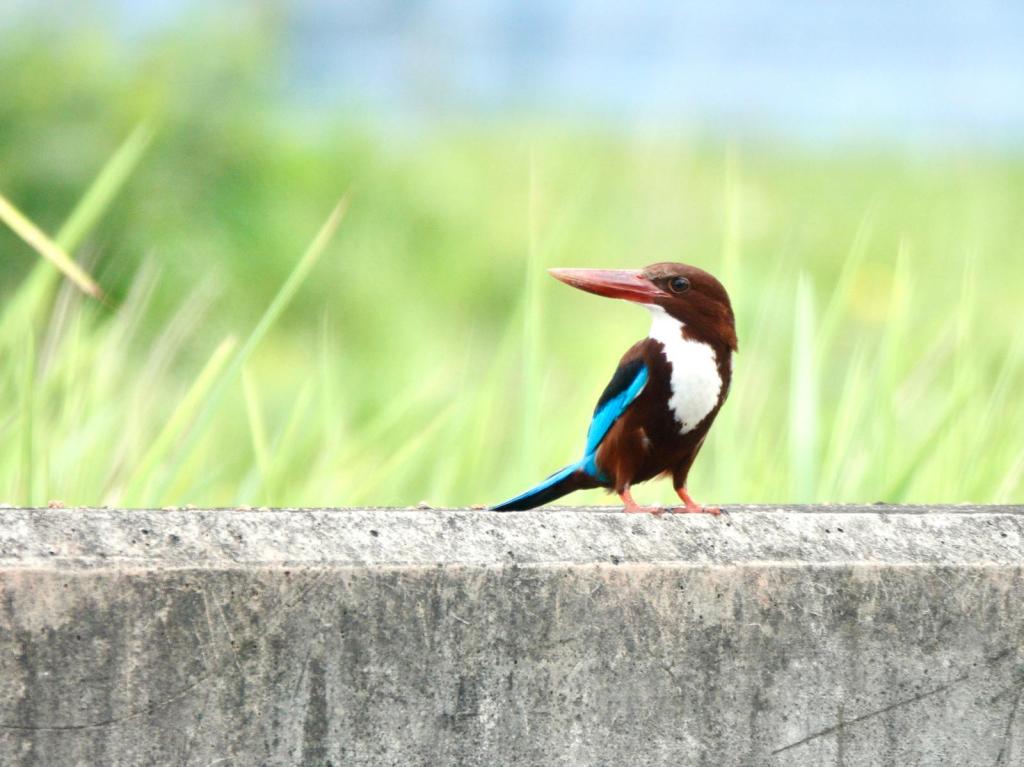
    2. The White-Throated Kingfisher (Halcyon smyrnensis)
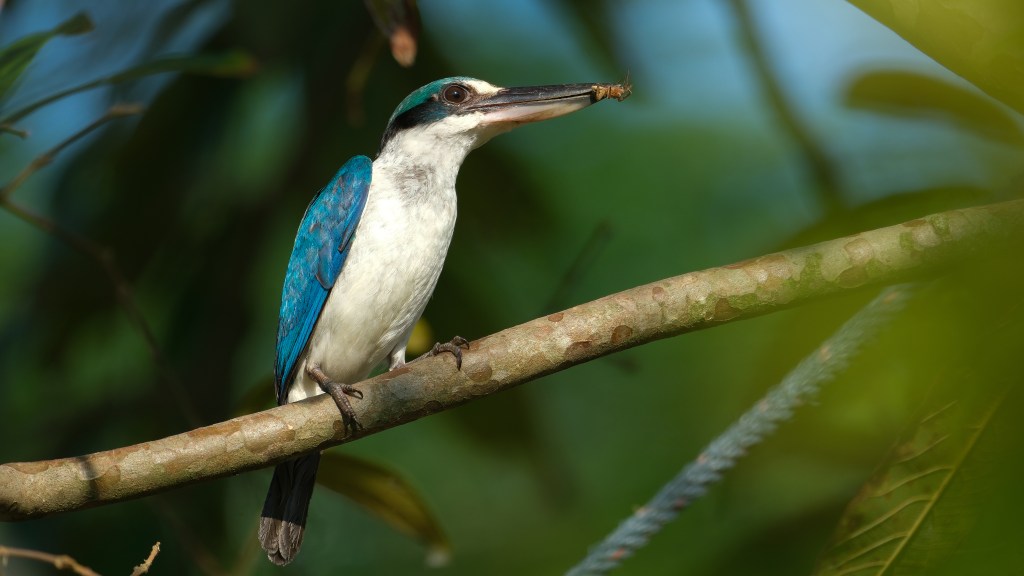
    A Collared Kingfisher feasting on an insect. Credit: Gabriel Kang
    White-Throated Kingfisher shot near Pasir Ris Farmway area.

    These observations, based on local birding experiences, highlight how the word “common” in a species’ name can be misleading when applied to different geographical contexts.

    When Descriptors in Common Names Aren’t Unique

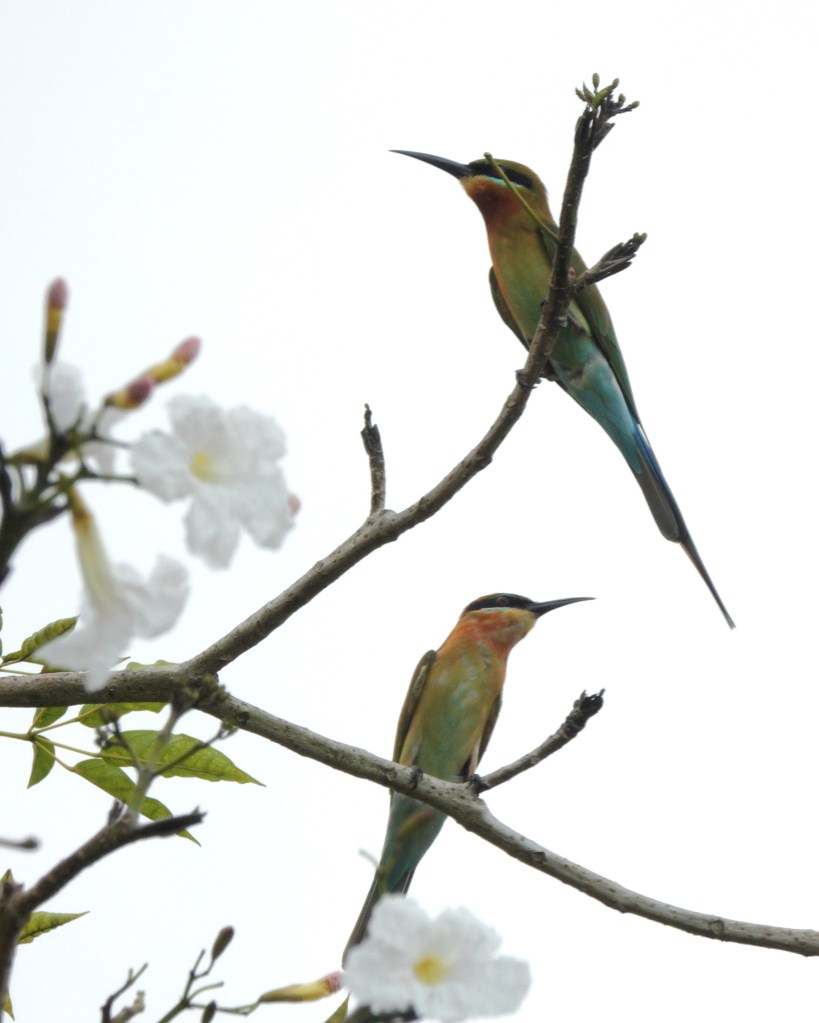
    Two species of bee-eaters found in Singapore, the Blue-Tailed Bee-eater (Merops philippinus) and the Blue-Throated Bee-eater (Merops viridis), serve as excellent examples to illustrate why common names can sometimes be problematic for bird identification.

    Both species actually have blue tails, which makes the “Blue-Tailed” descriptor in the common name of Merops philippinus potentially confusing. This shared characteristic demonstrates how common names can sometimes fail to highlight distinguishing features between similar species.

    The key difference between these two bee-eaters lies in their throat colouration:

    1. The Blue-Tailed Bee-eater (Merops philippinus) has a chestnut-coloured throat.
    2. The Blue-Throated Bee-eater (Merops viridis), as its name suggests, has a blue throat.
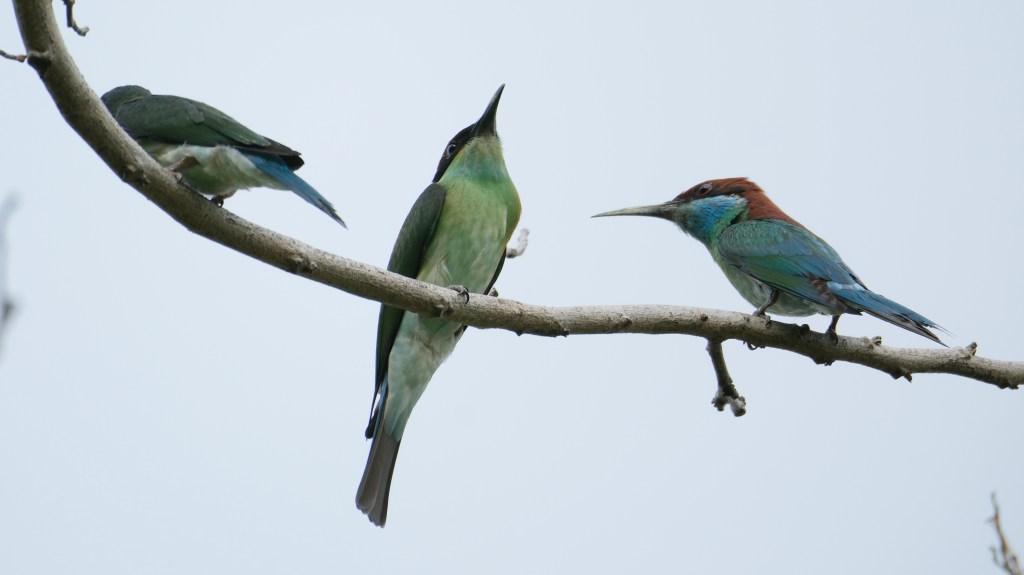
    Notice that the Blue-Throated Bee-Eater also has a blue tail. Credit: Gabriel Kang
    Blue-Tailed Bee-Eaters perched on a tree looking for their next victims in Lorong Halus.

    This example highlights the importance of looking beyond common names when identifying birds. For instance, considering the time of year can be crucial, as Blue-Tailed Bee-Eaters are not present in Singapore during the non-migratory season. More specifically, in this case, examining the throats of both bee-eaters provides a more reliable distinguishing characteristic.

    Whilst common names can be helpful, they may not always capture the most distinctive features of a species, especially when comparing closely related birds. By focusing on these specific details, birdwatchers can more accurately identify and differentiate between these similar species, regardless of potentially misleading common names.

    The Binomial Nomenclature

    Scientific names provide a standardised system recognised globally. The scientific naming system indeed consists of two main components, described as:

    1. Genus (e.g., Alcedo): Represents a group of closely related species. It is the generic name of the species.
    2. Specific epithet (e.g., atthis): The second part of the scientific name that, together with the genus, identifies the specific organism. It is the specific name of the species.

    The term ‘species name’ in scientific contexts refers to the complete scientific name, which is the combination of the genus and the specific epithet. This system is known as binomial nomenclature. In the case of the common kingfisher, Alcedo atthis, ‘Alcedo‘ is the genus and ‘atthis‘ is the specific epithet. Together, they form the species’ scientific name. This two-part system provides a unique identifier for each species within a genus, although the same specific epithet may be used in different genera. The genus is always capitalised, while the specific epithet is always in lowercase, and both are typically italicised or underlined when written.
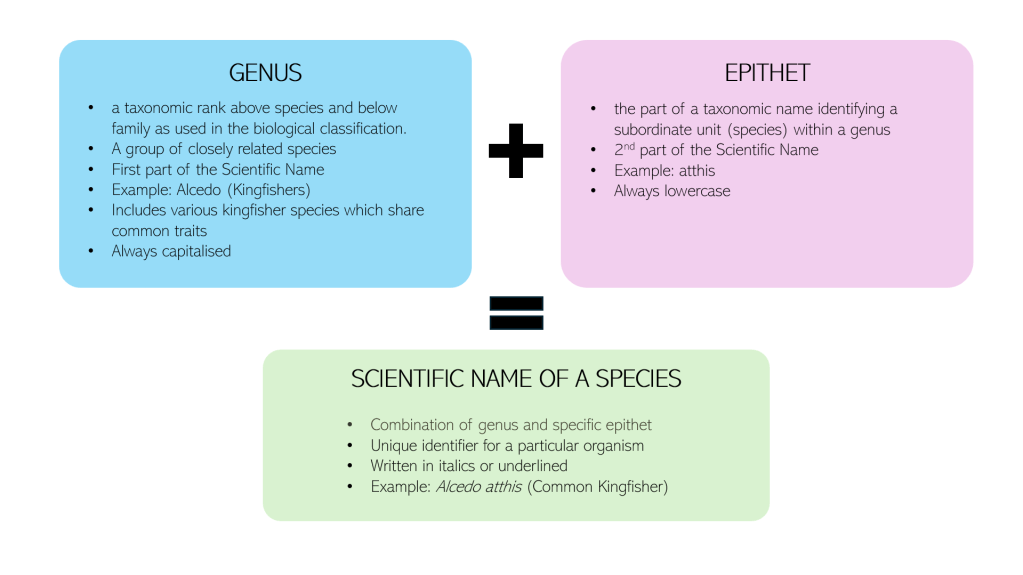
    There are 19 Genera (plural form for Genus) for Kingfishers and Alcedo is just one of them. Within the Alcedo genus, there are 7 distinct species. © 2025 wildlifehq

    Note: In some cases, scientists may use additional classification levels, such as subspecies, to denote distinct populations within a species or other taxonomic ranks to further classify organisms. However, the genus and species form the core of scientific naming.

    The Importance of Scientific Names

    Scientific names serve several crucial functions in biological research and conservation:

    1. Precision in Communication: They provide distinctions between species of the same genus (which causes them to have similar characteristics), such as the common kingfisher (Alcedo atthis) and the blue-eared kingfisher (Alcedo meninting), or between the North American bluebirds (Sialia spp.) and the Asian Fairy-bluebird (Irena puella).
    2. Evolutionary Understanding: These names reflect our current understanding of species relationships and evolutionary history. The first part of a scientific name, the genus, groups closely related species together. For example, between Homo sapiens (modern humans), Homo neanderthalensis (Neanderthals) and Homo erectus (an extinct human species), all these species share the genus Homo, indicating that scientists believe they are closely related and share a recent common ancestor.
    3. Overcoming Descriptive Limitations: Unlike common names, scientific names are not entirely based on overly simplistic physical appearances, which can be deceiving. They provide a unique identifier for each species, regardless of how similar the species may look to others.

    The Human-Cultural Element in Scientific Naming

    While scientific names are primarily functional, they occasionally reflect human creativity, humour, and even diplomacy. For instance, the Spongiforma squarepantsii: A mushroom species named after the cartoon character SpongeBob SquarePants.
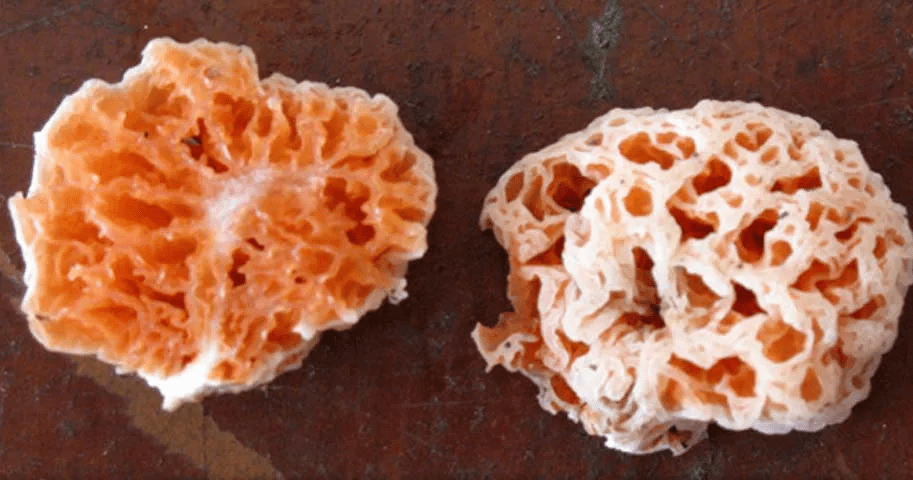
    The recently discovered fungus species found in Borneo’s forests has been named Spongiforma squarepantsii, drawing inspiration from a popular cartoon character. (Image credit: Tom Bruns, U.C. Berkeley)

    In another instance, a moth species, Neopalpa donaldtrumpi, as you can see, is named after President Donald Trump due to its golden scales on its head that looks like the president’s hair colour and style (Read this article for more details).

    An intriguing example of the intersection between scientific naming and diplomacy can be found in Singapore’s practice of naming new orchid hybrids after visiting political leaders or important figures. This tradition, known as “orchid diplomacy”, began in 1957 and has since become a significant honour bestowed upon state visitors.

    For example:

    This practice not only showcases Singapore’s rich botanical heritage but also creates a lasting scientific legacy of diplomatic visits. Each of these specially bred hybrids receives a unique scientific name, following the International Code of Nomenclature for algae, fungi, and plants, while also carrying the name of the honoured guest.

    These examples demonstrate how scientific naming can transcend mere classification to become a form of cultural expression, historical record-keeping, and even a tool for international relations.

    Conclusion

    Scientific names, whilst some of us find challenging to pronounce, serve as a universal language in the natural sciences. They provide precise identification, facilitate global communication among researchers, and offer insights into evolutionary relationships. Most importantly, they overcome the limitations of common names, especially those based on potentially misleading physical descriptions.

    Whether it’s Homo sapiens, Alcedo atthis, Irena puella, or Spongiforma squarepantsii, each scientific name encapsulates a wealth of information about an organism’s identity and place in the vast tapestry of life. As we continue to explore and understand the biodiversity of our planet, the importance of this standardised naming system becomes increasingly apparent.

    The next time you encounter a scientific name, consider it not just as a label, but as a key to unlocking a deeper understanding of the natural world. And let’s be honest, there’s a certain satisfaction in being able to remember and pronounce these names correctly among your fellow nature enthusiasts. It’s not about feeling superior, but rather about sharing a common language that connects us to the fascinating world of biodiversity.

    Nevertheless, while scientific names are crucial for precise identification and communication in academic and professional settings, common names still have their place. For hobbyists and enthusiasts, using familiar, local names in casual conversations is perfectly acceptable and often more practical.

    Written by Lucas
  • Fledgling Passion: Celebrating a Teen’s Love for Bird Watching

    Fledgling Passion: Celebrating a Teen’s Love for Bird Watching

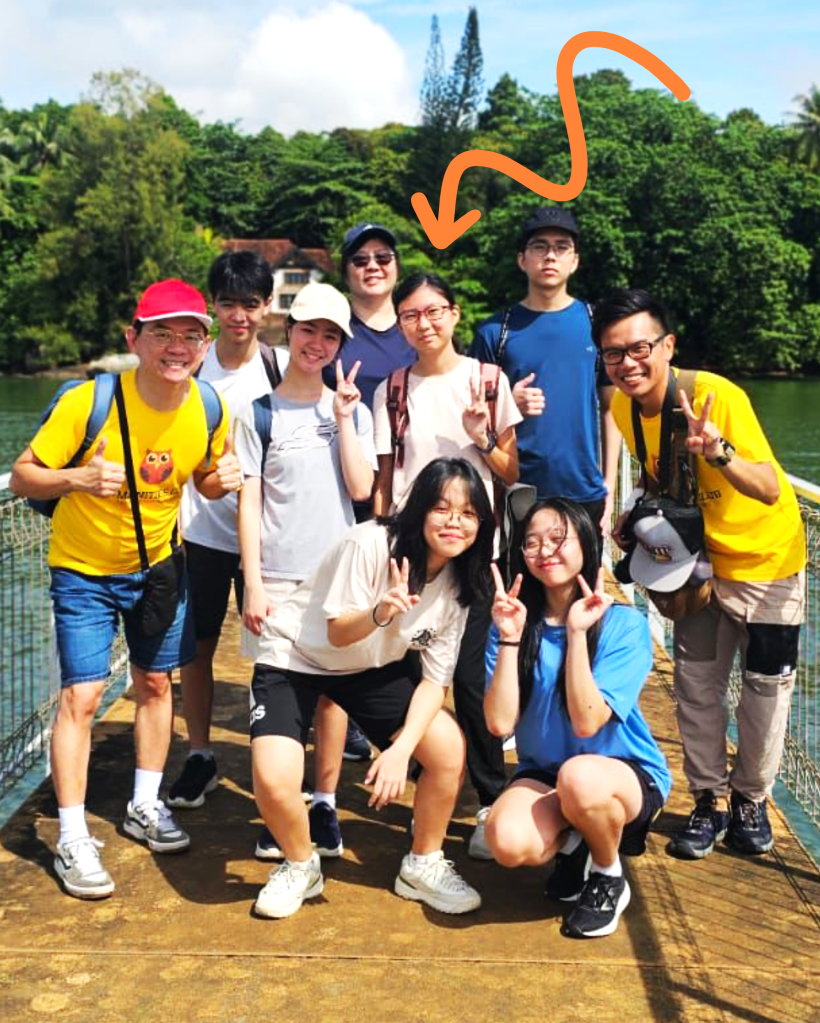
    When we encounter young people with a deep passion for nature, we aim to nurture their meaningful pursuits. This blog post introduces Claire, a 16-year-old birding enthusiast I met during my guided nature walk in Pulau Ubin with the Humanities Club tuition centre. Her enthusiasm for birds is truly inspiring, and I hope her story will spark a similar appreciation for nature in others.

    Mr. Joshua Lawrence and I, in yellow, with the rest of the wonderful participants for the guided nature walk in Pulau Ubin. Claire is indicated by the arrow pointing at her.

    Claire has developed a particular affinity for birds, with a special fondness for Oriental Pied Hornbills. Her father, recognising her interest, has supported her passion by organising birdwatching trips to various locations, including Lorong Halus-Coney Island and Singapore Botanic Gardens.

    As our group assembled at the Changi Village jetty, waiting to board our boat, Mr. Joshua Lawrence, the boss of the Humanities Club tuition centre, introduced me as the nature guide and a fellow birding enthusiast. Claire’s eyes immediately brightened, and she eagerly shared her birding experiences. She even showed me impressive footage she had captured of Golden-Backed Weavers constructing their nests in the Lorong Halus area.

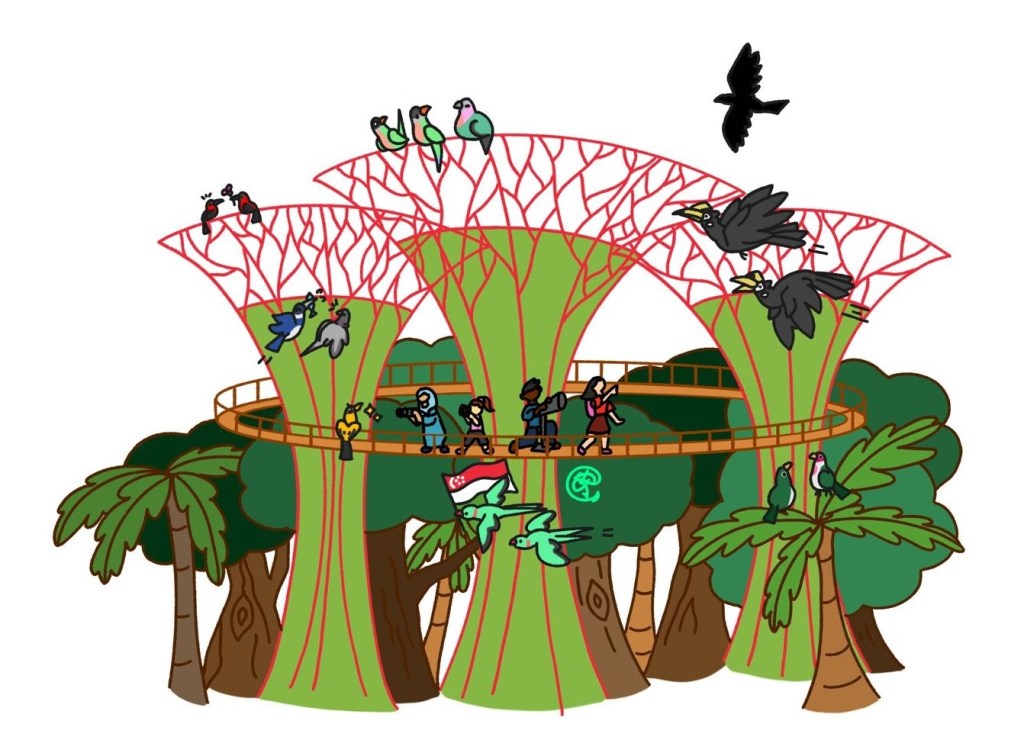
    Yesterday, I received a beautiful drawing from Claire, which she had submitted for the SG60 Design Pompipi competition. While her work didn’t make it to the final, I believe it deserves a wider audience, especially from our local birding community! I love how she deliberately included the silhouette of a mystery bird – as it reminds me of “Who’s that Pokémon?”. Claire shared with me, “Sometimes, I see the silhouette of big birds in the sky and I wonder what they are. So I just drew it in relation to that.”

    Here it is, along with Claire’s description:

    Title: “Birding at Gardens by the Bay”

    Singapore has been developing for over 60 years, focusing on integrating nature into urban architecture. A prime example is the Supertrees at Gardens by the Bay, which mimic mature rainforest trees. These structures not only resemble trees but also host various live plants, including orchids and ferns.

    My drawing illustrates how successfully we’ve incorporated nature into our urban landscape. It depicts birds at Gardens by the Bay, showcasing the harmony between our built environment and wildlife. As someone who is fond of birdwatching, I’ve included people engaging in birdwatching activities and featured various bird species found in Singapore. Can you name all the birds?

    This artwork represents the successful blend of urban development and nature conservation in Singapore, highlighting how our city has become a haven for both people and wildlife.

    I hope you enjoy Claire’s artwork as much as I have. It’s a testament to the passion and talent of our young nature enthusiasts.

    Written by Lucas
  • The Real Flappy Bird: Migratory Bird Collisions in Singapore

    The Real Flappy Bird: Migratory Bird Collisions in Singapore

    Do you remember the Flappy Bird mobile phone game launched in 2013? The goal was to navigate a small bird through a series of obstacles, primarily green pipes reminiscent of those in Super Mario Bros. While this game was a simplified, virtual challenge, it inadvertently mirrors a real-world issue: the struggles of migratory birds in urban environments.

    Migratory birds do face significant challenges while navigating Singapore’s urban landscape. These feathered visitors must contend with a complex maze of commercial skyscrapers, residential buildings (HDBs), bridges, and other man-made structures, reminiscent of the digital bird in Flappy Bird dodging obstacles. For example, in November 2023, a Peregrine falcon suffered a collision injury in Sengkang. Fortunately, it was successfully rehabilitated and subsequently released back into the wild (click here for the article).

    Crest Secondary School – A Haven for Local Avian Wildlife

    At my previous workplace, Crest Secondary School (a specialised school for students who are eligible for Posting Group 1), I earned the nickname ‘Birdman’ because of my love for birds. Whenever bird identification was needed, my colleagues would reach out to me.

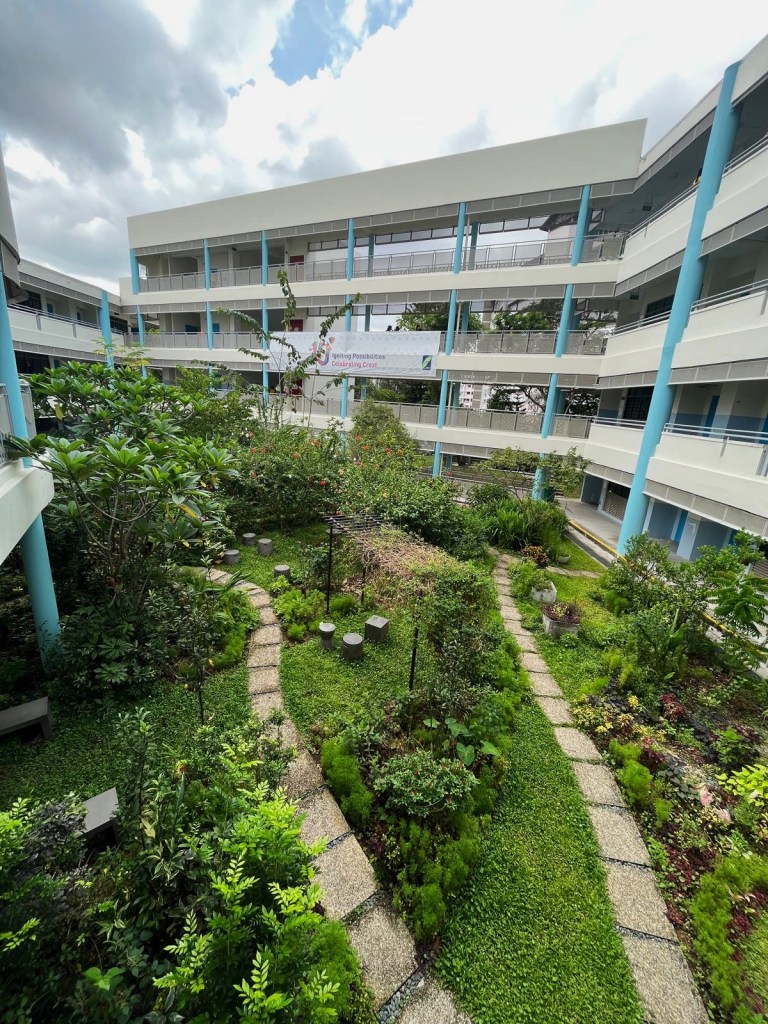
    The school boasts a spacious pond and a beautiful garden maintained by our beloved gardener, Auntie May, making it a haven for a diverse array of birds, both common urban dwellers and more exotic visitors. Beyond the usual Spotted and Zebra Doves, Javan and Common Mynas, Eurasian Tree Sparrows, House Crows, and Asian Glossy Starlings, the school compound has hosted a variety of other species.

    Male Brown-Throated Sunbird photographed in the school’s Garden of Hope – the name bestowed to the garden. Credit: Gabriel Kang

    Asian Koels frequent our mulberry tree, their distinctive calls often rivalling the school’s National Anthem in volume. Brown-Throated and Ornate Sunbirds are regular visitors to our ginger plants, while Collared Kingfishers can be spotted perched on the school roof, their calls resonating across the campus. Blue-Throated Bee-eaters adorn the rooftop antenna, and Rose-Ringed Parakeets feast on the fruits of our peacock flower shrubs. A resident Ashy Tailorbird adds its chirps to the chorus of student voices along the corridors.

    Here is just a part of the entire garden in Crest Secondary School

    When mango season arrives, we’re treated to visits from Coconut Lorikeets and Blue-Crowned Hanging Parrots, eager to join the fruity feast near the school carpark. Even Smooth-Coated Otters have made appearances, though their visits to our eco-pond have sometimes left a few fish casualties.

    During migratory seasons between September and March, the school becomes a temporary home to unexpected avian guests, further enriching our wildlife experience.

    Blue-Winged Pitta Trapped in Butterfly Enclosure

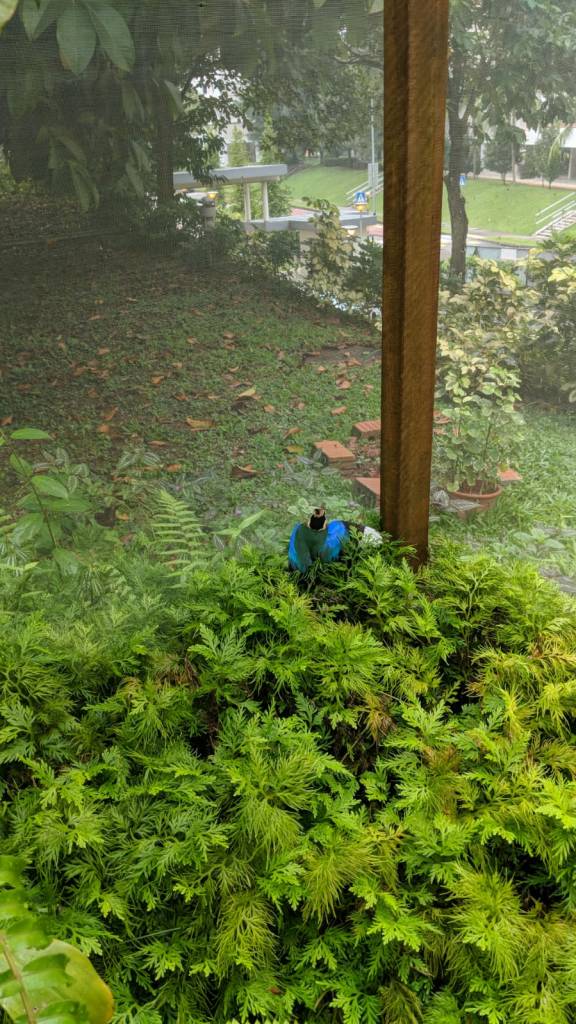
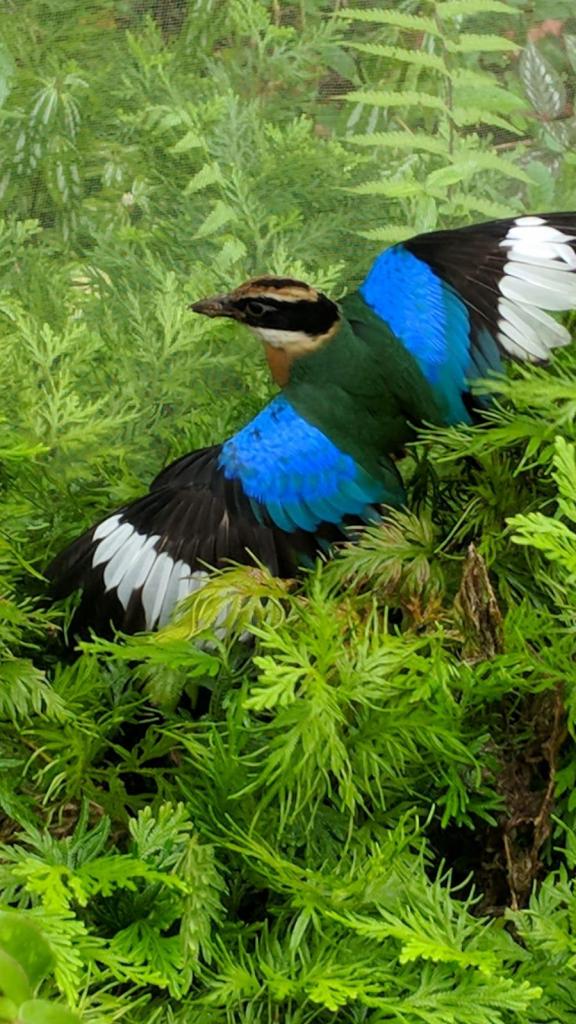
    One such memorable incident occurred on 25th October 2018, involving a Blue-Winged Pitta (Pitta moluccensis). This migratory bird found itself in a series of misadventures on our school grounds. Initially, the Pitta had a close call when it collided with a classroom door while being chased by our resident cat. I intervened, shooing away the cat, and was relieved to see the Pitta, though startled, remain active and mobile. After that, I had to rush for lessons and couldn’t find time to attend to it. Later that afternoon, a colleague alerted me to the Pitta’s predicament – it had become trapped inside our Butterfly Enclosure, unable to find its way out.

    Trapped inside the school’s Butterfly Enclosure

    Recognising the urgency of the situation, I carefully removed the confused Pitta and placed it in a quiet box to recover from its stressful day. After allowing sufficient time for the bird to calm down, I chose a location for its release with great care. The school’s open field seemed ideal, offering ample space for take-off while being far from our resident cat. The latter consideration was particularly important, given the Pitta’s ground-feeding habits which make it vulnerable to feline predators. As I opened the box, the resilient Pitta took flight, disappearing into the distance – hopefully to find a safer temporary home on its migratory journey.

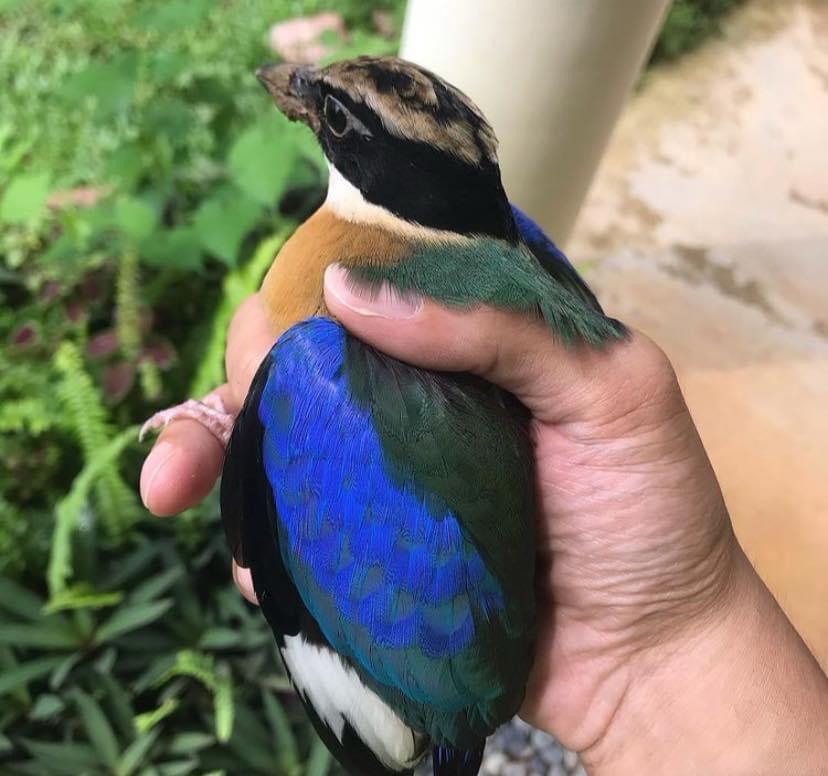
    A closer view of it before I grabbed it and placed it in a box.
    I still remember the warmth on my palm and how it pecked me before I placed it gently into a box.

    Black-Backed Dwarf Kingfisher Crashes into School

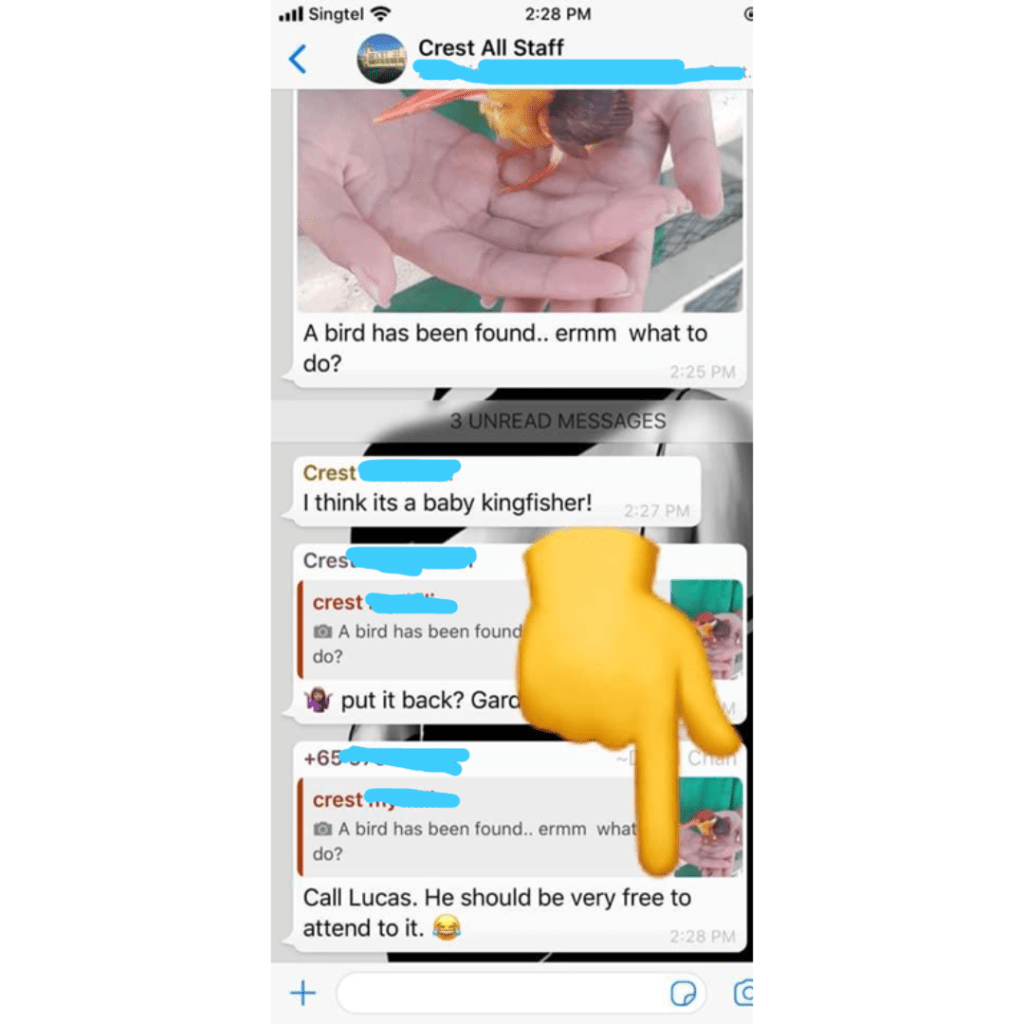
    During my temporary absence from the school between 2019 and 2020, my reputation as the ‘Birdman’ lingered on. On one occasion, a colleague texted me about an exciting discovery: a Black-Backed Dwarf Kingfisher (formerly known as the Oriental Dwarf Kingfisher) had been found on school grounds. In the birding community, such a sighting would typically draw huge crowds eager to photograph this rare species, yet it had simply landed in Crest Secondary School. I simply advise them to contact ACRES (Animal Concerns Research and Education Society). The rare visitor was likely rescued and safely relocated as a result of this intervention.

    To clarify, I am not trained in bird rescue. When such situations arise, I follow the expert guidance provided by ACRES. I have contacted them on several occasions to seek advice and assistance.

    Unexpected Classroom Visitor: A Sparrowhawk’s Misadventure

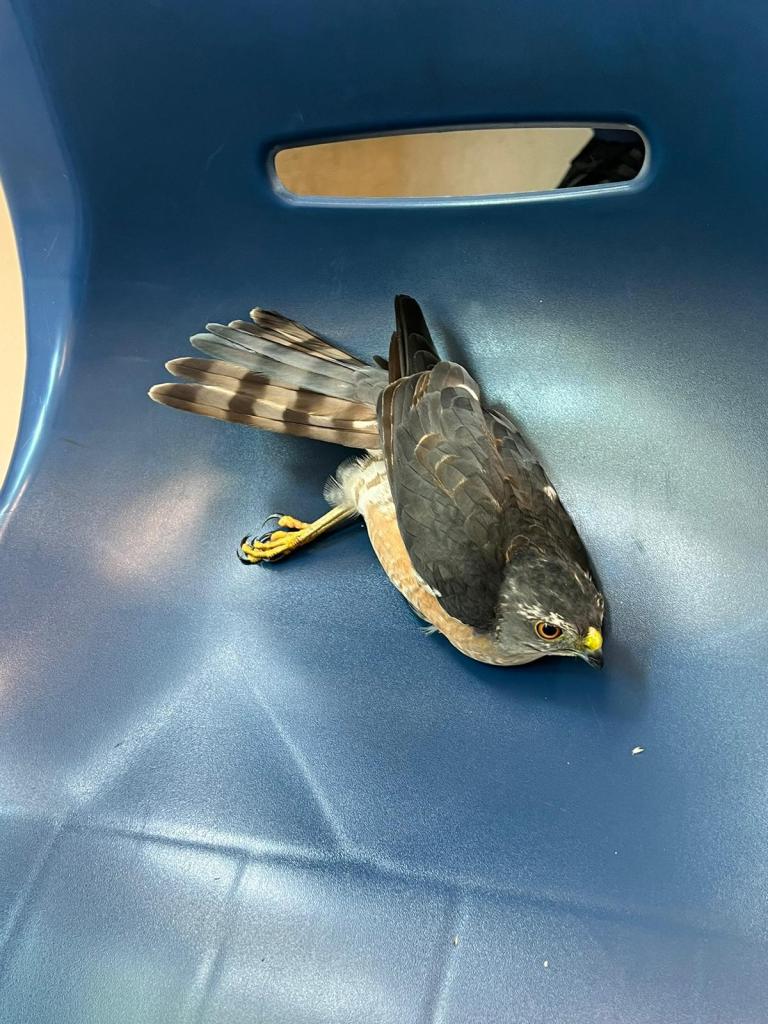
    On 15th February 2023, a Sparrowhawk (ID-ed by Tou Jing Yi as a Japanese Sparrowhawk) – Tachyspiza gularis, flew into a classroom during a Mother Tongue lesson. The bird collided with a glass window pane and fell to the floor, where it lay stiff but still breathing. Following ACRES’ advice, I examined the bird for injuries and sent a video to ACRES via WhatsApp for further guidance.

    I then placed the Sparrowhawk in a cardboard box, included a bottle of warm water to maintain a suitable temperature within the box in the air-conditioned room, and covered it with a towel, leaving a gap for air circulation. We monitored the bird’s condition, keeping in touch with ACRES, for 3-4 hours before attempting to release it in an open field. It took two attempts before the Sparrowhawk successfully flew off into the open sky.

    The sparrowhawk in a state of shock after falling off from the glass window pane

    Not All Survived: The Black Bittern’s Last Flight

    While we had a fair share of successful releases, one particular incident still haunts me to this day.

    It was an ordinary morning when I received a call from a colleague. “There’s a bird sprawled on the ground outside the administrative block,” they said, concern evident in their voice. I rushed to the scene, wondering if it was a spotted dove or a rock pigeon.

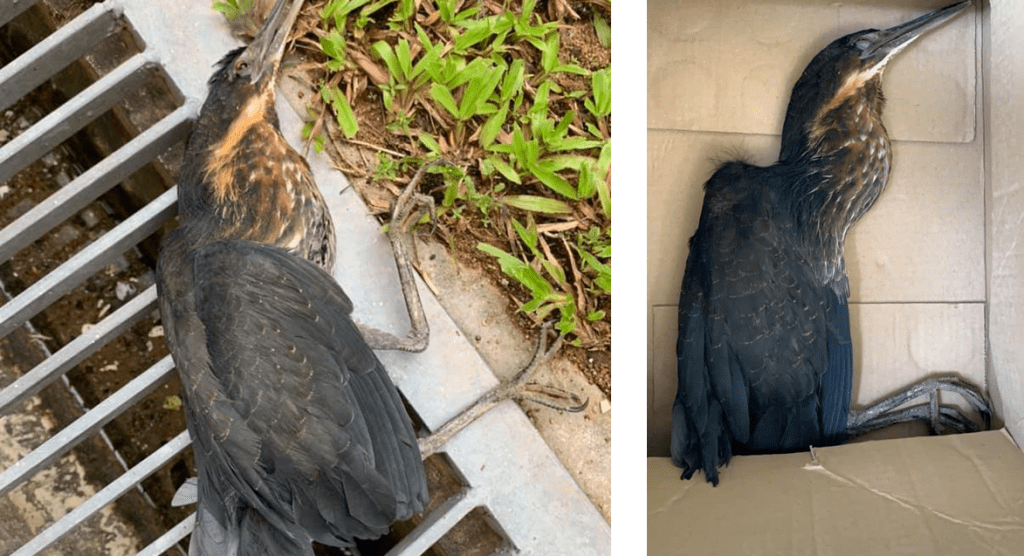
    As I approached, I immediately recognised the distressed creature – a Black Bittern (Botaurus flavicollis), a relatively uncommon migrant in our urban landscape. The bird was struggling and clearly in distress. My instincts kicked in, and I prepared my usual tools: an empty printing paper cardboard box and a soft towel.

    Cautiously, I began to approach the Bittern. As I drew near, the Bittern, spooked by my presence, mustered what seemed to be its last reserves of strength. In a desperate attempt to escape, it launched itself into the air. The bird, disoriented and weak, flew directly into the building’s wall and plummeted two storeys to the ground.

    As I stood there, shocked and guilt-stricken, I noticed a faint imprint left on the wall – a poignant reminder of the Bittern’s final flight. Could I have approached differently? Should I have been quicker? These questions plagued my mind, but I knew dwelling on them wouldn’t change the outcome.

    A black bittern was discovered by a colleague to have clashed into our school building. While approaching it to put in into a box, it was spooked and clashed into the wall again, dying instantly. The carcass was collected by NUS for research.

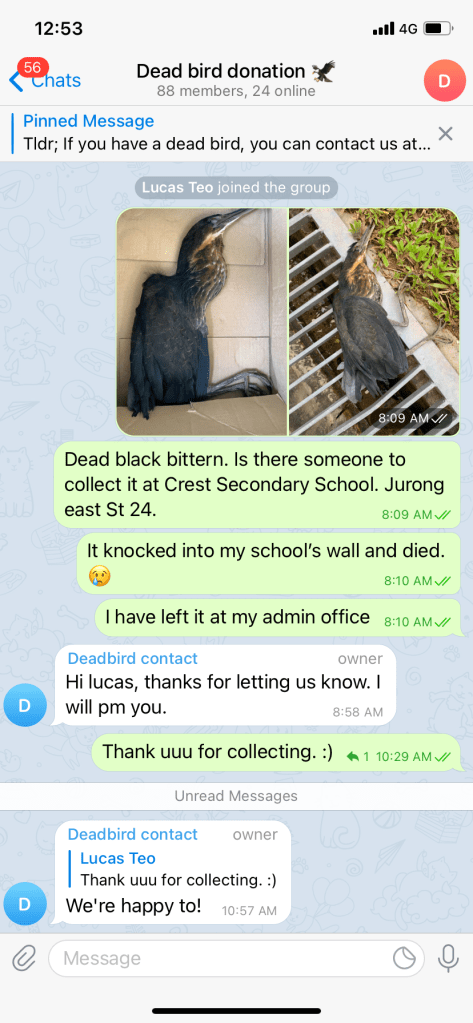
    Instead of calling ACRES (Animal Concerns Research and Education Society), I contacted Lee Kong Chian Natural History Museum (LKCNHM) to collect the bird’s lifeless body for research purposes (see contacts at the bottom of this post).

    Contacted LKCNHM via Telegram for collection of the carcass. Update: the telegram is no longer in use.

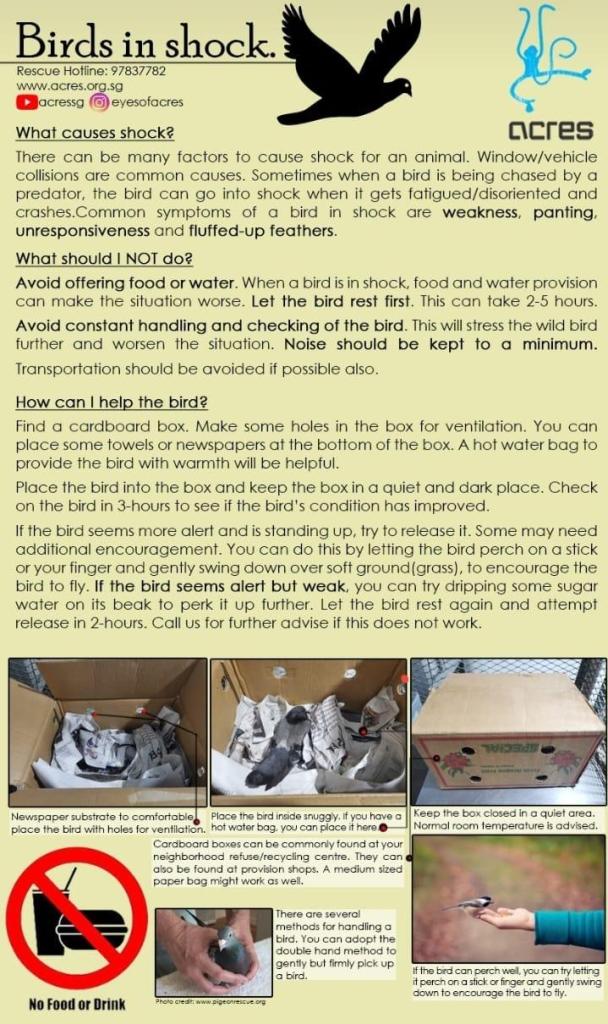
    BASIC ‘FIRST-AID’ FOR A BIRD IN SHOCK DUE TO COLLISON

    ACRES has been invaluable over the years, consistently providing assistance when we’ve reached out. Even after my departure from the school, my colleagues have continued to rely on their expertise. I recall instances where ACRES even aided injured sparrow nestlings. However, as a charity organisation managing wildlife-related requests across Singapore with limited resources, they undoubtedly face significant challenges in meeting the demands of their crucial work.

    Given the challenges faced by wildlife rescue organisations, it’s beneficial for individuals to have some basic knowledge of animal care. ACRES has provided valuable information on responding to “birds in shock”, which can serve as a useful form of triage in such situations.

    The information above was sent via the ACRES WhatsApp, and it has been helpful in sharing this information with my former colleagues.

    A crucial point to emphasise is the importance of refraining from feeding or giving water to a bird in shock. While many people’s natural instinct is to offer food or water when they encounter a distressed bird, this can actually be harmful. Despite good intentions, it’s not the correct course of action for a bird in shock.

    Thank you ACRES for your services and always seeking better ways to support your cause. And also to all others parties such as NPark’s Animal Response Centre as well as LKCNHM’s deadbird hotline services.

    To contact ACRES for Wildlife Rescue: WhatsApp 9783 7782

    To contact NPark’s Animal Response Centre: 1800-476-1600

    To contact LKCNHM’s deadbird hotline (for retrieval of bird carcasses): WhatsApp 84495023

    To support with bird collision research, please help to fill up the details in the link provided by Nature Society Singapore (see external link for more details but I am not sure if the research is an ongoing one).

    Happy 2025 to the Staff & Students of Crest Secondary School

    Last but certainly not least, a heartfelt shout-out to the dedicated teachers at Crest Secondary School who continue to serve their educational mission with passion. A special mention goes to Auntie May for her tireless efforts in maintaining the school’s beautiful garden. To all the staff, we wish you the very best as you attend to your students’ needs. Stay well and keep up the fantastic work!

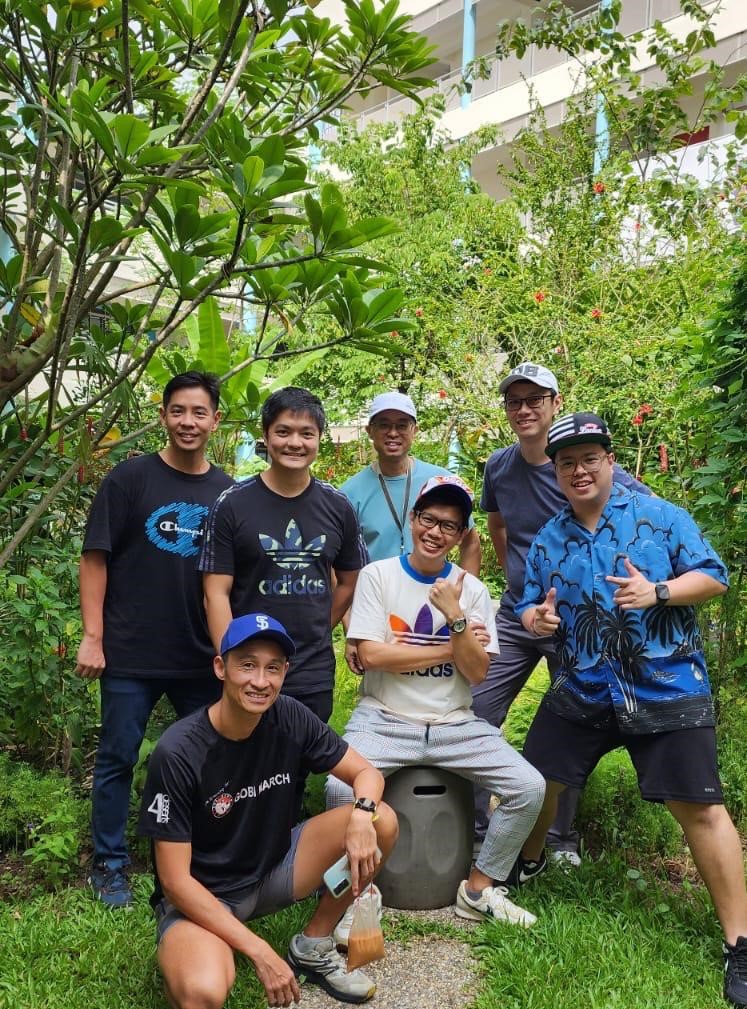
    Some of the very dedicated teachers from Crest Secondary School. While two of us in the photograph (including myself, seated in the center) have left the school, the rest of the teachers continue to serve the students. It’s worth noting how dense the garden can be at certain parts of the school, adding to the campus’s unique charm.

    Written by Lucas Teo
  • How 70s, 80s and 90s Kids Fell in Love with Nature (Part 1)

    How 70s, 80s and 90s Kids Fell in Love with Nature (Part 1)

    Peeling Back Memories: How Milk Tins Unveiled Nature’s Wonders to 80s Kids

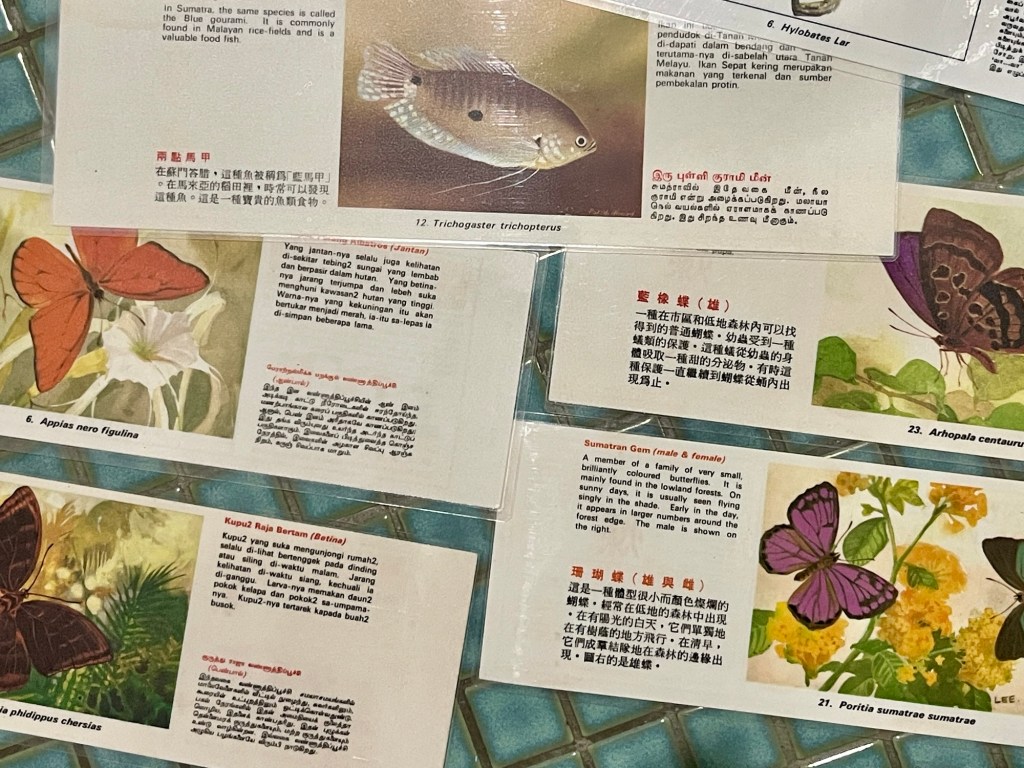
    As a kid growing up in the 80s, few thrills matched hearing Mum unpack milk tins after her grocery run. It wasn’t just about the creamy goodness inside; for me, the real excitement lay in carefully peeling off the labels to reveal hidden treasures.

    These weren’t ordinary labels, but windows into natural marvels. Each one showcased vivid depictions of birds, fish, or exotic plants not typically sighted in our neighbourhoods, providing glimpses of a world far beyond our urban surroundings.

    Notice the instructions for feeding condensed milk to infants. I guess formula milk wasn’t as accessible then, and people were generally poorer during that time.
    My favourite out of all these labels is the Three-Spot Gourami as I used to keep them in my aquarium.
    The “Common Shama” (Copsychus Malabaricus) is now known as “White-Rumped Shama”

    I can’t help but wonder if others share similar fond memories. Do you, too, recall the excitement of carefully peeling off Milkmaid labels, revealing a hidden world of exquisite flora and fauna illustrations? I’d love to hear your stories and experiences – did you collect these labels, trade them with friends, or simply admire them before discarding?

    Thank you Milkmaid for such wonderful memories! (The above are my personal collections).

    Written by Lucas Teo
  • Going Cuckoos Over Cuckoos

    Going Cuckoos Over Cuckoos

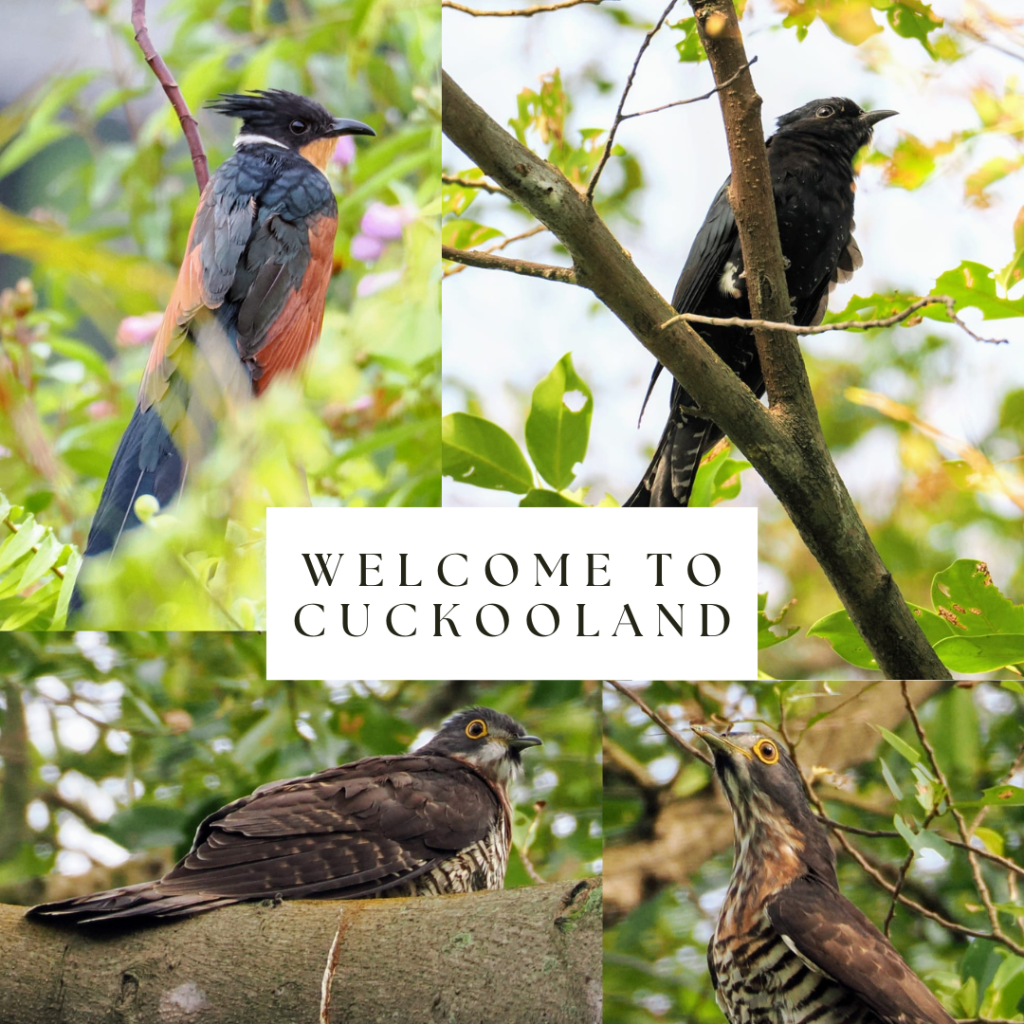
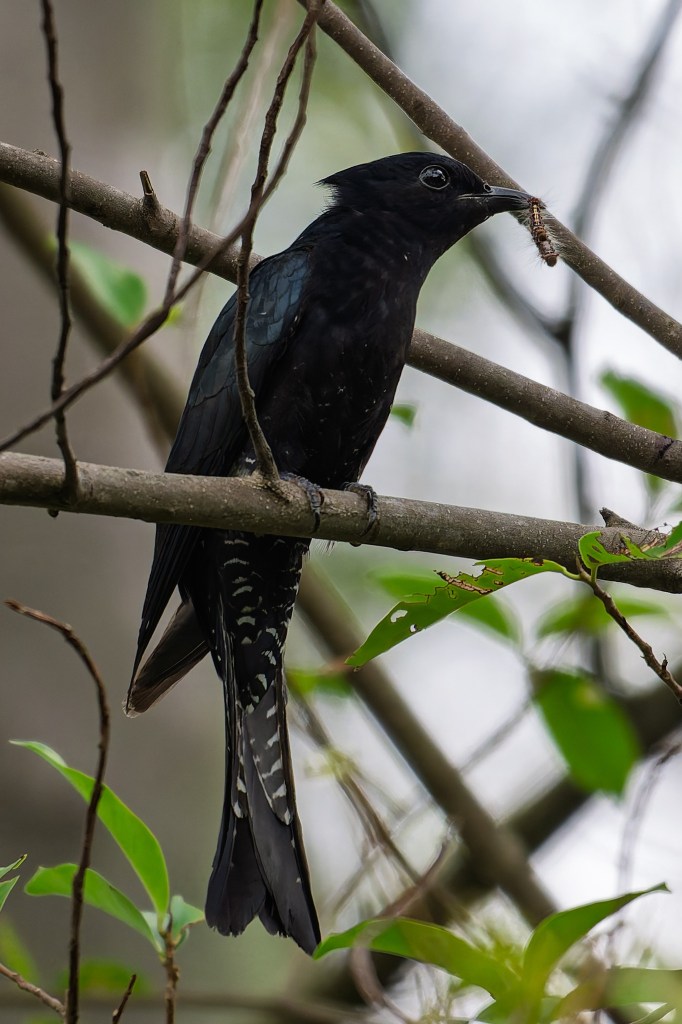
    Over the last month, a “Cuckooland” was discovered by the Singapore birding community in Jurong Lake Gardens, much to the delight of birders living in the West. Several species of migratory and resident cuckoos have congregated in the area, attracting wildlife photographers who adore these birds for their beautiful plumage and elegant silhouette. The diverse array of cuckoo species includes the Squared-Tailed Drongo-Cuckoo, Large-Hawk Cuckoo, Indian Cuckoo, Sunda Brush Cuckoo, Himalayan Cuckoo, Plaintive Cuckoo, Banded Bay Cuckoo, Asian Koel and the handsome Chestnut-Winged Cuckoo.

    From the top in clockwise directions: Chestnut-Winged Cuckoo, Square-Tailed Drongo Cuckoo, Large-Hawk Cuckoo. (Credit: Lee Ching Yong, 2024)

    The Parasitic Brooding Behaviour of Cuckoos

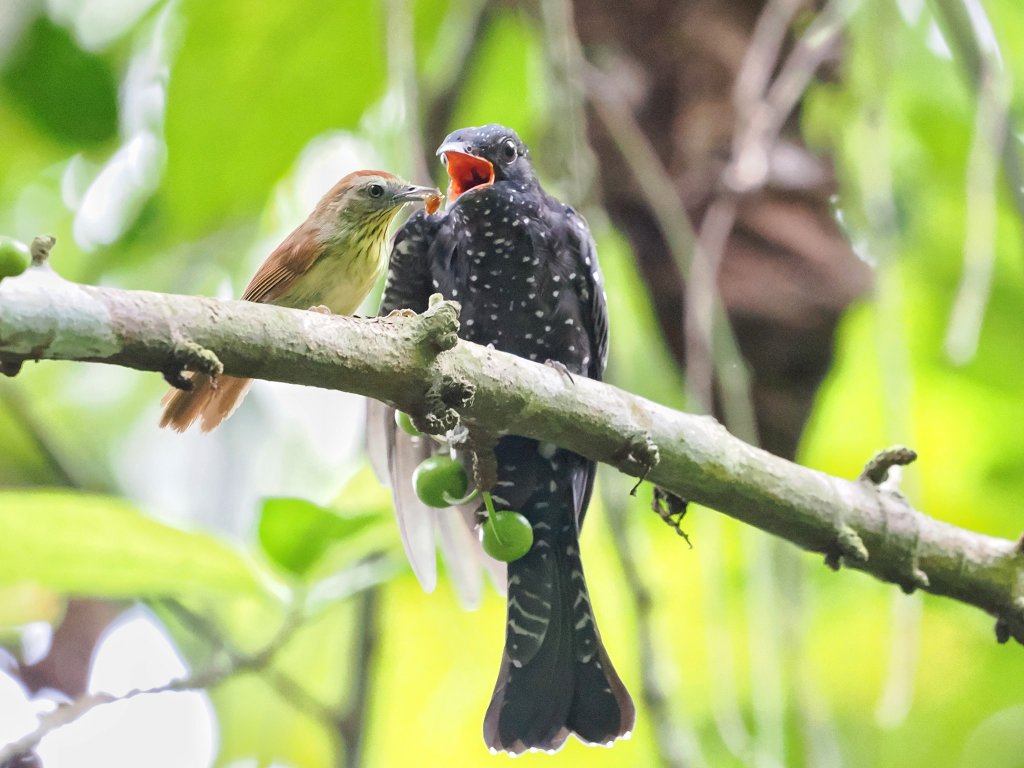
    Cuckoos are particularly interesting due to their parasitic brooding behaviour, which birders have had the pleasure of observing and photographing. Singaporean birders have brilliantly captured images of various host species, such as Golden-bellied Gerygones, Ashy Tailorbirds, Pin-Striped Tit-Babblers, and Malayan Pied Fantails, feeding cuckoo fledglings that are often larger than themselves, belonging to species like the Little Bronze Cuckoo, Square-Tailed Drongo, Rusty-breasted Cuckoo, Plaintive Cuckoo, and even the well-known Asian Koel (which is also a member of the Cuckoo family)

    A Pin-Striped Tit Babbler feeding its oversized Square-Tailed Drongo Cuckoo. (Credit: Anderson Ng, 2024)

    Cuckoos – Our Pest Controllers

    This unique gathering in Jurong Lake Gardens has also provided an excellent opportunity for bird enthusiasts to witness and document the feeding habits of beautiful cuckoos, which I’ll focus on in this post.

    During a recent birding excursion with my friend Gabriel, we explored the area around Fusion Spoon, a known cuckoo hotspot. Despite not spotting any cuckoos that morning, we enjoyed sightings of migratory Warblers, Flowerpeckers, Tailorbirds, Sunbirds, and Pied Trillers as we strolled past the ficus trees.

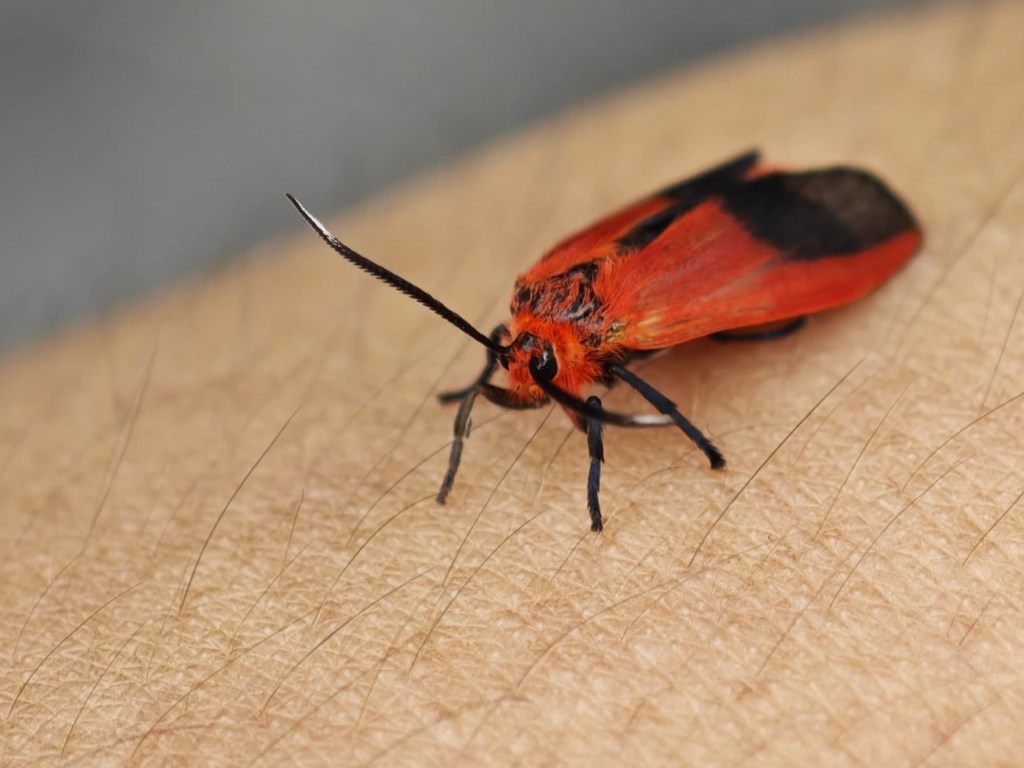
    A moment of delight came when a beautiful moth unexpectedly landed on Gabriel’s arm, adding a sudden splash of colour to our walk. Though familiar, we couldn’t immediately identify it. Our friend Ching Yong later joined us, sharing photos of caterpillars he’d spotted in the same area over the past few days. These caterpillars, found on the pavement, were likely dislodged by foraging cuckoos or heavy rain, hinting at the intricate ecological interactions unfolding around us.

    The deceptively harmless-looking Phauda flammans moth, a notorious pest species, perched on Gabriel’s arm (Credit: Gabriel Kang, 2025)

    Intrigued by our encounter, I later ‘Google-lensed’ the moth’s identity and made a fascinating connection: the moth that landed on Gabriel’s arm was the adult form of the caterpillar that Ching Yong had photographed. It turned out to be the notorious Phauda flammans, a species known for its destructive impact on specific Ficus trees, particularly Malayan Banyan (Ficus microcarpa) and Weeping Fig (F. benjamina), while leaving the other commonly seen Ficus elastica unscathed (see article).

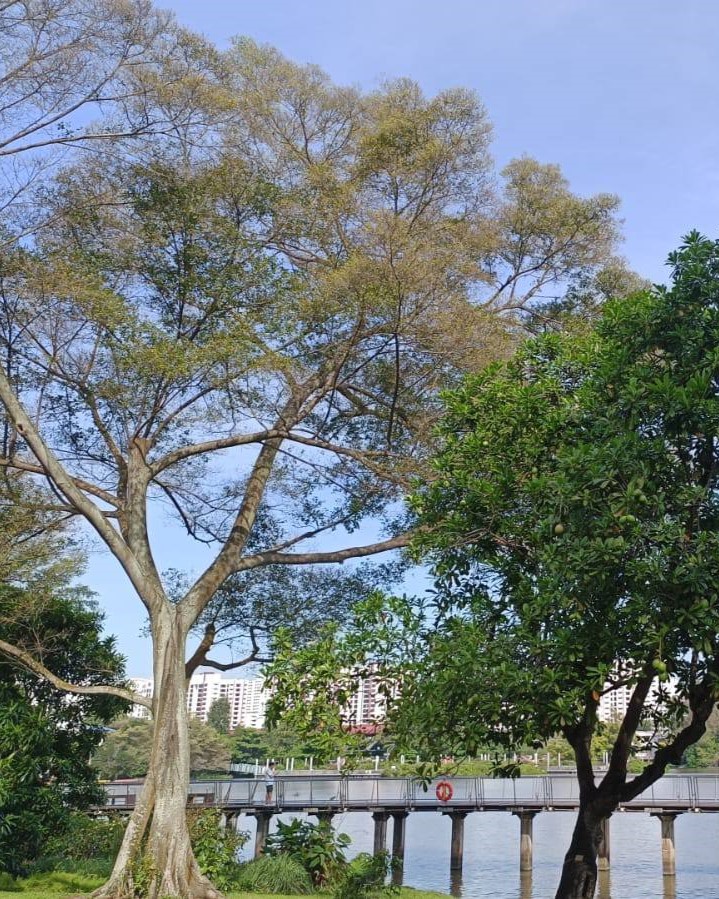
    On the left is a rather sparse looking unmatured Malayan Banyan (Ficus microcarpa) where the cuckoos love to perch and feed. Thanks Teo Siyang for the ID.
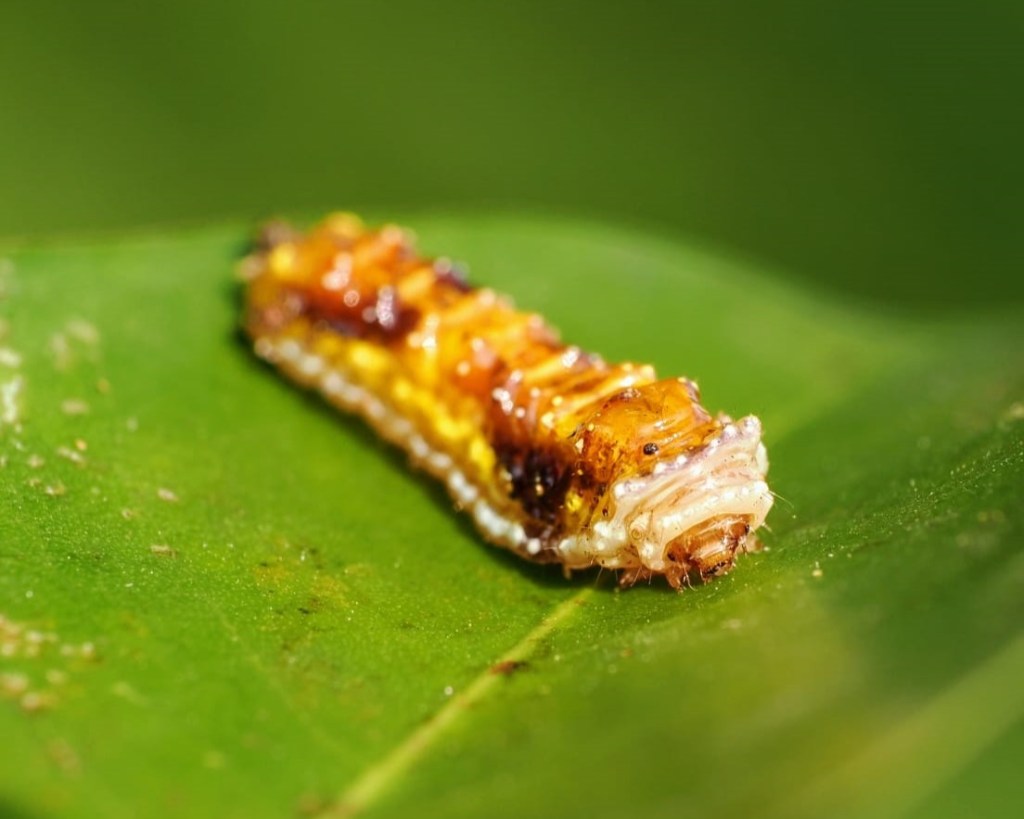
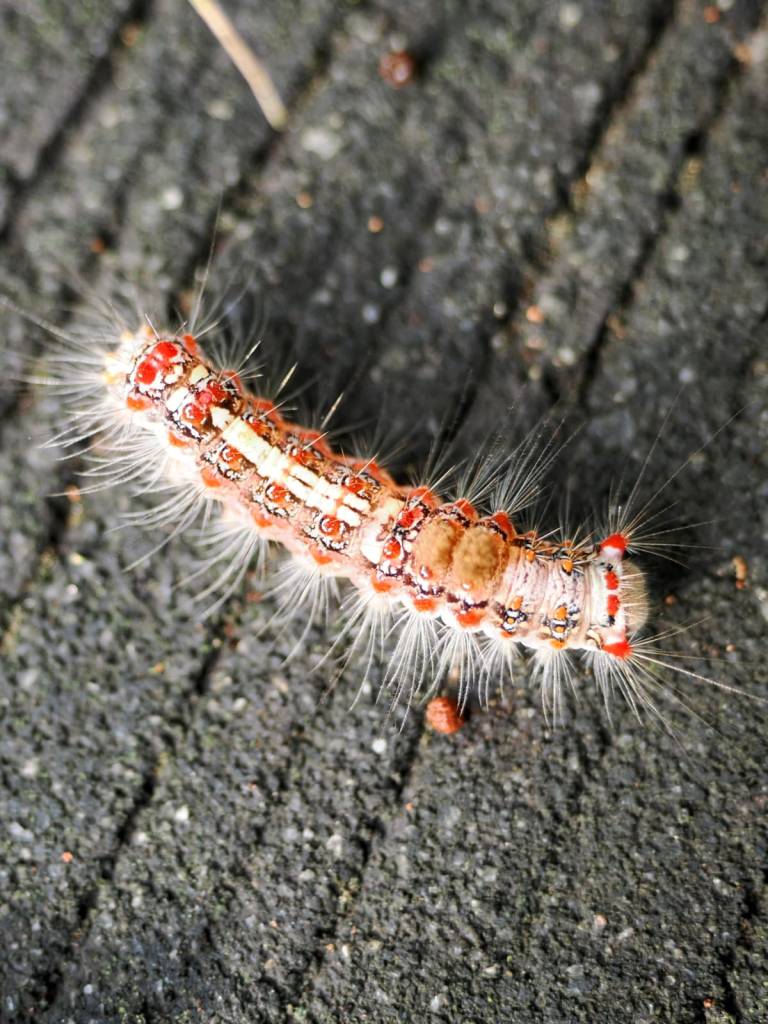
    A close-up view of the Phauda flammans caterpillar, a favourite delicacy of the cuckoos. The intricate pattern on this caterpillar’s body is reminiscent of the layered, rippled texture of the iconic Viennetta ice cream cake from the 1990s. (Credit: Lee Ching Yong, 2024)
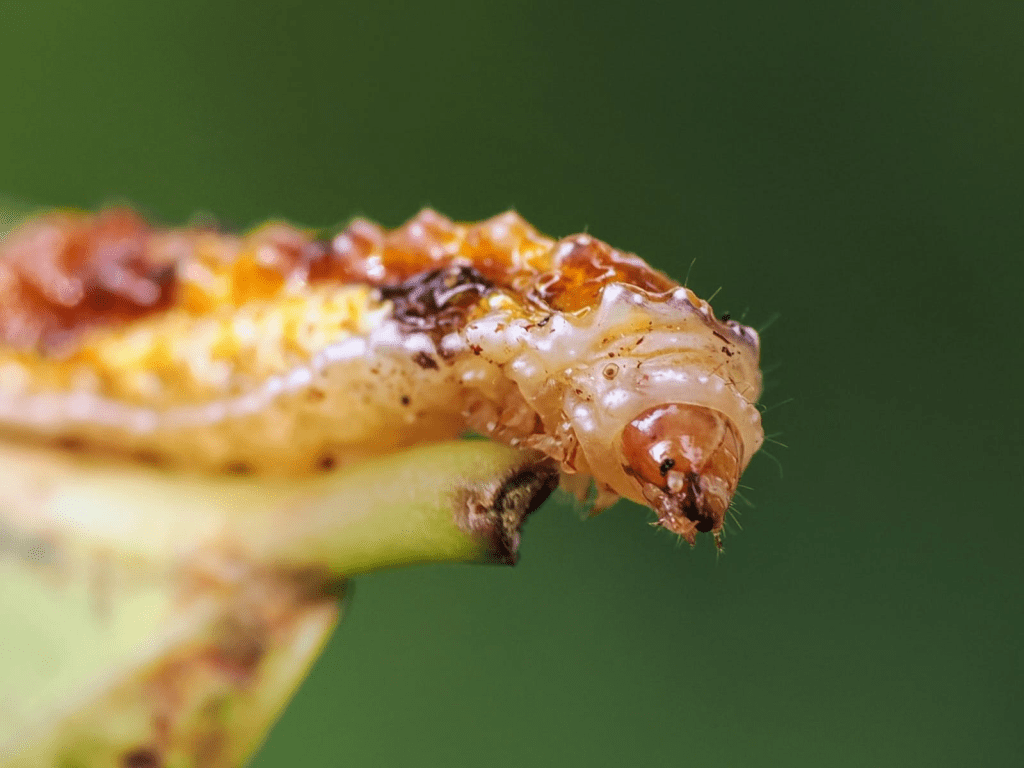
    Another macroshot of the caterpillar’s head. (Credit: Lee Ching Yong, 2024)

    This moth has gained infamy in recent years, particularly in Hong Kong, where it has been responsible for significant damage to various Ficus species (You may read about the article here), causing complete defoliation. Eggs are laid on leaves in the top of the trees and the larvae (caterpillars), upon hatching will start consuming right from the top. In Singapore, you may have noticed some canopy branches of Ficus trees losing their foliage. It’s highly likely that Phauda flammans is the culprit behind this damage.

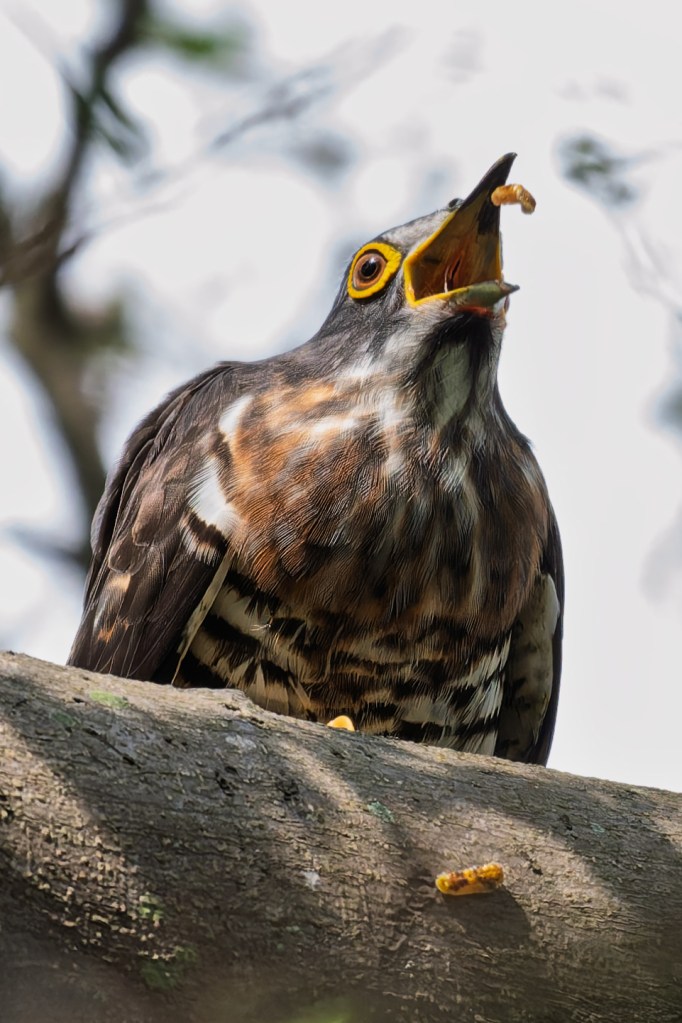
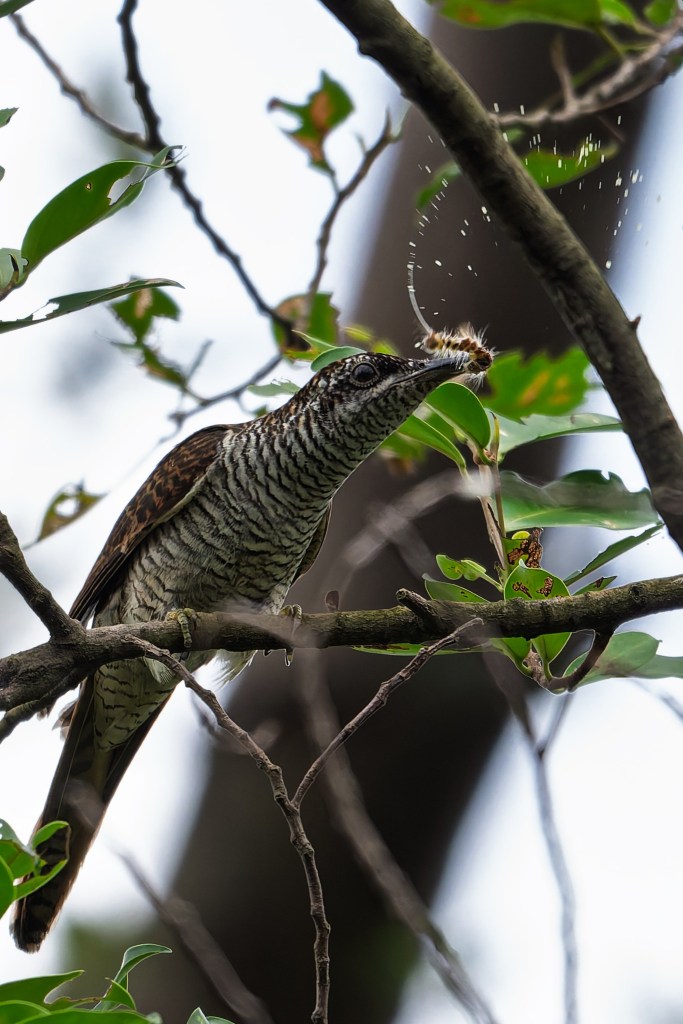
    The presence of these moths and caterpillars in the area not only explains the damage to the local Ficus trees but also sheds light on the reason behind the cuckoos’ congregation. These birds are capitalising on the abundant caterpillar population, which includes Phauda flammans and some tussock moth (Lymantriinae) caterpillars, as evidenced in other publicly shared photographs. This effectively transforms a potential pest problem into a bountiful feeding opportunity for the cuckoos. This ecological interaction has been visually confirmed by a fellow birder, Bai Qw’s photograph, which brilliantly captured a Large-Hawk Cuckoo (Hierococcyx sparverioides) feasting on these specific Phauda flammans caterpillars.

    A Large-Hawk Cuckoo feasting on a Phauda flammans caterpillar with another one trying to escape its fate. (Credits: Bai Qw, 2024)

    Ain’t Many of These Caterpillars Venomous and/or Poisonous?

    Yes, many caterpillars are indeed venomous and poisonous. However, this fact doesn’t deter cuckoos from making these hairy creatures a significant part of their diet. In fact, cuckoos worldwide are well-known for specifically targeting hairy caterpillars that possess venomous spikes/bristles.

    In New Zealand, Shining Bronze Cuckoos were documented feeding on venomous Gum-leaf Skeletoniser Caterpillars, Woolly-Bear caterpillars, Magpie Moth Caterpillar etc (refer to article for the New Zealand’s reference).

    The secret lies in the cuckoo’s unique digestive system:

    Protective Gizzard: The cuckoo’s gizzard is lined with a thick, protective mucous membrane.

    Hair Trapping: This membrane traps the venomous hairs of the caterpillars.

    Shedding Mechanism: As a defense mechanism, the bird periodically sheds patches of this membrane.

    Regurgitation: The shed membrane, along with the toxic hairs, is regurgitated as a pellet.

    Interestingly, the Bird Ecology Study Group has documented another intriguing behaviour: some cuckoos have been observed rubbing caterpillars against rough tree bark. This action likely serves to remove or reduce the number of irritating hairs on the caterpillar before consumption, further minimising the risk to the bird (see link).

    Back in the Jurong Lake Gardens, the cuckoos were photographed to have consumed hairy caterpillars such as the Clearwing Tussock Moth Caterpillar (Perina nuda).

    A Square-Tailed Drongo Cuckoo feasting on a Clear-Winged Tussock Moth (Credit: Bai Qw)
    A close-up shot of the Clear-Winged Tussock Moth discovered by Ching Yong near Fusion Spoon (Credit: Lee Ching Yong)

    As for toxic caterpillars well-known for their aposematic colouring, photographers have caught images and videos of cuckoos thrashing the caterpillars such that the toxic guts spilled out before consuming them.

    A Banded-Bay Cuckoo bashing and thrashing the caterpillar to remove the toxic guts and some of the hairs. (Credit: Bai Qw, 2024)

    Thank You Cuckoos for Your Service

    Before penning this post, I harboured doubts about Singapore’s ecosystem’s capacity to sustainably support the influx of migratory birds. Now, having witnessed this intricate dance between the Ficus trees, Phauda flammans caterpillars, and cuckoos, I’m positive about what our “city-in-a-garden” can offer to these beautiful visitors. It’s clear that our urban landscape offers more than meets the eye, providing a rich and complex habitat that can indeed sustain and attract diverse wildlife.

    A heartfelt thank you to our feathered friends for their pest control services! Special appreciation goes to Anderson Ng, Bai Qw, and Lee Ching Yong for their stunning photographs.

    Written by Lucas
  • Towards A More Ethical 2025 in Wildlife Photography

    Towards A More Ethical 2025 in Wildlife Photography

    As wildlife enthusiasts and photographers, we often find ourselves in situations that test our ethical boundaries. In 2024, I have experienced several moments, which led me to reflect on my own practices as well as my own role in promoting responsible wildlife photography.

    An Uncomfortable Encounter

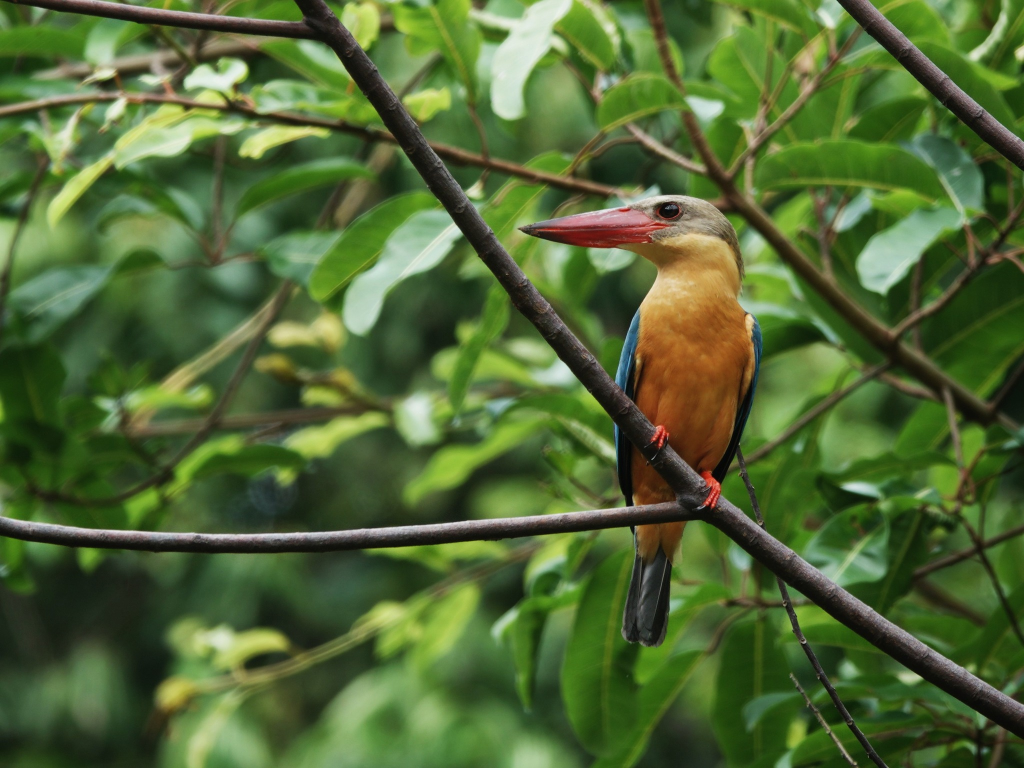
    Stork-Billed Kingfisher photographed in August at the Singapore Quarry

    My first clear photo of a Stork-billed Kingfisher came under circumstances that left me feeling uneasy. At the Singapore Quarry, surrounded by over 30 other birders, I witnessed behaviour that I now regret not addressing. Some individuals were tossing whole slices of bread into the water to gather the fishes to a particular spot where the photographers were aiming at. The ripples created by the fishes lured the kingfisher from a distant tree, prompting it to dive before perching right in front of us. I took a few shots, feeling conflicted – admiring the beautiful colours of the kingfisher in such a close distance but yet feeling guilt-stricken.

    The act of tossing bread into the water started triggering more hunting behaviour in various birds present, including the Grey-headed Fish Eagle and Oriental Darter.

    The Motivation Behind Unethical Practices

    The primary objective seemed to be capturing dramatic shots: “Birds in Flight”, photographs, “Fish in Mouth” images i.e. action shots preferred over standard perched bird photos. This practice raises several concerns. Bread lacks nutritional value for wildlife, adding empty calories to their diet. Uneaten bread may pollute the water. Moreover, feeding wildlife, in general, is discouraged and often prohibited.

    Feeling conflicted, I decided to act on my discomfort. I left Singapore Quarry after just 10 minutes, despite usually spending over an hour birdwatching. This decision meant missing the Oriental Darter’s and the Grey-Headed Fish Eagle’s feeding behaviours.

    Unfortunately, the incident at the Singapore Quarry isn’t isolated. Similar unethical behaviours have been observed across various locations, highlighting a concerning trend in wildlife photography.

    At Dairy Farm’s small pond, I’ve heard about a small group of individuals releasing feeder fish, feeder shrimps and glofish to get the Blue-Earred Kingfisher’s ‘Food-In-Mouth’ photographs. Social media has become a showcase for these questionable practices, with posts featuring blue-earred kingfishers capturing non-native fish species. Even more troubling are the discussions among photographers about which fish species to introduce next for ‘ideal’ shots.

    The issue continues during this year’s migratory season when Singapore becomes a temporary home for exotic birds, drawing large crowds of eager birders. In the newly opened Bidadari Park, rumours circulated about individuals releasing American Bull Frogs – typically sold in aquarium shops as live feed – to entice one particular Ruddy Kingfisher. Over several weeks, numerous photographs emerged showing this kingfisher with non-native frogs in its mouths, raising ethical and environmental concerns.

    These practices not only disrupt natural ecosystems but also potentially harm the very wildlife we aim to appreciate and document. They represent a fundamental misunderstanding of our role as observers and documentarians of nature, prioritising a perfect shot over the wellbeing of the subjects we photograph.

    As wildlife enthusiasts and photographers, we must recognise the far-reaching consequences of these actions. It’s crucial to foster a community that values ethical practices and respects the natural behaviours and habitats of wildlife. Only then can we truly capture the essence of nature without compromising its integrity.

    I Can Do Better Myself

    The enthusiasm for capturing great wildlife shots is something I understand all too well. Like many others in this field, I’ve had my own lapses in judgment, particularly when it comes to approaching birds too closely, even near their nests.

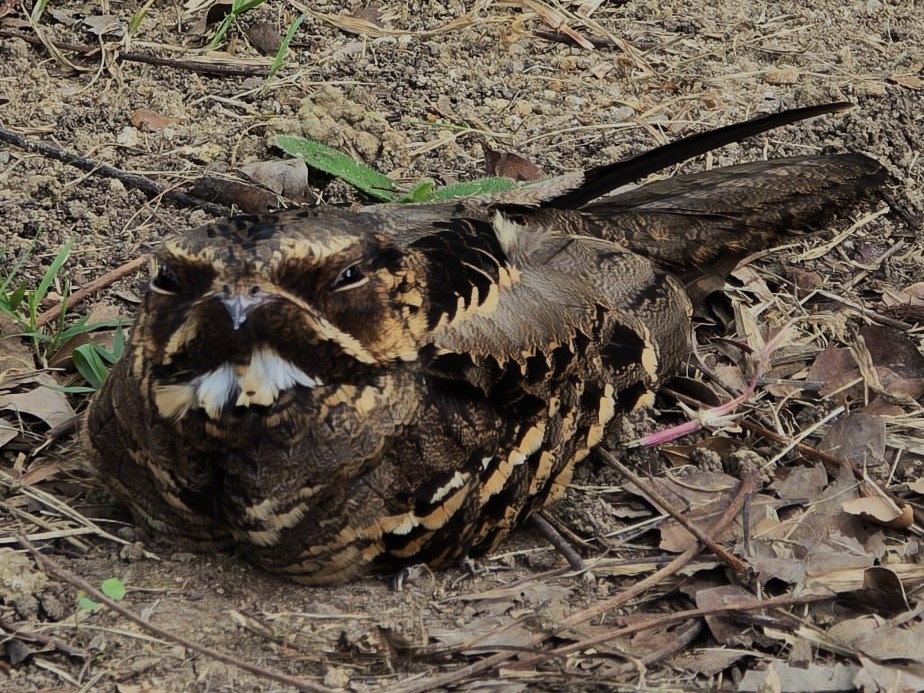
    One incident from earlier this year stands out, leaving me with a profound sense of guilt and shame. While cycling with my family in Pasir Ris Park, I spotted a Large-Tailed Nightjar. Excited by the sighting and without my usual zoom camera, I approached the bird with just my smartphone, hoping for a clearer picture. My actions frightened the nightjar, causing it to fly away and expose its eggs.

    A fellow birder who was following behind me, witnessing this, sternly warned me against sharing the location and reprimanded me for my close approach. Although I initially tried to justify my actions, deep down I knew I was wrong. I silently thanked her for the reminder about my actions and the greater mission we share as wildlife enthusiasts.

    An unethical handphone shot of the Large-Tailed Nightjar
    The moment I saw the two eggs after the mum flew off, I was guilt-stricken.

    Beyond the incident with the nightjar, I’ve faced other ethical challenges in my wildlife photography journey. The temptation to handle wildlife such as snakes, lizards, and frogs for that perfect shot has been a recurring struggle. However, each of these experiences has become a valuable lesson in restraint and respect for nature.

    Moving Forward

    As I continue to grow in this field, gaining both experience and credibility, I’ve come to realise the importance of not only improving my own practices but also gently guiding others. Educating fellow enthusiasts about responsible wildlife watching has become an integral part of my mission. It’s crucial to remember that this journey towards ethical wildlife photography is an ongoing process. All of us who share this passion for nature and wildlife photography are constantly learning, adapting, and hopefully, improving.

    By openly discussing these challenges and sharing our experiences, we create a community of more conscientious observers and documentarians of the natural world. This collective effort to balance our enthusiasm for capturing wildlife with our responsibility to protect it is what will ultimately ensure that our passion contributes positively to conservation efforts rather than inadvertently causing harm.

    What are your thoughts on this issue? Have you encountered similar situations?

    Written by Lucas
  • Nature’s Anime Cosplay (Part 1): From Dragon Ball Characters to Singapore’s Wildlife

    Nature’s Anime Cosplay (Part 1): From Dragon Ball Characters to Singapore’s Wildlife

    This week in the anime world, Dragon Ball fans celebrated Vegeta’s epic Super Saiyan 3 transformation! What an exhilarating moment for the Prince of Saiyans! To commemorate this milestone, I’ve decided to draw an intriguing parallel between Dragon Ball and nature. Thanks to a local birder Leonard Kok who gave me an inspiration to write about it.

    In 1994, whilst I was hospitalised for a severe medical reaction, my parents presented me with a colourful Dragon Ball manga volume to boost my spirits and encourage my recovery. The book showcased the familiar heroes like Goku, Krillin, Piccolo, and Gohan, alongside some new antagonists. I was particularly captivated by the main villain – Cooler, who is, in fact, Frieza’s elder brother.

    Cooler concept art drawn by Akira Toriyama (Credit: Dragon Ball Wiki)

    For nature enthusiasts, many of you may immediately find yourself connecting this character with exotic creatures you’ve encountered in the wild. For me, however, it wasn’t until more than two decades after reading that manga that I realised Cooler’s final form bears a resemblance to one of my favourite caterpillars: the Plain Nawab (Polyura hebe plautus) caterpillar or the Blue Nawab (Polyura schreiber tisamenus).

    A frontal view of the Plain Nawab Caterpillar with its iconic head resting on its host tree leaves – the Saga Tree (Adenanthera pavonina)
    Cooler in his coolest form, which has a head structure that resembles the Nawab caterpillars. (Credit: Dragon Ball Wiki)

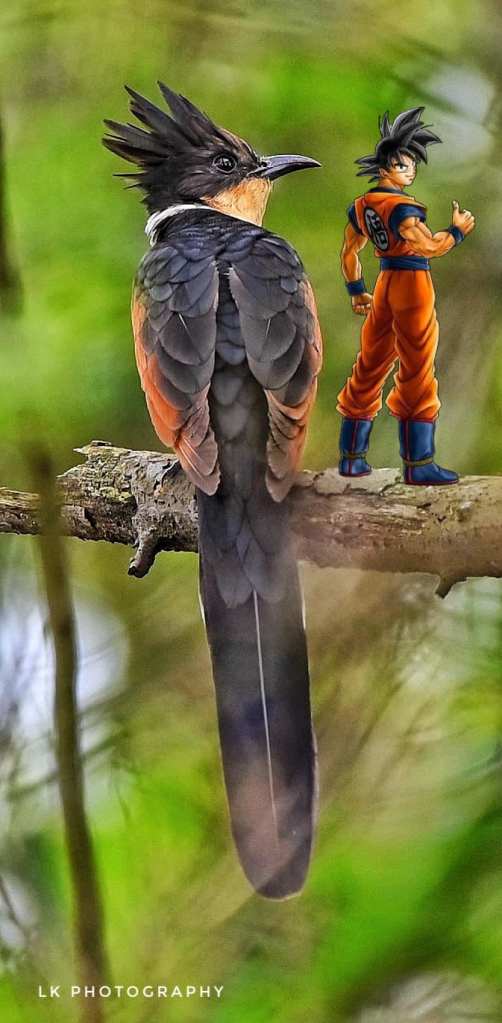
    Fast forward to today: I stumbled upon an incredible connection between nature and anime on the Bird Sightings Facebook Group. The star of this unexpected crossover? The Chestnut-Winged Cuckoo (Clamator coromandus), a migratory bird that has recently graced Singapore with its presence. Several of these stunning creatures have been spotted in the newly renovated Jurong Lake Gardens, and Leonard Kok, one of the lucky and dedicated birders, managed to capture a beautiful shot of it.

    What makes this sighting truly extraordinary is the uncanny resemblance Leonard noticed. Alongside the cuckoo’s photo, he cleverly juxtaposed a picture of Son Goku from Dragon Ball Z in his original form, sporting his iconic blue and orange outfit. The similarity is nothing short of striking! The cuckoo’s distinctive crest mirrors Goku’s gravity-defying black hair, while even the colour combination seems to match perfectly.

    But the parallels don’t stop there. Remarkably, the bird’s posture exudes the same positive energy and confidence that Goku is known for.

    Imagine this cuckoo can get into a Super Saiyan form! LOL. Now that would be a sight to behold – a golden-crested cuckoo with glowing aura.

    I can’t unsee the resemblance now (Credit: LK Photography)

    Interestingly, just as Goku ultimately defeated Cooler in an epic battle, nature has its own version of this showdown. The Chestnut-Winged Cuckoo, our Goku lookalike, is known to feed on various insects, including caterpillars. So, in a twist of cosmic irony, our cuckoo friend might actually prey on caterpillars similar to the Nawab that reminded us of Cooler! It’s as if the natural world is playing out its own version of Dragon Ball Z battles right before our eyes.

    These delightful comparisons not only showcase the beauty of nature but also remind us of the unexpected ways pop culture and wildlife can intersect. It’s a testament to the keen eye of nature enthusiasts and the magic that can happen when we view the world around us with a touch of imagination.

    Written by Lucas
  • A Tale of Two ‘Tongues’ (or No Tongue)

    A Tale of Two ‘Tongues’ (or No Tongue)

    It has been over a year since my last offshore fishing trip, and today I finally had the chance to join my friends for an exciting expedition in the Southern Islands area, situated between Sentosa and Saint John’s Island.

    Passing by PSA on Our Fishing Boat

    With Chinese New Year approaching, we embarked on our fishing trip with high hopes of landing some prized catches like Coral Trout, Golden Snapper, Red Snapper, or the Orange-Spotted Grouper for our reunion dinners. However, our enthusiasm was dampened by unfavourable weather conditions, as heavy downpours significantly impacted the bite rate, making our quest more challenging.

    In the end, we caught a variety of other fishes instead, that included a Black Spot Tuskfish (Choerodon schoenleinii), which is often mistakenly called ‘Eng Kor’ or Parrot Fish in Hokkien, despite belonging to a different family than true parrotfish (Scaridae). We also caught a Fingermark Seaperch, commonly known as ‘Golden Snapper’ (Lutjanus johnii), and an impressively large ‘Leng Jiam’, also known as a Spangled Emperor (Lethrinus nebulosus). To round out our catch, we reeled in numerous ‘Tee Boon’, or Spanish Flag Snapper (Lutjanus carponotatus). While we may not have caught exactly what we were aiming for, we enjoyed the time spent together.

    Alvin, an ex-colleague caught a beautiful Spangled Emperor
    A Black-Spotted Tuskfish with a broken tooth (tusk). Parrot fish, on the other hand, has strong human-liked teeth to chomp through corals with ease.
    Warning: If you have entomophobia (a fear of insects) or hemophobia (a fear of blood), please do not continue with the article. 

    A Nightmarish and Disturbing Discovery

    Our fishing adventure was filled with unexpected sights and discoveries. During our trip, we were treated to the majestic view of 5-6 White-Bellied Sea Eagles (Haliaeetus leucogaster) soaring through the sky and perching on one of St. John’s Island’s Casuarina Trees. We also exclaimed in awe at the sight of a huge turtle, most likely a Green Turtle (Chelonia mydas) given its impressive size.

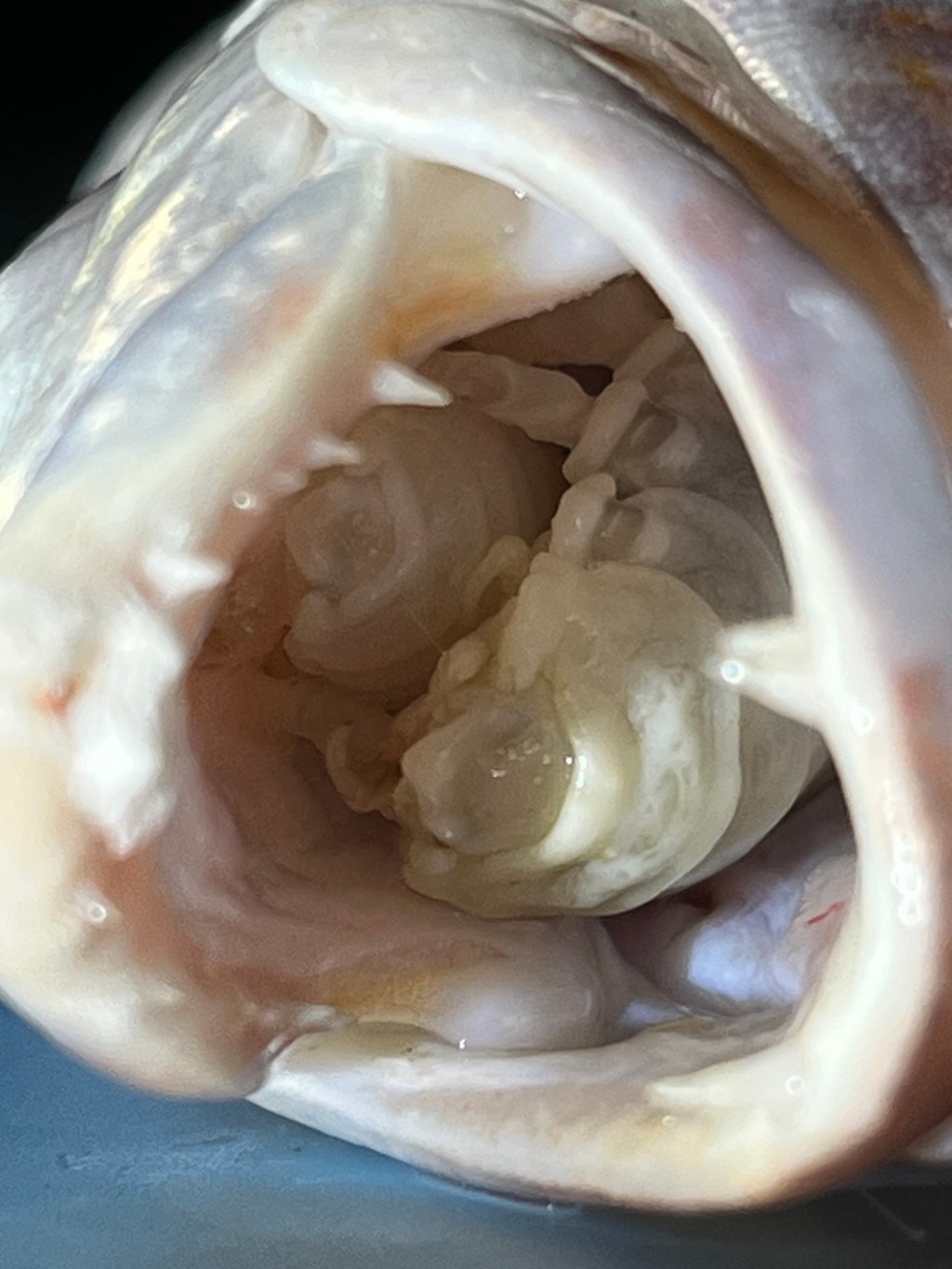
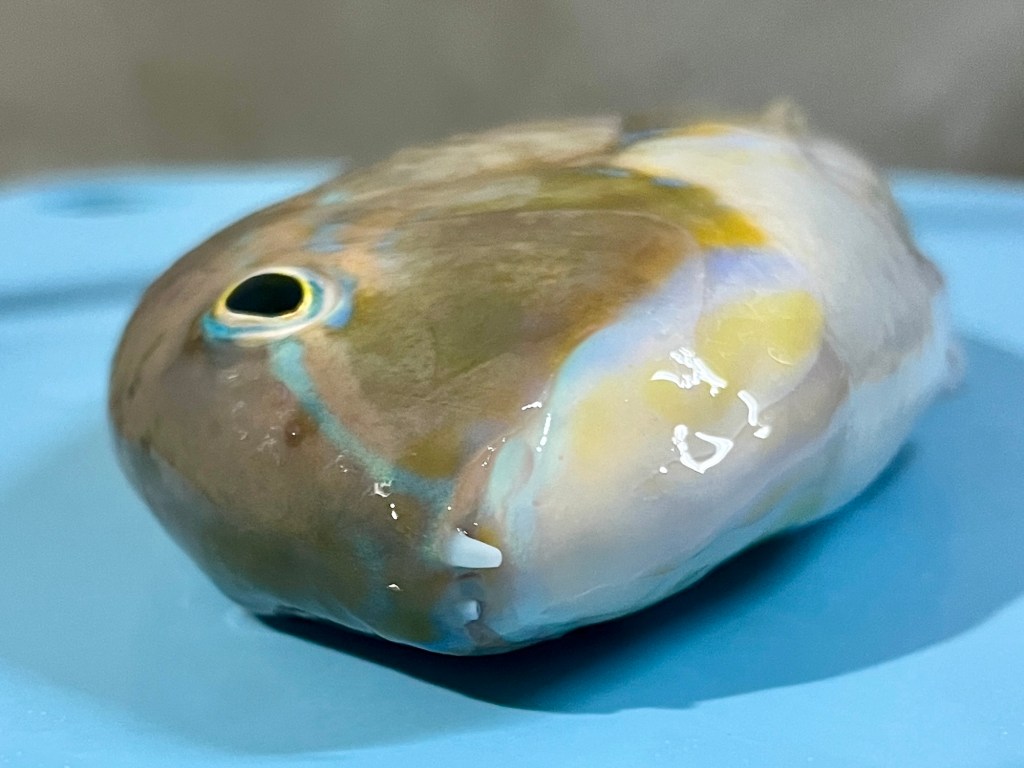
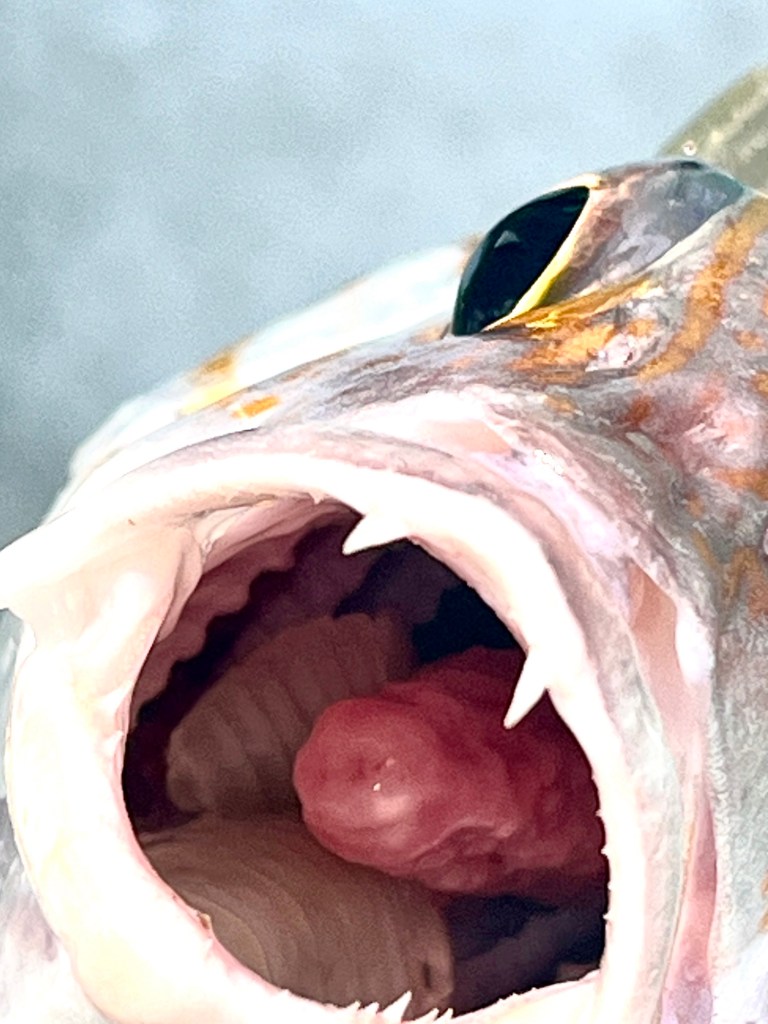
    A disturbing yet fascinating discovery was the Tongue-Eating Louse (Cymothoa exigua), I mean lice, as there were two of them in the mouth of a Spanish Flag Snapper, caught by my ex-colleague, Marvin.

    Inside the mouth of a Spanish flag snapper, two tongue-eating lice have yet attached themselves
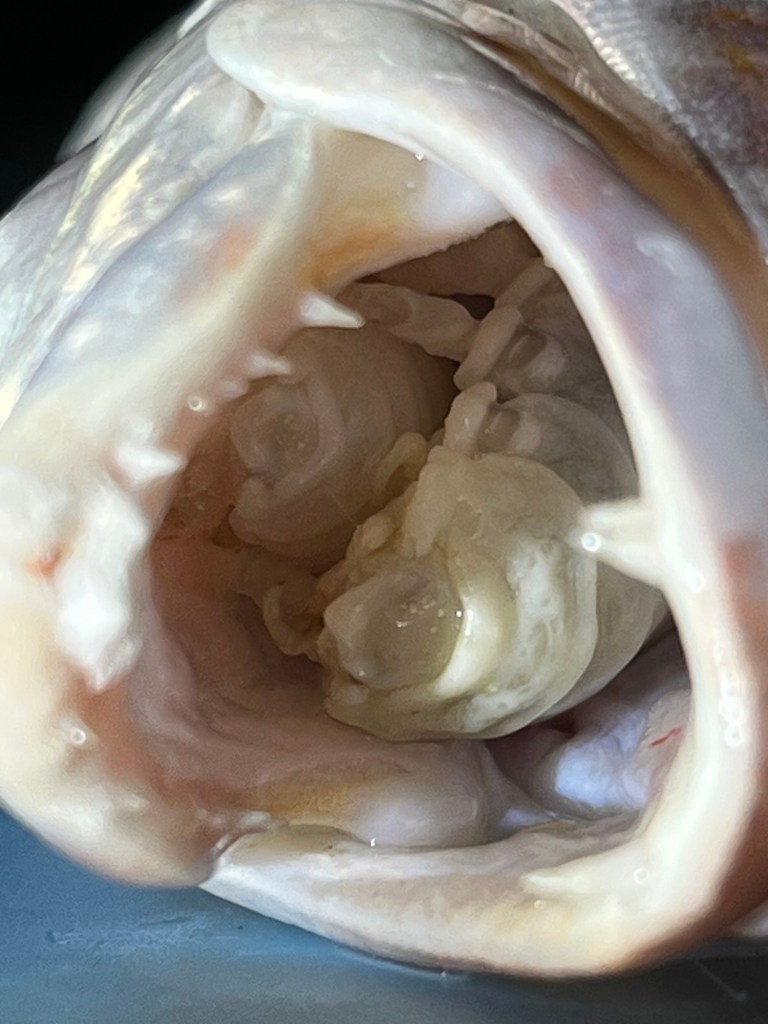
    When I reached home, the two lice have found its rightful place on the tongue.

    Behaviours & Appearances of the Parasitic Isopods

    During their juvenile stage, these isopods swim freely in the ocean before attaching themselves to fish. They then crawl into the fish’s mouth through the gills and make their way to the tongue, where they anchor themselves using their sharp claws. This clever manoeuvre cuts off blood circulation to the tongue, causing the tongue to eventually experience necrosis.

    But that’s not the most astonishing part – the parasite then positions itself as a replacement tongue, essentially becoming a functional part of the fish’s anatomy. It survives by feeding on the host’s blood and mucus.

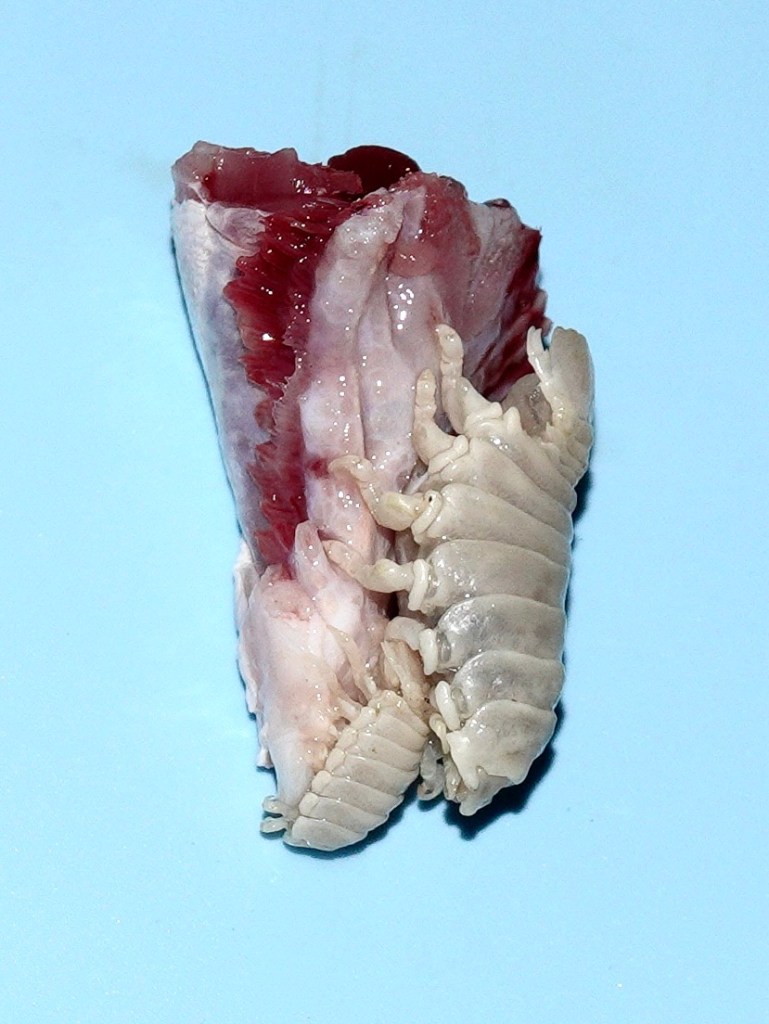
    The photograph above shows two tongue-eating lice, with the larger female (approximately 20mm) taking center stage and the smaller male (about 8mm) positioned behind and slightly underneath her. Apparently, they are protandrous hermaphrodites as they begin their lives as males and mature into females. Thus, it is safe to deduce that the smaller one is not just smaller in size but younger in age as well.

    As I cleaned and prepared the fish for freezing, I carefully extracted the tongue, which still had the two isopods attached. Despite my best efforts, I couldn’t separate them from the tongue, as their multiple pairs of legs were tightly lodged in place. What struck me as remarkable was that, even after being out of water for over 6 hours, the isopods were still alive and moving. This raised an intriguing question: are these tiny creatures capable of breathing air?

    After gutting the fish, I removed the tongue and saw the two isopods in this particular position.
    Observe the back of the female. Looks like part of the body structure that allows the isopods to swim through the water. Does anyone have more information about the anatomy of this isopod crustacean?

    As much as they are scary-looking creatures, these parasites do not really kill their hosts and often the latter will outlive the parasites. Nevertheless, the host may be slightly malnourished.

    The host where the tongue-destroyers lived looks thinner than my usual catch of Spanish Flag Snappers.
    The underside of the two parasites. How many pairs of legs can you see?

    After I have preserved the parasites in a bottle of 70% alcohol, the bigger female started having babies floating around. So it wasn’t bloated. It was pregnant!

    Ewwwww… Goosebumps!

    I’ve spent what feels like an eternity observing these two creatures, all in the pursuit of accurately documenting their behaviours and appearances. Despite being an insect enthusiast – I even keep terrestrial isopods as pets – there’s something about these particular creatures that sends shivers down my spine and leaves me covered in goosebumps.

    And so, our journey into the bizarre world of tongue-eating lice comes to an end. But if you’re ready for more adventures into the uncharted territories of Earth’s biodiversity, be sure to follow birdbrain blog for a wild ride. From the fascinating to the frightening, we’ll explore it all – so, buckle up and join us, but be warned: not all of our discoveries will be for the faint of heart!

    Written by Lucas
  • My Maiden Intertidal Walk

    My Maiden Intertidal Walk

    My Childhood Memory of the Seashore Life

    My fascination with seashore creatures began in my childhood, rooted in frequent visits to Pasir Ris beach with my father in the 1980s and 1990s. His mother and sister lived nearby, giving us the perfect excuse to explore this coastal haven.

    Those trips left indelible memories:

    • The elusive mudskippers, tiny and impossibly quick, always evading our grasp
    • Baby squids, their defense mechanism on full display as they turned white after expelling their ink (a stress response to our curious prodding)
    • Black Eeltail catfish (Plotosus canius), camouflaged among the ‘sea litter’ – dried leaves, seaweed and even rubbish, waiting to be discovered. Dad warned us against the venomous spines.
    • The harmless Sand Bubbler Crabs (Scopimera and Dotilla spp.), which left holes on the sandy beaches.
    A Sand Bubbler Crab filtering for food from the balls of sand.

    Armed with the beloved $5 guidebook – “A Guide to Seashore Life” published by the Singapore Science Centre – I embarked on a journey of discovery. This pocket-sized treasure trove became my trusted companion, helping me decipher the identities of various sea creatures.

    In those carefree days, our curiosity often led us to capture fascinating marine creatures and bring them home. Sadly, most perished within days, with only the hardy catfish surviving for months. Looking back with regret, it’s striking how different our mindset and approach were then:

    • Wildlife conservation wasn’t yet a widespread concept
    • Our interactions with nature were driven primarily by personal curiosity and fun
    • We didn’t fully grasp the impact of removing creatures from their natural habitats

    This reflection serves as a poignant reminder of how our understanding and relationship with nature have evolved. While those experiences sparked a lifelong interest in marine life, they also highlight the importance of conservation and responsible interaction with ecosystems.

    A Return to the Shore: Guided Intertidal Walk at Changi Beach

    Fast forward to last week, and I found myself embarking on my first guided intertidal walk. Organised by “Just Keep Thinking” and led by the renowned MJ Biogal, this excursion took place at Changi Beach, right beside the Ferry Terminal to Pulau Tekong. Arriving early, my friend and I seized the opportunity for some impromptu bird watching. We spotted White-Bellied Sea Eagles, Long-Tailed Parakeets, and Collared Kingfishers, along with the Common Mynas, Javan Mynas and House Crows.

    White-Bellied Sea Eagle (Icthyophaga leucogaster) Clutches a Catfish in its Talons
    A pair of collared kingfishers (Todiramphus chloris) perched on the Casuarina tree (Casuarina equisetifolia)

    MJ Biogal, our guide, proved to be a passionate advocate for environmental conservation, truly walking the talk. Her approach to the intertidal walk was a stark contrast to my childhood experiences. She enforced firm guidelines, prohibiting the digging out of creatures and touching, especially venomous species like fire worms and bristle worms. Throughout the walk, MJ actively educated the public, reminding other beachgoers to leave creatures undisturbed.

    MJ Biogal with one of her fans.

    During the Covid-19 pandemic in 2021, MJ raised awareness about the mistreatment of marine life, notably calling out those skewering through Sand Dollars (Clypeasteroida), like meat chunks on a satay stick, killing them right in front of her eyes. It was a powerful reminder of the need to balance our curiosity with respect for marine life and their habitats and there is a lot more to be done to educate the public.

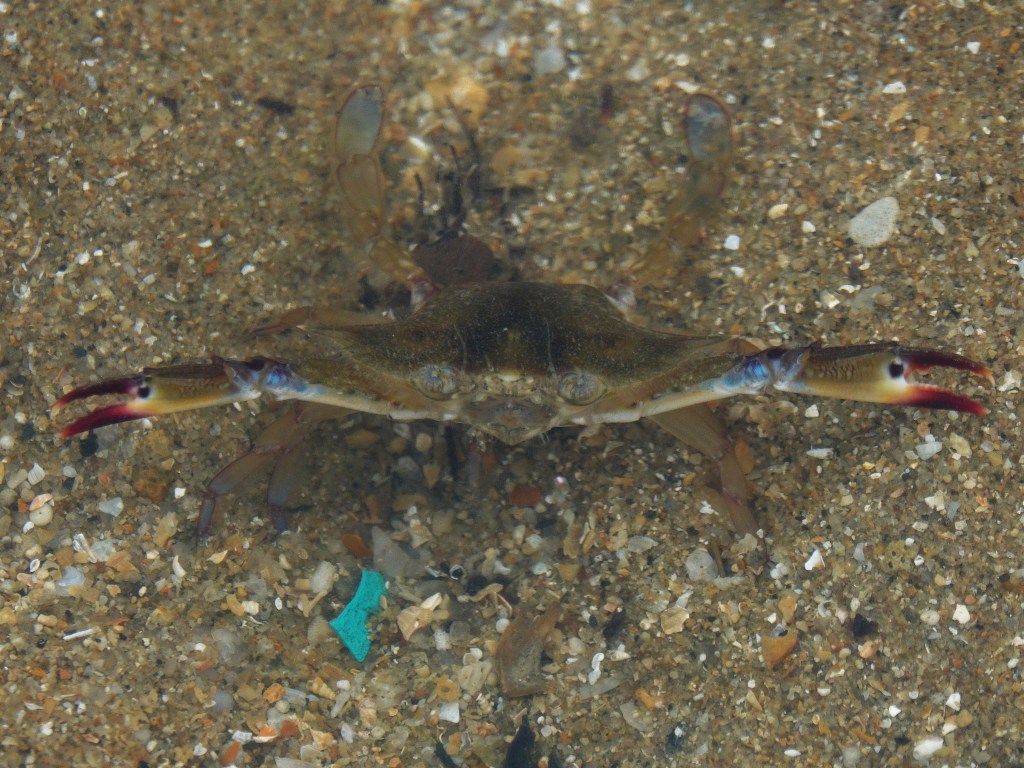
    During our guided walk, our group of 36 was divided into smaller clusters, each led by an experienced guide. I found myself in a group led by Jerryl, an avid diver with aspirations of becoming a marine biologist. Our exploration began with a molted flower crab shell. When a young boy in our group mistook it for a dead crab, Jerryl seized the opportunity for an impromptu learning session.

    Defensive Dance: A Flower Crab (Portunus pelagicus) Raises Its Claws in a Bold Stand-off

    Using engaging questioning techniques, Jerryl sparked curiosity among the group, particularly exciting two enthusiastic boys. “What are the tell-tale signs that this isn’t a dead crab?” he asked, encouraging critical thinking and observation. This interactive approach not only corrected misconceptions but also kindled a deeper interest in marine life among the participants.

    As we gathered around, Jerryl revealed the fascinating details that distinguish a molted shell from a dead crab:

    The Missing Eyes: In a freshly dead crab, the eyes are still visible. However, on a molted shell, you won’t find any eyes. This absence is a clear sign that what we’re looking at is just the discarded outer layer of the crab.

    The Gap: A key indicator is the noticeable gap between the molt. This separation occurs as the crab sheds its old exoskeleton to grow.

    Tidal Retreat: Anemone’s Tentacles Withdraw as Waters Recede

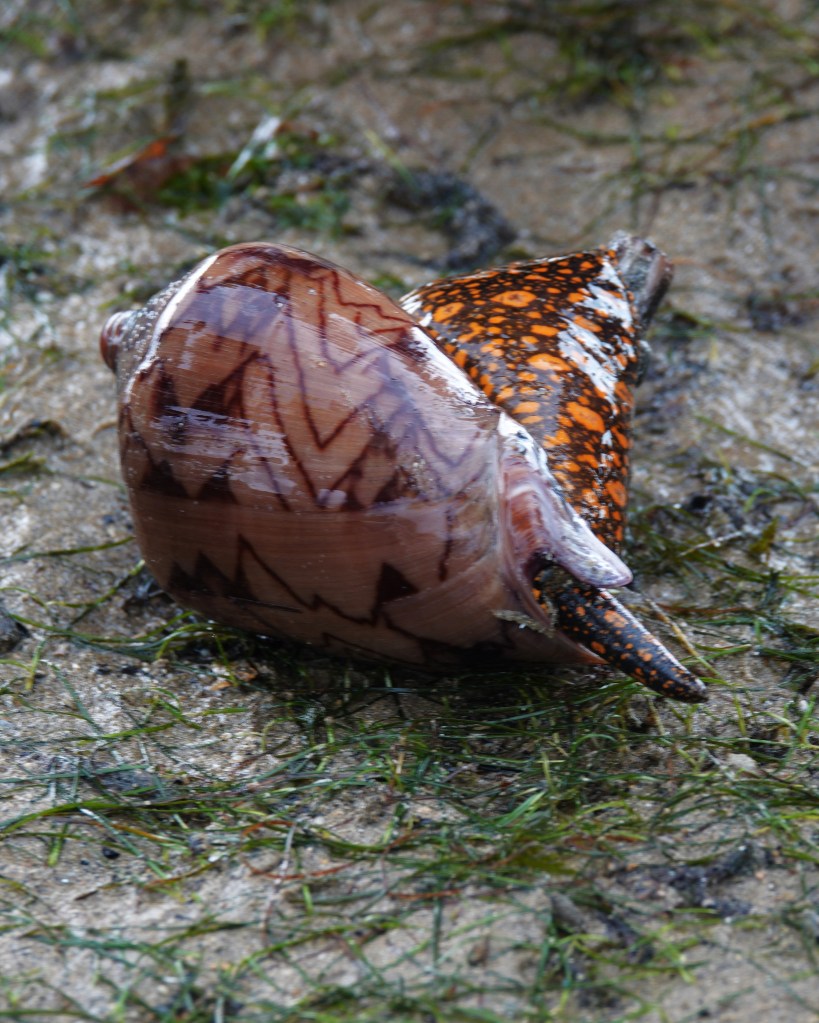
    Our first ‘wow’ moment arrived with the discovery of a large hermit crab, snugly ensconced in the shell of a Noble Volute (Cymbiola nobilis). The sight initially sent a jolt of excitement through me, as I mistook the shell for that of the venomous cone snail, infamous for its harpoon-like shooting mechanism. Moments later, another guide brought us a live Noble Volute! It was the prettiest thing I have seen that day. This is a large carnivorous snail that used to be hunted for its beautiful shell and even its edible flesh.

    The colours and patterns on the Noble Volute change daily due to the pigment cells constantly infecting its neighbouring cells

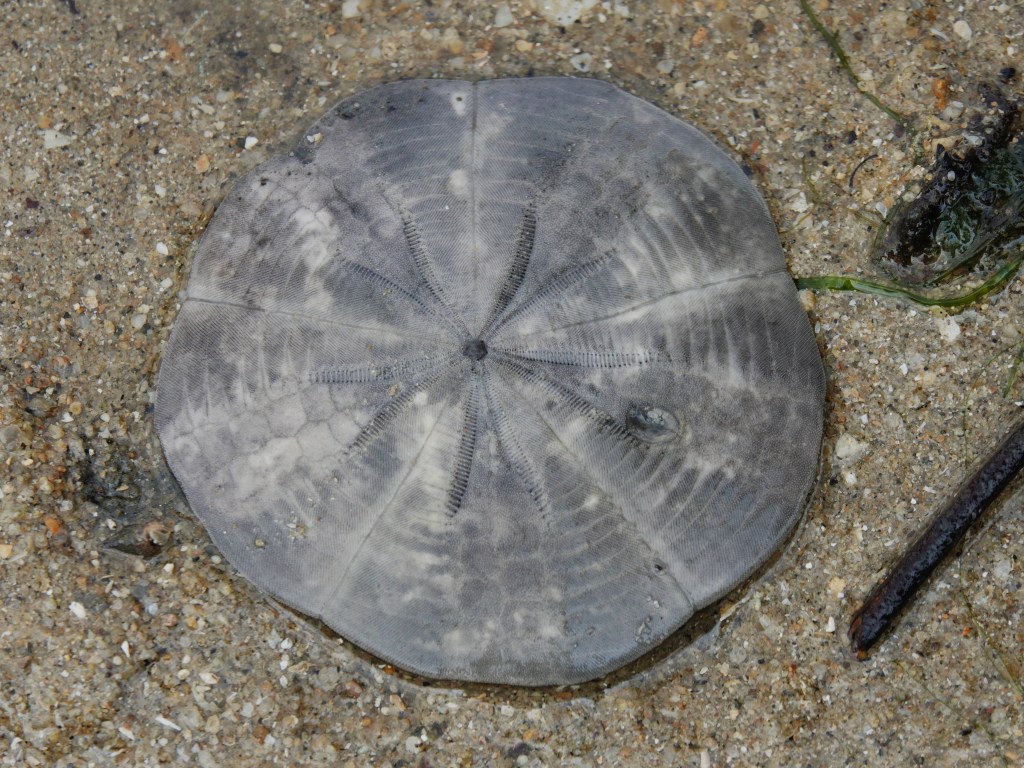
    Our exploration led us to a fascinating discovery: Cake Sand Dollars (Arachnoides placenta). It was hard to believe these peculiar discs were living animals. Jerryl, our knowledgeable guide, turned this find into an engaging guessing game, challenging us to identify the top and bottom sides of these flat, clayey-looking creatures.

    After a few attempts, Jerryl revealed the secret: the top side typically displays a subtle ‘flower pattern’ and is slightly convex, while the bottom side prominently showcases the pentaradial symmetry characteristic of most echinoderms (a group including sea cucumbers, sea stars, and sea urchins).

    Jerryl’s sharing sparked my curiosity, leading me to further research. I learnt that the sand dollar’s unique disc-like shape is an evolutionary adaptation, optimised for efficiently consuming detritus on the ocean floor. It has tube feet on both surfaces to help breathe, navigate and feed.

    Anatomy Unveiled: The middle hole is its central mouth on its underside (oral side). Guess where is its anus? It is right at the 10-11’o clock position near the edge.
    The top side (also known as the petaloid) with the flower petal pattern.

    Written by Lucas
    Midway through our guided tour, a heavy downpour forced us to seek shelter, despite the absence of lightning risk. We prioritised the well-being of the many young children in our group, not wanting them to catch a cold. Fortunately, it was merely a passing shower, and as we resumed our walk around the intertidal zone, we were greeted with a beautiful rainbow as our backdrop. This natural spectacle added an extra layer of wonder to our already fascinating excursion.

    Police boat patrolling between Pulau Tekong and Changi against the colourful backdrop.

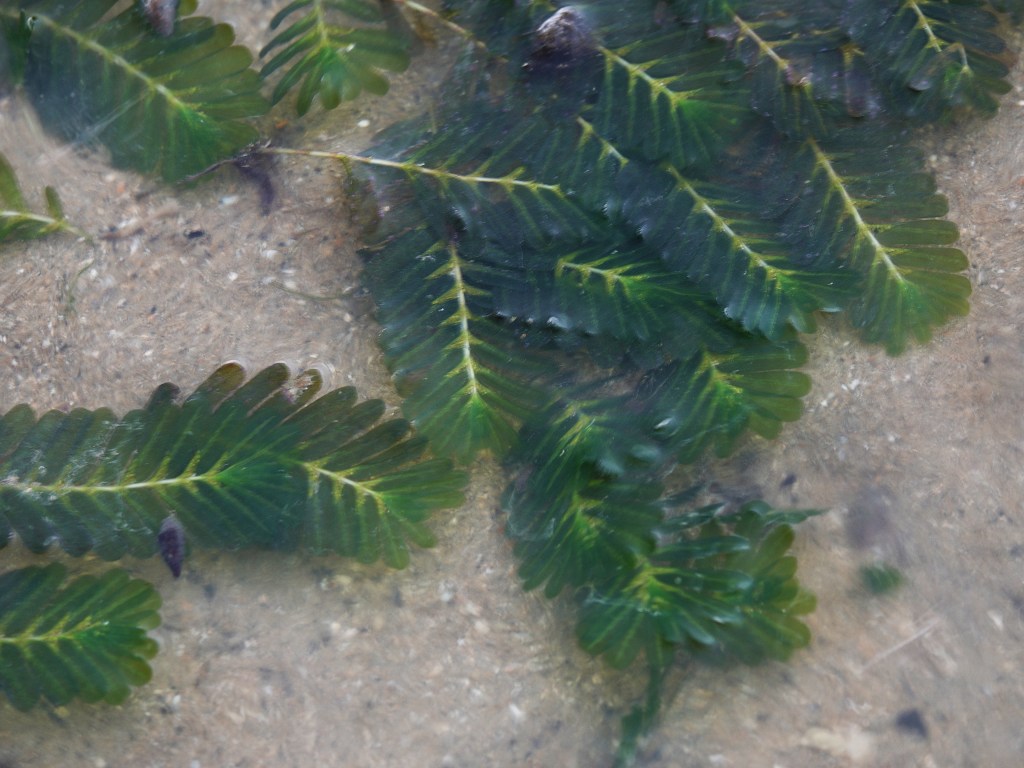
    As a plant enthusiast, I found myself drawn to the seagrasses, particularly a species resembling a cross between mimosa and fern – aptly named fern seagrass (Halophila spinulosa). Unlike seaweed, these are true flowering plants that produce fruits. They form a crucial ecosystem, serving as the primary habitat and food source for dugongs. I look forward to capturing photographs of these fascinating plants’ various features during my next solo intertidal walk.

    Fern seagrass with snails grazing on it.

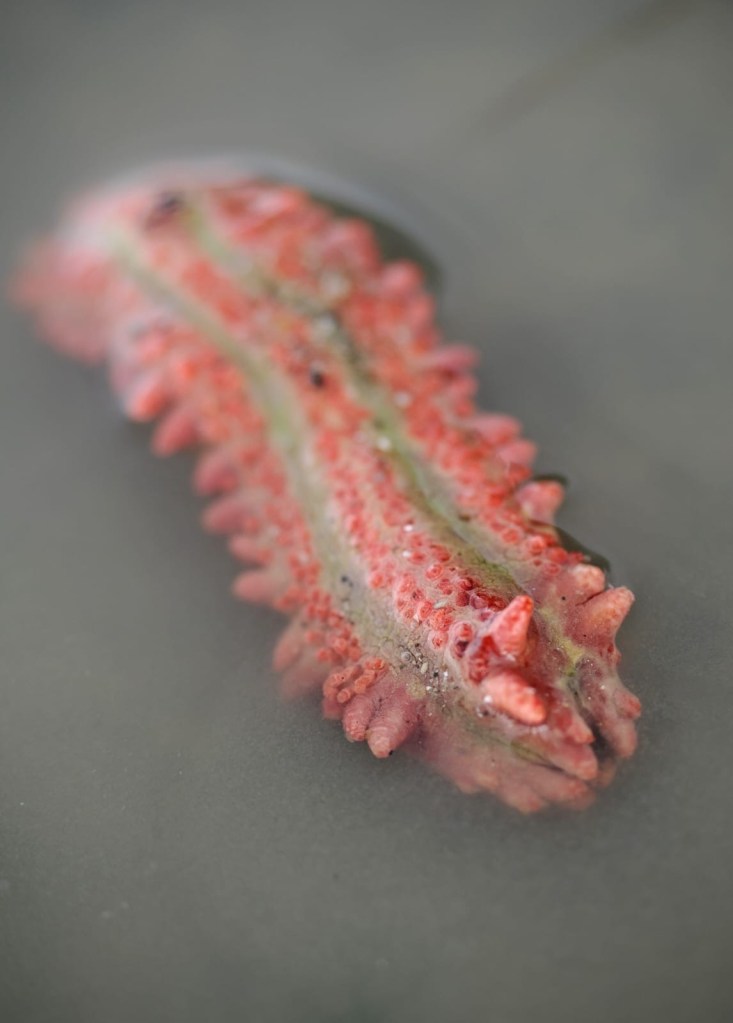
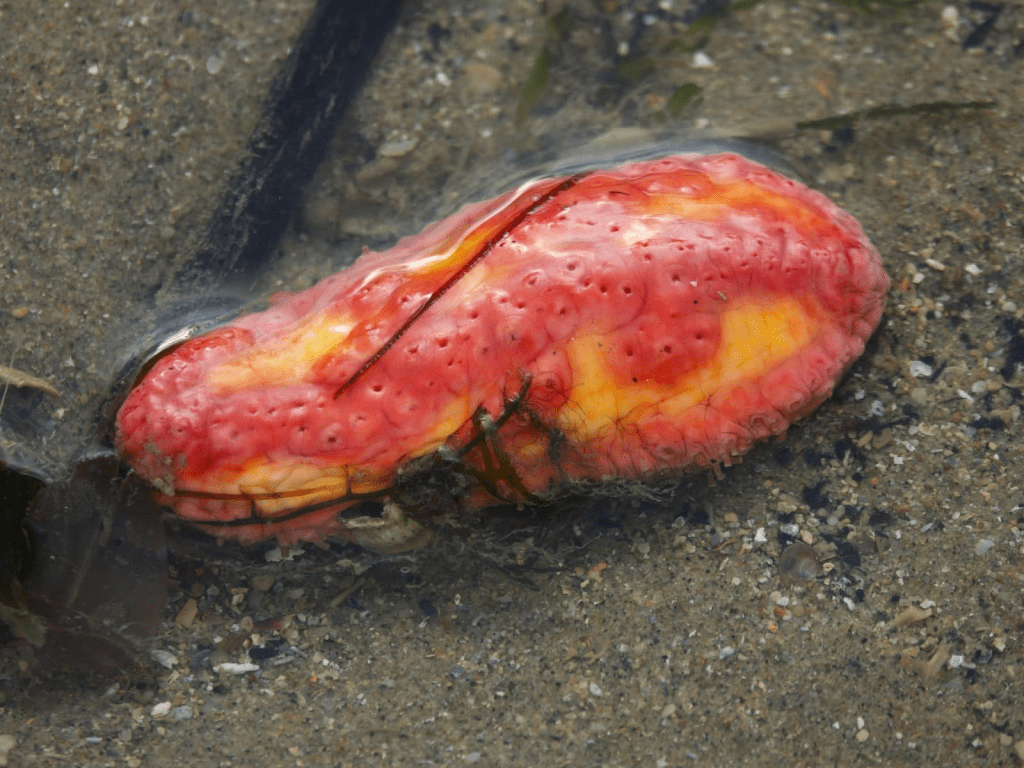
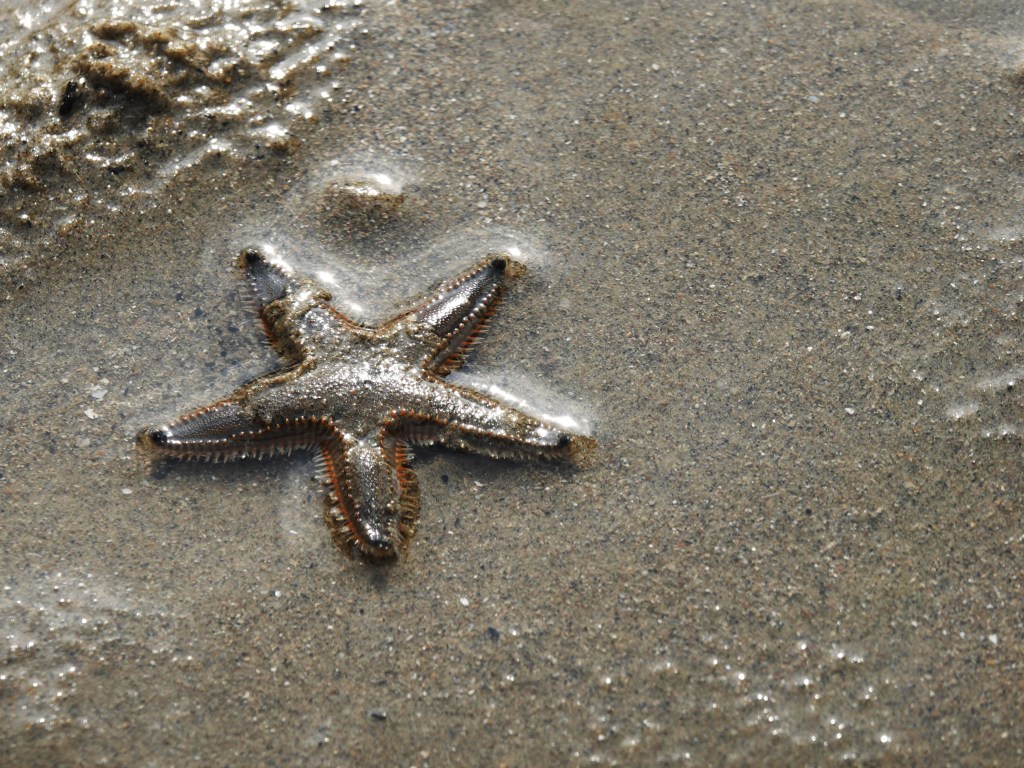
    Our exploration revealed three more fascinating creatures exhibiting pentaradial symmetry: the thorny sea cucumber (Colochirus quadrangularis), the pink warty sea cucumber (Cercodemas anceps), and the plain sand star (Astropecten indicus). Both sea cucumber species display a remarkable feeding process, extending their vibrant tentacles from one end while expelling waste from their anus at the opposite end. In stark contrast, the sand star’s muted appearance likely aids in camouflage. This intriguing difference sparked curiosity about how the more flamboyant sea cucumbers manage to conceal themselves in this dynamic environment. Hmm… By aposematism?

    Thorny Sea Cucumber Often Mistaken for Its Pink Warty Cousin
    Pink Warty Sea Cucumber with its psychedelic looks
    In contrast, the plain looking Plain Sea Star

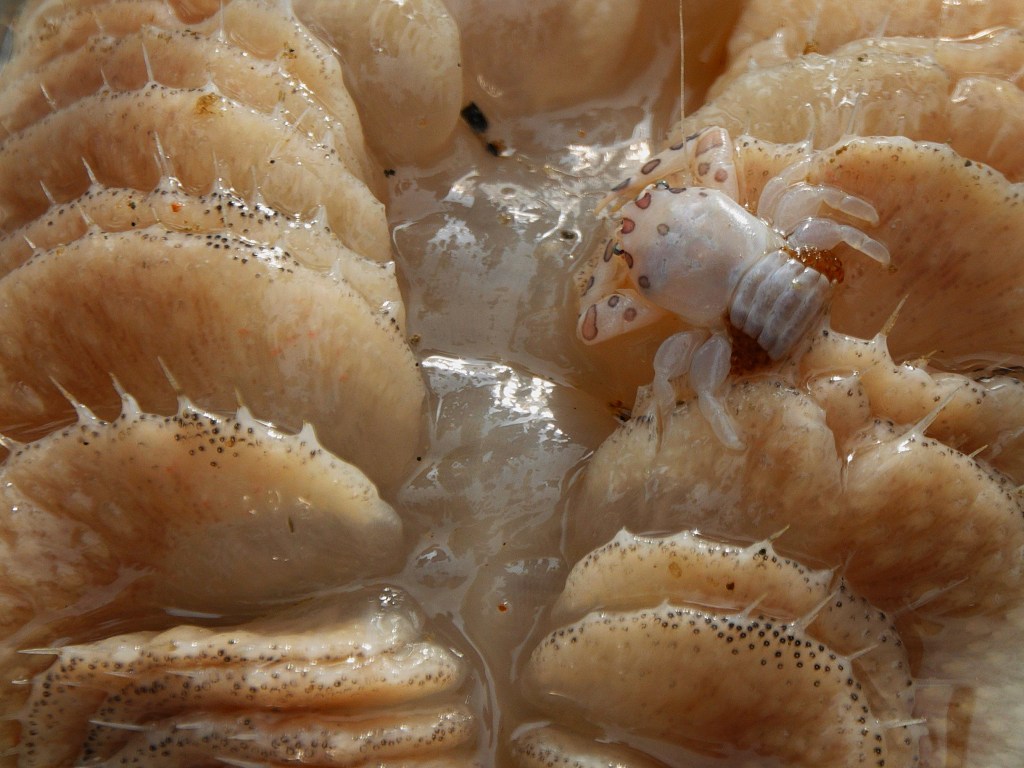
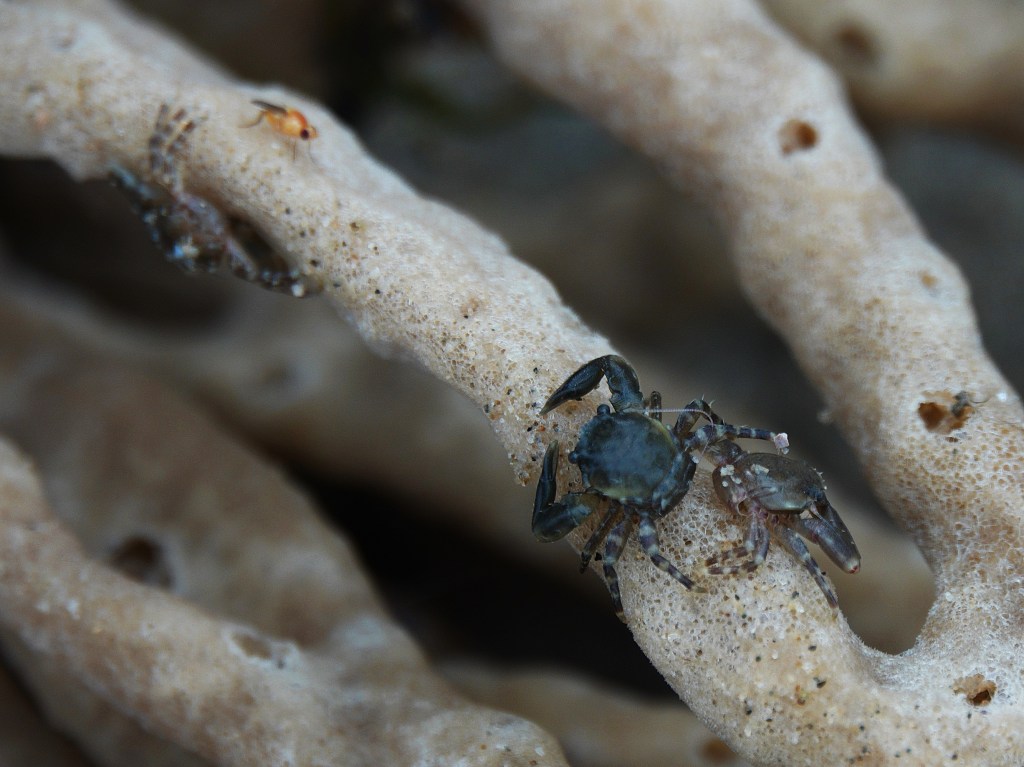
    Living organisms like sea pens and sea sponges serve as vibrant habitats for a diverse array of marine life. One of our guides made an exciting discovery: a Spiky Sea Pen hosting two Painted Porcelain Crabs (one of which is carrying a load of eggs), showcasing the intricate relationships within these miniature ecosystems. We also had the opportunity to examine what appeared to be a lifeless sea sponge, yet it was teeming with life, including a brittle star, snails and several tiny crabs. These encounters highlighted the complex interdependencies within marine communities and the importance of seemingly simple organisms in supporting biodiversity.

    A female Painted Porcelain Crab on a Spiky Sea Pen.
    Unidentified tiny crabs on the sea sponge.

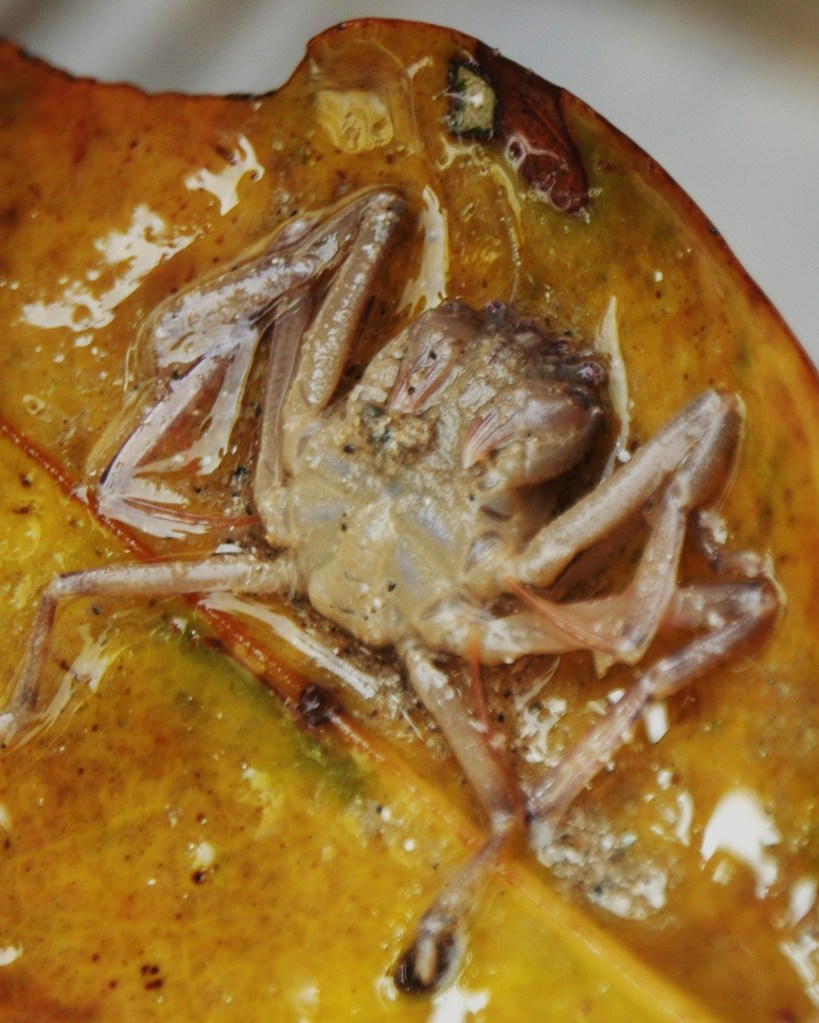
    One of the most peculiar crustaceans I encountered, which evoked memories from the seashore life guidebook, was the Leaf Porter Crab (Family Dorippidae). This fascinating creature appears remarkably flat, including its pincers and legs. What makes it truly intriguing is its adaptive behavior: at night, it perches atop floating leaves, taking advantage of the darkness to evade predators from above. During daylight hours, it cleverly conceals itself beneath these same floating leaves, demonstrating a remarkable survival strategy in its marine habitat.

    “I surrender!” – This particular image appears to depict someone cornered against a wall.

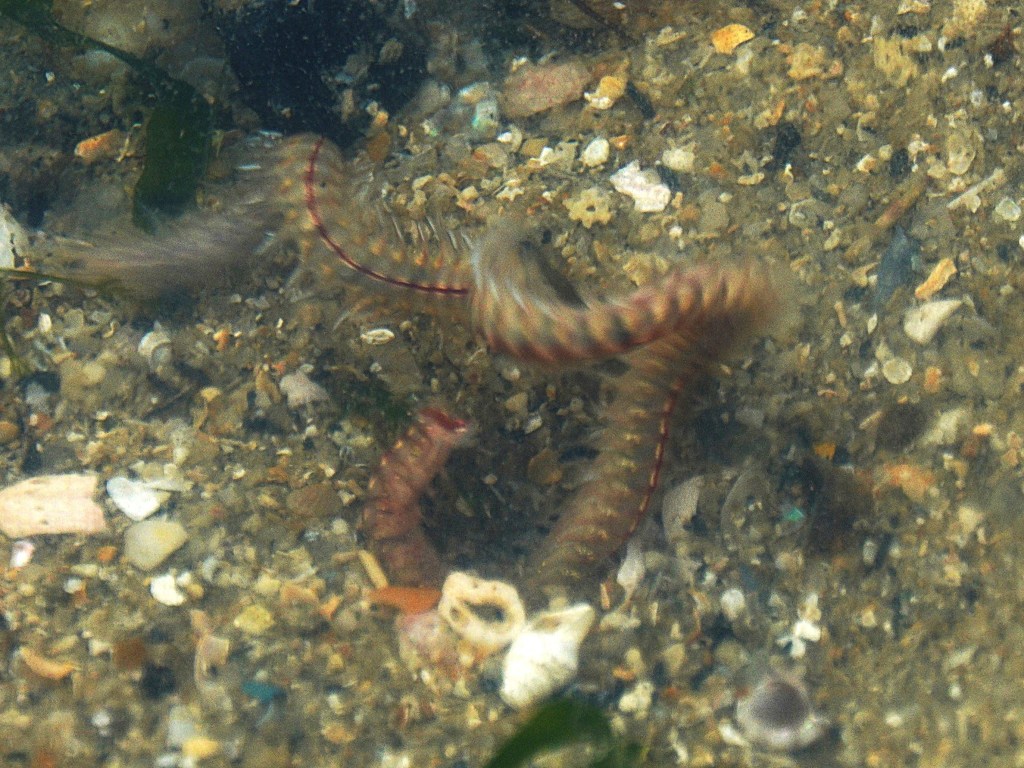
    During our exploration, a participant noticed a worm-like creature in a small tidepool, prompting our guide to issue a stern warning against touching any such organisms. Although the guide didn’t identify the species, it bore a striking resemblance to a bristle worm. While this particular specimen appeared to have been decapitated, bristle worms are renowned for their remarkable regenerative abilities, often capable of regrowing body parts lost to predators – including, astonishingly, their heads!

    Bristle worms are traditionally used as bait for fishing.

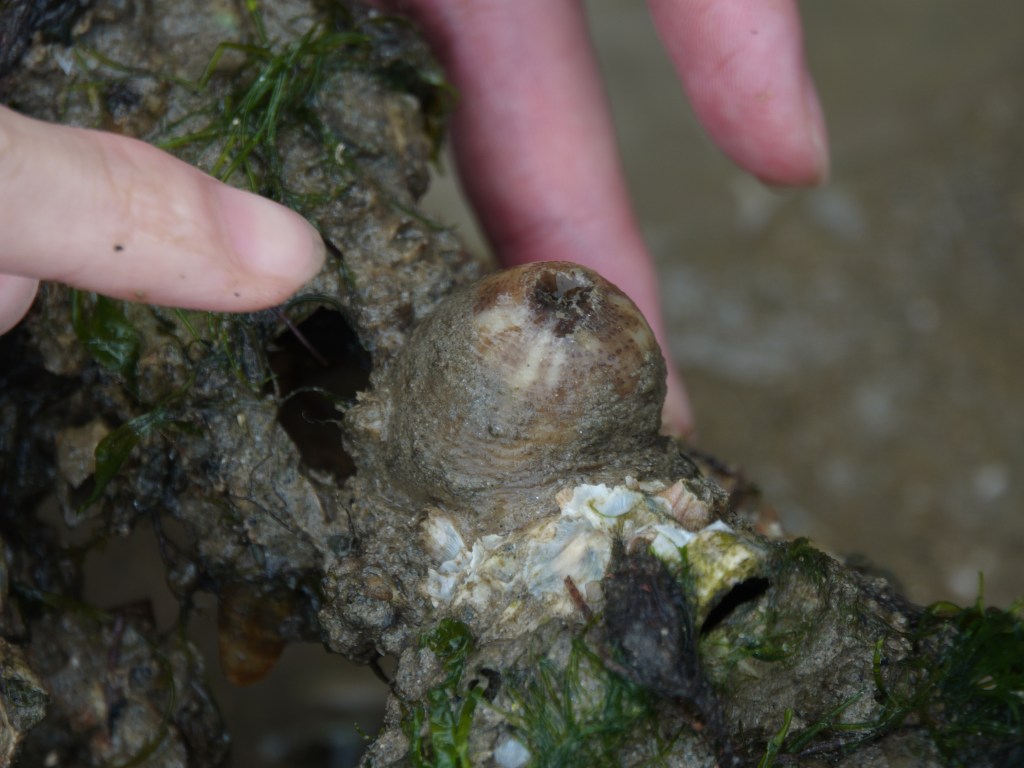
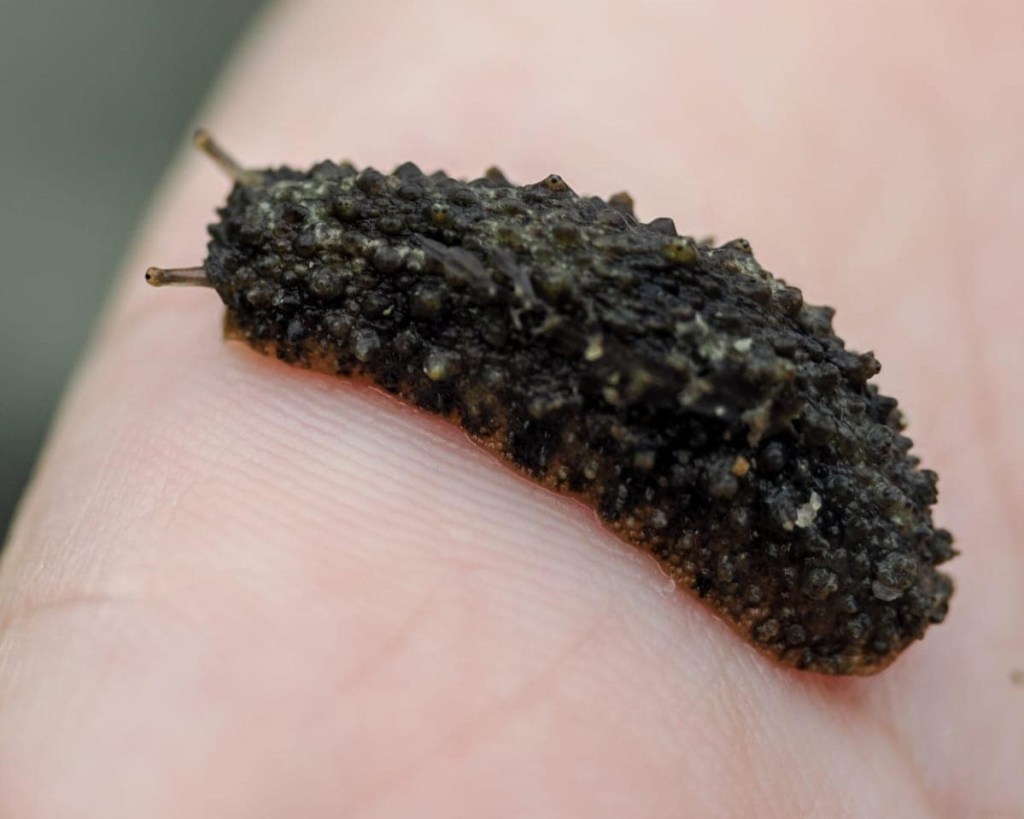
    As we approached the canal area where our drainage system discharges, we encountered a vibrant ecosystem thriving on the walls. Algae, barnacles, and periwinkle snails adorned both sides. Jerryl, our guide, picked up some small black objects and offered to place them on our palms. Initially mistaking them for limpets, I was surprised to learn they were Onch Slugs (Family Onchidiidae), grazing on the algae. As one rested on my palm, it began leaving a trail of mucus and excrement while observing me with its distinctive elongated eyes, providing an unexpectedly intimate encounter with these fascinating intertidal creatures.

    Onch slugs that breathe air unlike nudibranch (sea slugs)

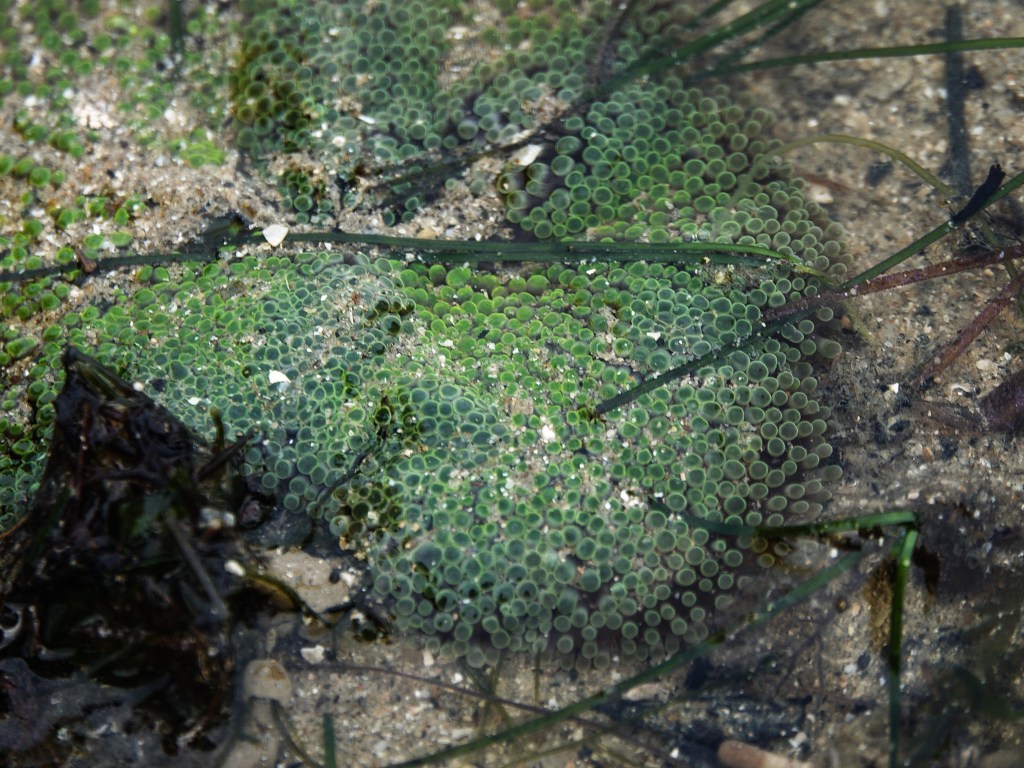
    As our guided walk neared its conclusion, we encountered a stunning carpet anemone, its vibrant green hue catching our eyes. Jerryl, our knowledgeable guide, encouraged us to gently touch its stinging tentacles, explaining that the subtle suction we felt was due to a small amount of toxin being released onto our skin. This fascinating experience piqued my curiosity about the various types of carpet anemones and the miniature marine life that might be dwelling among their tentacles.

    Apparently, a specific type of carpet anemone may have different kinds of colours

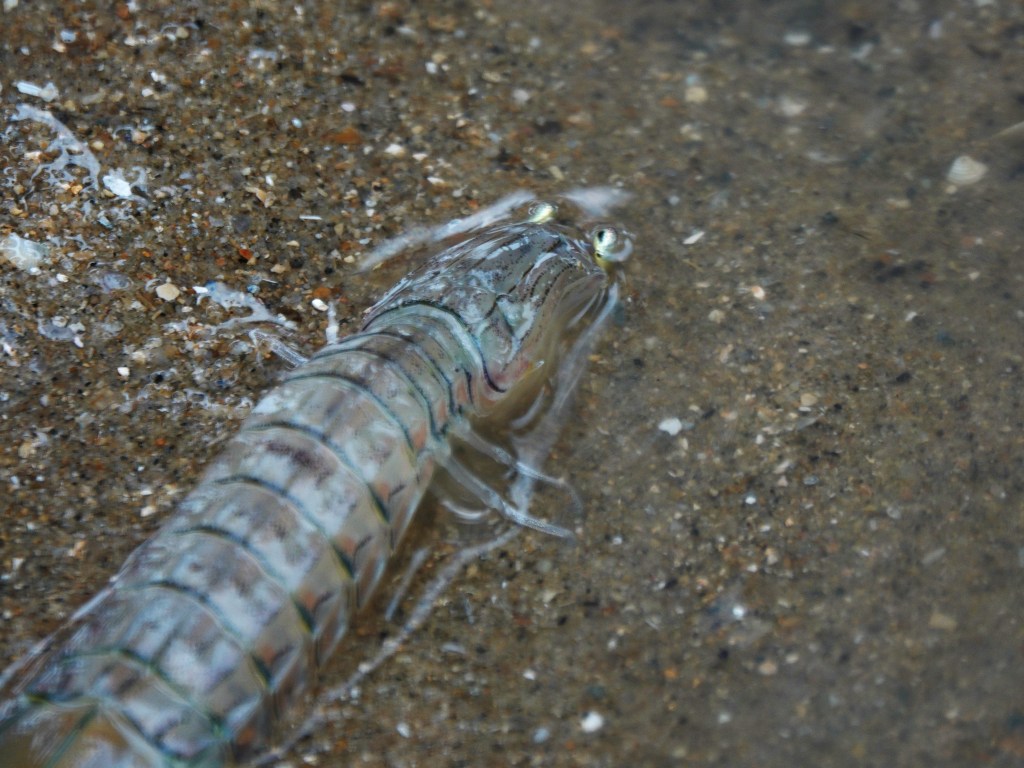
    Our excursion concluded with a spectacular sighting: a Spearer Mantis Shrimp (Family Squillidae), spotted by my friend. The creature’s striking appearance drew eager participants who were tempted to touch it. However, our vigilant guides swiftly intervened, warning against such interaction.

    Spearer Mantis Shrimp as opposed to the Smasher Mantis Shrimp

    The excursion concluded on a high note with a group photograph featuring MJ and her expert guides. As a delightful parting gift, MJ distributed cutesy, beautifully-illustrated stickers to all participants. These stickers depicted the various sea creatures we had encountered during our intertidal adventure, serving as both a memento and an educational tool to reinforce our newfound knowledge of the marine ecosystem.

    Thank you MJ Biogal and the guides for such an enriching intertidal walk.

    I am a huge fan too! ♥️

    Written by Lucas
  • Under the Mistletoe

    Under the Mistletoe

    As the holiday season approaches, many of us think of mistletoe as a festive decoration, often associated with winter countries, stolen kisses and Christmas cheer. However, what many don’t realise is that mistletoes are actually parasitic plants that grow on trees.

    In Singapore’s lush public parks, nature reserves or even our roadside trees, a unique ecosystem revolves around the native Malayan Mistletoe, creating a fascinating web of life that includes the vibrant Painted Jezebel butterfly and the charming Scarlet-backed Flowerpecker. I invite all nature lovers to stand under the mistletoe, where instead of a kiss, you might be rewarded with a plethora of living creatures flourishing above—a different kind of holiday magic.

    The Malayan Mistletoe: Our Local Parasite

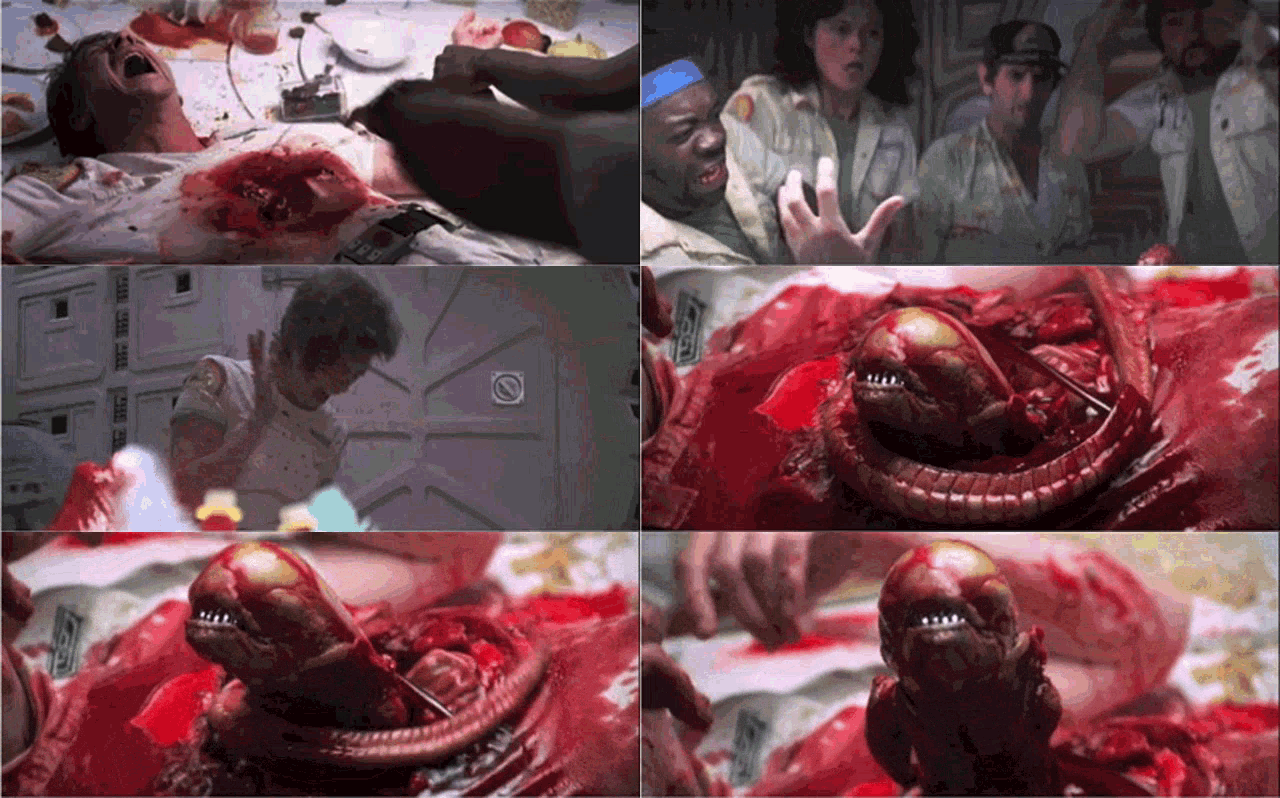
    The word “parasite” often evokes fear and discomfort, conjuring images from popular culture that range from the grotesque to the terrifying. From the infamous chest-bursting xenomorphs in the 1980s sci-fi classic “Alien” to more recent documentaries showcasing fungi (cordyceps) zombify insects before dramatically erupting from their bodies, parasites have long captured our imagination in the most unsettling ways.

    Infamous ‘chestburster’ scene from Alien (1979)

    While our local Malayan Mistletoe (Dendrophthoe pentandra) might not win any beauty contests (in fact, they are considered the ‘messiest’ mistletoe of all in Singapore), it plays an important role in the ecosystem. As a parasitic plant, it is less like a scary invader and more like that one relative who shows up during Chinese New Year and proceeds to eat all your cookies and snacks. It might irk the tree, much like how that relative tests your patience, but most of the time, it doesn’t cause serious harm. However, just as too many hungry relatives can empty your pantry, too many mistletoes can overwhelm a tree. But don’t worry – our sturdy and mature Singapore trees can usually handle these freeloaders without too much fuss.

    Interestingly, while the holiday mistletoe we’re familiar with from Christmas cards has needle-like leaves, our Singapore mistletoes sport a different look. Most of our local species, including the Malayan Mistletoe, have thick, fleshy leaves.

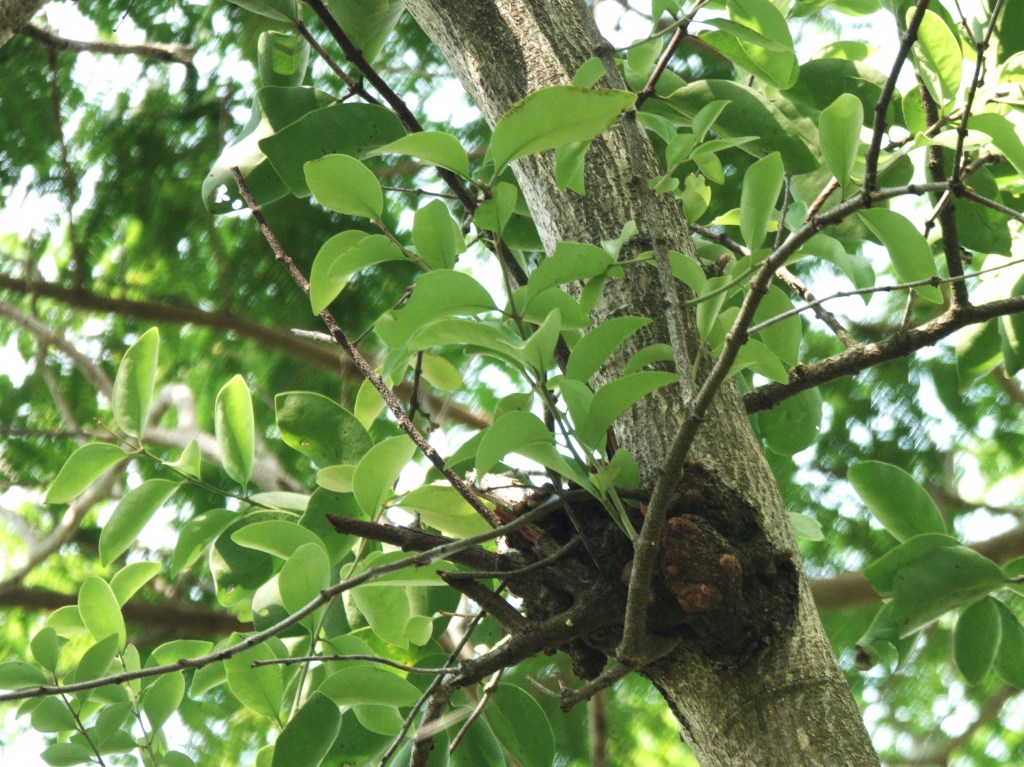
    The haustoria (special roots) of one Malayan Mistletoe plant.

    The Malayan Mistletoe is what we call a hemiparasite. It’s like a part-time freeloader, getting some of its nutrients from the host tree while also making its own food through photosynthesis. It attaches to the tree’s branches using special roots called haustorium, which tap into the tree’s plumbing system for water and minerals. While a few mistletoes usually don’t cause much harm, a large number can slow the tree’s growth or even cause branches to die back.

    And here’s a fun twist—some unexpected guests, in the form of caterpillars, actually help keep the party under control. It’s nature’s way of balancing the books, ensuring that our leafy hosts don’t end up too stressed by their clingy mistletoe guests!

    The Painted Jezebel: Our Colorful Butterfly Friend

    Now, let me introduce you to one of the mistletoe’s most beautiful admirers—the Painted Jezebel butterfly (Delias hyparete metarete). The life cycle of this stunning creature is a sight to behold, right in our own backyard!

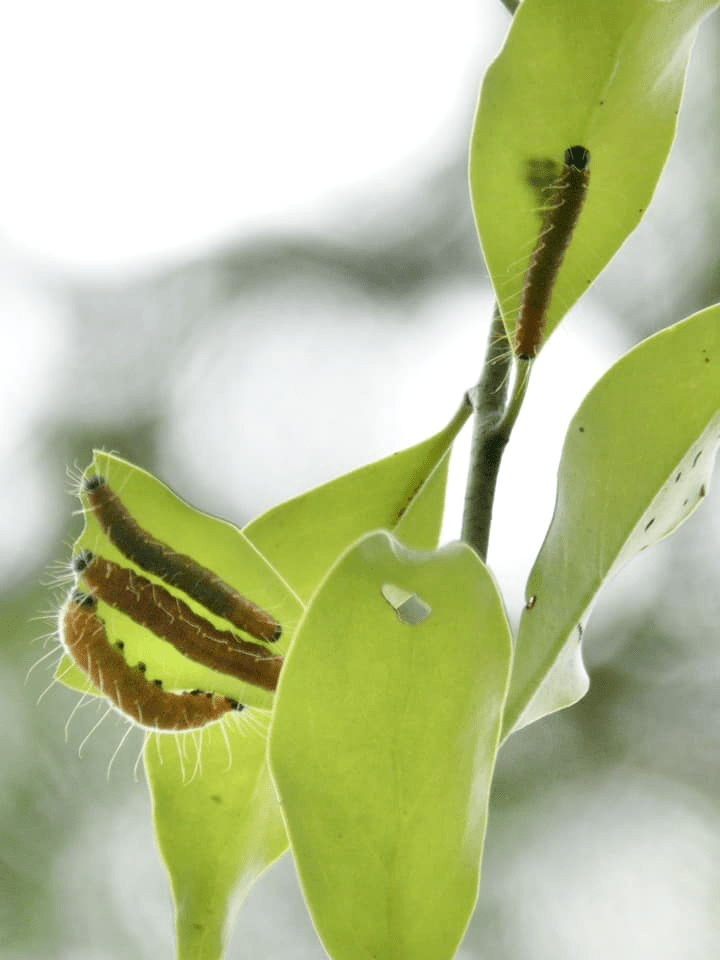
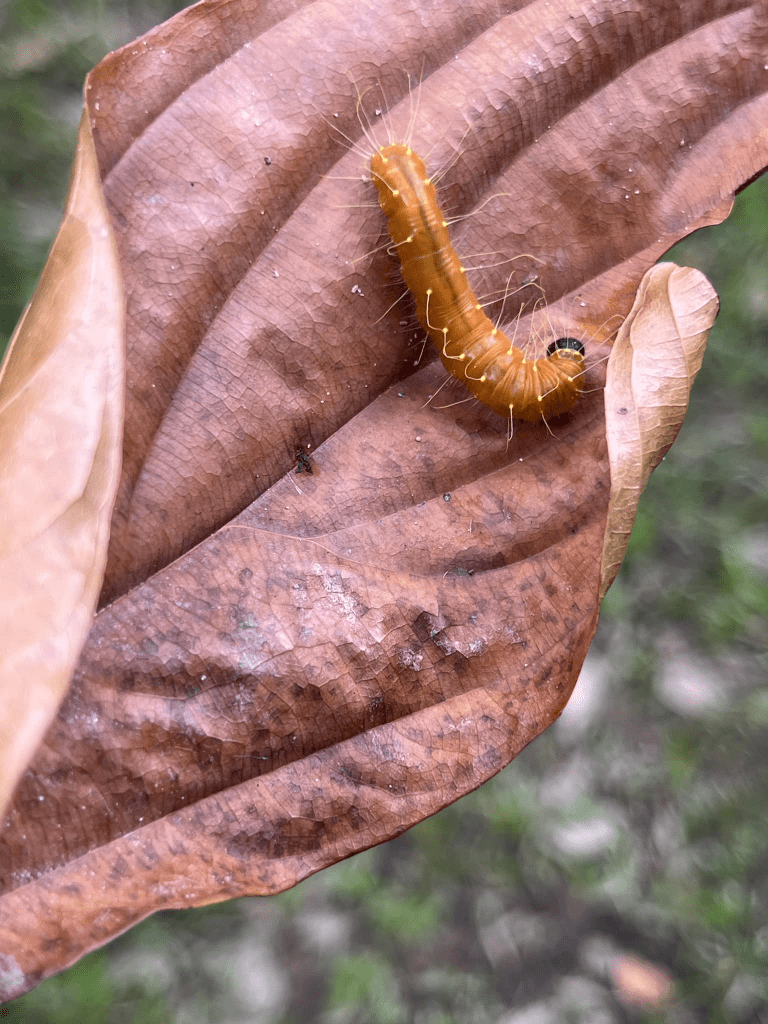
    The caterpillars start their journey as tiny 2mm creatures, growing to about 25mm while changing from light to dark orange. They’re social eaters, feeding in groups on the undersides of mistletoe leaves. If you look closely, you might see a row of little black heads munching away together. Their bright orange color isn’t just for show—it’s a warning to predators that they’re not a tasty snack. On top of that, by feeding at the undersides of leaves, they tend to avoid predation.

    Feeding ‘socially’ at underside of the Malayan Mistletoe leaf
    A closer view of the Painted Jezebel Caterpillar that fell from its host plant

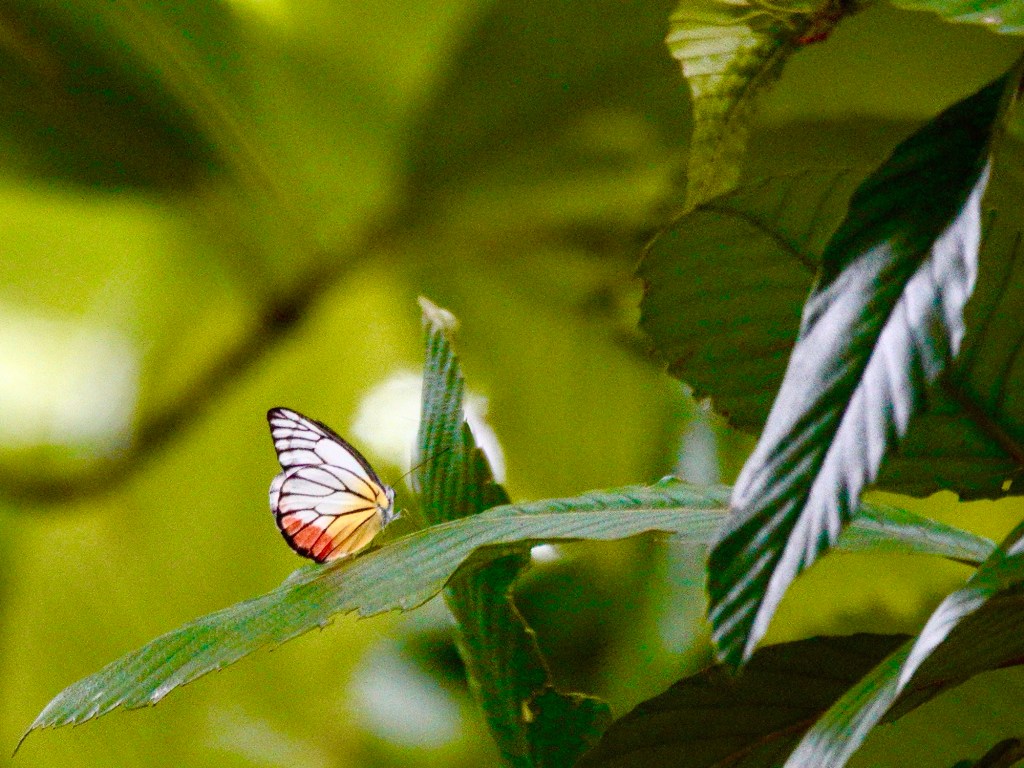
    When these caterpillars grow up, they transform into spectacular butterflies. The Painted Jezebel’s wings are a work of art, showcasing a beautiful pattern of white, black, bright red, and vibrant yellow. But here’s the clever part—this beauty is actually a defense mechanism called aposematism. It’s nature’s way of saying, “Look how pretty I am, but don’t even think about eating me!”

    Painted Jezebel Butterfly

    It’s a perfect example of how nature works together—the mistletoe provides food and protection for the butterfly, and in return, the butterfly might help pollinate the mistletoe.

    The Scarlet-backed Flowerpecker: Our Tiny Tree Dweller

    A male Scarlet-Backed Flowerpecker foraging at the Malayan Mistletoe

    Completing our trio of mistletoe marvels is the Scarlet-backed Flowerpecker (Dicaeum cruentatum). This little bird, barely larger than your thumb, sports a brilliant red back that makes it a striking sight in our trees.

    A front view of the beautiful bird

    The Scarlet-backed Flowerpecker has a special relationship with our Malayan Mistletoe. It loves to snack on the mistletoe’s fruits, helping to spread the seeds in the process. When the bird’s droppings land on tree branches, they contain undigested seeds that can grow into new mistletoe plants.

    Other than the flowerpeckers, it is also common to see the Ornate Sunbirds (Cinnyris ornatus) or Brown-Throated Sunbirds (Anthreptes malacensis) feeding on the fruits of the mistletoes.

    Nature’s Relationships

    While the Malayan Mistletoe is the most common in our parks and gardens, Singapore is home to several other mistletoe species. Keep an eye out for the Rusty Mistletoe, the Oval-leaved Mistletoe, and the Common Chinese Mistletoe. Each of these plants plays a role in supporting our local wildlife, even as a parasite.

    Together, these species create a miniature ecosystem right above our heads, showcasing the interconnectedness of life. The mistletoe provides food and shelter, the butterfly helps with pollination, and the flowerpecker spreads the mistletoe to new trees. It’s a beautiful cycle of life happening in our very own green spaces.

    So, the next time you’re strolling through one of Singapore’s public parks or exploring our nature reserves, look up! You might spot a clump of mistletoe with its distinctive fleshy leaves, a flash of a Painted Jezebel’s wings, or hear the chirp of a Scarlet-backed Flowerpecker. Remember, our local mistletoe isn’t just for holiday kisses—it’s supporting a whole world of wildlife right here in our urban jungle. It’s a nature story written by evolution itself, filled with color, cooperation, and the cycle of life—truly a Singapore marvel worth celebrating.

    Merry Christmas!

    Written by Lucas